Operculicarya pachypus Care Guide
Learn how to grow Operculicarya pachypus, a slow-growing pachycaul from southwestern Madagascar with a swollen caudex and specialized taproot.
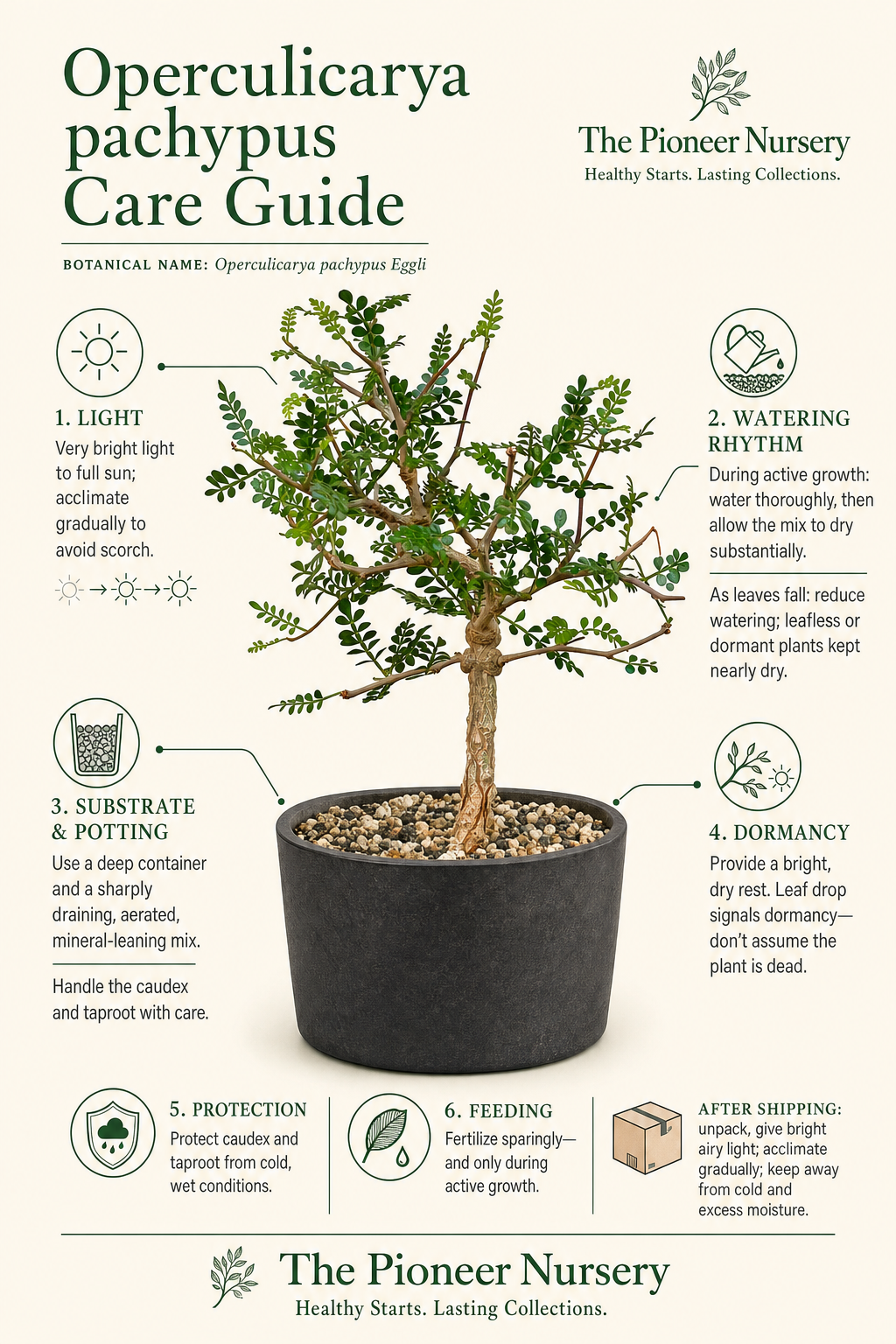
Operculicarya pachypus is a slow-growing pachycaul from dry southwestern Madagascar, with a swollen trunk, natural bonsai-like form, and deciduous growth habit. Its substantial taproot and caudex need a deep, sharply draining container, careful watering, and protection from cold, wet conditions. Very bright light, strong airflow, and a pronounced dry season are key to successful cultivation.
Quick Care Summary
- Provide very bright light to full sun, with gradual acclimation.
- Use a deep container and sharply draining, aerated mineral-leaning substrate.
- Water thoroughly during active growth, then allow the substrate to dry substantially.
- Reduce watering as leaves fall and keep dormant or leafless plants nearly dry.
- Protect the caudex and taproot from cold, wet conditions.
- Fertilize sparingly only during active growth.
About the Plant
Operculicarya pachypus Eggli is an accepted species in the Anacardiaceae family. It is also known as tabily, beoditra, botiboty, jabihy, zaby, and elephant bush. In cultivation, it is commonly described as a pachycaul, caudex-forming, or succulent bonsai plant. Its native habitat is dry southwestern Madagascar, with rainfall concentrated in a warm season followed by a prolonged dry season. It closely resembles Operculicarya decaryi, so retain provenance information and avoid specimen-level identity claims without appropriate confirmation.
Light and Airflow
Provide very bright light to full sun during active growth. Acclimate gradually after shade, greenhouse conditions, indoor cultivation, or shipping to reduce sunscald. Strong airflow is especially helpful in hot or humid conditions.
Watering
Water thoroughly during active growth, then allow the fast-draining substrate to dry substantially before watering again. Reduce watering as leaves yellow or fall, and keep dormant or leafless plants nearly dry to dry. Avoid wet substrate in cool conditions because it increases the risk of taproot and caudex rot. For shipping and repotting recovery, follow the guidance in “Shipping and Arrival Care.”
Soil and Substrate
Use a sharply draining, highly aerated, mineral-leaning mix with substantial pumice, scoria, perlite, coarse sand, or similar drainage material. Avoid dense, water-retentive mixes and prolonged saturation around the roots.
Potting and Root Care
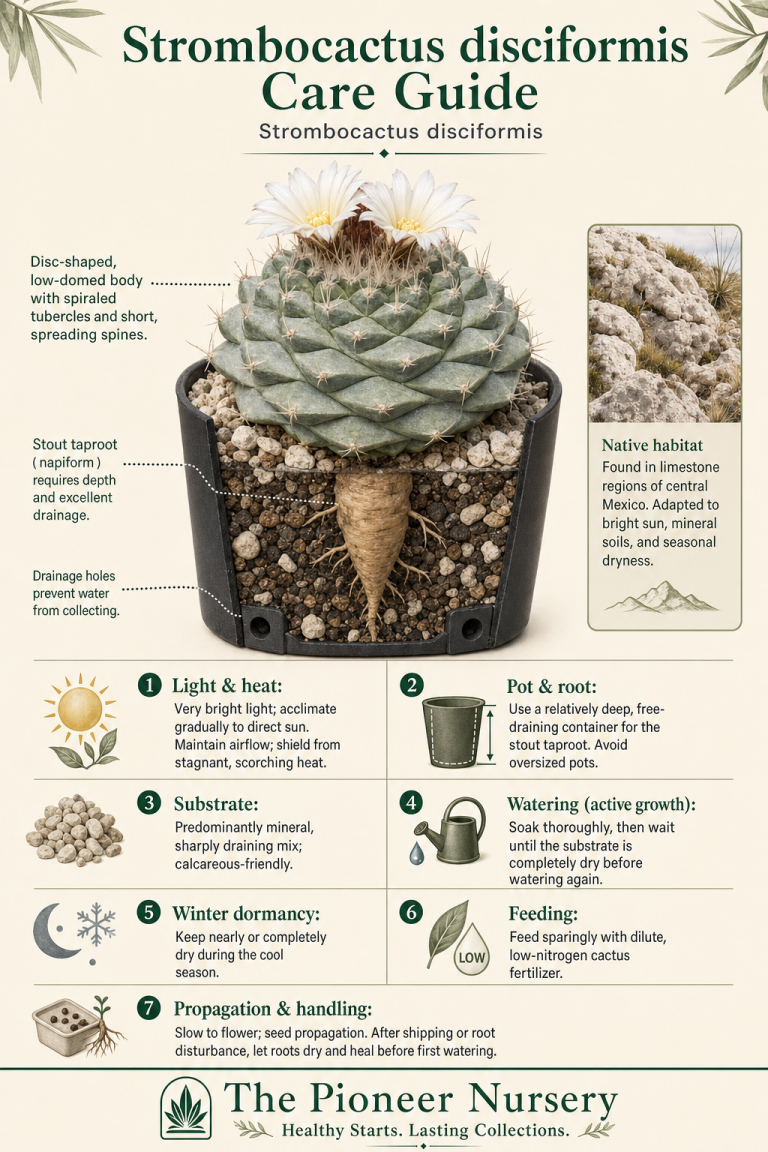
This species develops a substantial taproot and swollen root system. Choose a container with adequate depth and excellent drainage rather than an unnecessarily shallow bonsai pot. Repot cautiously because root disturbance can delay recovery and increase rot risk. After major root disturbance, keep the plant dry or only minimally moist until damaged roots have callused and recovery is evident; see “Shipping and Arrival Care” for the same recovery principle.
Temperature
Warm growing conditions are preferred, approximately 20–35 °C. Protect the plant from frost and freezing temperatures. During winter dormancy, maintain bright, dry conditions and keep a leafless plant away from cold, wet soil. A conservative winter minimum near 5–10 °C is advisable, with warmer conditions preferred for recently shipped or root-disturbed plants.
Seasonal Growth and Dormancy
Deciduous or semi-deciduous behavior is normal. Plants commonly slow or stop growth and shed leaves during cooler or drier periods, reflecting the pronounced dry season of their native habitat. Leaf drop alone does not mean the plant has failed. Resume watering gradually when temperatures, light, and new growth indicate renewed activity.
Fertilizer
Feed sparingly only during active growth. A balanced liquid fertilizer diluted to approximately half strength or weaker about monthly may be used during this period. Do not fertilize dormant, leafless, recently shipped, or recently root-disturbed plants.
Flowering and Fruit
Mature plants produce small, inconspicuous flowers in terminal or pseudoterminal inflorescences. The fruit is a small fleshy drupe that may mature from green to red. This species is not primarily grown for ornamental flowering, and seed production requires appropriate reproductive compatibility and pollination.
Propagation
Propagation is principally by seed. Fresh seed and warm conditions are important; specialist cultivation reports use approximately 25–30 °C for germination, which can be variable and difficult. Collectors also use root or stem cuttings, but success is less consistently documented than seed propagation and carries significant rot risk. Protect seedlings from excessive drying while establishing, then gradually acclimate them to stronger light and less frequent watering.
Shipping and Arrival Care
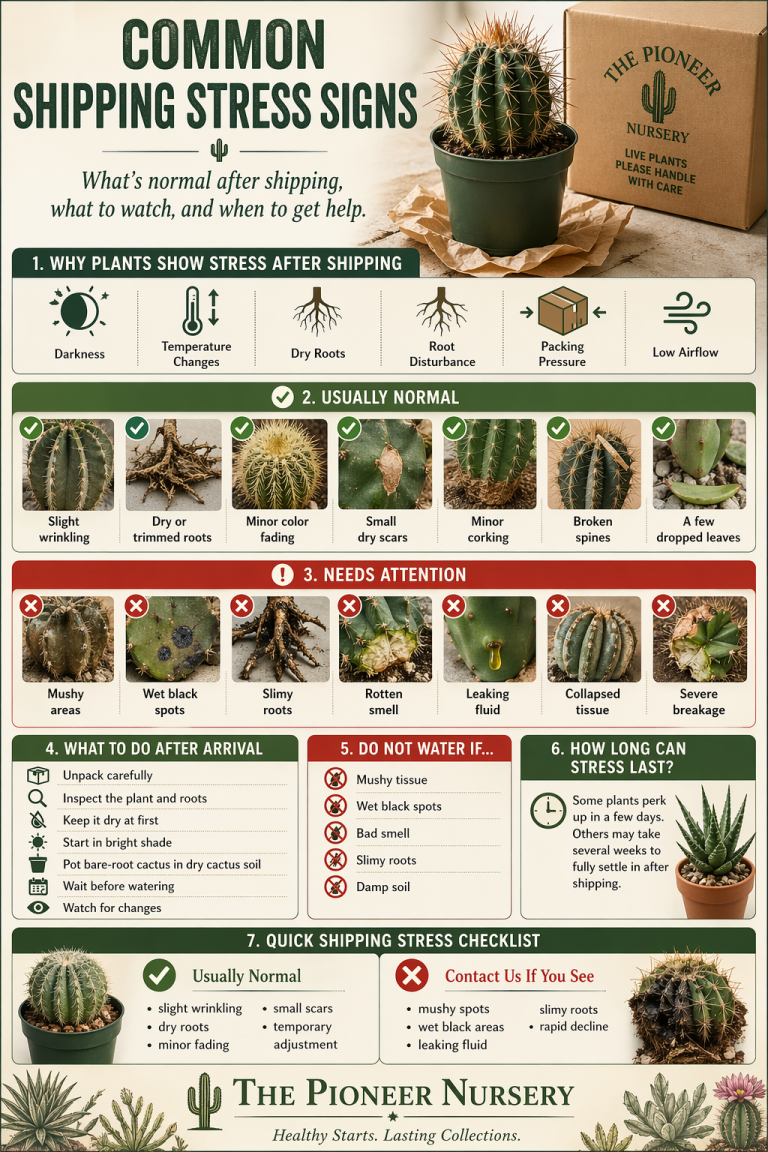
Inspect the plant after arrival for crushing, bending, moisture damage, or rot, especially around the swollen caudex and taproot. Acclimate it gradually to stronger light and pot it into a dry, fast-draining medium. After shipping or significant root disturbance, avoid heavy watering until damaged roots have callused and recovery is evident. Recently shipped or root-disturbed plants benefit from warmer rather than cold, wet conditions.
Conservation and Responsible Sourcing
Operculicarya pachypus has a restricted distribution in southwestern Madagascar and is listed in CITES Appendix II. Wild-collected or undocumented material may raise conservation and legal concerns. Documented, responsibly sourced plants, seeds, and other plant material are important, particularly for international trade.
Common Problems
- Root or caudex rot: associated with dense substrate, poor drainage, or watering during cool dormancy.
- Sunburn: may follow abrupt movement into full sun; acclimate gradually.
- Leaf drop: may be normal dormancy, but can also reflect drought, cool temperatures, or root stress.
- Slow recovery: shipping and repotting can disturb the substantial taproot and swollen root system; limit watering during recovery as described above.
- Seedling loss: stagnant or excessively wet germination media can contribute to damping-off and fungal loss.
- Identity confusion: Operculicarya decaryi is closely similar and may lead to inaccurate identity or provenance claims.
- Skin irritation: sap from Anacardiaceae members may irritate sensitive skin; handle damaged tissue cautiously.
- Conservation concerns: wild-collected or undocumented material may involve legal or conservation issues because the species is listed in CITES Appendix II.
Frequently Asked Questions
How often should I water Operculicarya pachypus?
Water thoroughly during active growth, then allow the fast-draining substrate to dry substantially. Reduce watering as leaves yellow or fall, and keep dormant or leafless plants nearly dry. Avoid cool, wet conditions.
Why is my Operculicarya pachypus losing its leaves?
Leaf drop can be normal deciduous or semi-deciduous behavior during cooler or drier periods. It may also reflect drought, cool temperatures, or root stress, so consider the season and root condition.
Does this plant need a shallow bonsai pot?
No. Although it has a bonsai-like appearance, it develops a substantial taproot and swollen root system. Use a container with adequate depth and excellent drainage.
Can Operculicarya pachypus take full sun?
Yes. Very bright light to full sun is suitable during active growth, but acclimate gradually after shipping, indoor cultivation, or greenhouse production.
How should I care for it after shipping?
Inspect for damage or rot, acclimate gradually to stronger light, and pot into a dry, fast-draining medium. Avoid heavy watering after root disturbance until recovery is evident.
How is Operculicarya pachypus propagated?
Propagation is principally by seed. Fresh seed and warm conditions are important, with specialist reports using approximately 25–30 °C for germination. Cuttings are also used by collectors, but success is less consistently documented and rot is a significant risk.
With bright light, excellent drainage, careful root handling, and a dry dormant period, Operculicarya pachypus can develop into a distinctive caudex plant with natural bonsai character. Let seasonal growth signals guide watering, and take extra care during potting and shipping.