Gymnocalycium saglionis Care Guide: Growing the Giant Chin Cactus
Learn how to grow Gymnocalycium saglionis, a comparatively large chin cactus that thrives in strong light, sharply draining soil, careful summer watering, and a dry cool-season rest.
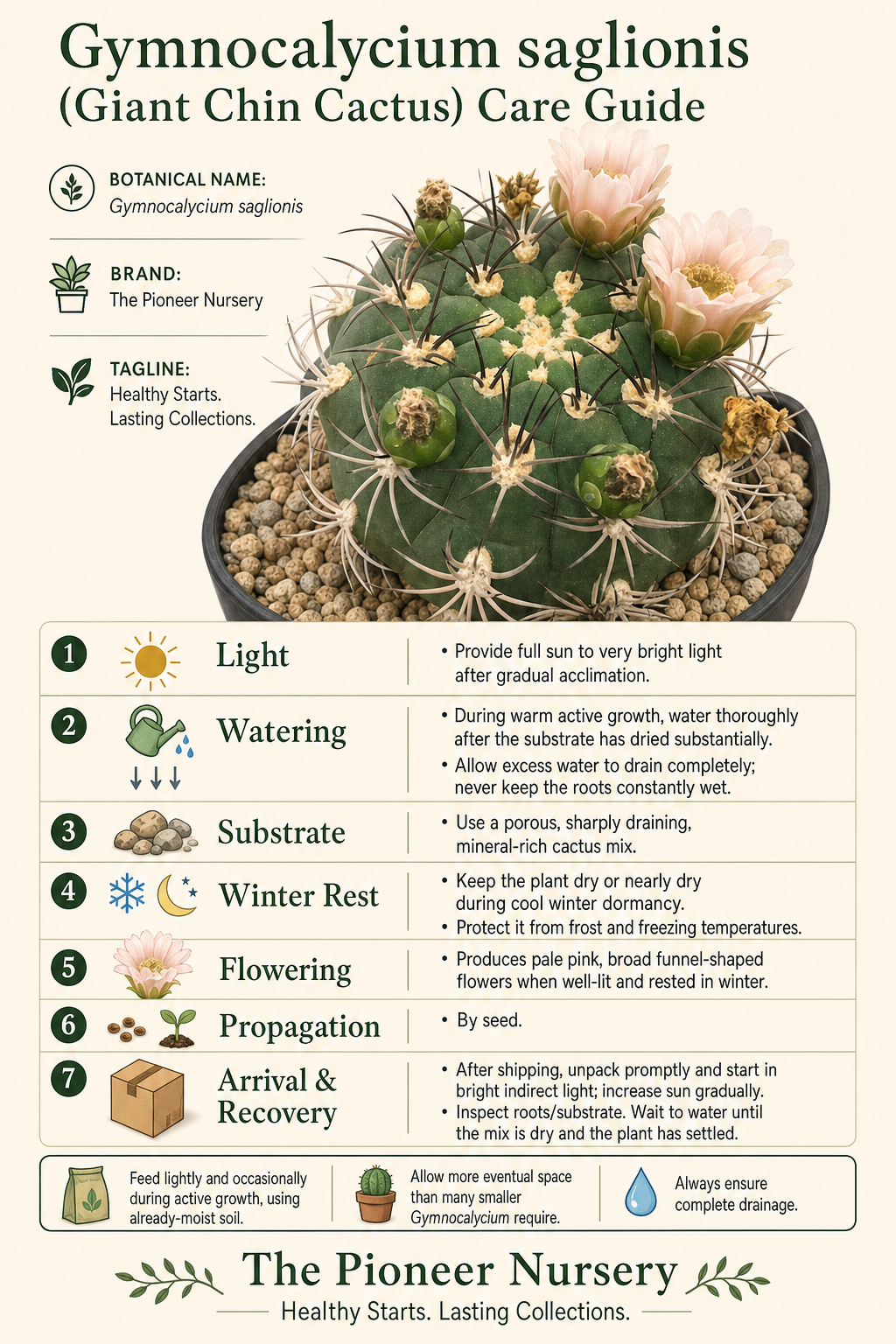
Gymnocalycium saglionis, commonly called giant chin cactus, is a comparatively large Gymnocalycium with flattened globose stems, tubercled ribs, stout spines, and pale pink flowers that may appear in early summer. Successful care centers on strong light, excellent drainage, thorough but condition-based watering during warm active growth, and a substantially drier winter rest.
Quick Care Summary
- Provide full sun to very bright light after gradual acclimation.
- Use a porous, sharply draining substrate with substantial mineral material.
- Water thoroughly during warm active growth after the substrate has dried substantially.
- Allow excess water to drain completely; never keep the roots constantly wet.
- Keep the plant dry or nearly dry during cool winter dormancy.
- Protect it from frost and freezing temperatures.
- Feed lightly and occasionally during active growth, using already-moist soil.
- Plan for more eventual space than many smaller Gymnocalycium require.
About Gymnocalycium saglionis
This accepted species is native to northwestern Argentina. It can become substantially larger than many commonly sold Gymnocalycium, so plan for more eventual container space and spacing than you might provide for a dwarf species. Strong light and good airflow help maintain compact growth and support flowering.
Light
Provide full sun to very bright light once the plant is acclimated. After shipping or a period of indoor winter cultivation, increase direct light gradually to reduce the risk of sunburn. Strong light is especially important for compact growth and flowering; insufficient light can lead to etiolated, stretched growth.
Watering
During warm active growth, water thoroughly only after the substrate has dried substantially. Let excess water drain completely, and do not keep the roots constantly wet. Watering frequency depends on temperature, light, pot size, substrate, and airflow. During cool winter conditions, reduce watering greatly and keep the plant dry or nearly dry if growth has stopped. Hot active growth may increase water demand, but the plant should still not remain wet.
Soil and substrate
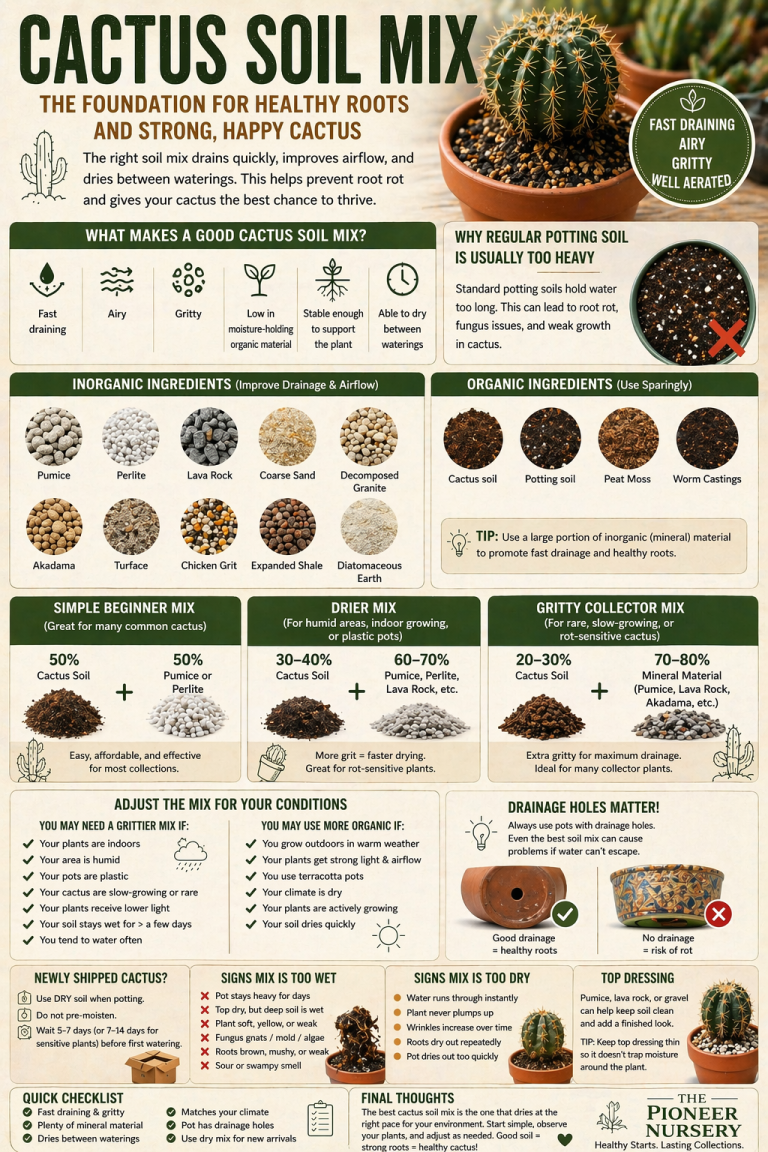
Use a sharply draining, porous cactus substrate with a substantial mineral component such as pumice, perlite, coarse sand, or similar aggregate. A loam- and sand-based mix can also work when drainage and root aeration are strong. The goal is a substrate that dries substantially between waterings rather than holding excess moisture around the roots.
Potting and roots
Choose a container with an unobstructed drainage hole and avoid pots that remain wet for long periods. Repot during active growth or near the beginning of the growing season. Handle the roots carefully, remove damaged or rotten material, and allow disturbed roots to dry before cautiously resuming watering. Do not use an excessively large pot solely to accelerate growth. Research does not establish a uniquely specialized taproot requirement for this species, so standard careful cactus potting with excellent drainage is appropriate.
Temperature and winter rest
Warm conditions support active growth. Protect Gymnocalycium saglionis from frost and freezing temperatures. Growth commonly slows during cool, low-light winter conditions, when the plant should be kept dry or nearly dry, particularly indoors or in an unheated greenhouse. Cool conditions combined with wet soil increase the risk of rot.
Fertilizer
During active growth, apply a dilute balanced or cactus-form fertilizer occasionally to already-moist soil. Avoid excessive nitrogen. Do not fertilize during dormancy or when the roots are dry and inactive.
Flowering
Mature plants may produce broad, funnel-shaped pale pink flowers approximately 2 cm across in early summer. Strong light, mature growth, a well-drained substrate, and a suitable seasonal winter rest support flowering. Inadequate light, immature plants, or the absence of a suitable rest can contribute to flowering failure.
Propagation
Propagation is primarily by seed. The seeds are very small, and seedlings can remain extremely small during their first year or two. Seed sowings therefore require close observation and careful moisture management.
Shipping and arrival care
Receive and keep the plant dry during shipping, with protection from freezing temperatures and prolonged cold exposure. After arrival, inspect it for damage or rot and provide ventilation. Acclimate gradually to stronger light, especially if it was shipped or grown indoors. After bare-root shipping or significant root disturbance, avoid immediate heavy watering; allow damaged or disturbed roots to dry before resuming cautious care.
Common Problems
- Root and stem rot: Persistently wet substrate, especially in cool conditions, can damage the plant.
- Sunburn: Abrupt exposure to intense direct sun after shipping or indoor cultivation can scorch the stem.
- Etiolated growth: Insufficient light can produce stretched, weak growth.
- Pests: Monitor for mealybugs, scale, and other common cactus pests.
- Failure to flower: Inadequate light, immature growth, or lack of a suitable seasonal rest may reduce flowering.
Frequently Asked Questions
How often should I water Gymnocalycium saglionis?
There is no fixed calendar. During warm active growth, water thoroughly after the substrate has dried substantially, then let excess water drain completely. Water much less in cool winter conditions, keeping the plant dry or nearly dry if growth has stopped.
Can Gymnocalycium saglionis grow in full sun?
Yes, full sun is appropriate once the plant is acclimated. Increase direct light gradually after shipping or indoor cultivation to reduce sunburn risk.
What soil does giant chin cactus need?
Use a sharply draining, porous cactus substrate with substantial mineral material such as pumice, perlite, coarse sand, or similar aggregate. Loam and sand can also be suitable when drainage and root aeration are strong.
Why is my Gymnocalycium saglionis not flowering?
Inadequate light, immature growth, or the absence of a suitable cool-season rest can contribute to flowering failure. Strong light, mature growth, good drainage, and seasonal rest support flowering.
How should I care for this cactus after shipping?
Inspect it for damage or rot, provide ventilation, and acclimate it gradually to stronger light. If it arrived bare-root or experienced root disturbance, avoid immediate heavy watering and allow disturbed roots to dry before cautious watering.
How is Gymnocalycium saglionis propagated?
Propagation is primarily by seed. The seeds are very small, and seedlings may remain extremely small during their first year or two, requiring close observation and careful moisture management.
Gymnocalycium saglionis rewards a bright, airy setup and a careful seasonal rhythm: let it grow actively with thorough but condition-based watering, then keep it substantially drier through cool winter conditions. With excellent drainage and gradual light acclimation, this giant chin cactus can develop into a distinctive, comparatively large Gymnocalycium with pale pink early-summer flowers.