Gymnocalycium quehlianum Cristata Care Guide
Learn how to grow Gymnocalycium quehlianum Cristata with guidance on light, watering, substrate, seasonal rest, flowering, propagation, and protecting its distinctive crested growth.
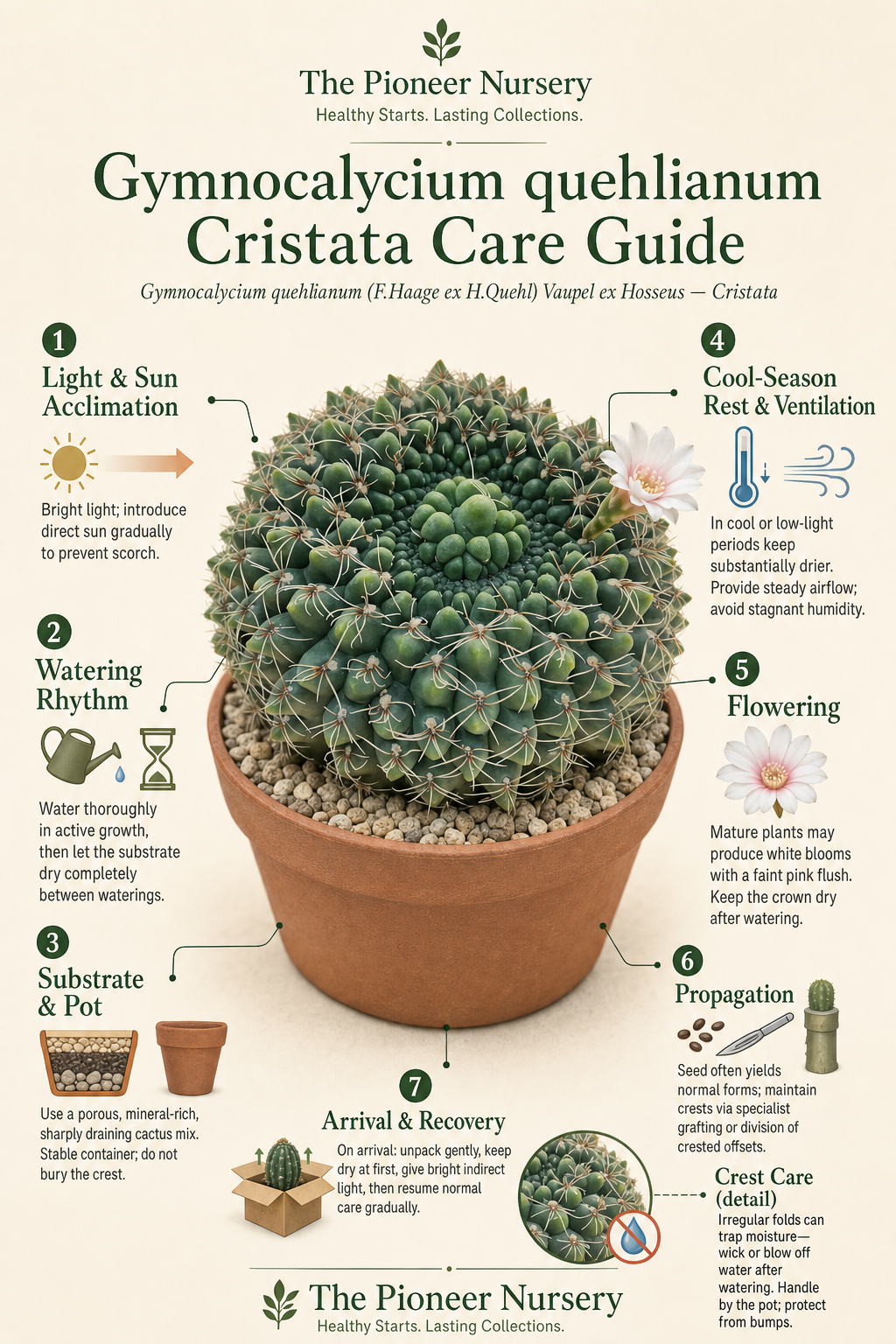
Gymnocalycium quehlianum Cristata is the crested horticultural form of the accepted species Gymnocalycium quehlianum, also known as the Quehla chin cactus. Its irregular crest needs the same basic care as the species, with extra attention to gradual light acclimation, excellent drainage, careful watering, and protection from water collecting in folds or from mechanical damage. The species is primarily summer-growing in cultivation and benefits from a cool, dry rest during the low-light season.
Quick Care Summary
- Bright light with gradual acclimation to direct sun.
- Use a porous, mineral-rich, sharply draining cactus substrate.
- Water thoroughly during active growth, then let the substrate dry completely.
- Keep substantially drier during cool or low-light dormancy.
- Prevent water from collecting in the crest’s folds or wounds.
- Use a stable container and do not bury the crest.
- Protect the crest from abrupt environmental changes and mechanical damage.
About the plant
“Cristata” describes a crested growth form caused by abnormal development of the growing point; it is not a separate species, botanical variety, cultivar, or hybrid. Individual crested plants may not retain all the typical rounded morphology of the species. Green, rooted specimens can generally be grown on their own roots, while grafting is also a legitimate horticultural option for preserving or increasing unusual crested material. The accepted species is native to Argentina, including Córdoba.
Light
Provide bright light with good ventilation. Full sun can be suitable after gradual acclimation, but bright filtered light is safer when the plant is recovering from shipping or growing under particularly intense greenhouse conditions. Avoid moving it abruptly from shade or low light into strong direct sun, because the irregular crested tissue can scorch readily.
Watering
During active growth, water thoroughly and then allow the substrate to dry completely before watering again. Reduce watering substantially during cool or dormant conditions and keep the plant nearly dry in winter. Avoid repeated moisture around the crest, especially in its folds, and never combine cold temperatures with persistently wet soil. Grafted plants may have different watering and seasonal responses because the rootstock can influence growth behavior.
Soil and substrate
Use a porous, sharply draining cactus substrate with substantial mineral content and good root aeration. A standard cactus compost amended with pumice, perlite, coarse sand, or another stable mineral component is appropriate. The goal is a mix that drains freely and dries reliably rather than holding moisture around the roots.
Potting and roots
Choose a container only modestly larger than the root system with an unobstructed drainage hole. Because a cristate plant may be low, broad, or irregular, use a stable pot that prevents tipping. Do not bury the body or crest. Repot during active growth when possible. If roots are damaged or significantly disturbed, allow wounds to callus and resume watering cautiously rather than watering immediately.
Temperature and ventilation
Protect the plant from prolonged freezing and from cold, wet conditions. A frost-free to cool-winter setting with a dry substrate is the safer general approach, and the plant should be grown with good air circulation. During active growth, provide conditions warm enough for the substrate to dry promptly.
Seasonal growth and dormancy
Gymnocalycium quehlianum is primarily a summer-growing cactus in cultivation. During the cool or low-light season, keep the substrate dry or almost dry and maintain good air circulation. As spring light and temperatures increase, resume watering gradually rather than returning immediately to a full active-growth routine.
Fertilizer
Feed only during active growth, using a dilute balanced cactus fertilizer or balanced liquid fertilizer. The RHS recommends feeding every two to three weeks during growth. Do not fertilize a dry, stressed, recently repotted, or dormant plant.
Flowering
Mature, well-cultivated plants can flower freely. Flowers are funnel-shaped, generally white and sometimes flushed pink toward the center, and may reach approximately 5 cm across. Flowering is described for early summer. Strong light, adequate warmth during growth, and a cool, dry rest can support flowering.
Propagation
The species can be propagated from seed; the RHS recommends sowing fresh seed at approximately 19–24 °C in early spring. Seedlings generally revert to ordinary growth, so seed is not a dependable way to reproduce the cristate form. Selected crested material is more appropriately maintained through specialist vegetative propagation or grafting. Grafting is useful for unusual or slow-growing Gymnocalycium forms, but it is not inherently required for every specimen.
Common problems
Root or stem rot usually reflects poorly drained substrate, overwatering, or cool wet conditions. Sudden exposure to strong direct light can cause sunburn, especially after shipping or low-light growth. Mealybugs may occur. Water trapped in irregular crested folds or wounds can encourage localized rot. Insufficient light may produce weak, stretched growth, while handling, repotting, or shipping can mechanically damage the crest.
Shipping and arrival care
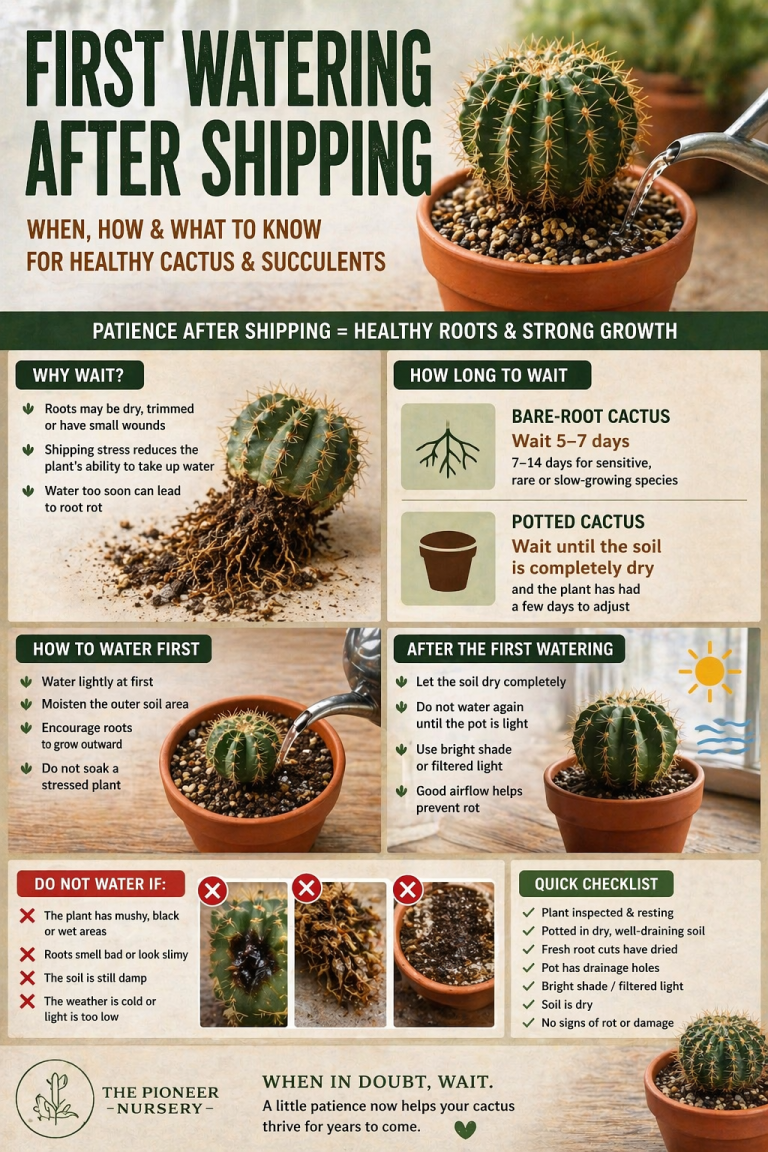
Inspect the crest after arrival for compression, abrasion, snapping, or wounds. Place the plant in bright but initially filtered light with good ventilation, rather than immediately into intense sun. If it arrives bare-root or with disturbed roots, keep it dry until damaged areas have callused, then reintroduce water gradually. Avoid cold, wet conditions while the plant is recovering.
Frequently Asked Questions
How should I water Gymnocalycium quehlianum Cristata?
Water thoroughly during active growth, then allow the substrate to dry completely. Water much less in cool or dormant conditions and keep the plant nearly dry in winter. Take extra care not to leave moisture in the crest’s folds.
Can this crested cactus take full sun?
Yes, full sun may be suitable after gradual acclimation. Bright filtered light is safer during shipping recovery or under intense greenhouse conditions, and abrupt changes can cause scorching.
Does the cristate form need a special pot?
Use a container only modestly larger than the roots, with excellent drainage and enough stability to prevent the irregular plant from tipping. Do not bury the body or crest.
Can Gymnocalycium quehlianum Cristata be grown on its own roots?
A green, rooted cristate plant can generally be cultivated on its own roots. Grafting is also a legitimate option for preserving or increasing unusual crested material, but it is not automatically required.
Will seedlings stay crested?
Usually not. Cristate growth is not reliably reproduced from seed, and seedlings generally revert to ordinary growth. Selected crested material is better maintained through specialist vegetative propagation or grafting.
What should I do when the plant arrives by mail?
Inspect it for damage, give it bright filtered light and good ventilation, and acclimate it gradually. If roots were disturbed or the plant arrived bare-root, wait until damaged areas have callused before cautiously reintroducing water.
Gymnocalycium quehlianum Cristata is best grown with bright, gradually acclimated light, fast drainage, careful active-season watering, and a dry cool-season rest. Its unusual crest rewards gentle handling and attention to trapped moisture, especially after shipping or repotting.