Dorstenia foetida — Variegated Care Guide
Learn how to grow variegated Dorstenia foetida, including light, watering, soil, dormancy, propagation, shipping recovery, and common problems.
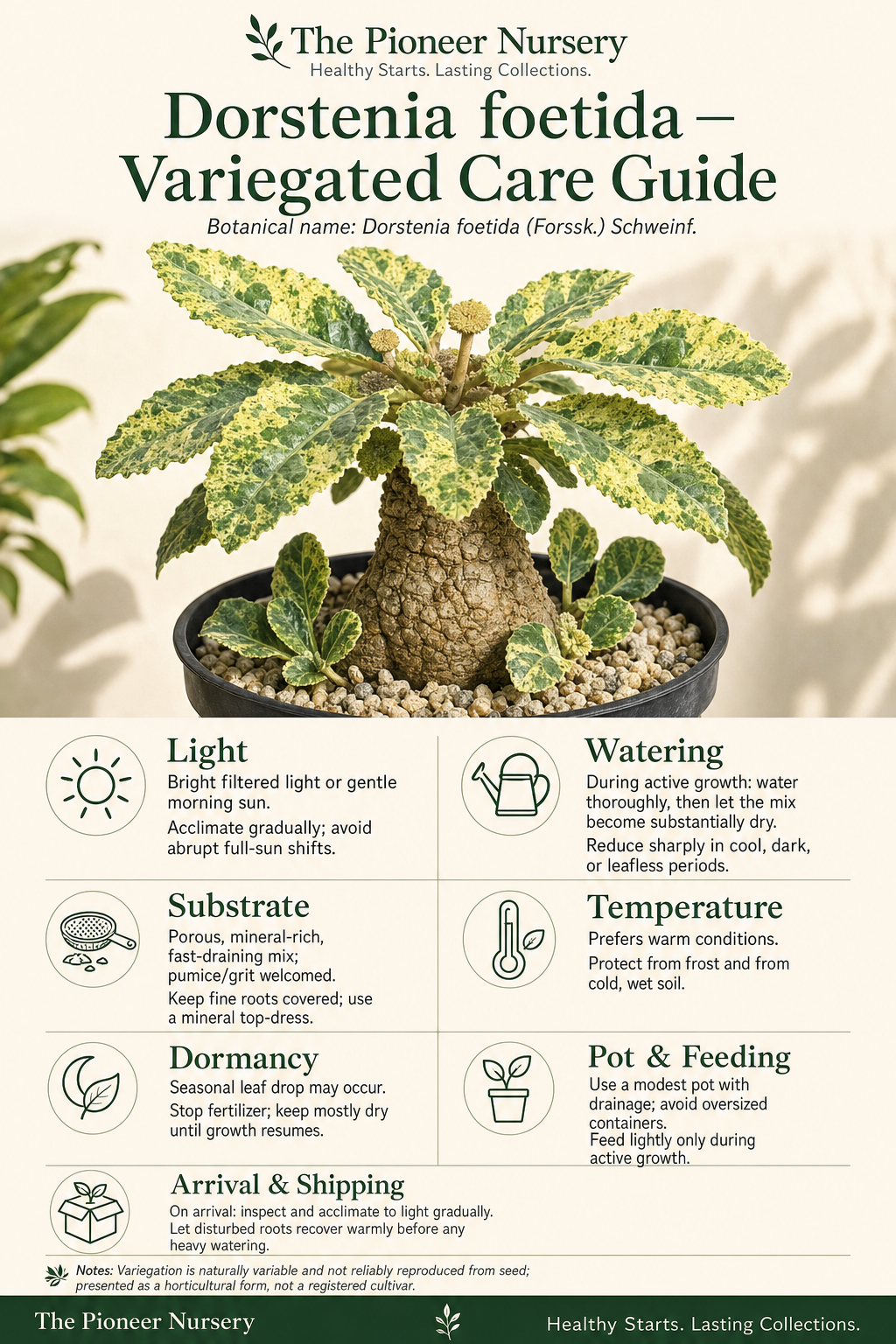
Dorstenia foetida is a succulent subshrub in the Moraceae family, recognized by its swollen basal stem or caudex and fine roots. Variegated plants are best understood as a horticultural or commercial form rather than a formally established botanical variety or cultivar. They generally need bright, filtered light or gentle sun, fast drainage, and careful adjustment of watering through active growth and dormancy. Because variegated tissue contains less chlorophyll, provide enough light for usable photosynthesis while avoiding abrupt exposure to intense sun.
Quick Care Summary
- Bright filtered light or gentle sun, with gradual acclimation.
- Use a porous, mineral-rich, fast-draining substrate.
- Water thoroughly during active growth, then let the mix become substantially dry.
- Reduce watering sharply during cool, dark dormancy or leafless periods.
- Protect from frost and cold, wet conditions.
- Use a modest pot with drainage and avoid oversized containers.
- Feed lightly only during active growth.
- Variegation may be variable and may not reproduce reliably from seed.
About Dorstenia foetida — Variegated
Dorstenia foetida has a swollen basal or tuberous stem that stores water, but it should not be treated exactly like a completely dormant, highly xeric cactus. The commercial term “variegated” describes reduced chlorophyll in the foliage; it does not confirm a formally published variety, registered cultivar, or particular hybrid. Commercial plants may include selected seedlings and possible hybrids, so vigor, leaf form, dormancy behavior, and variegation stability can vary.
Light
Provide bright filtered light or gentle direct sun. Strong light helps variegated plants maintain compact growth and usable photosynthesis, while insufficient light can cause elongated stems and larger, widely spaced leaves. Acclimate gradually after shipping or a move from shade. Protect unacclimated plants from intense summer sun, and provide ventilation during extreme heat. Variegated tissue may be more vulnerable to sun stress.
Watering
During active growth, water thoroughly, then allow the substrate to drain and become substantially dry before watering again. Dorstenia foetida can use more water than many highly xeric caudex plants while growing, but the caudex and roots must not stay constantly wet. Reduce watering as growth slows or leaves are shed. During cool, dark dormancy, keep the plant mostly dry and avoid repeated heavy watering. Resume watering gradually when new growth appears.
Soil and substrate
Use a porous, fast-draining mix with substantial mineral material such as pumice, perlite, lava, coarse sand, or similar aggregate. Include enough organic matter to retain limited moisture during active growth, while keeping the mix aerated and resistant to compaction and waterlogging.
Potting and roots
Choose a pot with a drainage hole and avoid an oversized container. The swollen basal stem or caudex may be displayed above the substrate, but the roots should remain securely covered. Handle the fine roots carefully and repot during warm active growth when possible. After major root disturbance, keep the plant warm, ventilated, and protected from strong direct sun; delay heavy watering until damaged roots have had time to recover.
Temperature and seasonal growth
Warm conditions are preferred. Protect the plant from frost and freezing temperatures. Cold combined with wet substrate substantially increases the risk of root or caudex rot. A cool-season or stress-induced slowdown may include partial or substantial leaf drop. Plants kept warm and bright may continue growing, while reduced light and cooler temperatures make dormancy more likely. During dormancy, reduce irrigation sharply, stop fertilizing, and keep the substrate from remaining wet.
Fertilizer
Feed only during active growth with a diluted, balanced or low-nitrogen fertilizer. Apply fertilizer to already-moist substrate and avoid frequent or heavy feeding, which can produce weak, stretched growth and salt accumulation. Stop feeding during dormancy or when the plant is leafless and inactive.
Flowering and seed
Dorstenia foetida produces distinctive disc-like inflorescences, technically called hypanthodia, on peduncles. Flowering may repeat during warm active growth. Mature receptacles can disperse seed explosively, so monitor or enclose developing inflorescences if unwanted seedlings are a concern. Seed production and fertility may vary among individual plants and hybrids.
Propagation
Fresh seed is the most dependable propagation method. Dorstenia seed is forcibly dispersed from mature receptacles, so monitor or enclose the inflorescences when collecting. Sow fresh seed on or just into a porous, lightly moist seed-raising medium and maintain warmth, humidity, and ventilation. Transplant seedlings carefully after establishment because their small caudexes and roots are vulnerable to drying and handling. Cuttings may be possible for suitable material, but success and resulting caudex development are less predictable. Variegation may not reproduce consistently from seed, and offspring may be non-variegated or genetically variable.
Shipping and arrival care
Receive and ship this plant in warm, dry conditions protected from frost. Inspect the plant after arrival for rot or pests, then gradually acclimate it to bright light. Do not immediately place a recently disturbed or bare-root plant into intense direct sun. If roots were substantially disturbed, allow a short warm recovery period before thorough watering, then water cautiously once the plant shows signs of rehydration or renewed growth. Avoid prolonged cold, sealed humidity, or wet packaging.
Safety note
The latex is reported to have an unpleasant odor. Handle damaged tissue with care and avoid contact with eyes or ingestion.
Common Problems
- Caudex or root rot from cold, wet, compacted, or poorly drained substrate.
- Leaf scorch after sudden exposure to intense direct sun.
- Elongated stems and widely spaced leaves from inadequate light.
- Leaf drop related to dormancy, environmental change, root stress, overwatering, or underwatering.
- Mealybugs, especially around the growing point, and occasional scale.
- Spider mites under hot, dry, or persistently stressful conditions.
- Slower growth or greater sun sensitivity in variegated tissue.
- Variable form or variegation caused by selected seedlings or possible hybridization.
Frequently Asked Questions
How often should I water variegated Dorstenia foetida?
Do not use a fixed calendar. Water thoroughly during active growth, then wait for the porous substrate to become substantially dry. Water much less during cool, dark dormancy, and avoid keeping the caudex and roots wet.
Can this plant grow in full sun?
It can receive gentle direct sun, but acclimate gradually. Bright filtered light is safer for variegated tissue, which may scorch after abrupt exposure to intense sun.
Why is my Dorstenia foetida dropping leaves?
Leaf drop may occur during dormancy or after environmental change, root stress, overwatering, or underwatering. Assess temperature, light, substrate moisture, and the condition of the caudex and roots.
Will seedlings from a variegated plant stay variegated?
Not necessarily. Variegation may not reproduce consistently from seed, and offspring may be non-variegated or genetically variable.
How should I handle a shipped or bare-root plant?
Inspect it first, acclimate it gradually to bright light, and protect it from cold and wet conditions. After substantial root disturbance, allow a short warm recovery period before thorough watering.
With warmth, bright but carefully managed light, fast drainage, and a pronounced reduction in water during dormancy, variegated Dorstenia foetida can develop into a distinctive caudex plant. Treat each specimen individually, especially when its commercial provenance is unknown, and avoid assuming that variegation or growth form will remain identical over time.