Mammillaria baumii Cristata Care Guide
Learn how to grow Mammillaria baumii Cristata, a crested Baum’s pincushion cactus requiring bright light, sharply draining soil, careful watering, and a dry winter rest.
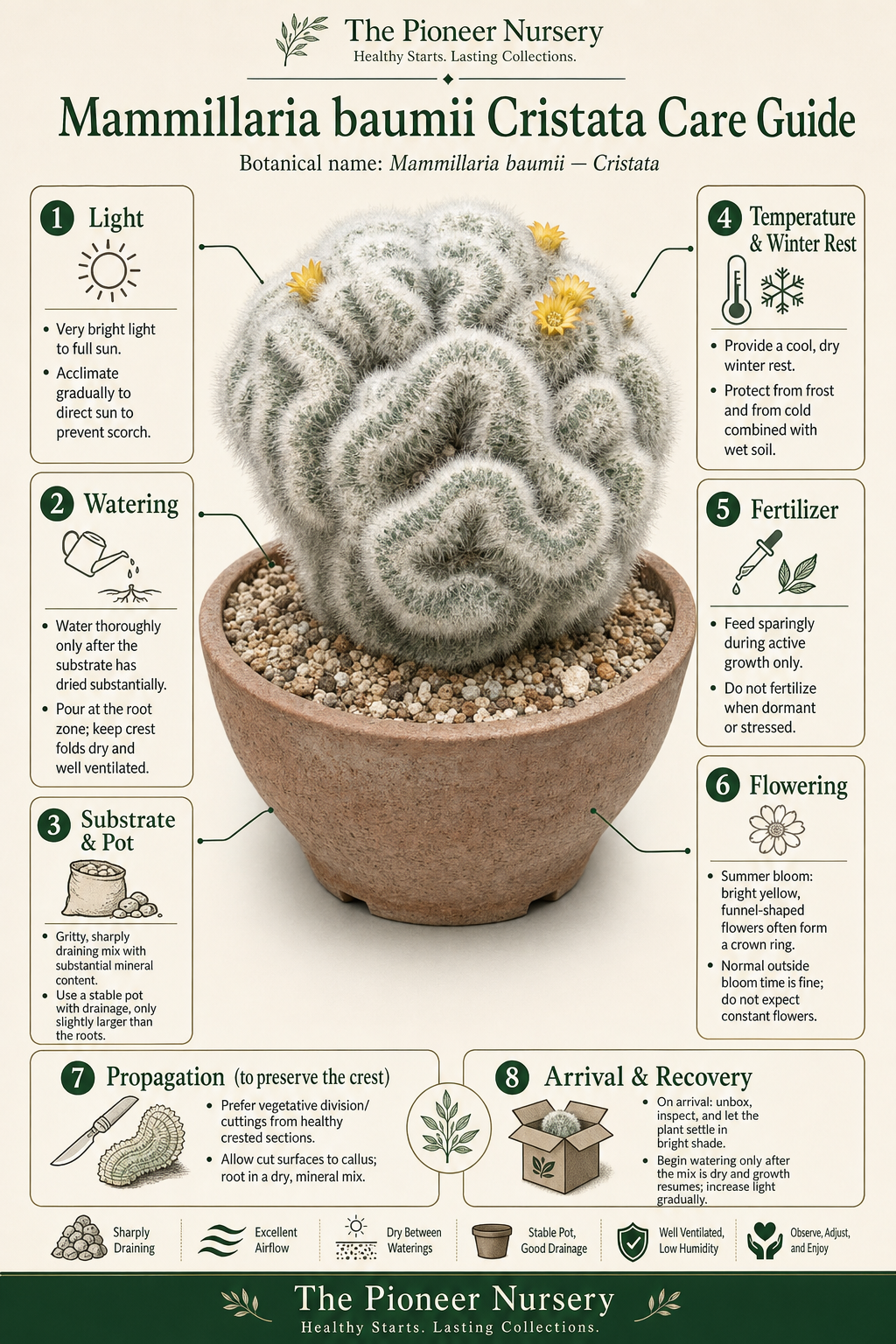
Mammillaria baumii Cristata is the crested form of Mammillaria baumii, also known as Baum’s pincushion cactus or San Vicente cactus. Its fan-shaped, convoluted growth makes airflow and careful watering especially important because moisture can remain in the folds. Give it very bright light, a gritty mineral-rich substrate, thorough watering during active growth, and a cool, nearly dry winter rest. “Cristata” describes the horticultural growth form rather than a separate species.
Quick Care Summary
- Provide very bright light to full sun with gradual acclimation.
- Use a gritty, sharply draining substrate with substantial mineral content.
- Water thoroughly during active growth only after the substrate has dried substantially.
- Keep the crest and its folds free of trapped moisture.
- Reduce watering sharply and keep nearly dry during the cool winter rest.
- Protect from frost and from cold conditions combined with wet soil.
- Use a stable pot only slightly larger than the root system.
- Feed sparingly during active growth, never while dormant or stressed.
About Mammillaria baumii Cristata
Mammillaria baumii Boed. is an accepted species native to Tamaulipas, Mexico. The submitted nursery name refers to its cristate, or crested, form. In cristate growth, the growing point broadens into a fan-like or convoluted structure. Some plants may produce normally formed offsets or reverted growth; this does not represent a change in species identity.
Light
Provide very bright light to full sun, but protect the plant from abrupt exposure to intense midday or hot greenhouse sun. Acclimate gradually after shipping or whenever its location changes to reduce sunburn. Because the folds of a crest can shade one another, strong overhead light is particularly useful for compact growth. Insufficient light may cause weak, elongated growth.
Watering
During active growth, water thoroughly only after the substrate has dried substantially, allowing all excess water to drain. Avoid repeated shallow watering and never leave the pot standing in water. In autumn and winter, reduce watering sharply and keep the plant nearly dry, watering only if it shows excessive shrivelling. Keep moisture from collecting in the crest and provide airflow so the convoluted surface can dry promptly.
Soil and substrate
Use a sharply draining, gritty cactus mix with substantial mineral content and good root aeration. The substrate should dry effectively after irrigation and must not remain compacted or waterlogged.
Potting and roots
Choose a pot with a drainage hole and only slightly more room than the root system requires. Repot in spring or at the beginning of active growth. Avoid oversized containers, which can retain moisture too long. Handle the shallow, fibrous roots carefully, and allow damaged roots or wounds to dry before watering. Since a crest may be irregular or top-heavy, use a stable pot.
Temperature and winter rest
Keep Mammillaria baumii Cristata frost-free. It grows best with warm conditions during the growing season followed by a cool, dry winter rest. A night temperature around 8–10°C (46–50°F) is consistent with the supplied cactus-rest guidance when the plant is kept dry and protected from freezing. Cold combined with wet soil presents a serious rot risk.
Seasonal growth and dormancy
Reduce watering sharply in autumn and winter as light levels and growth decline. Resume more substantial watering gradually when brighter conditions and active growth return. Do not treat the plant as permanently drought-free during the growing season; roots should dry between waterings without remaining continuously wet.
Fertilizer
Feed sparingly during active growth with a balanced or relatively low-nitrogen cactus fertilizer at diluted strength. One or two applications in late spring and summer are generally sufficient. Do not fertilize while the plant is dormant, stressed, recently repotted, or recovering from root damage.
Flowering
Mature plants can produce bright yellow, funnel-shaped flowers in a ring around the crown, generally during summer. Bright growth-season conditions and a cool, dry winter rest can support flowering. Cristate plants may flower less regularly than normally formed specimens.
Propagation
Mammillaria baumii can be propagated from seed and offsets where available. Seedlings should not be expected to reproduce the crest consistently. To preserve the cristate form, vegetative propagation such as cuttings or grafting is more appropriate. Allow cut surfaces to callus fully and keep newly propagated material dry until rooting begins.
Common problems
Root or basal rot: Usually associated with wet, poorly aerated substrate, especially during cool weather or winter dormancy. Sunburn: Can follow sudden movement from shade or shipping conditions into intense direct sun. Weak growth: Insufficient light may produce elongated growth. Pests: Monitor for mealybugs, including root mealybugs, as well as occasional scale or spider mites. Crest rot: Water trapped in convoluted growth or poor airflow can promote rot.
Shipping and arrival care
After arrival, inspect the plant and provide bright but filtered light initially. Increase direct sun gradually. If it was shipped bare-root, experienced root disturbance, or has damaged tissue, do not water immediately; allow roots and wounds to dry and settle first. Keep the cristate folds dry and provide ventilation. Legal sourcing and applicable transport requirements should also be observed because the species is listed in the Kew CITES Cactaceae checklist.
Frequently Asked Questions
How often should I water Mammillaria baumii Cristata?
There is no fixed calendar. During active growth, water thoroughly after the substrate has dried substantially, then drain completely. Water much less in autumn and winter, keeping the plant nearly dry unless it shows excessive shrivelling.
Does the crested form need different care from regular Mammillaria baumii?
Its basic care is similar, but the folds of the crest can trap moisture and shade themselves. Prioritize strong overhead light, good airflow, and prompt drying after watering.
Can Mammillaria baumii Cristata grow in full sun?
Yes, but acclimate it gradually. Abrupt movement from shade or shipping conditions into intense direct sun can cause sunburn.
How can I preserve the crested growth form?
Vegetative propagation, including cuttings or grafting, is more appropriate than seed because seedlings should not be expected to reproduce the crest consistently.
Can it flower?
Mature plants can produce bright yellow, funnel-shaped flowers in a ring around the crown, generally during summer. Cristate plants may flower less regularly than normally formed specimens.
When should I water after shipping?
If the plant arrived bare-root, has disturbed or damaged roots, or has damaged tissue, allow those areas to dry and settle before watering. Begin with bright filtered light and acclimate gradually.
Mammillaria baumii Cristata is best grown with a balance of strong light, fast drainage, thorough but carefully timed watering, and a cool, dry winter rest. Pay special attention to airflow and moisture trapped in the crest, and allow any shipped or damaged roots time to recover before watering.