Ariocarpus trigonus Care Guide: Growing the Three-Angled Living Rock
Learn how to grow Ariocarpus trigonus, a slow-growing living rock cactus with an enlarged, root-sensitive storage system and distinctive seasonal care needs.
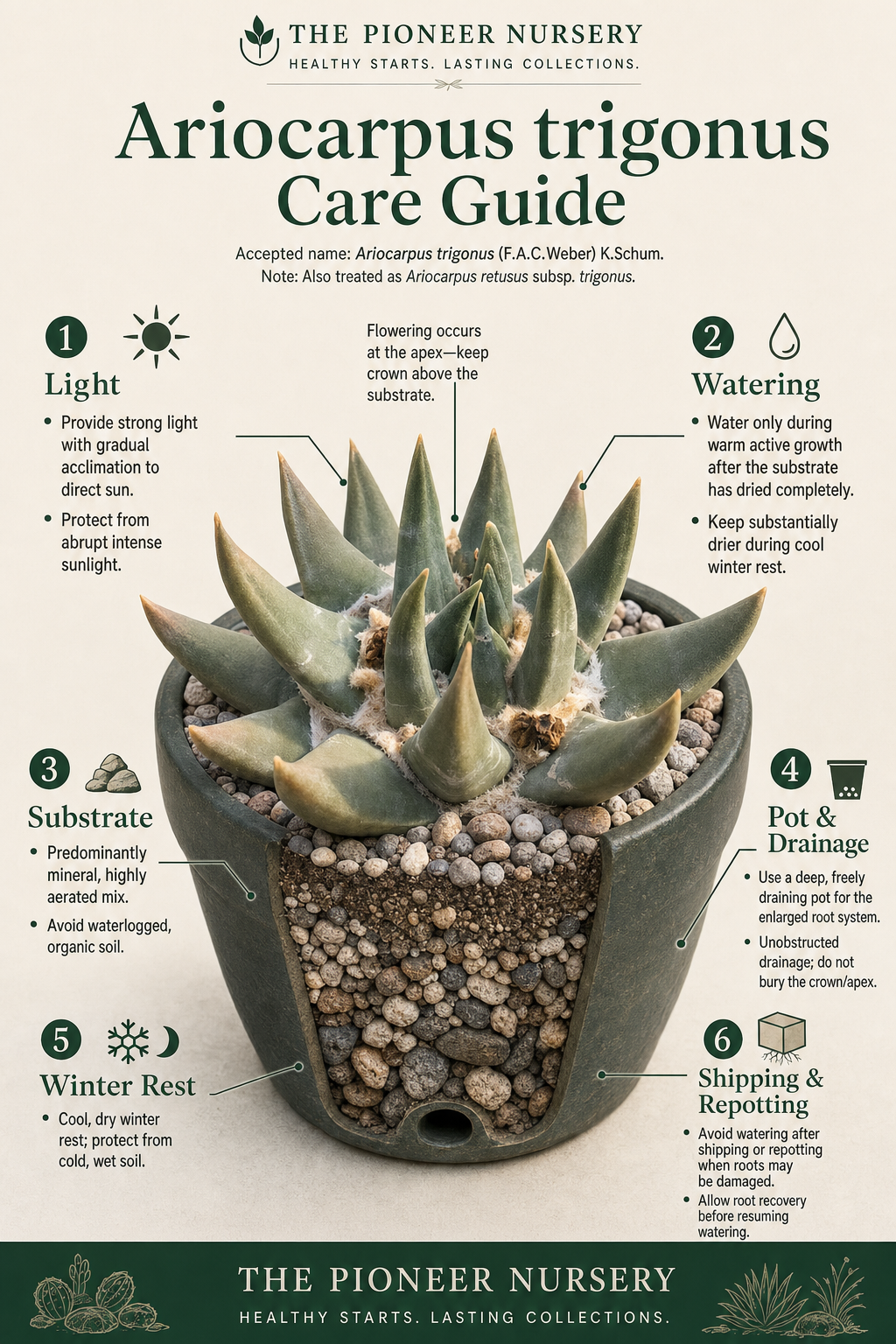
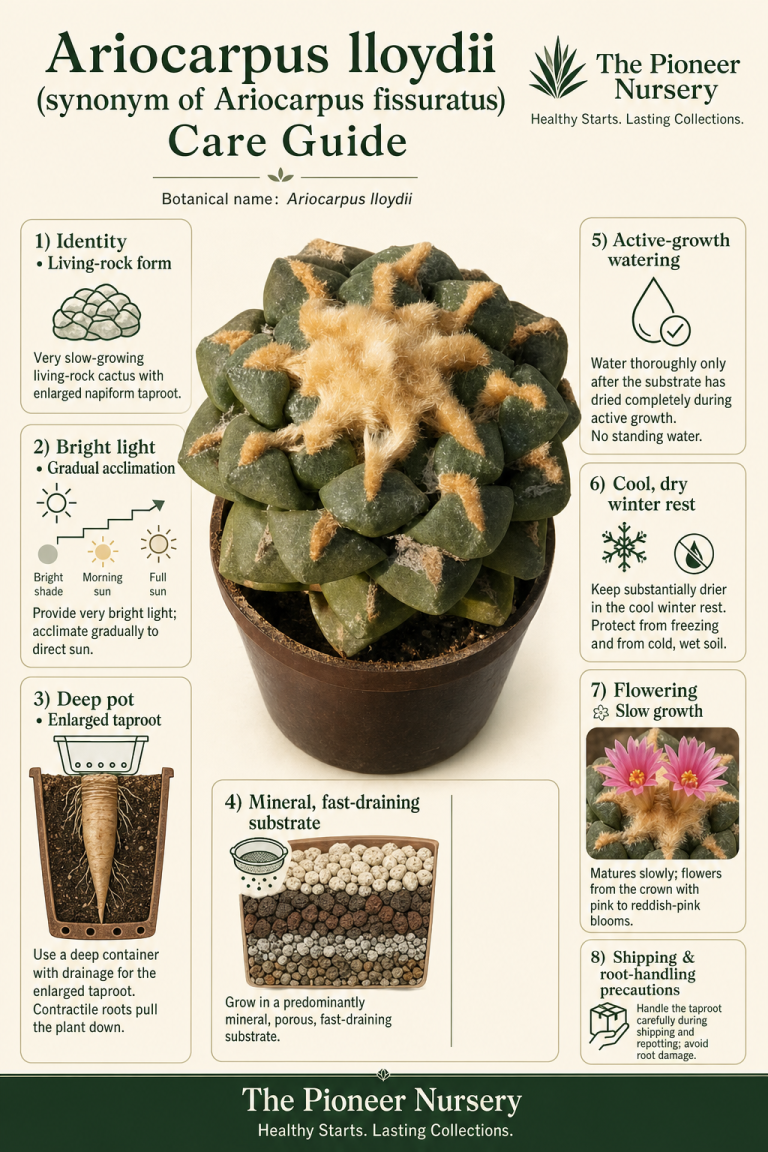
Ariocarpus trigonus, commonly called the living rock cactus or three-angled living rock, is a specialized, slow-growing collector cactus. Its enlarged root system makes deep containers, careful handling, excellent drainage, and post-repotting dryness especially important. Provide strong light gradually, water only during warm active growth after the substrate has dried completely, and keep the plant substantially drier during cool winter rest.
Quick Care Summary
- Provide strong light with gradual acclimation to direct sun.
- Use a deep, freely draining pot for the enlarged root system.
- Grow in a predominantly mineral, highly aerated substrate.
- Water only during warm active growth after the substrate has dried completely.
- Keep substantially drier during cool winter rest.
- Avoid watering after shipping or repotting when roots may be damaged.
- Protect the plant from cold, wet soil and abrupt intense sunlight.
About Ariocarpus trigonus
Ariocarpus trigonus is accepted as a species by Plants of the World Online. Some references instead use Ariocarpus retusus subsp. trigonus; this alternative treatment should be acknowledged when labeling or publishing information. In cultivation, the plant is best treated as a slow-growing living rock cactus with specialized, enlarged storage roots.
Light
Provide strong light with gradual acclimation. Bright filtered light, morning sun, or lightly shaded greenhouse conditions are suitable. Recently shipped, repotted, or indoor-grown plants should not be moved abruptly into intense afternoon sun, since sudden exposure can cause scorching. Inadequate light may result in weak or etiolated growth.
Watering
Water only when the plant is warm and actively growing and the substrate has dried completely. Water thoroughly, allow excess water to drain freely, and let the substrate dry again. Reduce or stop watering during cool winter dormancy, and never keep the plant persistently wet in cold conditions. Do not water immediately after bare-root shipping or root disturbance when roots may be damaged.
Soil and substrate
Use a fast-draining, highly aerated, mineral-dominant cactus mix. Suitable mineral components include pumice, lava rock, coarse grit, perlite, decomposed granite, or similar materials. Keep organic material limited because slow-drying soil around the roots increases rot risk. Calcareous or limestone-containing components may be suitable, but the substrate should not remain alkaline and wet.
Potting and roots
Choose a pot with unobstructed drainage and enough vertical depth for Ariocarpus trigonus's enlarged storage-oriented root system. Avoid oversized pots that hold a large volume of slowly drying substrate. Handle the roots carefully, and do not bury the crown or apex. After repotting, keep the plant dry in bright shade or filtered light until damaged roots have callused and the plant has settled.
Temperature and seasonal rest
Keep the plant warm during active growth and protect it from frost, cold rain, and cold wet substrate. A cool, dry winter rest is generally preferable to warm, damp winter conditions. During the cool season, keep watering substantially reduced, particularly when nights are cool and light levels are low. Resume watering gradually only when temperature and light support active growth. Exact minimum temperatures depend on acclimation, root condition, and provenance, so freezing exposure should not be treated as a routine recommendation.
Fertilizer
Fertilize sparingly during active growth with a dilute, low-nitrogen cactus fertilizer. Do not fertilize newly shipped, freshly repotted, dormant, or visibly stressed plants. Excess fertilizer and organic-rich media can encourage weak growth and root problems.
Flowering
Flowers emerge from the apical region, typically toward late summer, autumn, or early winter depending on conditions and provenance. Adequate active-season growth followed by a suitable dry rest can support flowering. Seed-grown plants may require many years to reach flowering size.
Propagation
Propagation is primarily by seed. Seedlings are slow-growing and benefit from warm, carefully managed conditions while young, followed by gradual acclimation to drier cultivation. Grafting may be used to accelerate establishment or growth, but grafted and own-root plants should not be treated as taxonomically different. Specialized grower literature also documents using deeper containers for seedlings as their roots develop.
Shipping and arrival care
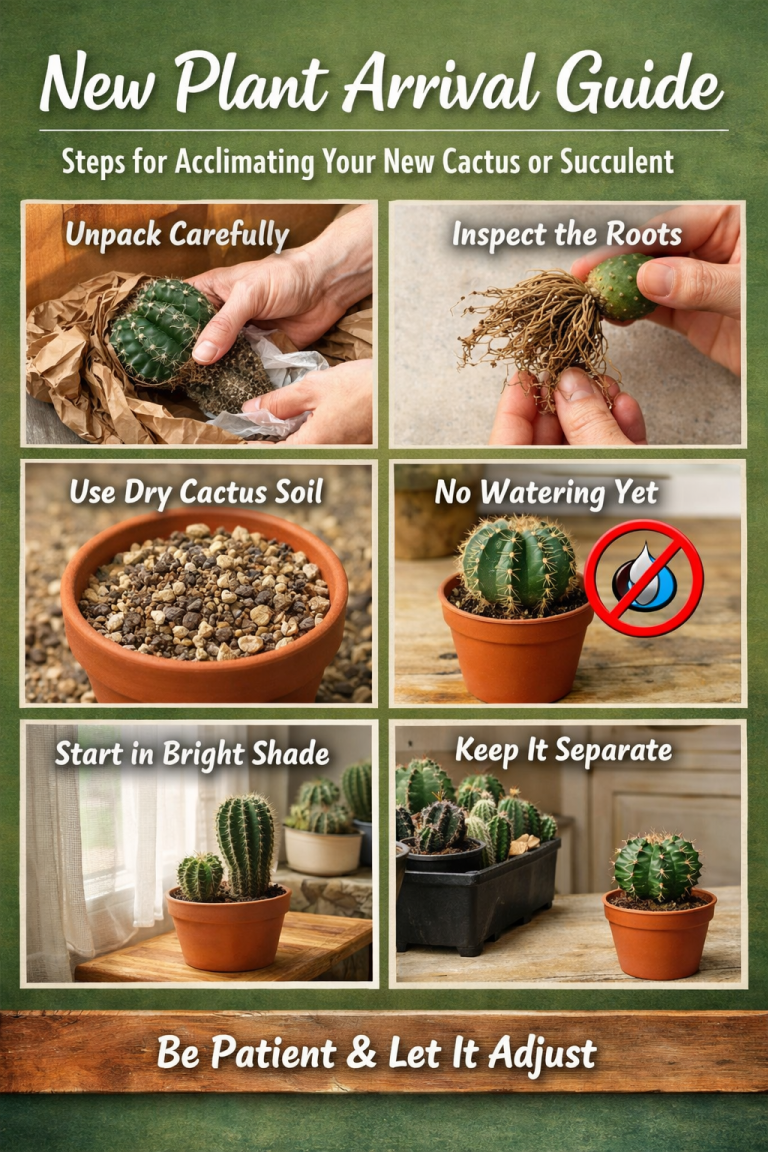
Unpack bare-root or recently disturbed plants carefully and inspect the roots for damage or rot. Place the plant in dry, well-drained substrate and avoid immediate watering when roots may have been injured; a conservative dry recovery period is safer. Acclimate gradually from shipping darkness to bright light, and protect the plant from cold, wet conditions during transit and establishment.
Common Problems
- Root or basal rot: Usually associated with wet, poorly aerated substrate or watering during cool conditions.
- Sunburn: Can follow abrupt exposure to intense sun after shipping, greenhouse shade, or indoor culture.
- Root injury: The enlarged root system can be damaged during rough shipping or repotting.
- Weak growth: Inadequate light may produce weak or etiolated growth.
- Pests: Monitor for mealybugs, scale, and other common cactus pests, particularly in dense greenhouse collections.
- Localized decay: Flowers or wool that remain wet in cool conditions may begin to decay.
Frequently Asked Questions
How often should I water Ariocarpus trigonus?
Do not use a fixed calendar. Water only when the plant is warm and actively growing and the mineral substrate has dried completely. Reduce or stop watering during cool winter rest.
Does Ariocarpus trigonus need a deep pot?
Yes. The species has an enlarged, storage-oriented root system, so a pot with useful vertical depth and unobstructed drainage is important. Avoid oversized pots filled with slow-drying substrate.
Can Ariocarpus trigonus take full sun?
Provide strong light, but acclimate gradually. Bright filtered light, morning sun, or lightly shaded greenhouse conditions are appropriate, while sudden intense afternoon sun can cause scorching.
When should I water after shipping or repotting?
Avoid immediate watering when shipping or repotting may have damaged the roots. Keep the plant dry in bright shade or filtered light until damaged roots have callused and the plant has settled.
How is Ariocarpus trigonus propagated?
Propagation is primarily by seed, and seedlings are slow-growing. Grafting may also be used to accelerate establishment or growth; grafted and own-root plants are not taxonomically different.
When does Ariocarpus trigonus flower?
Flowers are typically produced toward late summer, autumn, or early winter, depending on conditions and provenance. Seed-grown plants may take many years to reach flowering size.
Ariocarpus trigonus rewards patience and conservative care. Give its enlarged roots room without allowing the substrate to stay wet, provide strong light gradually, and let seasonal warmth and growth—not a fixed calendar—guide watering.