Astrophytum asterias ‘Kikko’ Care Guide
Learn how to grow Astrophytum asterias ‘Kikko’, a collector form valued for its raised geometric surface. Bright light, mineral soil, careful watering, and a cool dry winter rest are key.
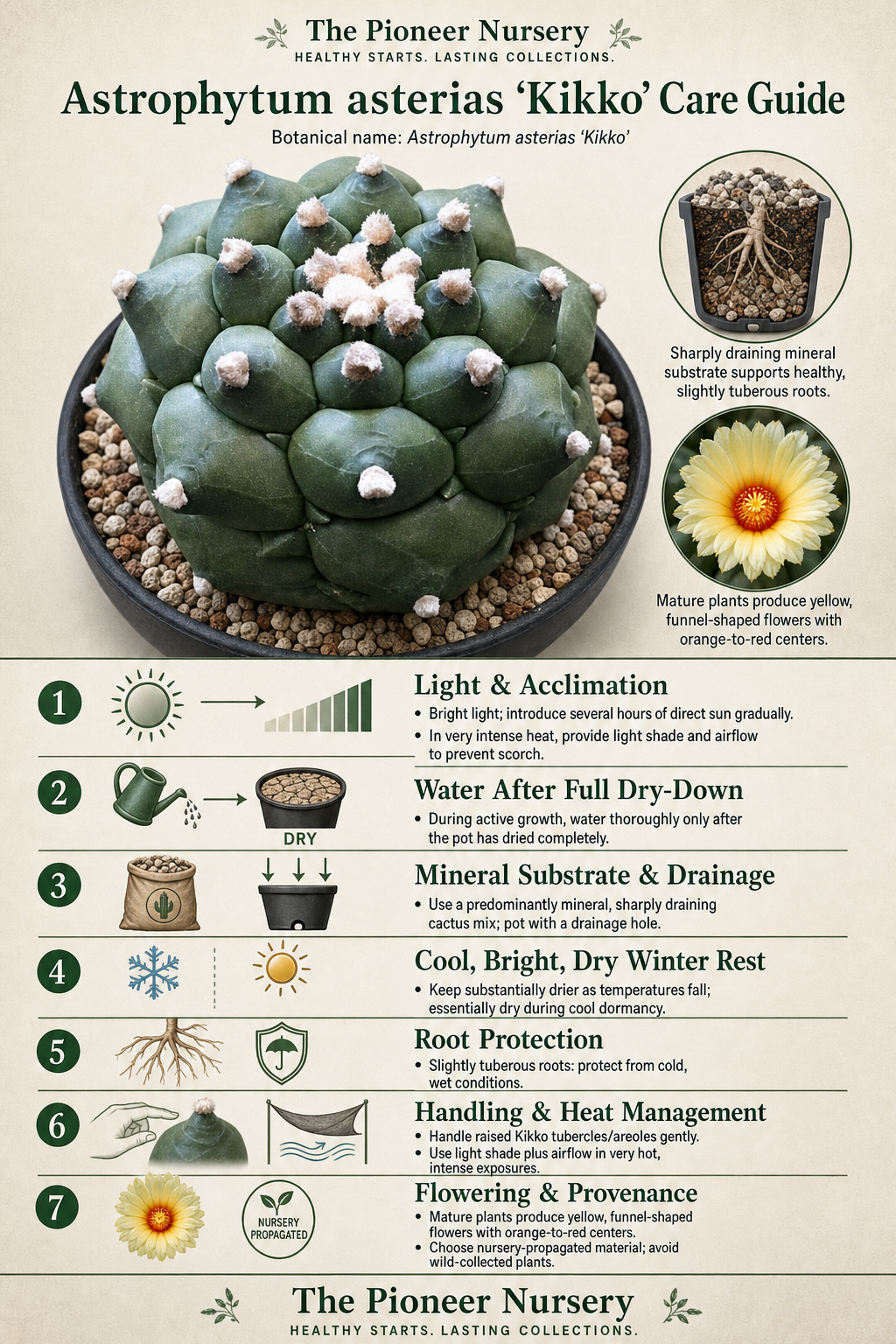
Astrophytum asterias ‘Kikko’, often called sand dollar cactus or star cactus, is a cultivated form of Astrophytum asterias recognized for its raised, angular or hexagonal tubercles and tortoise-shell-like surface. Its slightly tuberous roots need excellent drainage, thorough drying between active-season waterings, and protection from cold, wet conditions. ‘Kikko’ is a horticultural cultivar or collector designation rather than a formal botanical rank.
Quick Care Summary
- Bright light with several hours of direct sun after gradual acclimation.
- Use a predominantly mineral, sharply draining cactus substrate.
- Water thoroughly during active growth only after the pot has dried completely.
- Keep substantially drier as temperatures fall and essentially dry during cool dormancy.
- Protect the slightly tuberous roots from cold, wet conditions.
- Use light shade and airflow in very hot, intense exposures.
- Handle the raised Kikko tubercles and areoles carefully.
- Use nursery-propagated material and avoid wild-collected plants.
Light
Provide bright light with several hours of direct sun. Acclimate gradually after shipping, repotting, or moving the plant to stronger exposure. In very hot climates or behind glass, use light shade during intense midday sun and maintain good airflow to reduce scorch risk.
Watering
During active growth, water thoroughly only after the substrate has dried completely through the pot. Let excess water drain freely. Reduce watering as temperatures fall, and keep the plant essentially dry during cool winter dormancy. Cold, wet roots create a significant rot risk.
Soil and substrate
Use a sharply draining, predominantly mineral cactus mix containing materials such as pumice, lava rock, coarse grit, or similar open aggregates, with only a modest organic fraction. Avoid dense, peat-heavy, or water-retentive soil.
Potting and roots
Astrophytum asterias has a slightly tuberous root system, so use a pot with a drainage hole and enough depth for the roots without leaving a large volume of slow-drying mix around them. Repot at the start of active growth and handle the roots carefully. Avoid rough contact with the raised Kikko tubercles and areoles.
Temperature and dormancy
Grow warm during active growth, with airflow and protection from prolonged cold rain. A cool, bright, dry winter rest around 41–59°F (5–15°C) is appropriate. Avoid frost and never combine low temperatures with moisture around the roots. Resume watering gradually when temperatures and light support active growth.
Fertilizer
During active growth, occasionally apply a dilute, low-nitrogen cactus fertilizer after the plant has been watered or while the substrate is being rehydrated. Do not fertilize during winter dormancy or when roots are damaged or inactive.
Flowering
Mature plants produce large, funnel-shaped yellow flowers, commonly with orange to red centers, during warm-season growth. Strong light, a pronounced dry winter rest, healthy roots, and a gradual spring return to watering support flowering.
Propagation
Propagation is primarily by seed. Grafting is also used commercially and by collectors to accelerate growth or preserve difficult forms. Kikko characteristics may vary among seedlings, so vegetative or clonal material is more reliable when maintaining a particular appearance. Grafted plants may need different watering and temperature management because the rootstock influences growth behavior.
Common problems
Root rot can result from overwatering, poor drainage, or cool wet conditions. Sudden strong sunlight may cause sunburn, especially after shipping or indoor culture. Monitor for mealybugs, scale, and spider mites. Insufficient light can cause etiolation and weak growth. Rough handling may scar or distort the raised Kikko structures, while prolonged moisture can stress the tuberous root.
Shipping and arrival care
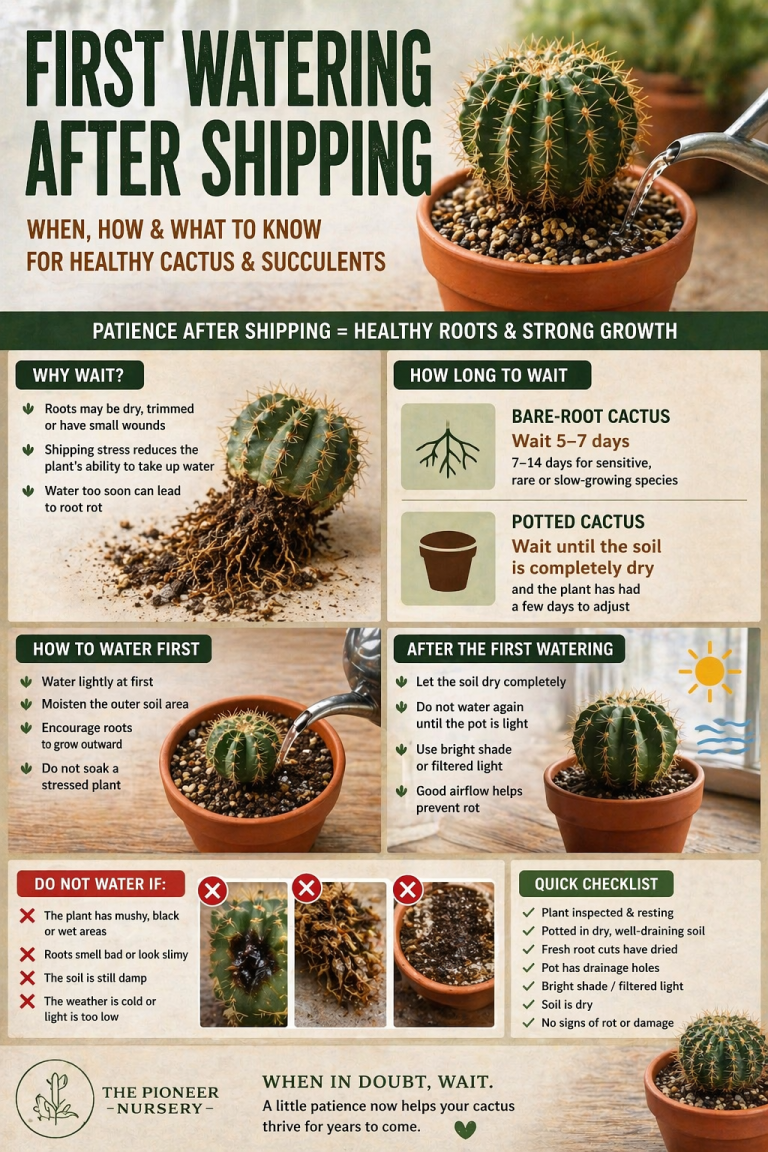
Receive and ship the plant as dry as practical, especially in cool weather. Protect it from freezing, prolonged damp packing, and crushing of the flattened body or raised structures. After arrival, inspect for rot or root damage, begin with bright filtered light, and acclimate gradually to direct sun. Delay watering if the plant has been bare-rooted, repotted, or visibly disturbed.
Frequently Asked Questions
How often should I water Astrophytum asterias ‘Kikko’?
During active growth, water thoroughly only after the substrate has dried completely through the pot. Water less as temperatures fall and keep the plant essentially dry during cool winter dormancy.
Does ‘Kikko’ need full sun?
It benefits from bright light and several hours of direct sun, but acclimate gradually. In very hot climates or behind glass, provide light shade during intense midday sun and maintain airflow.
Why is winter dryness important?
Growth slows or stops during the cool, darker season. Keeping the plant bright and dry reduces the rot risk associated with low temperatures and wet roots.
How can I preserve the Kikko appearance?
Kikko characteristics may vary among seedlings. Seed is the primary propagation method, while vegetative or clonal material is more reliable for maintaining a particular appearance.
Should I water immediately after shipping?
Not necessarily. Inspect the plant first, and delay watering if it was bare-rooted, repotted, or visibly disturbed. Begin with bright filtered light and acclimate gradually.
Astrophytum asterias ‘Kikko’ rewards careful growers with distinctive geometric structure and attractive warm-season flowers. Keep the roots well drained, provide strong but acclimated light, and treat cool winter conditions as a dry rest rather than a watering season.