Astrophytum myriostigma ‘Fukuryu’ Care Guide
Learn how to grow Astrophytum myriostigma ‘Fukuryu’ with bright acclimated light, fast drainage, careful watering, and a cool, dry winter rest.
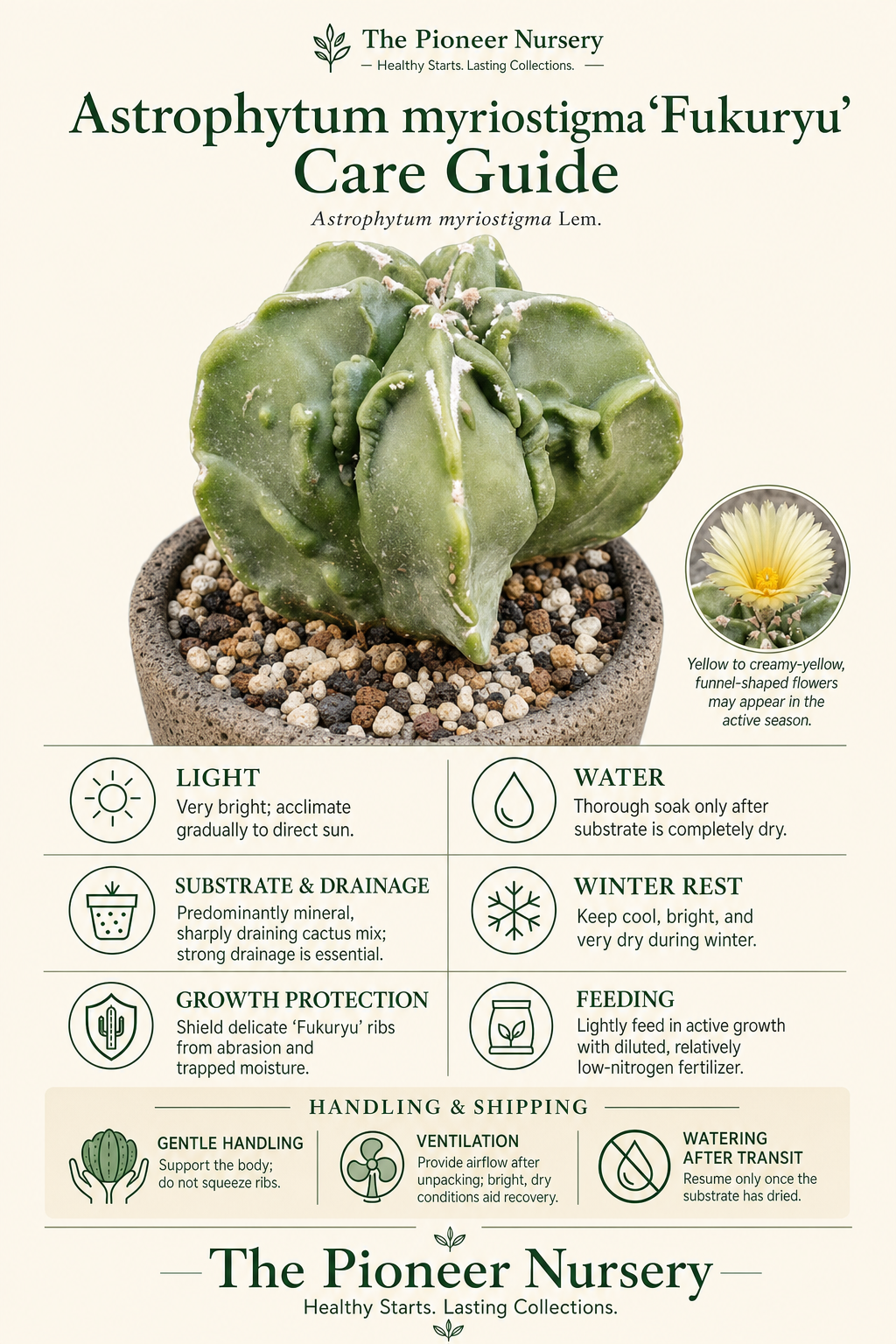
Astrophytum myriostigma ‘Fukuryu’ is a selected horticultural form of bishop’s cap cactus. Its irregular ribs and surface growth give it collector appeal, while its care remains that of the species: bright acclimated light, porous soil, complete drying between waterings, and a cool, bright winter rest.
Quick Care Summary
- Give very bright light and acclimate gradually to direct sun.
- Use a predominantly mineral, sharply draining cactus substrate.
- Water thoroughly only after the substrate has dried completely.
- Keep the plant much drier during its cool winter rest.
- Protect unusual ‘Fukuryu’ growth from abrasion and retained moisture.
- Feed lightly with diluted, relatively low-nitrogen fertilizer during active growth.
About the Plant
Astrophytum myriostigma is native to northeastern Mexico and associated with rocky, calcareous soils. ‘Fukuryu’ is a cultivated selection, not a separate species, known for irregular partial extra ribs or rib-like surface growth. These uneven structures can be damaged by abrasion or retain moisture, so handle the plant carefully.
Light
Provide very bright light, including several hours of direct sun once the plant is acclimated. Introduce newly shipped, greenhouse-grown, grafted, or shade-grown plants to stronger light gradually. In very hot climates or behind glass, light afternoon shade can help.
Watering
During active growth, water thoroughly after the substrate has dried completely, then let excess water drain. Frequency varies with temperature, light, humidity, pot size, and substrate. Reduce watering as temperatures fall and keep the plant nearly or completely dry during a cool winter rest.
Soil and Substrate
Use a sharply draining cactus mix with mostly mineral material such as pumice, coarse grit, perlite, or similar aggregate. A modest amount of organic material is acceptable if the mix dries rapidly. A neutral to mildly alkaline mineral mix suits the species; limestone or another calcareous material may be included.
Potting and Roots
Use a container with an effective drainage hole and avoid oversized pots that stay wet around the compact root system. Repot in late spring or during active growth when possible. Handle roots gently, remove damaged or rotted portions with sterile tools, and let root wounds dry before rewatering. Protect ‘Fukuryu’ growth from abrasion during potting and transport.
Temperature and Winter Rest
Keep the plant frost-free for reliable cultivation. Warm conditions support active growth, while a cool, bright, dry winter rest is beneficial. Provide good ventilation and little to no water as growth slows. Resume watering cautiously when warmer temperatures and stronger light indicate active growth, with the substrate fully dry.
Fertilizer
Feed only during active growth with a diluted cactus fertilizer that is relatively low in nitrogen. Occasional light applications are preferable to heavy feeding. Do not fertilize during winter dormancy or immediately after major root disturbance.
Flowering
Mature plants produce funnel-shaped yellow to creamy-yellow flowers, generally in spring or summer. Strong light, a dry winter rest, and avoiding excessive nitrogen support compact growth and flowering. ‘Fukuryu’ may flower less predictably depending on its clone, grafting, age, and growing conditions.
Propagation
Seed is the standard propagation method for the species. Sow fresh seed in a sterile, porous medium with warmth, bright filtered light, controlled moisture, and good ventilation; gradually reduce humidity as seedlings establish. Selected ‘Fukuryu’ traits may not come true from seed. Grafting or other vegetative methods may be used when preserving a particular clone is important.
Common Problems
Root or basal rot can result from overwatering, poor drainage, or cool wet conditions. Sun scorch may follow abrupt exposure to intense light. Mealybugs, scale, and spider mites can occur, especially in protected collections or on grafted plants. Persistent humidity and poor ventilation can contribute to fungal problems. Insufficient light or excessive nitrogen and water can cause stretching, while rough handling can bruise or scar the spineless body.
Shipping and Arrival Care
Keep shipped plants as dry as practical, especially in cool or humid conditions. Inspect roots and surface growth after arrival. For bare-root plants, use dry or nearly dry porous substrate and delay thorough watering until root wounds have dried and recovery has begun. Start with bright but moderated light, then acclimate gradually to direct sun.
Frequently Asked Questions
How can I tell whether my ‘Fukuryu’ is being overwatered?
Watch for problems associated with wet conditions, especially when it is cool: root or basal rot and fungal issues. Use a sharply draining mix and wait until the substrate has dried completely before watering during active growth.
What should I do when a shipped plant arrives?
Inspect the roots and surface growth. Keep the plant dry as practical, pot bare-root specimens into dry or nearly dry porous substrate, and begin with bright but moderated light before gradual acclimation to direct sun.
Why might ‘Fukuryu’ look different from another plant sold under the same name?
‘Fukuryu’ is a horticultural selection with cultivar types that are not standardized in authoritative botanical databases. Plants may therefore show differences in irregular rib or surface growth.
Can I grow ‘Fukuryu’ from seed?
Seed is standard for the species, but selected ‘Fukuryu’ traits may not come true. Grafting or vegetative propagation may be used when preserving a particular clone is important.
Bright light, fast drainage, and careful watering support a healthy Astrophytum myriostigma ‘Fukuryu’. Its unusual growth deserves gentle handling, while species-level care remains the reliable foundation.