Mammillaria perbella Cristata Care Guide
Learn how to grow Mammillaria perbella Cristata, a crested Owl Eye Cactus form requiring bright light, sharply draining mineral soil, careful watering, and excellent airflow.
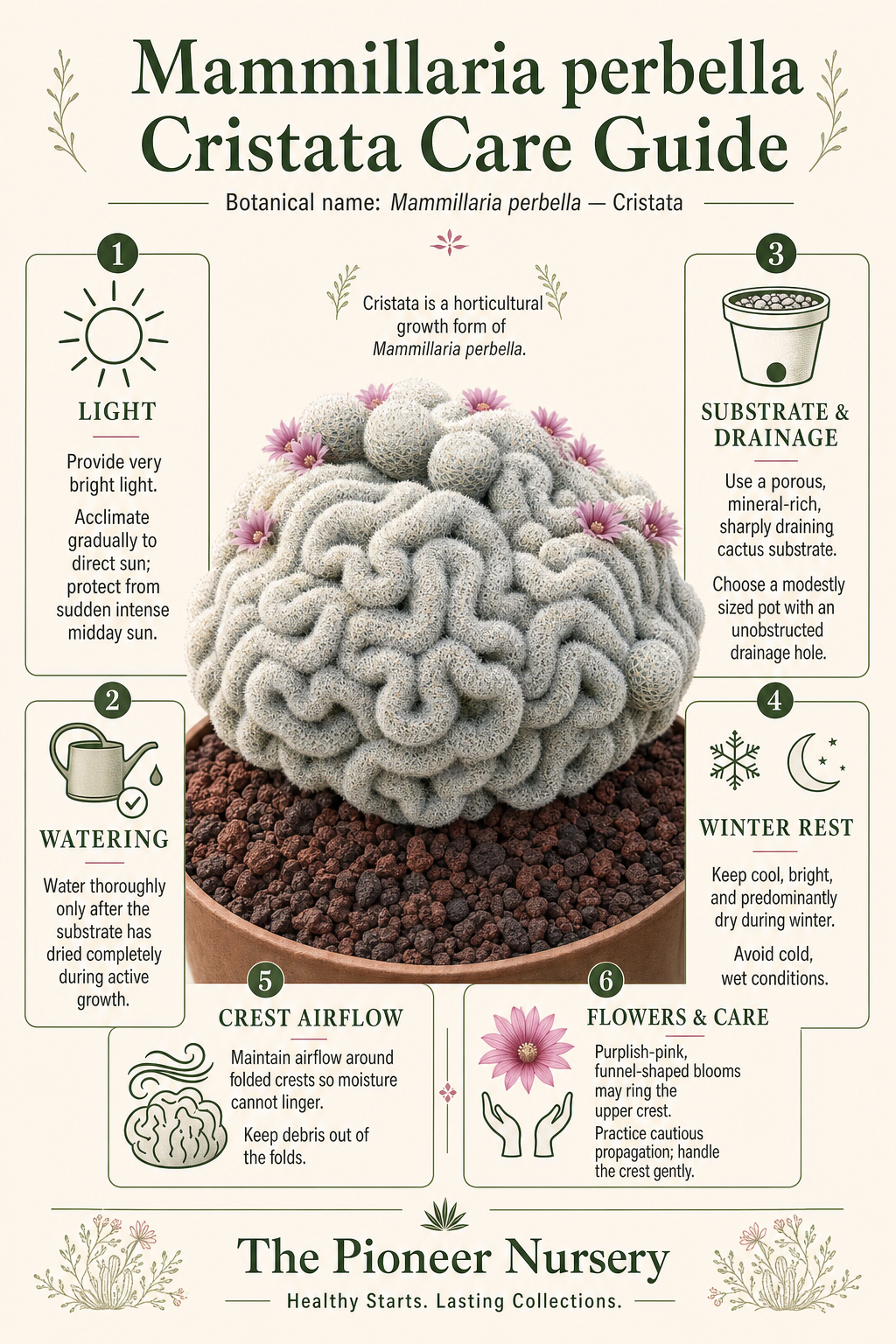
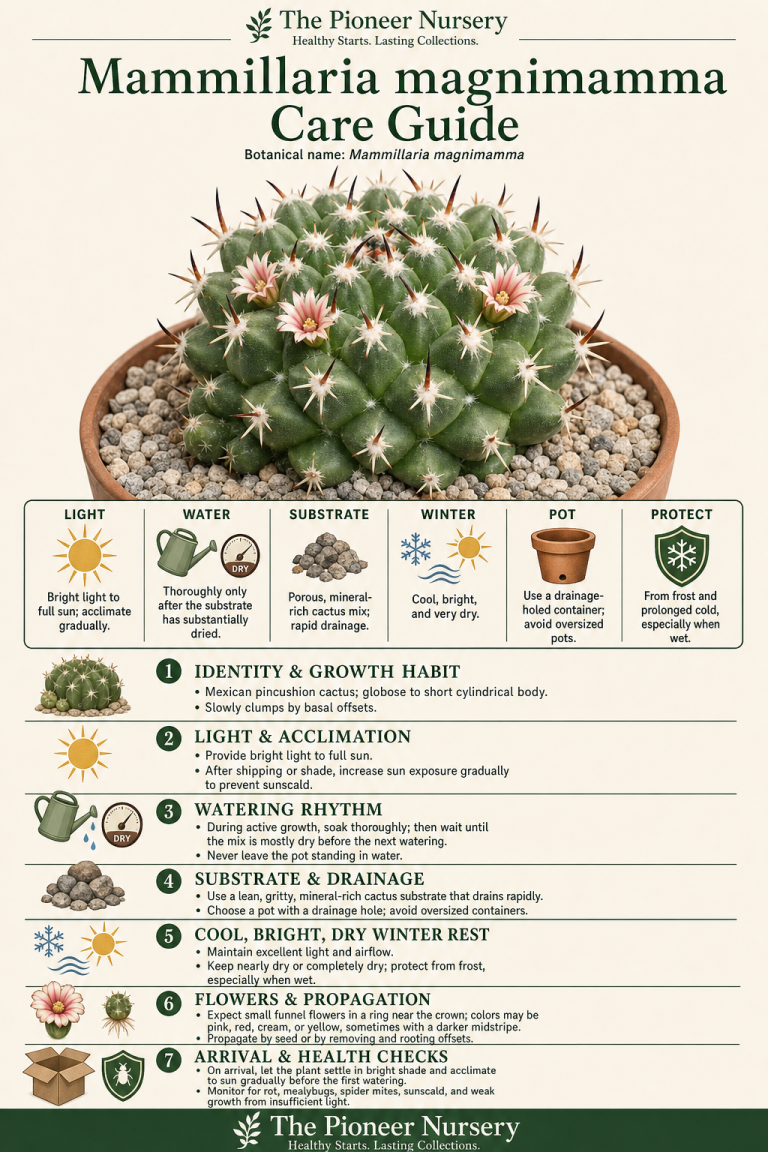
Mammillaria perbella Cristata is the crested or fasciated form of Mammillaria perbella, a slow-growing cactus native to rocky, calcareous habitats in central Mexico. Its irregular, folded growth makes it especially attractive but also more vulnerable to trapped moisture and pressure damage. Provide very bright light, a mineral, rapidly draining substrate, thorough watering only after complete drying during active growth, and a cool, bright, predominantly dry winter rest.
Quick Care Summary
- Provide very bright light with gradual acclimation to direct sun.
- Water thoroughly only after the substrate has dried completely during active growth.
- Keep the plant essentially dry during a cool winter rest.
- Use a porous, mineral-rich, sharply draining cactus substrate.
- Choose a modestly sized pot with an unobstructed drainage hole.
- Maintain airflow around the folded crest so moisture cannot linger.
- Avoid cold, wet conditions and abrupt exposure to intense midday sun.
About Mammillaria perbella Cristata
The submitted name refers to the accepted species Mammillaria perbella Hildm. ex K.Schum. with a cristate growth form. “Cristata” describes the crested or fasciated shape; it is not a separate accepted species or formal botanical variety. The plant has fibrous roots and irregular folds that require particularly good airflow and rapid drying.
Light
Provide very bright light with several hours of direct sun. Acclimate gradually after shipping or a period in shade. Strong light helps maintain compact growth and good spine development, but the folded cristate tissue can scorch if moved abruptly into intense midday sun.
Watering
During active growth, water thoroughly only after the substrate has dried completely, allowing excess water to drain freely. Reduce watering progressively in autumn and keep the plant essentially dry during a cool winter rest. Avoid repeated light watering and never leave the roots constantly wet. Moisture retained in the crest’s folds can increase localized rot risk.
Soil and substrate
Use a very porous, rapidly draining cactus mix with substantial mineral material such as pumice, perlite, coarse grit, or crushed stone, combined with a limited amount of organic potting material. A mineral, alkaline-leaning approach suits the species’ calcareous, rocky habitat. Avoid dense, peat-heavy, poorly aerated mixes.
Potting and roots
Choose a container with an unobstructed drainage hole and only modestly more space than the root system requires. The fibrous roots do not require a specialized deep caudex pot. Good airflow is especially important around the irregular crest. Repot during active growth or shortly before it begins, using dry substrate. Avoid separating old branching or crested portions unless the plant is known to tolerate division, as removal can be fatal.
Temperature and winter rest
Warm conditions suit active growth. During winter, provide bright, cool, dry conditions, preferably around 5–10 °C (41–50 °F) or somewhat warmer. Short exposure to lower temperatures may be tolerated when completely dry, but freezing and cold, wet conditions should be avoided. A cool, bright, dry rest supports flowering in the following growing season.
Fertilizer
Feed sparingly during active growth with a dilute, low-nitrogen cactus fertilizer. Do not fertilize during winter dormancy or while the plant is stressed, recently repotted, or not actively growing.
Flowering
Mature plants produce small, funnel-shaped purplish-pink flowers, often with a darker central stripe, in a ring near the upper part of the stem. Strong light and a cool, dry winter rest encourage flowering.
Propagation
Mammillaria perbella is principally propagated from seed, but the crested form is not reliably reproduced from seed. Crested specimens are generally maintained through vegetative propagation when offsets or suitable cuttings are available. Removing a branch or dividing an old plant can damage or kill the parent, so this work requires caution.
Shipping and arrival care
Inspect the plant after arrival and protect the irregular crest from crushing and prolonged cold. Begin with bright but filtered light, then gradually acclimate it to direct sun. After bare-root shipping, allow damaged roots to dry and recover in dry substrate before resuming cautious watering. Recovery needs vary with root condition and shipping conditions.
Common problems
Root rot usually follows watering before the substrate has dried or exposure to cold, wet conditions. Sunburn can result from abrupt relocation into intense sun, while insufficient light causes etiolation and weak, distorted growth. Monitor for mealybugs, scale, and spider mites, especially indoors or in sheltered greenhouse conditions. Poor ventilation can allow moisture to remain in the crest’s folds and encourage localized rot. Corking or woody basal tissue may develop with age.
Frequently Asked Questions
How often should I water Mammillaria perbella Cristata?
Do not follow a fixed calendar. During active growth, water thoroughly only when the substrate has dried completely. Reduce watering in autumn and keep the plant essentially dry during its cool winter rest.
Can this crested cactus take full sun?
It benefits from very bright light and several hours of direct sun, but acclimate gradually. The irregular crest can scorch after a sudden move into intense midday sunlight.
Does Mammillaria perbella Cristata need a deep pot?
No. Its fibrous roots do not require a specialized deep caudex pot. Use a modestly sized container with excellent drainage and a porous substrate.
Why is airflow especially important for the cristate form?
The crest has irregular folds that can retain moisture. Good ventilation and rapid drying help reduce localized rot risk.
Will seeds produce the crested form?
Cresting is not reliably reproduced from seed. Crested specimens are generally maintained through vegetative propagation when suitable offsets or cuttings are available.
Mammillaria perbella Cristata thrives when its unusual folded growth is kept bright, dry between waterings, and well ventilated. The most important habits are gradual sun acclimation, a mineral and rapidly draining substrate, careful winter dryness, and avoiding cold moisture around the roots and crest.