Gymnocalycium baldianum Care Guide
Learn how to grow Gymnocalycium baldianum, the small dwarf chin cactus, with bright light, excellent drainage, moderate summer watering, and a dry winter rest.
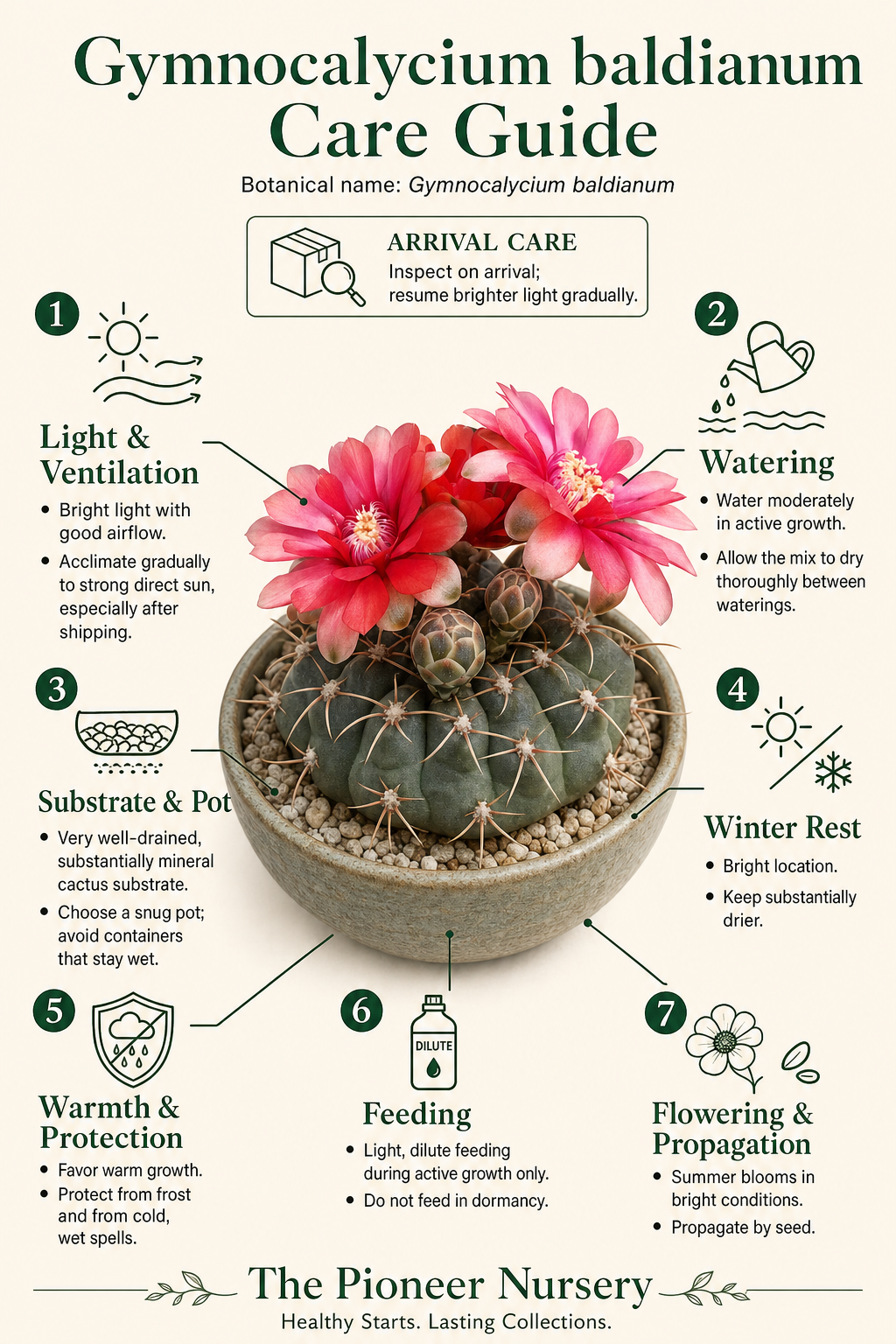
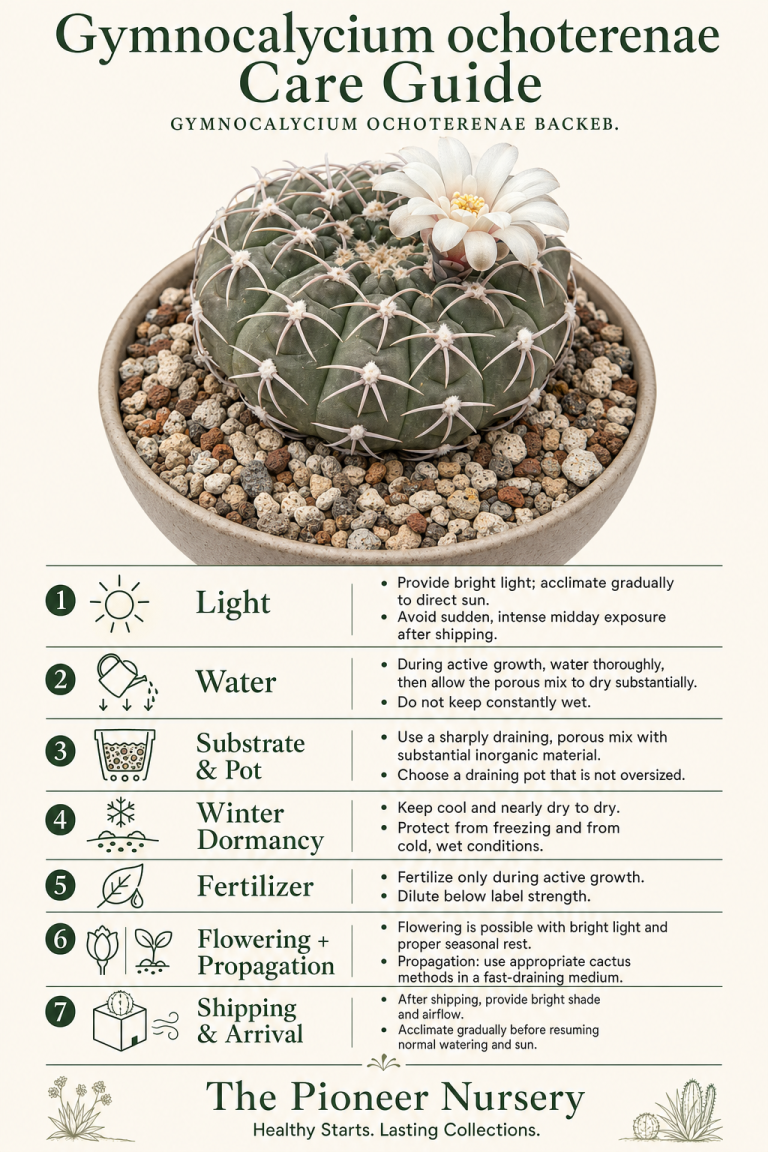
Gymnocalycium baldianum, commonly called dwarf chin cactus or spider cactus, is a small, solitary, flattened-globose cactus from northwestern Argentina. Its tubercled ribs and bristle-like radial spines give it a distinctive compact appearance, while its deep pink to crimson summer flowers make it especially rewarding in cultivation. The main care priorities are bright light with good ventilation, a very well-drained mineral-rich substrate, moderate watering during active growth, and substantially drier conditions through winter.
Quick Care Summary
- Provide bright light with good ventilation.
- Use a very well-drained, substantially mineral cactus substrate.
- Water moderately during active growth, allowing the mix to dry thoroughly between waterings.
- Keep the plant substantially drier during its bright winter rest.
- Protect it from prolonged frost and cold, wet conditions.
- Avoid oversized pots that remain wet for long periods.
- Acclimate gradually to intense direct sun, especially after shipping.
- Feed lightly during active growth, but not during dormancy.
About the plant
Gymnocalycium baldianum is an accepted botanical species in the genus Gymnocalycium. It typically remains small, reaching approximately 10 cm in mature height according to the RHS. The plant is generally solitary, with a flattened-globose body, tubercled ribs, and bristle-like radial spines. Its historical synonyms include Echinocactus baldianus, the name under which it was originally published.
Light
Provide bright light and good ventilation. Full sun is tolerated, but many Gymnocalycium benefit from protection from intense afternoon sun. Bright filtered light or gradually acclimated direct light is a practical approach, particularly after shipping or when moving the plant outdoors. Avoid an abrupt transition from greenhouse or indoor conditions to intense direct sun, which can cause sun damage.
Watering
Water moderately during active growth, then allow the substrate to dry thoroughly before watering again. Do not keep the potting mix constantly wet. During the winter rest, reduce watering greatly or withhold it when the plant is cool and inactive. Cold conditions combined with wet substrate create a significant root-rot risk. Resume watering gradually when light and temperatures support renewed growth.
Soil and substrate
Use a very well-drained cactus substrate with substantial mineral content and good aeration. Coarse sand, pumice, perlite, or gravel can be combined with a modest organic fraction. The goal is a mix that drains freely and does not remain wet around the roots after watering.
Potting and roots
Choose a container with effective drainage and avoid oversized pots, which can hold moisture for too long. Gymnocalycium baldianum can be kept somewhat underpotted. There is no supplied evidence that it requires an unusually deep container or a specialized enlarged taproot treatment, so standard well-drained cactus potting practice is appropriate. After repotting or significant root disturbance, keep the plant dry until damaged roots have callused and recovery has begun.
Temperature and winter rest
Warm growing conditions are preferred. Protect the plant from prolonged frost and especially from cold, wet conditions. The RHS places it in hardiness category H2, indicating tolerance of low temperatures only when protected from freezing conditions. A cool-to-mild, bright, dry winter rest is safer than exposure to wet freezes. Dryness during winter is more important than following a universal temperature target.
Seasonal growth and dormancy
During the active growing season, provide bright light, warmth, moderate watering, and good drainage. In winter, the plant generally benefits from a bright, substantially dry rest, with watering greatly reduced or withheld. Increase watering gradually rather than returning immediately to a full active-season routine.
Fertilizer
Feed during active growth with a dilute balanced liquid fertilizer every two to three weeks, or use a comparable low-strength cactus fertilizer. Do not fertilize during winter dormancy or while the plant is dry and inactive.
Flowering
Funnel-shaped flowers appear in summer and are typically deep pink to crimson, reaching about 4 cm across according to the RHS. Strong light, warmth, fresh well-drained substrate, and appropriate seasonal watering support flowering. Inadequate light, excessive winter watering, or insufficient warmth during active growth can contribute to a lack of flowers.
Propagation
Gymnocalycium baldianum is primarily propagated by seed. The RHS recommends sowing seed in early spring at approximately 19–24 °C. Seeds and young seedlings can be very small, and seedlings may grow slowly during their first year, so careful monitoring is important. If a plant produces offsets, they may also be used; allow removed offsets or cut surfaces to dry before potting.
Common problems
Root rot: Poor drainage, oversized containers, constantly wet substrate, or watering during cold dormancy can damage the roots.
Mealybugs: The RHS identifies mealybugs as a possible pest, so inspect the plant regularly.
Sun damage: Sudden exposure to intense direct sun can scorch a plant that was previously grown under protected light. Acclimate gradually.
Failure to flower: Review light levels, winter watering, and warmth during active growth.
Tiny seedlings: Gymnocalycium seeds and young seedlings can be difficult to monitor because of their small size.
Shipping and arrival care
Inspect the plant after arrival, paying particular attention to root disturbance and any damaged areas. Protect it from cold and wet conditions. If roots were disturbed during shipping, avoid watering immediately and allow damaged roots time to callus and begin recovering. Place the plant in bright but initially filtered light, then acclimate it gradually to stronger sun. Shipping recovery can vary with the plant's condition and the season; the key priorities are gentle light acclimation, drainage, and avoiding wet roots while cold or damaged.
Frequently Asked Questions
How often should I water Gymnocalycium baldianum?
Water moderately during active growth, but wait until the substrate has dried thoroughly before watering again. Reduce watering greatly or withhold it during the winter rest, especially when conditions are cool.
Does Gymnocalycium baldianum need full sun?
It appreciates bright light and can tolerate full sun, but protection from intense afternoon sun may be beneficial. Acclimate gradually, particularly after shipping or a move outdoors.
What type of soil is best?
Use a very well-drained cactus mix with substantial mineral content and good aeration, using materials such as pumice, perlite, coarse sand, or gravel with a modest organic fraction.
Should it be kept completely dry all year?
No. It should receive moderate watering during active growth once the substrate has dried thoroughly. The substantially drier period is the winter rest.
Why might it not flower?
Inadequate light, excessive winter watering, or insufficient warmth during active growth can interfere with flowering. Appropriate seasonal care and good drainage also support summer flower production.
Can Gymnocalycium baldianum be grown from seed?
Yes. It is primarily propagated by seed. Early spring sowing at approximately 19–24 °C is recommended, but the seeds and young seedlings can be very small and seedlings may grow slowly during their first year.
Gymnocalycium baldianum is a compact cactus with showy summer flowers and straightforward needs when its seasonal rhythm is respected. Give it bright, well-ventilated conditions, excellent drainage, moderate water during active growth, and a bright, dry winter rest. Careful acclimation and protection from cold, wet conditions will help keep this small Gymnocalycium healthy.