Mammillaria compressa ‘Yokan’ Cristata Care Guide
Learn how to care for the crested Mammillaria compressa commonly sold as ‘Yokan’, including light, watering, soil, dormancy, shipping recovery, and rot prevention.
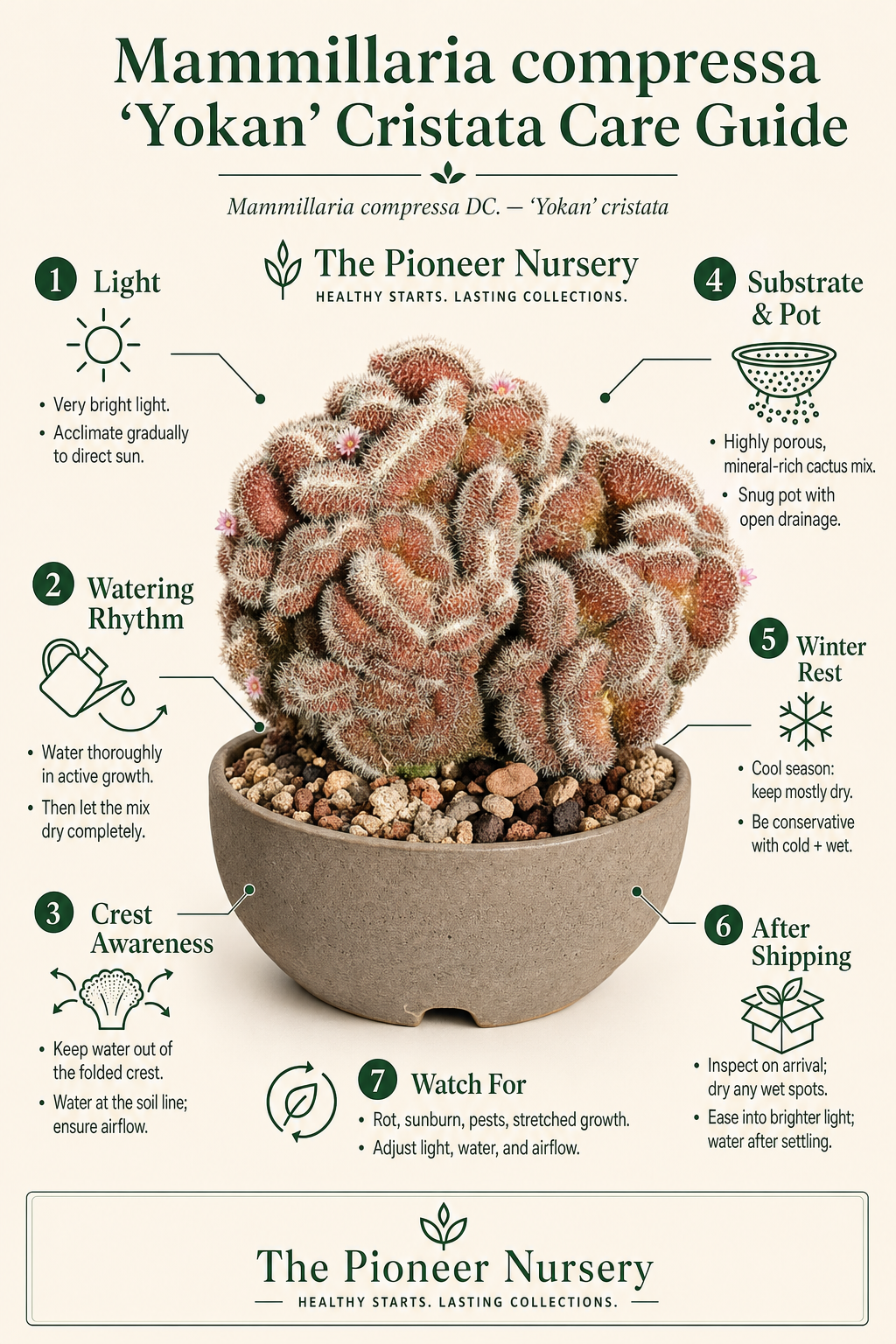
Mammillaria compressa ‘Yokan’ cristata is a selected crested form of Mammillaria compressa, known for its irregular, fan-shaped growth and dense folds. The name ‘Yokan’ is used as a cultivar or collector designation rather than a verified formal cultivar registration. Its care is similar to that of Mammillaria compressa, but the crested surface can hold moisture longer, making bright light, airflow, careful watering, and excellent drainage especially important.
Quick Care Summary
- Provide very bright light and acclimate gradually to direct sun.
- Use a highly porous, mineral-rich cactus substrate.
- Water thoroughly during active growth, then let the mix dry completely.
- Keep nearly dry during cool, low-light winter conditions.
- Prevent water from collecting in the crest’s folds.
- Use a snug pot with an unobstructed drainage hole.
- Treat the crested form conservatively around cold and wet conditions.
About the plant
Mammillaria compressa DC. is the accepted species name. ‘Yokan’ refers to a commonly circulated crested horticultural form, while cristata describes the fan-shaped growth abnormality. The plant may produce small pink to purplish flowers in a ring near the growing region. Normal shoots can occasionally appear; these may be removed to preserve the crested appearance or retained as part of the plant’s variable growth.
Light
Provide very bright light with several hours of direct sun. Acclimate gradually after shipping, repotting, or a move from lower light, because crested tissue can sunburn when suddenly exposed. Indoors, use the brightest available window or supplemental grow lighting. Insufficient light can cause stretched, soft growth.
Watering
During active growth, water thoroughly and then allow the substrate to dry completely before watering again. Do not follow a fixed calendar; watering frequency depends on light, temperature, pot size, substrate, and ventilation. Reduce watering substantially in late autumn and winter, keeping the plant nearly dry in cool, low-light conditions. Avoid repeatedly wetting the crest or leaving water trapped in its folds.
Soil and substrate
Use a sharply draining, highly porous cactus mix with substantial mineral content, such as pumice, perlite, coarse grit, or lava rock combined with a modest amount of organic potting medium. The finished substrate should dry promptly and remain well aerated.
Potting and roots
Choose a container with an unobstructed drainage hole and only slightly more space than the root system requires. Oversized pots stay wet longer and increase rot risk. A broad, stable container can suit a spreading crest, but excessive depth is unnecessary unless the roots require it. Handle the crest carefully during repotting. If roots are damaged, allow them to dry before resuming cautious watering.
Temperature and winter rest
Keep the plant warm during active growth and protect it from prolonged cold, especially when the substrate is wet. Ordinary Mammillaria compressa is reported to tolerate light frost when completely dry, but this should not be treated as a guarantee for a crested plant. Avoid freezing temperatures, cold wet soil, and abrupt temperature changes. During the cooler, darker season, provide strong light, ventilation, and a cool-to-mild, mostly dry rest. Increase watering gradually as light and temperatures improve.
Fertilizer
Fertilize sparingly during active growth, approximately once or twice in the brighter growing season, with diluted cactus fertilizer. Avoid high-nitrogen feeding, which can encourage soft, weak growth and increase susceptibility to rot or deformity.
Flowering
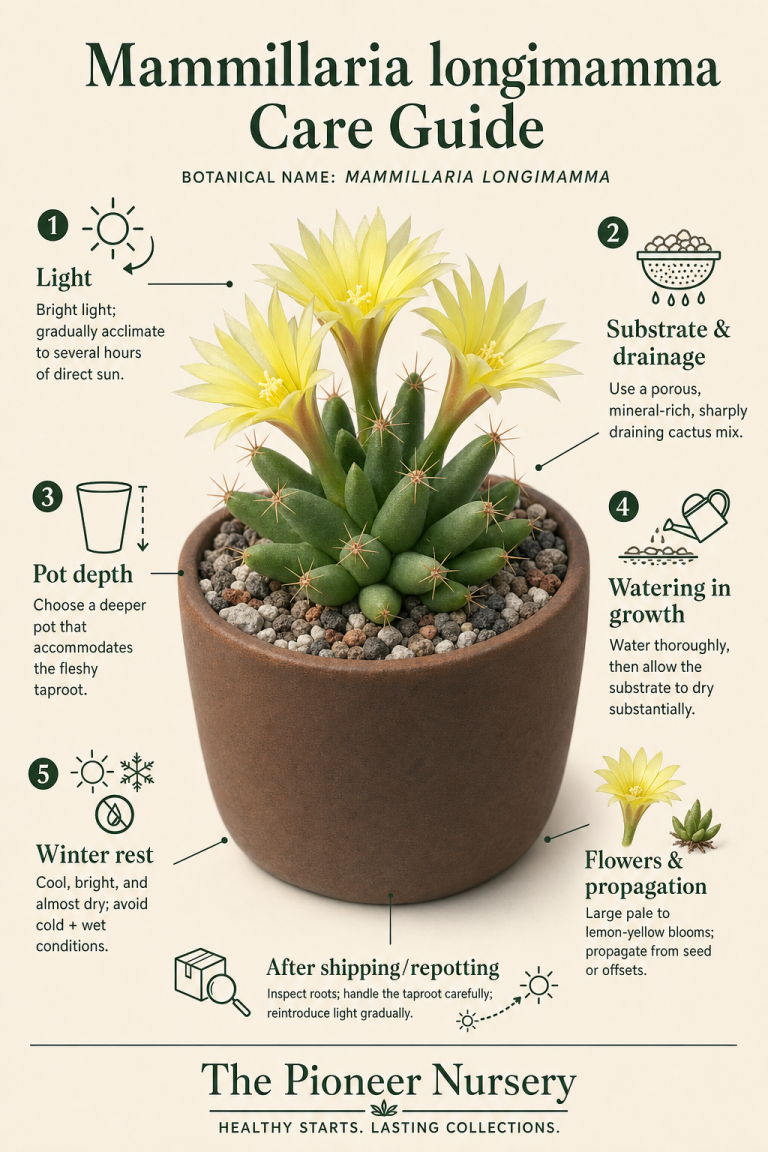
Mammillaria compressa can produce small pink to purplish flowers, generally in a ring near the growing region and often during late winter or spring under suitable conditions. Strong light, mature growth, and a cool, dry winter rest can support flowering. A highly crested specimen may flower less predictably than a normal-growing plant.
Propagation
The preferred methods are carefully separating rooted offsets or divisions when available. Grafting may be useful for damaged, weak, or difficult crested pieces. Seed propagation will not reliably reproduce the same crest, so it is not the preferred method for maintaining the named form.
Common problems
Root or basal rot usually results from poorly drained soil, excessive watering, or cold wet conditions. Sunburn can follow abrupt exposure to strong sun. Mealybugs and scale may shelter in dense folds. Soft or stretched growth indicates insufficient light or excessive nitrogen. Water trapped in irregular grooves can encourage localized rot, so ventilation and careful watering are important.
Shipping and arrival care
Inspect the plant after arrival for crushed or broken crested tissue and root or wound damage. Keep it dry as practical, especially in cool weather. Provide bright but initially filtered light, then acclimate gradually to direct sun. If roots were significantly disturbed or damaged, allow them to callus and place the plant in a fast-draining substrate before resuming cautious watering.
Frequently Asked Questions
How often should I water Mammillaria compressa ‘Yokan’ cristata?
Do not use a fixed schedule. Water thoroughly during active growth, then wait until the substrate is completely dry. Water much less in cool, low-light winter conditions.
Does the crest need different care from a normal Mammillaria compressa?
Its basic requirements are similar, but the irregular folds can dry more slowly. Pay extra attention to ventilation, drainage, sun acclimation, and preventing water from remaining on or within the crest.
Can this plant take frost?
Ordinary Mammillaria compressa is reported to tolerate light frost when completely dry, but that should not be considered a guarantee for a crested specimen. Avoid freezing temperatures and cold, wet roots.
Will seeds produce another ‘Yokan’ crest?
Not reliably. To maintain the selected crested form, carefully separated rooted offsets or divisions are preferred when available.
What should I do if a normal shoot appears?
You may remove it if maintaining the crested appearance is the goal, or leave it as evidence of the plant’s variable growth.
With bright light, a fast-drying substrate, careful active-season watering, and a mostly dry winter rest, Mammillaria compressa ‘Yokan’ cristata can remain healthy while developing its distinctive crested form. The main priority is keeping moisture from lingering around the folds or roots.