Gymnocalycium quehlianum Care Guide
Learn how to grow Gymnocalycium quehlianum with bright light, careful watering, a porous mineral substrate, and a cool, nearly dry winter rest.
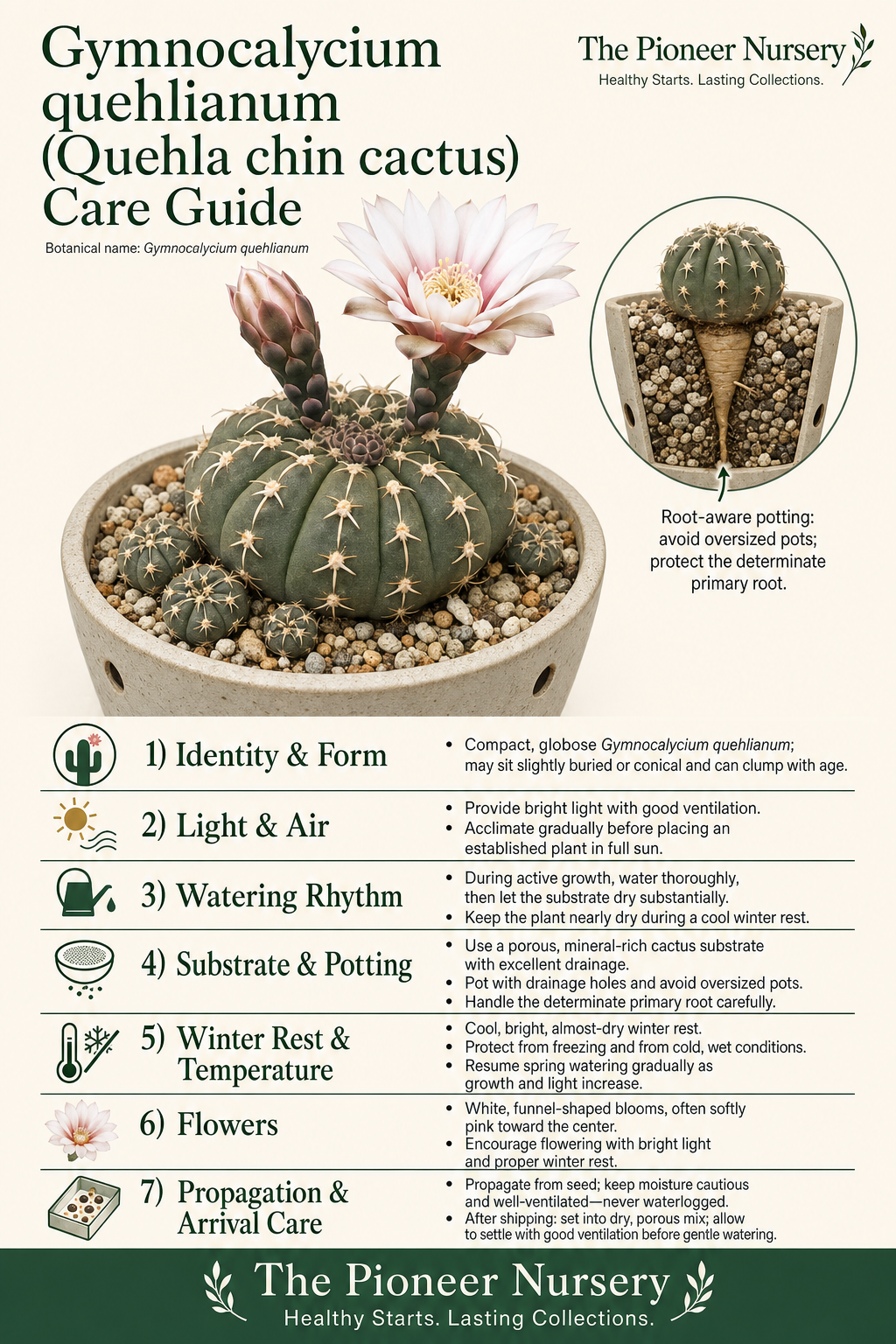
Gymnocalycium quehlianum, also called the Quehla chin cactus, is a compact globose cactus native to Córdoba, Argentina. Its buried or conical stem, potential to clump, determinate primary root, and white flowers sometimes flushed pink make thoughtful potting and seasonal watering especially important. Provide bright light with gradual sun acclimation, excellent drainage, thorough watering during active growth, and a cool, nearly dry winter rest.
Quick Care Summary
- Provide bright light with good ventilation.
- Acclimate gradually before placing an established plant in full sun.
- Water thoroughly during active growth, then let the substrate dry substantially.
- Use a porous, mineral-rich cactus substrate with excellent drainage.
- Keep the plant nearly dry during a cool winter rest.
- Avoid oversized pots and handle the determinate primary root carefully.
- Protect from freezing and from cold, wet conditions.
- Resume spring watering gradually as growth and light increase.
About Gymnocalycium quehlianum
This accepted Gymnocalycium species comes from the Córdoba Sierras of Argentina. It forms a compact, globose body that may contract into the substrate during drought, so mild seasonal shrinkage can be normal. Historical names including Echinocactus quehlianus, Gymnocalycium stellatum, and Gymnocalycium amoenum are treated as synonyms, but Gymnocalycium quehlianum remains the primary botanical identity for this guide.
Light
Give the plant bright light with good ventilation. Established plants can grow in full sun when acclimated gradually. Bright filtered light is safer immediately after shipping, repotting, or winter dormancy. Sudden exposure to strong, unfiltered sunlight can cause scorch, while insufficient light may produce weak, elongated growth and reduce flowering.
Watering
During active growth, water thoroughly and then allow the substrate to dry substantially before watering again. Adjust frequency for temperature, light, pot size, substrate, and airflow rather than following a fixed calendar. Reduce watering sharply in autumn and keep the plant nearly dry during a cool winter rest. Wet substrate combined with cold conditions creates a significant rot risk.
Soil and substrate
Use a porous, sharply draining cactus mix with substantial mineral content and good root aeration. A modest organic fraction is acceptable if the mix dries reliably. Avoid dense or water-retentive soil. Slight seasonal contraction is not, by itself, a reason to keep the substrate constantly wet.
Potting and roots
Choose a container with drainage holes and avoid oversized pots that hold wet mix for too long. The species has determinate primary-root growth and may have a buried, conical stem, so provide enough depth for the root system without leaving a large volume of unused wet substrate. Repot during active growth or shortly before it, handle roots carefully, and delay heavy watering after root disturbance until wounds have dried and recovery has begun.
Temperature and winter rest
Grow Gymnocalycium quehlianum frost-free and protect it from prolonged freezing. A cool, dry winter rest is appropriate. Keep watering minimal or absent in cool indoor or greenhouse conditions, then resume gradually as spring temperatures, light, and active growth increase. Avoid low temperatures combined with moisture.
Fertilizer
Feed only during active growth. Use a balanced liquid fertilizer at diluted strength at intervals suited to the growing environment. Do not fertilize during winter rest, while the plant is dehydrated, immediately after repotting, or when it is not actively growing.
Flowers
Mature, well-lit plants receiving appropriate seasonal rest can produce funnel-shaped flowers up to approximately 5 cm across. Flowers are generally white and may be flushed pink toward the center. The RHS describes flowering in early summer.
Propagation
Seed is the primary propagation method. The RHS recommends sowing in early spring at approximately 19–24°C. Seedlings may be very small and slow initially, so use carefully controlled moisture and high ventilation rather than prolonged saturation. Clumping plants may produce offsets; separate them only when sufficiently developed, and allow wounds to dry before planting or watering.
Common problems
Root or stem rot usually relates to dense substrate, poor drainage, overwatering, or wet conditions during cool weather. Sun scorch can follow abrupt exposure to strong sunlight after indoor culture, shipping, or winter rest. Insufficient light may cause etiolation and poor flowering. Check areoles and roots for mealybugs. Shriveling can occur during prolonged drought or dormancy, but persistent softness, discoloration, or failure to rehydrate after appropriate watering warrants root inspection.
Shipping and arrival care
Inspect the plant on arrival, especially the roots if it was shipped bare-root. Protect roots from crushing, and allow damaged or cut roots to dry before potting. Use a dry or barely moist, well-drained substrate and avoid immediate soaking after major root disturbance. Begin in bright filtered light, then acclimate gradually to stronger sun. Cold, wet transit or post-arrival conditions substantially increase rot risk.
Frequently Asked Questions
How often should I water Gymnocalycium quehlianum?
Water thoroughly during active growth, then wait for the substrate to dry substantially. Frequency depends on temperature, light, pot size, substrate, and airflow. Water much less in autumn and keep the plant nearly dry during a cool winter rest.
Can Gymnocalycium quehlianum take full sun?
Established plants can take full sun after gradual acclimation. Use bright filtered light after shipping, repotting, or winter dormancy to reduce the risk of scorch.
Does the plant need a deep pot?
Provide sufficient depth for its determinate primary root and buried or conical stem, but avoid an oversized container that leaves excess wet substrate around the roots.
Why is my plant shrinking?
Mild contraction can be a normal response to drought or seasonal rest. Persistent softness, discoloration, or failure to rehydrate after appropriate watering may indicate root problems and calls for inspection.
When does it flower?
Mature, well-lit plants with appropriate seasonal rest may produce white, sometimes pink-flushed funnel-shaped flowers. Flowering is described as occurring in early summer.
How should I care for a bare-root plant after shipping?
Inspect the roots, allow damaged or cut areas to dry, and pot into a dry or barely moist well-drained mix. Begin in bright filtered light and acclimate gradually. Avoid soaking immediately after major root disturbance.
Gymnocalycium quehlianum responds well to a clear seasonal rhythm: bright, ventilated conditions and thorough but controlled watering during active growth, followed by a cool, nearly dry rest. Careful acclimation and thoughtful root handling help preserve this compact Córdoba cactus for healthy growth and flowering.