Mammillaria magnimamma ‘Erusamu’ Variegated Care Guide
Learn how to grow variegated Mammillaria magnimamma with bright light, excellent drainage, careful watering, and a cool, nearly dry winter rest.
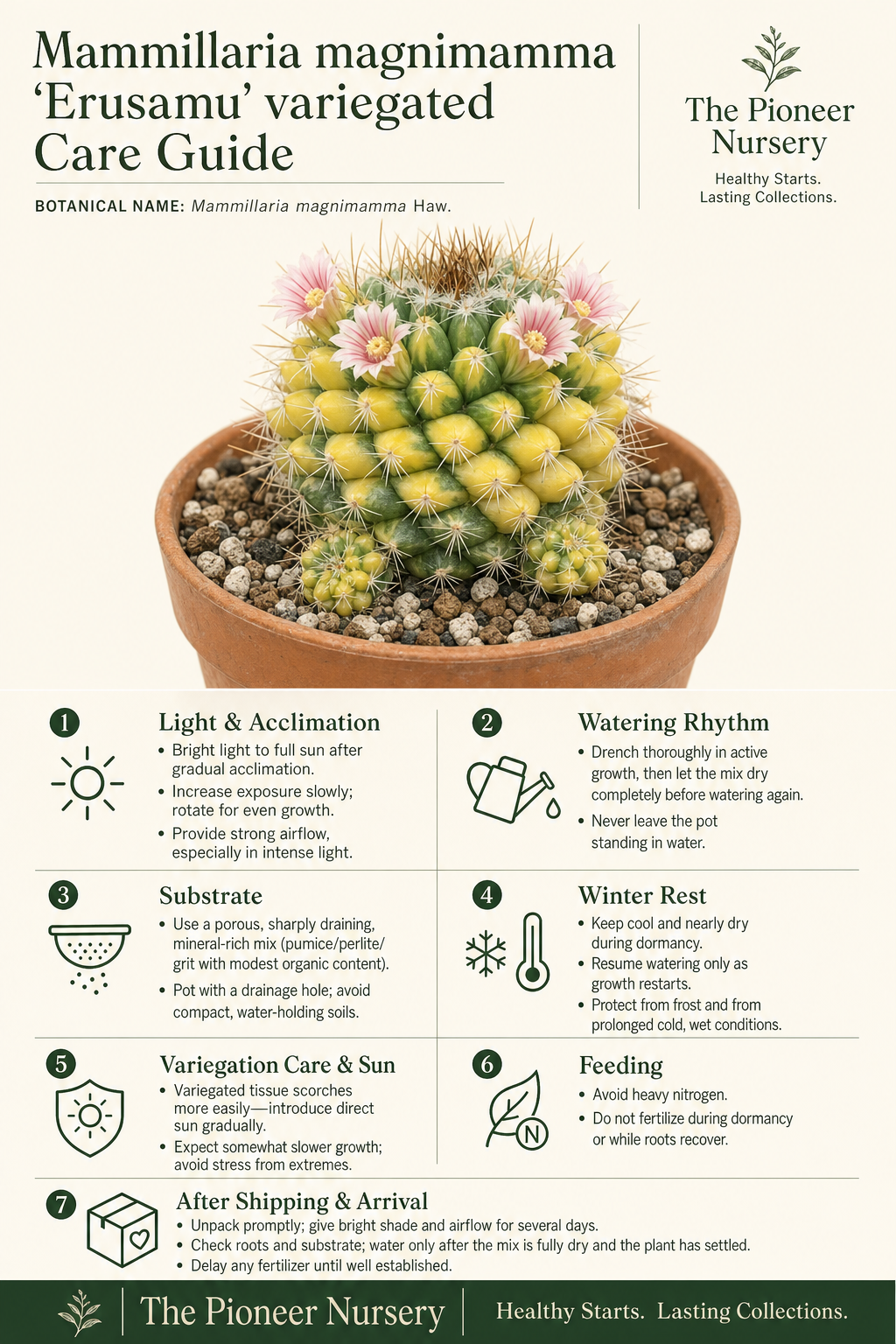
Mammillaria magnimamma is a clumping Mexican pincushion cactus that may begin solitary before producing basal offsets. The “Erusamu variegated” designation describes a cultivated, chlorophyll-deficient form associated with the synonym Mammillaria bucareliensis, rather than a formally verified botanical cultivar. Because variegated tissue can have lower vigor and greater sensitivity to sudden sun, successful care depends on gradual light acclimation, a porous mineral-rich substrate, thorough drying between waterings, and extra caution during cool weather.
Quick Care Summary
- Bright light to full sun after gradual acclimation.
- Provide strong airflow, especially in intense light.
- Water thoroughly during active growth, then let the substrate dry completely.
- Keep substantially drier during cool winter dormancy.
- Use a porous, sharply draining substrate with substantial mineral content.
- Avoid heavy nitrogen fertilizer and fertilizing during dormancy or root recovery.
- Variegated tissue may scorch more easily and may grow more slowly.
- Protect from frost and prolonged cold, wet conditions.
About the plant
Mammillaria magnimamma is an accepted species, while Mammillaria bucareliensis is treated as a synonym. “Erusamu” is used in horticultural and collector commerce, and “variegated” refers to a chlorophyll-deficient phenotype. Plants with more variegation may grow more slowly, have less vigor, and tolerate sudden intense light less readily than fully green plants.
Light
Provide bright light to full sun once the plant is acclimated. Several hours of direct sun during active growth, combined with strong airflow, supports compact growth and flowering. After shipping or a move from protected conditions, increase direct light gradually. Watch variegated areas for bleaching or sunburn; in very hot climates, light afternoon protection may be helpful if damage develops.
Watering
During active growth, water thoroughly and then allow the substrate to dry completely before watering again. Reduce irrigation substantially during cool, dark, or dormant periods, keeping the plant nearly dry in winter. Constantly wet roots are hazardous, and cold, wet conditions substantially increase the risk of rot.
Soil and substrate
Use a porous, sharply draining cactus mix with a substantial mineral component, such as pumice, perlite, lava, coarse sand, or similar materials. The substrate should dry promptly while retaining enough moisture for active growth. Avoid dense, water-retentive mixes.
Potting and roots
Choose a pot with an adequate drainage hole and only modest extra space around the root ball. Mammillaria magnimamma does not require an unusually deep pot for a taproot, but good root aeration is important. Repot during warm active growth when possible. Following repotting or significant root disturbance, keep the plant dry for several days and resume watering cautiously after damaged roots have had time to seal.
Temperature and dormancy
Protect the plant from frost and prolonged cold, wet conditions. About 5 °C is a conservative minimum for cultivated plants, especially variegated or recently shipped specimens. Growth is generally strongest in spring and summer, followed by a cooler, drier winter rest. Maintain bright light while greatly reducing irrigation. Avoid warm, dim, regularly watered winter conditions, which can encourage weak growth and root loss.
Fertilizer
During active growth, apply a dilute, balanced or cactus-formulated fertilizer occasionally. Avoid heavy nitrogen feeding, which can produce soft, elongated growth and reduce the compact form. Do not fertilize during dormancy or while the plant is recovering from root damage.
Flowering
Small funnel-shaped flowers form in a ring near the crown, typically in spring and sometimes again later in the growing season. Flower colors may include pink, reddish, or cream with darker midveins. Strong light, mature growth, and a cool, dry rest can support flowering.
Propagation
Propagation is possible from seed or by carefully rooting offsets when available. Allow cut or separated offsets to callus before planting. Seedlings need warmth, light moisture, and protection from intense direct sun until established. Variegated seedlings are not guaranteed to remain variegated, and weakly variegated plants may grow slowly.
Common problems
Root or stem rot usually relates to dense substrate, poor drainage, or watering during cool conditions. Insufficient light can cause etiolation and weak growth, while abrupt exposure to intense sun can scorch variegated portions. Mealybugs, glasshouse red spider mite, and whitefly may occur in protected cultivation. Poor airflow and chronic humidity increase the likelihood of pests and rot. Highly variegated plants may show slow growth or loss of green tissue because of reduced chlorophyll.
Shipping and arrival care
If the plant arrives bare-root, remove loose soil, inspect it for damage or pests, and pot it into a dry, porous medium. Keep it dry initially after arrival or repotting, then begin cautious watering after root damage has had time to dry and seal. Reintroduce direct sun gradually because shipping darkness and variegated tissue increase sunburn risk. Protect the plant from freezing temperatures and prolonged cold, enclosed, humid packaging.
Frequently Asked Questions
How much light does variegated Mammillaria magnimamma need?
Bright light to full sun is appropriate after gradual acclimation. Variegated areas may scorch more readily, so increase direct sun carefully and provide light afternoon protection if bleaching or sunburn develops.
When should I water it?
Water thoroughly during active growth, then wait until the substrate has dried completely. Reduce watering substantially during cool or dormant periods and keep the plant nearly dry in winter.
Does it need a deep pot because of its taproot?
No unusually deep pot is required. Use only modest extra space around the root ball, an adequate drainage hole, and a well-aerated substrate.
What does “Erusamu” mean?
“Erusamu” is a horticultural and collector designation associated with Mammillaria bucareliensis, a name treated as a synonym of Mammillaria magnimamma. It should not be presented as a formally verified botanical cultivar.
Can I propagate the variegated form from seed?
Seed propagation is possible, but seedlings are not guaranteed to remain variegated. Offsets can also be rooted after separated portions have been allowed to callus.
How should I handle it after shipping?
Inspect the plant, pot bare-root specimens into dry porous substrate, and delay cautious watering until damaged roots have had time to dry and seal. Gradually reintroduce direct sun.
With bright, carefully acclimated light, fast drainage, thorough drying between waterings, and a cool, nearly dry winter rest, Mammillaria magnimamma ‘Erusamu’ variegated can maintain a compact form and may flower around the crown. Adjust care to the amount of green tissue: highly variegated plants often need careful sun management and may grow more slowly.