Gymnocalycium baldianum Cristata Care Guide
Learn how to care for Gymnocalycium baldianum in its distinctive cristate form, including light, watering, soil, winter dormancy, flowering, propagation, and shipping recovery.
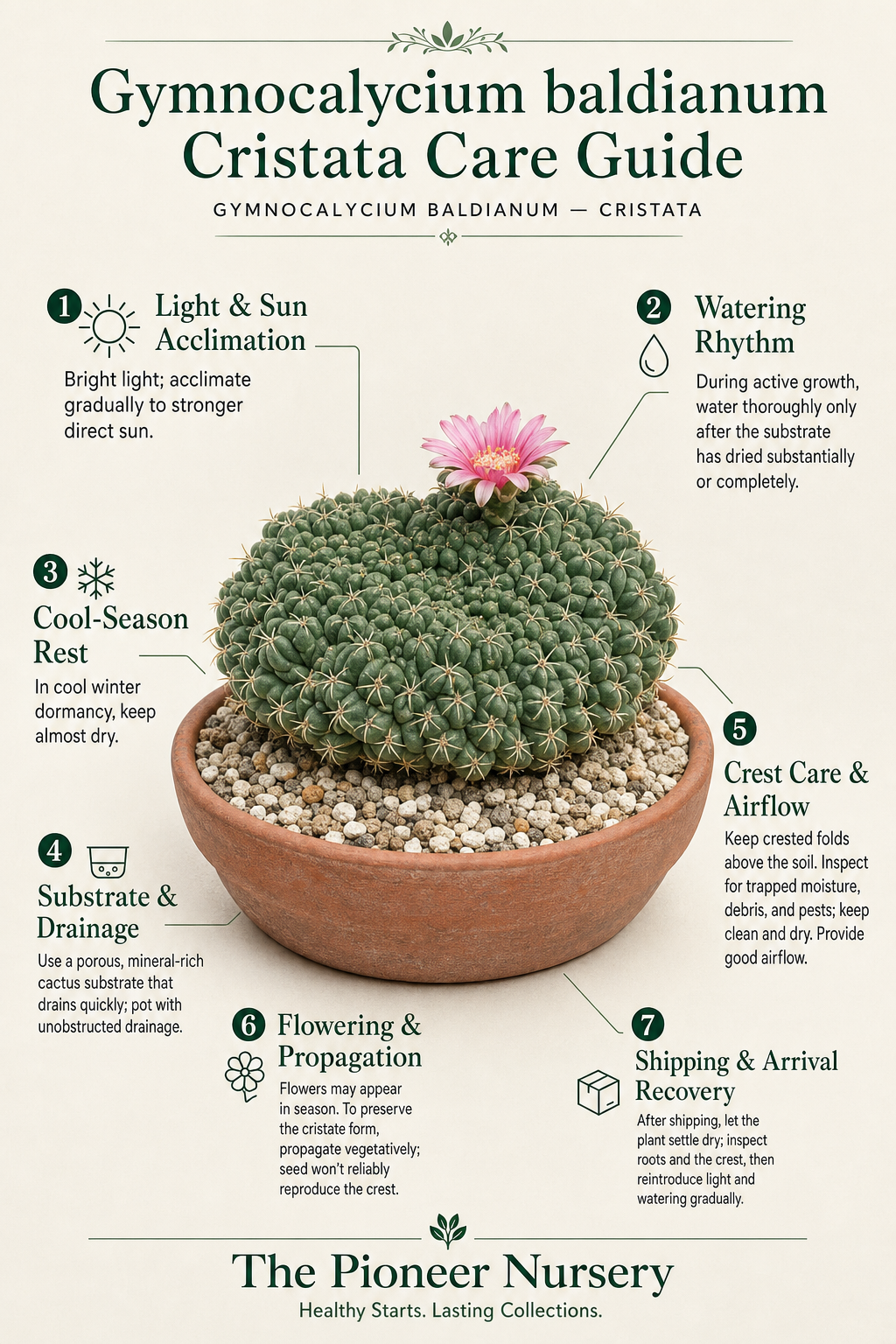
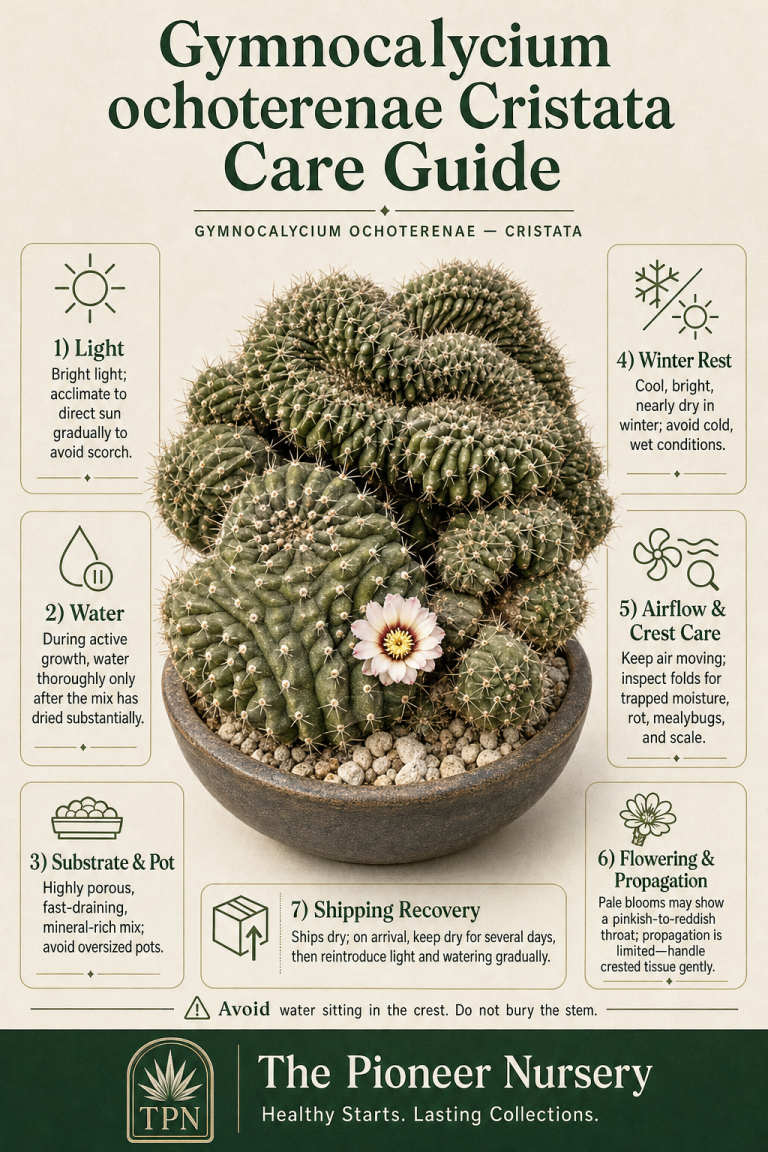
Gymnocalycium baldianum Cristata is the crested form of Gymnocalycium baldianum. Instead of producing an ordinary rounded stem, the growing point forms a fan-shaped or convoluted crest. This unusual architecture does not fundamentally change the species’ care, but its folds can retain moisture and debris, making airflow, inspection, and rapid drying especially important. Provide bright light, porous soil, careful condition-based watering, and a cool, nearly dry winter rest.
Quick Care Summary
- Bright light with gradual acclimation to stronger direct sun.
- Use a porous, mineral-rich cactus substrate that drains quickly.
- Water thoroughly during active growth only after the substrate has dried substantially or completely.
- Keep the plant almost dry during cool winter dormancy.
- Keep crested folds above the soil and inspect them for moisture, debris, and pests.
- Protect from cold, wet conditions and provide good airflow.
- Propagate the cristate form vegetatively rather than relying on seed to reproduce the crest.
About Gymnocalycium baldianum Cristata
Gymnocalycium baldianum is an accepted species native to northwestern Argentina. “Cristata” describes its crested horticultural growth form rather than a separate accepted botanical rank, cultivar, or hybrid. The crest may develop broad, folded, or convoluted tissue and can occasionally produce ordinary growth that reverts from the crest.
Light
Provide bright light with good airflow. Full sun can be suitable after gradual acclimation, while bright filtered light or morning sun with afternoon protection is safer for greenhouse-grown or recently shipped plants. Increase exposure gradually to reduce sunscald, particularly across the uneven tissue of the crest.
Watering
During active growth, water thoroughly only after the substrate has dried substantially or completely, then allow excess water to drain fully. Do not keep the root zone constantly moist. Reduce watering sharply in autumn and keep the plant almost dry during cool winter dormancy. Resume watering gradually as temperatures and light increase in spring. Avoid watering when the plant is cold or the substrate is drying slowly.
Soil and substrate
Use a very well-drained, porous cactus substrate with a substantial mineral component such as pumice, perlite, coarse sand, or other inert grit. The mix should retain enough moisture for active growth while drying promptly and remaining well aerated.
Potting and roots
Choose a small, stable pot with a drainage hole and avoid oversized containers. Position the plant so its base and crested folds remain above the soil surface. Inspect shaded folds regularly because debris, pests, and prolonged moisture can collect there. Repot during active growth only when necessary. After significant root disturbance, delay watering until damaged roots have dried and begun to heal.
Temperature and winter dormancy
Grow the plant in warm conditions during active growth and protect it from prolonged cold, freezing temperatures, and cold wet soil. A cool, dry winter rest is useful; approximately 5–10°C (41–50°F) is a conservative target for dormant plants. Established non-crested plants may tolerate lower temperatures when completely dry, but crested specimens should be treated more cautiously because irregular tissue may dry and heal less uniformly. During dormancy, provide excellent ventilation, little to no water, and reduced light intensity.
Fertilizer
During active growth, apply a diluted balanced cactus fertilizer every two to three weeks, or use a low-nitrogen fertilizer at label dilution less frequently. Do not fertilize during winter dormancy or immediately after repotting.
Flowering
Gymnocalycium baldianum produces funnel-shaped flowers near the crown, with colors that may include red, pink, purple, orange, or white. Adequate light, mature growth, and a cool, dry winter rest support flowering, although flowering and flower production can be less predictable in cristate plants.
Propagation
The normal species is readily propagated from seed, but the cristate form is generally maintained vegetatively because cresting is not reliably reproduced from seed. Healthy crested sections may be propagated as cuttings after the cut surface has fully callused, though rooting can be slower and less reliable than with ordinary stems. Grafting is also a legitimate method, especially for small or weak crested sections. If maintaining the crested form is the goal, separate any reverted normal shoots.
Common problems
The main risks are root or basal rot from wet substrate, poor drainage, or watering in cool conditions; sunscald after abrupt exposure to strong light; and mealybugs or scale insects hidden in the folds. Moisture and debris retained in convoluted growth can increase localized rot risk. Cuttings may root slowly or unevenly, and the plant may revert to ordinary, non-crested growth.
Shipping and arrival care
Ship and receive the plant dry, protected from crushing, and preferably during mild weather. Crested folds can bruise easily and trap packing material or moisture. After arrival, inspect for soft areas, pests, and root damage. If roots were disturbed or shipped bare, allow them to dry before potting. Keep the plant out of intense direct sun initially and acclimate it gradually over several days to weeks. Do not water immediately after major root disturbance.
Frequently Asked Questions
How often should I water Gymnocalycium baldianum Cristata?
Do not use a fixed calendar. During active growth, water thoroughly after the substrate has dried substantially or completely, then let excess water drain. Water much less in autumn and keep the plant almost dry during cool winter dormancy.
Does the crested form need different care from ordinary Gymnocalycium baldianum?
Its basic species-level requirements are similar, but the crest’s folds make airflow, inspection, and rapid drying more important. Keep the folds above the soil and watch for trapped moisture, debris, and pests.
Can Gymnocalycium baldianum Cristata grow in full sun?
It can tolerate full sun once acclimated, but increase exposure gradually. Bright filtered light or morning sun with afternoon protection is safer for recently shipped or greenhouse-grown plants.
Can the crested form be grown from seed?
The normal species is readily grown from seed, but cresting is not reliably reproduced that way. To maintain the cristate form, use healthy crested sections as callused cuttings or use grafting where appropriate.
Why is my crested plant producing ordinary growth?
Crested plants can revert to ordinary, non-crested growth. If preserving the crest is the objective, reverted normal shoots should be separated.
Should I water immediately after receiving a shipped plant?
Not after major root disturbance. Inspect the plant, allow disturbed or bare roots to dry before potting, protect it from intense sun initially, and acclimate it gradually before resuming condition-based watering.
With bright light, fast-draining soil, careful watering, and a cool, dry winter rest, Gymnocalycium baldianum Cristata can remain a rewarding collector plant. Give the crest extra attention: keep its folds clean and dry, maintain airflow, and inspect regularly for pests or soft tissue.