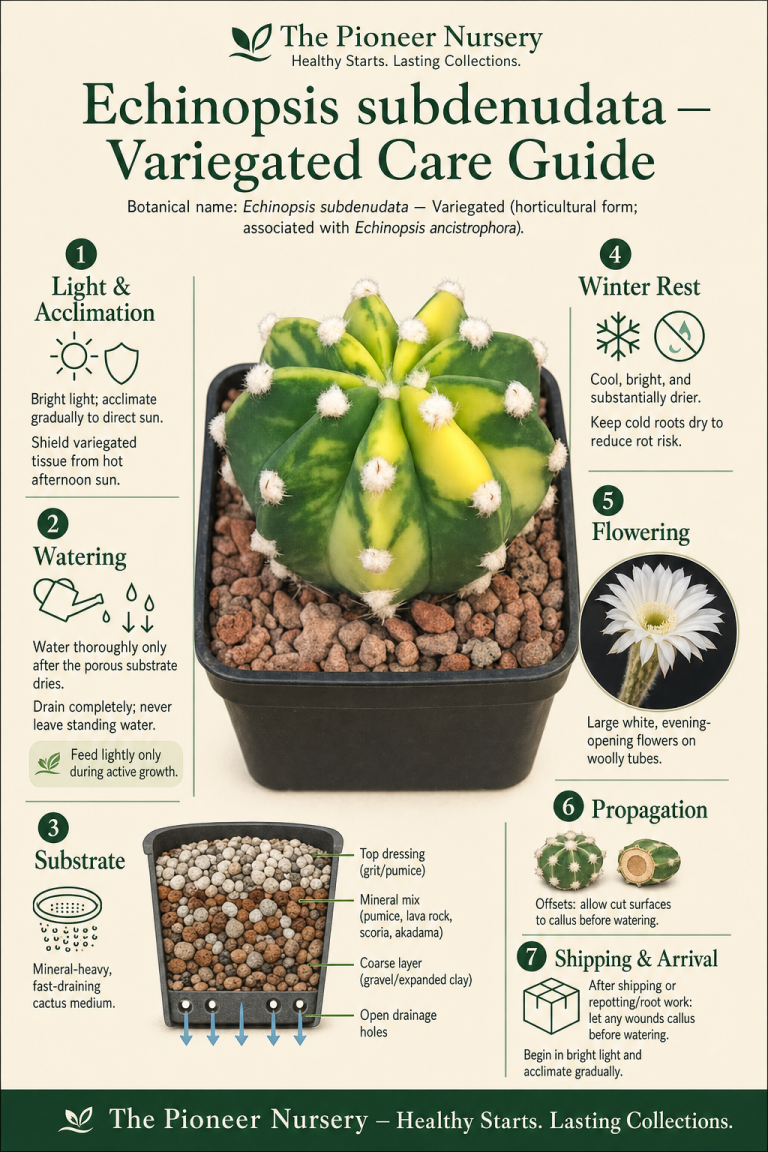
Gymnocalycium baldianum — Variegated Care Guide
Learn how to grow variegated Gymnocalycium baldianum with bright acclimated light, fast drainage, careful watering, and a dry winter rest.
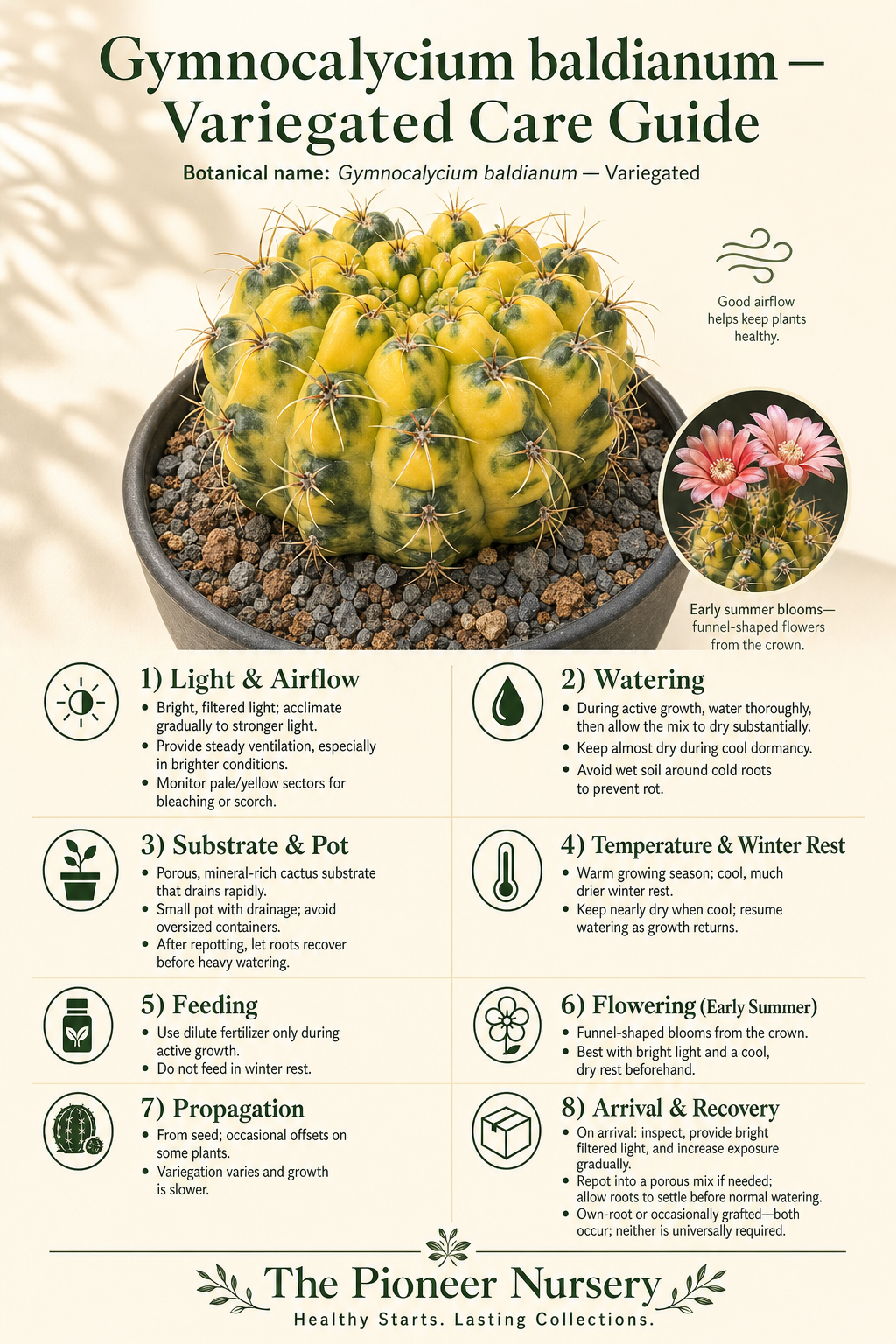
Gymnocalycium baldianum, commonly called dwarf chin cactus, is a small globular to somewhat flattened cactus from northwestern Argentina. The variegated form has reduced chlorophyll in portions of its tissue, so it may grow more slowly and can be more sensitive to intense light than a fully green plant. Give it bright, well-ventilated conditions, a porous substrate, thorough watering during active growth followed by substantial drying, and an almost dry winter rest.
Quick Care Summary
- Bright filtered light is a conservative starting point; acclimate gradually to stronger light.
- Provide good ventilation, especially in brighter conditions.
- Use a porous, mineral-rich cactus substrate that drains rapidly.
- Water thoroughly during active growth, then allow the substrate to dry substantially.
- Keep the plant almost dry during cool winter dormancy.
- Avoid wet soil around cold roots because rot can develop.
- Expect variegated plants to grow more slowly and monitor for bleaching or scorch.
About the Plant
Gymnocalycium baldianum is an accepted species in the genus Gymnocalycium. “Variegated” describes a cultivated coloration or chlorophyll pattern rather than a formal botanical variety, cultivar, or hybrid. Specimens may be grown on their own roots or grafted. Heavily chlorophyll-deficient plants can require grafting, while partially variegated plants can often remain own-rooted.
Light
Provide bright light with good ventilation. Bright filtered light is a conservative starting point, especially after shipping or for an indoor plant. Established specimens can receive stronger light, but acclimate variegated plants gradually because reduced chlorophyll may increase sensitivity. Watch for bleaching or scorch, while insufficient light can cause elongated, weak growth.
Watering
During active growth, water thoroughly enough to moisten the substrate, then allow it to dry substantially before watering again. Reduce watering as growth slows and keep the plant almost dry during winter dormancy. Avoid repeatedly wet soil, particularly in cool conditions, because prolonged moisture can lead to root or basal rot.
Soil and Substrate
Use a porous, sharply draining cactus substrate with substantial mineral content and good root aeration. Standard cactus compost is suitable only when it drains rapidly and does not remain wet for extended periods.
Potting and Roots
Choose a container with a drainage hole and avoid an unnecessarily large pot, which can hold excess moisture around the roots. Repot during active growth when possible and disturb the roots as little as practical. After major root disturbance or repotting, allow damaged roots to callus and resume watering cautiously rather than immediately saturating the substrate.
Temperature and Winter Rest
Grow warm during the active season and protect the plant from frost, prolonged cold, and wet conditions. The species tolerates low temperatures above freezing but should not be considered reliably freeze-hardy. Dry, established plants may tolerate brief colder exposure, but wet cold is a major rot risk. During the cool-season rest, keep the plant nearly dry in bright light and resume watering gradually when temperatures and light increase and active growth is evident.
Fertilizer
Feed only during active growth with a dilute cactus fertilizer or balanced liquid fertilizer. Avoid heavy feeding. Variegated specimens often need especially restrained fertilizing when growth is slow or light is limited.
Flowering
With suitable light, warmth, and seasonal growth, this small cactus can produce funnel-shaped flowers, generally in early summer.
Propagation
Seed is the standard species-level propagation method. Seed may be sown in early spring at approximately 19–24 °C. Offsets can also be propagated when a particular plant produces them. A variegated pattern is not guaranteed to reproduce true from seed. Severely chlorophyll-deficient material may require grafting to survive.
Shipping and Arrival Care
Receive and ship the plant dry, well ventilated, and protected from freezing temperatures. After arrival, inspect it for damage or rot and provide bright but initially filtered light. Acclimate gradually to stronger exposure. If roots were disturbed, broken, or shipped bare-root, do not water immediately; allow injuries to dry and begin cautious watering after recovery.
Common Problems
- Root or basal rot can result from poor drainage, oversized pots, or watering while the plant is cold.
- Sun scorch may follow a sudden move into intense light; variegated tissue needs gradual acclimation.
- Insufficient light can cause etiolation and weak growth.
- Mealybugs are a potential pest.
- Heavily variegated tissue may show slow growth or reduced vigor because of reduced chlorophyll.
- Stress discoloration, nutrient-related chlorosis, and graft-related coloration can be confused with true variegation.
Frequently Asked Questions
How often should I water variegated Gymnocalycium baldianum?
Water thoroughly during active growth, then wait until the substrate has dried substantially before watering again. Water less as growth slows and keep the plant almost dry during winter.
Does a variegated specimen need less light?
Begin with bright filtered light and acclimate gradually. Variegated plants can be more sensitive to intense exposure, so monitor for bleaching or scorch.
Can this cactus stay on its own roots?
Partially variegated plants can often remain on their own roots. Severely chlorophyll-deficient material may require grafting to survive.
Why is my plant growing slowly?
Reduced chlorophyll in heavily variegated tissue can limit vigor and growth. Insufficient light and seasonal dormancy may also affect growth.
Can the variegation be reproduced from seed?
Seed is the standard species-level propagation method, but a variegated pattern is not guaranteed to reproduce true from seed.
What should I do after receiving a bare-root plant?
Inspect it, provide bright initially filtered light, and allow damaged roots or injuries to dry. Resume watering cautiously after recovery rather than immediately saturating the substrate.
The key to growing variegated Gymnocalycium baldianum is balancing bright light with gradual acclimation and keeping the roots from staying wet, especially during cool dormancy. Watch the plant’s growth and coloration, adjust exposure carefully, and keep watering tied to active growth and substrate dryness.