Sempervivum Care Guide
Learn how to grow Sempervivum, commonly called houseleeks or hens and chicks, with bright light, gritty drainage, restrained watering, and careful attention to species-level differences.
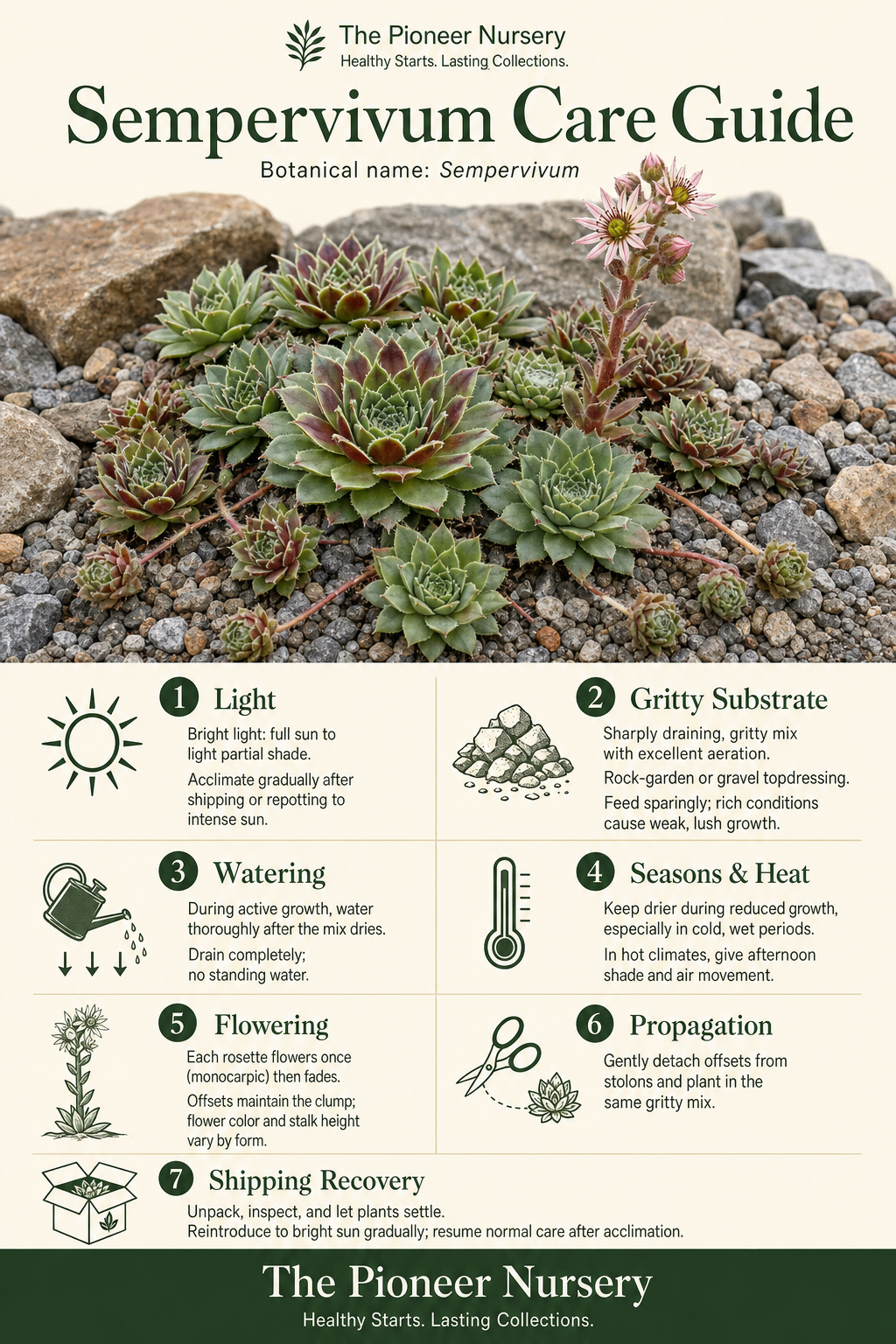
Sempervivum, commonly called houseleek or hens and chicks, is a genus of rosette-forming plants in the Crassulaceae family. These plants generally thrive in sunny, rocky, lean conditions and produce offsets around the parent rosette. For reliable growth, prioritize strong light, sharply draining soil, restrained watering, and good air movement. Care varies among species and cultivars, especially in heat tolerance, winter-wet sensitivity, and seasonal growth.
Quick Care Summary
- Bright light, from full sun to light partial shade, maintains compact rosettes and coloration.
- Acclimate newly shipped or repotted plants gradually to intense direct sun.
- Use sharply draining, gritty soil with good root aeration.
- Water thoroughly during active growth after the substrate dries, then drain completely.
- Keep plants drier during reduced growth, especially in cold, wet conditions.
- Protect some forms from intense summer heat with afternoon shade and air movement.
- Feed sparingly; overly fertile conditions can produce weak, lush growth and reduce suitability for gritty, lean conditions.
About Sempervivum
Sempervivum includes numerous species, hybrids, and cultivated selections. The familiar name “hens and chicks” refers to the offsets produced around a parent rosette. Plants sold under this name can sometimes be confused with related rosette-forming Crassulaceae such as Jovibarba or Echeveria, so exact identification may require examining the plant and its provenance.
Light
Provide an open, bright location with full sun to light partial shade. Strong light helps maintain compact rosettes and coloration. In very hot climates, afternoon shade and excellent air movement can reduce heat stress. Newly shipped or recently repotted plants should be acclimated gradually to intense direct sun.
Watering
Water thoroughly during active growth once the substrate has dried, then let excess water drain completely. Outdoor plants may need supplemental water during prolonged dry spring or summer weather but generally need little watering. Avoid constantly wet roots and avoid routine outdoor winter watering, especially in cold or poorly ventilated conditions. Some species and cultivars reduce growth during hot weather, so water cautiously until active growth resumes.
Soil and Substrate
Use a sharply draining, gritty substrate with good root aeration. A commercial cactus or alpine mix amended with mineral grit or coarse sand is appropriate. Avoid heavy, water-retentive soil and overly fertile media. Sempervivum suits raised beds, rock gardens, gravel gardens, and containers with drainage holes.
Potting and Roots
Use containers with effective drainage and a medium that does not remain wet after watering. Repot or divide established container plantings in spring, commonly every two to three years or when the display becomes crowded or gappy. Set rosettes at their existing depth and prevent surface grit from accumulating around the crown. Avoid unnecessary root disturbance; after major repotting, allow damaged roots or offsets to recover before resuming normal watering.
Temperature and Seasonal Growth
Sempervivum is generally a cold-hardy genus, and many commonly cultivated forms tolerate substantial frost. Exact hardiness varies by species, cultivar, local moisture, and exposure. Cold combined with prolonged wetness creates a greater rot risk than cold alone for many plants. In hot climates, some forms may struggle with summer heat and benefit from afternoon shade and ventilation. Many Sempervivum experience reduced growth or dormancy during severe winter conditions or intense summer heat, depending on species and climate. Keep plants drier when growth has clearly slowed, particularly during cold, wet weather.
Fertilizer
Feed sparingly. Plants in fertile outdoor ground often need no fertilizer. Container plants may receive diluted, balanced liquid fertilizer during active growth or a carefully measured slow-release fertilizer incorporated into the potting medium. Avoid high fertility, which can produce weak, overly lush growth and reduce suitability for gritty, lean conditions.
Flowering
Flowering generally occurs in summer. An individual rosette is monocarpic, meaning the flowering rosette dies after blooming and setting seed, while its offsets usually continue growing. Flower color, stalk height, timing, and the interval before flowering vary among species and cultivars. Remove spent flower stalks if self-seeding is not desired, then remove the dead rosette and replant or redistribute offsets as needed.
Propagation
Offsets produced on stolons are the most dependable way to maintain named cultivars and are generally easy to separate and root. Pot rooted offsets into gritty, well-drained medium. Unrooted offsets can be placed lightly on the medium surface, kept lightly moist, shaded from intense direct sun, and protected from excess humidity until roots form. Seed propagation is possible for species, but named cultivars and hybrids may not come true from seed and can show substantial variation.
Shipping and Arrival Care
Receive and ship Sempervivum in well-drained, dry-to-lightly moist conditions rather than saturated media. Inspect plants on arrival for rot or detached offsets, protect rosettes from crushing and prolonged heat, and initially provide bright indirect or filtered light. Acclimate gradually to direct sun. If roots were disturbed or the plant arrived bare-root, allow wounds to dry and avoid immediate heavy watering until the plant is stable and beginning active growth.
Common Problems
- Root or crown rot: usually associated with excessive moisture, poor drainage, or cold wet conditions.
- Stretching, pale color, or loose rosettes: commonly caused by insufficient light.
- Heat stress or summer decline: possible in some species and cultivars, particularly in hot climates.
- Winter damage: may result from excessive moisture, especially in less wet-tolerant forms.
- Vine weevil or other soil-dwelling pests: possible in containers.
- Sempervivum leaf miner: occurs in some regions.
- Rust or cosmetic damage: may be associated with wet soil or debris accumulating around rosettes.
- Uprooted offsets: birds or animals may disturb newly planted offsets.
Frequently Asked Questions
Does Sempervivum need full sun?
The genus generally prefers an open, bright location with full sun to light partial shade. Strong light supports compact rosettes and coloration, but hot-climate forms may benefit from afternoon shade and excellent air movement.
How often should I water Sempervivum?
Water during active growth when the substrate has dried, then allow excess water to drain. Do not use a fixed calendar because species, climate, light, temperature, and growth activity vary. Keep plants especially dry during cold, wet conditions.
Is Sempervivum cold hardy?
Sempervivum is generally a cold-hardy genus, and many cultivated forms tolerate substantial frost. Exact tolerance varies with species, cultivar, moisture, and exposure; prolonged wetness during cold weather increases rot risk.
Why does a Sempervivum rosette die after flowering?
An individual flowering rosette is monocarpic and dies after blooming and setting seed. Its offsets usually continue growing and can be redistributed after the spent rosette is removed.
What is the best way to propagate Sempervivum?
Separate and root offsets produced on stolons. This is the most dependable method for maintaining named cultivars. Seed is possible for species, but cultivars and hybrids may not reproduce true to type.
Can Sempervivum stay indoors?
The genus should not be treated as a uniformly heat-loving indoor succulent. Many forms perform best with strong outdoor light, cool nights, and seasonal cold.
Sempervivum is most successful in bright, rocky, well-drained conditions rather than as a uniformly warm indoor succulent. Use gritty drainage, water only when growth and substrate conditions call for it, and remember that species and cultivars can differ significantly in heat tolerance, winter wet sensitivity, and seasonal behavior.