Ariocarpus kotschoubeyanus Care Guide
Learn how to grow Ariocarpus kotschoubeyanus, the slow-growing living rock cactus with a large storage root, mineral soil needs, strong-light requirements, and a dry winter rest.
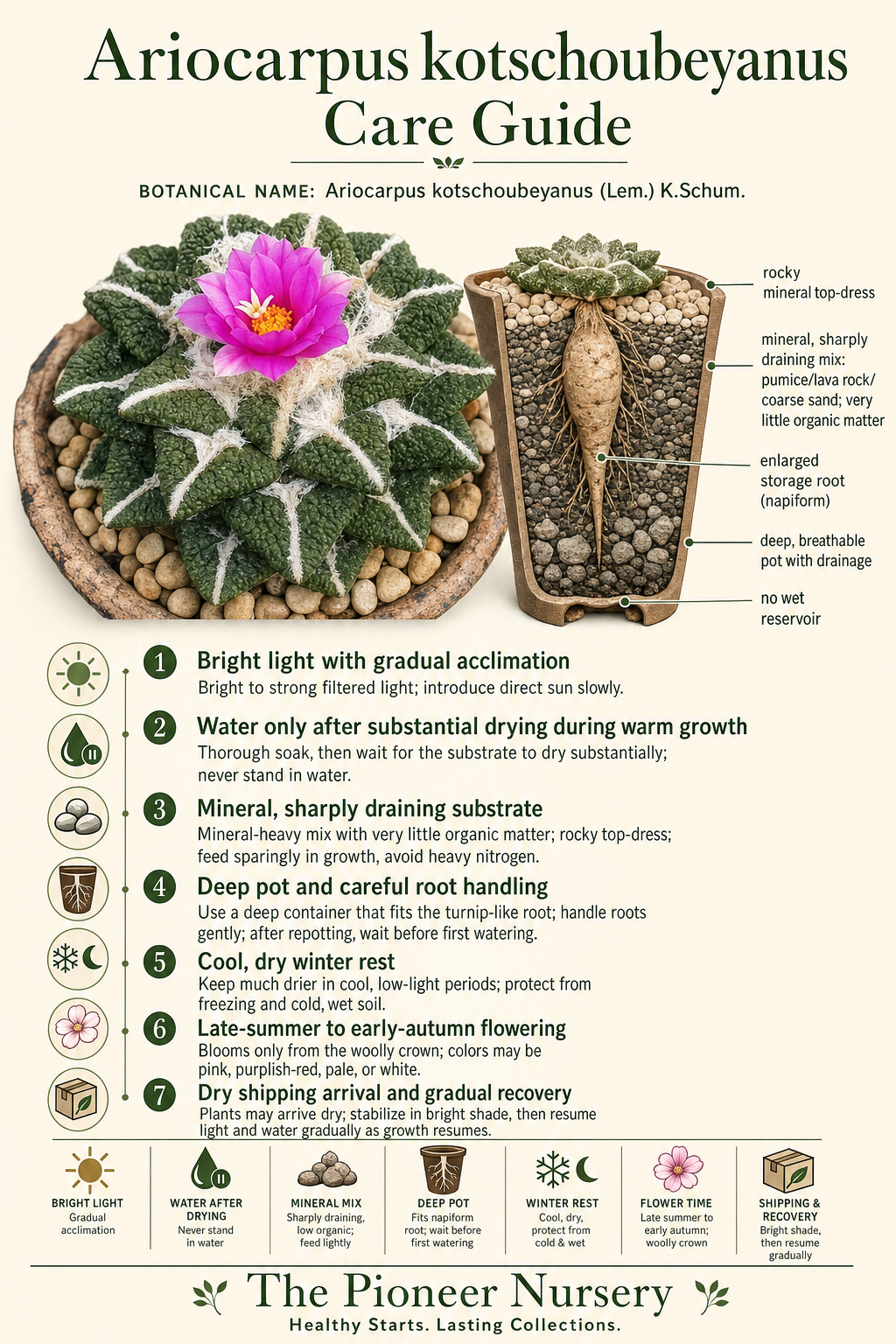
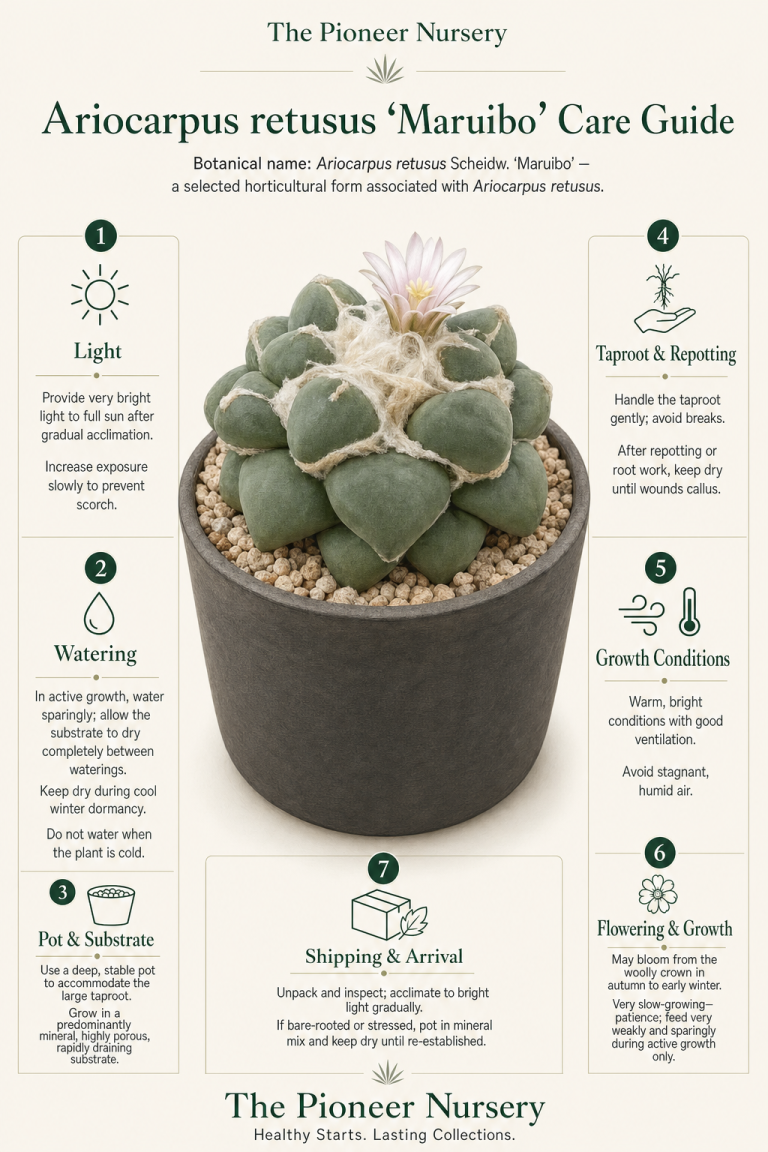
Ariocarpus kotschoubeyanus, also called living rock cactus or deer-hoof cactus, is a very slow-growing cactus with a distinctive enlarged, turnip-like storage root. Successful cultivation depends on protecting that root from prolonged moisture and damage. Provide strong light with gradual acclimation, a deep pot, sharply draining mineral substrate, careful warm-season watering, and a cool, dry winter rest.
Quick Care Summary
- Bright light to strong filtered light, with gradual acclimation to direct sun.
- Use a deep pot for the large storage root.
- Grow in a sharply draining, mineral-heavy substrate with little organic matter.
- Water thoroughly during warm active growth only after the substrate has dried substantially.
- Keep substantially drier during cool, low-light winter dormancy.
- Protect from freezing temperatures and cold, wet soil.
- Repot carefully and avoid watering immediately after significant root disturbance.
- Feed sparingly during active growth and avoid heavy nitrogen.
About the plant
Ariocarpus kotschoubeyanus is an accepted Ariocarpus species. Its large napiform storage root is the most important feature for cultivation: it needs room in the container but is sensitive to rough handling and wet conditions. Growth is slow, so trying to accelerate it with frequent watering or heavy feeding can increase rot risk and produce weak growth.
Light
Provide bright light to strong filtered light. Established plants can tolerate substantial direct sun once acclimated, but increase exposure gradually after shipping, repotting, greenhouse-to-outdoor movement, or other changes in light. Abrupt exposure to intense sun can cause scorch.
Watering
Water only after the substrate has dried substantially. During warm active growth, water thoroughly, then allow rapid drainage and drying before watering again. Reduce or stop watering during cool, low-light, or dormant periods. Avoid watering when the plant is cold, poorly lit, or sitting in persistently damp soil.
Soil and substrate
Use a very porous, sharply draining, mineral-heavy mix with little organic matter. Suitable components include pumice, lava rock, coarse sand, decomposed granite, calcined clay, or similar mineral materials. Excess peat or other moisture-retentive organic matter increases the risk of rot.
Potting and roots
The enlarged storage root benefits from a deep pot that accommodates it without creating a large reservoir of wet substrate. Repot carefully and infrequently. After significant root disturbance, use dry substrate while damaged roots callus and avoid immediate watering. Excessive handling can also remove feeder roots and delay recovery.
Temperature and seasonal growth
Provide warm growing conditions and protect the plant from frost, freezing temperatures, cold drafts, and cold wet soil. The species generally receives a cool, dry winter rest, with most growth and watering during the warmer part of the year. Growth may slow temporarily during extreme heat. Resume watering gradually as warmth and active growth return.
Fertilizer
Feed sparingly during active growth with a dilute, balanced or cactus-formulated fertilizer. Avoid heavy nitrogen applications. Do not fertilize newly shipped, freshly repotted, dormant, stressed, or declining plants.
Flowering
Flowers typically emerge from the woolly central area in late summer or early autumn. Flower color may range from pink or purplish-red to pale or white, depending on population and form.
Propagation
Ariocarpus kotschoubeyanus is primarily propagated from seed. Seedlings grow slowly and require careful management of moisture, warmth, ventilation, and the gradual reduction of humidity as they establish. Tissue-culture propagation has been demonstrated scientifically but is not the usual home or nursery method. Grafting may accelerate growth or help preserve material, though grafted plants may not develop the same root system as long-term seed-grown plants.
Shipping and arrival care
Whenever possible, ship and receive this species in dry conditions. After arrival, inspect the plant for root damage and do not water immediately, especially if it was shipped bare-root or its roots were disturbed. Pot it into a dry, highly mineral substrate and acclimate it gradually to bright light.
Common problems
The principal risk is rot from dense substrate, prolonged wetness, or watering during cool conditions. Root damage can follow rough repotting, bare-root shipping, or excessive taproot handling. Sudden intense light can cause sun scorch. Inadequate light or excessively rich, wet conditions can produce weak, stretched growth. Poor airflow may also contribute to mealybug or fungal problems.
Frequently Asked Questions
How often should I water Ariocarpus kotschoubeyanus?
Do not use a fixed calendar. During warm active growth, water thoroughly after the substrate has dried substantially, then allow rapid drainage and drying. Reduce or stop watering in cool, low-light, or dormant conditions.
Does Ariocarpus kotschoubeyanus need a deep pot?
Yes. Its large, turnip-like storage root needs a deep container, but the pot should not hold a large reservoir of wet substrate.
Can this cactus grow in direct sun?
Established plants can tolerate substantial direct sun when acclimated. Increase exposure gradually, especially after shipping, repotting, or a change from greenhouse conditions.
How should I care for it during winter?
Give it a cool, dry winter rest and protect it from freezing temperatures, cold drafts, and cold wet soil. Resume watering gradually when warmth and active growth return.
How is Ariocarpus kotschoubeyanus propagated?
It is primarily propagated from seed. Seedlings grow slowly and need careful moisture, warmth, ventilation, and gradual humidity reduction. Grafting is also used horticulturally, while tissue culture has been demonstrated scientifically.
Should I water immediately after receiving a shipped plant?
Usually no, especially if the plant arrived bare-root or its roots were disturbed. Inspect it, pot it into dry mineral substrate, and allow recovery before watering.
Ariocarpus kotschoubeyanus rewards patience and careful root management. Keep the substrate mineral and fast-draining, match watering to warmth and active growth, acclimate light gradually, and maintain a dry winter rest. Its slow growth makes conservative care safer than attempts to force development.