Ariocarpus retusus ‘Frumdosus’ Care Guide
Learn how to grow Ariocarpus retusus ‘Frumdosus’, a named A. retusus selection with flat, smooth tubercles. This guide covers light, watering, mineral soil, taproot care, dormancy, flowering, and shipping recovery.
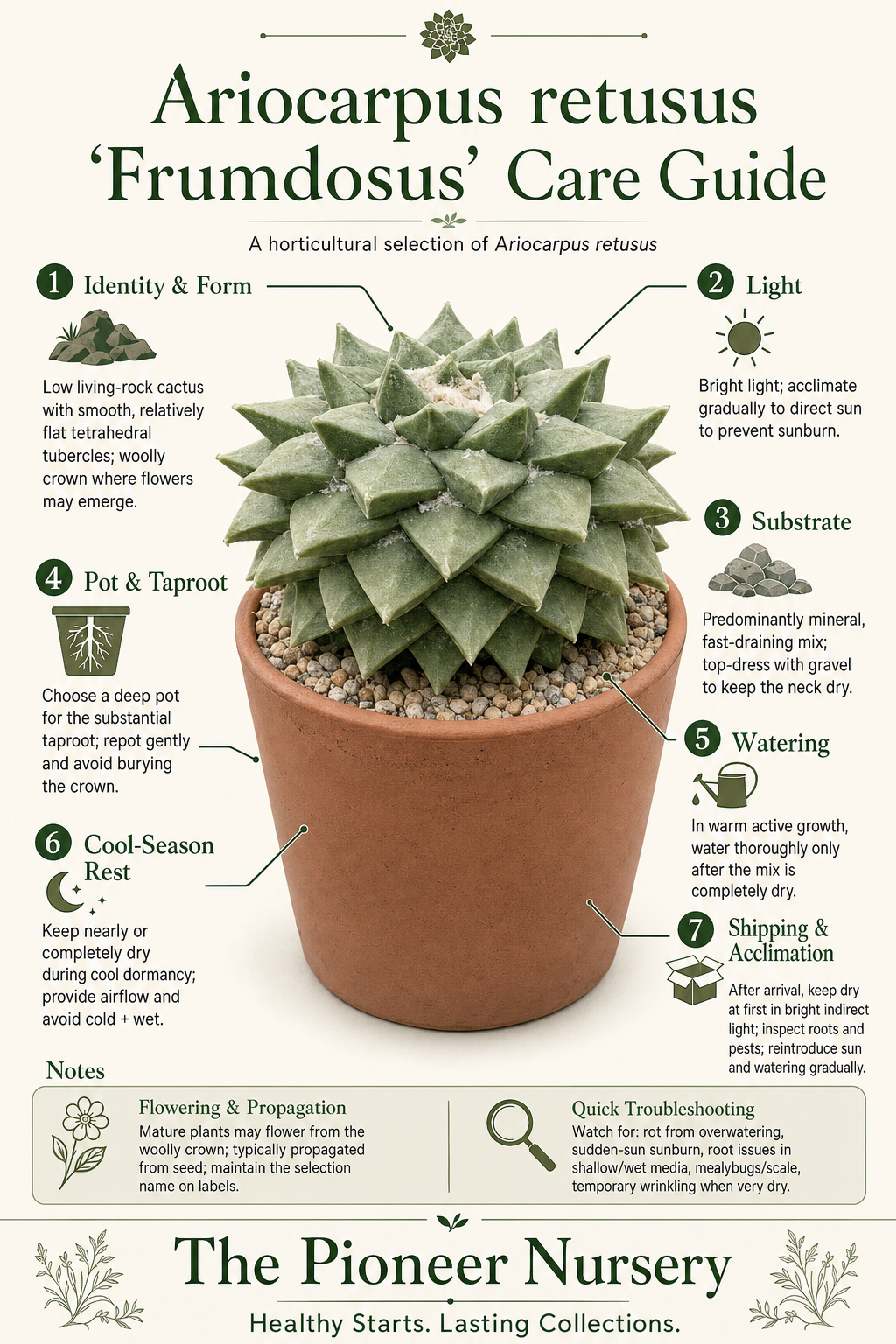
Ariocarpus retusus ‘Frumdosus’ is a recognized horticultural selection of A. retusus, valued for its relatively flat, smooth, tetrahedral-looking tubercles. The cultivar does not have independently verified care requirements different from its parent species, so successful cultivation depends on A. retusus fundamentals: bright acclimated light, a predominantly mineral and fast-draining substrate, careful taproot handling, restrained watering during warm growth, and a nearly dry cool-season rest.
Quick Care Summary
- Bright light with gradual acclimation to direct sun.
- Use a predominantly mineral, fast-draining substrate.
- Choose a deeper pot that accommodates the substantial taproot.
- Water thoroughly only after the mix has dried completely during warm growth.
- Keep nearly or completely dry during cool dormancy.
- Protect from cold, wet conditions and maintain good airflow.
- Treat ‘Frumdosus’ as a named A. retusus selection; its care is based primarily on the parent species.
About Ariocarpus retusus ‘Frumdosus’
‘Frumdosus’ is a named garden-origin selection of Ariocarpus retusus, not a separate botanical species, subspecies, or variety. Its distinguishing feature is its flatter, smoother tubercle form. The practical care below is based primarily on verified A. retusus cultivation guidance; no reliable evidence establishes materially different physiology for this cultivar.
Light
Provide bright light with gradual acclimation. Gentle morning sun, bright filtered light, or a bright greenhouse position can work well. Do not move a recently shipped, repotted, or shade-grown plant directly into intense midday sun, as stressed Ariocarpus can sunburn.
Watering
Water conditionally rather than by a fixed calendar. During warm active growth, soak the substrate thoroughly only after it has dried completely, then allow it to dry again. Reduce watering sharply or stop during cool, dark, humid, or dormant periods. Avoid watering when cold soil, poor airflow, or recent root disturbance could delay drying.
Soil and substrate
Use a very fast-draining, predominantly mineral mix with high air porosity and little moisture retention. A practical starting point is approximately 80–90% mineral material, such as pumice, lava rock, coarse grit, decomposed granite, or similar aggregate, with only a small amount of organic cactus soil. A modest mineral calcium component may be appropriate because A. retusus occurs in limestone-associated habitats.
Potting and roots
Choose a pot with excellent drainage and enough depth for the substantial taproot. A deeper pot is generally preferable to a shallow one, but avoid excess unused wet substrate. Keep the crown above the soil line and do not pack damp mix against the body. Handle the taproot carefully because root damage substantially increases rot risk.
Temperature and seasonal rest
Warm conditions are preferred. Protect the plant from frost and prolonged freezing, especially when the substrate is wet. Cold combined with moisture is a serious risk, so hold water as temperatures fall and maintain good ventilation. A dry winter or cool-season rest is appropriate; keep the plant nearly or completely dry during dormancy, watering only in exceptional cases if severe shriveling occurs and conditions are warm enough for rapid drying.
Fertilizer
Fertilize sparingly during active growth only, using a dilute cactus fertilizer. Do not fertilize freshly shipped, freshly repotted, dormant, stressed, or root-damaged plants. Excess fertilizer can produce weak growth and increase salt accumulation around the roots.
Flowering
Mature plants may flower from the woolly central area, generally in fall or around the transition toward the cool season. Maturity, strong but acclimated light, warm active growth, restrained watering, and a proper dry rest support flowering. No cultivar-specific flower color or flowering behavior has been reliably verified for ‘Frumdosus’.
Propagation
Seed propagation is the most defensible general method for A. retusus, although it is slow. Seed-grown plants may not reliably preserve the ‘Frumdosus’ cultivar identity unless the line is maintained through controlled selection and documented parentage. Grafting may be used horticulturally to accelerate growth or preserve difficult material, but it does not make the cultivar botanically distinct.
Shipping and arrival care
Receive and handle the plant as dry as practical. Inspect the body and roots after arrival, pot it into dry mineral substrate, and provide bright shade or filtered light with good airflow while it acclimates. Do not water immediately after shipping. Because of the taproot, bare-root handling and root damage require particular caution; after repotting or damaged-root handling, wait until wounds have dried and the plant has settled before the first watering.
Common Problems
- Taproot or basal rot from wet, dense, or poorly aerated substrate.
- Rot caused by watering during cool conditions.
- Sunburn after abrupt exposure to intense direct light.
- Root damage during repotting or bare-root shipping.
- Mealybugs in the woolly center, crown, or root zone.
- Fungal or surface problems in stagnant, humid conditions.
- Wrinkling from drought response, shipping stress, or dormancy; wrinkling alone does not prove watering is needed.
Frequently Asked Questions
Is Ariocarpus retusus ‘Frumdosus’ a separate species?
No. ‘Frumdosus’ is a named horticultural selection of Ariocarpus retusus, characterized by relatively flat and smooth tubercles. It should not be treated as a separate botanical species.
How often should I water ‘Frumdosus’?
Do not use a fixed schedule. During warm active growth, water thoroughly only after the mineral substrate has dried completely. Reduce sharply or stop during cool, dark, humid, or dormant conditions.
Does this cultivar need special care compared with A. retusus?
No materially different cultivar-specific care has been verified. Use A. retusus-based care: bright acclimated light, fast-draining mineral substrate, careful taproot handling, restrained watering, and a dry cool-season rest.
Why is a deep pot recommended?
Ariocarpus retusus develops a substantial taproot, so a deeper, well-drained pot is generally preferable to a shallow one. Avoid leaving excessive wet substrate around the roots.
Can I grow ‘Frumdosus’ from seed?
Seed propagation is a defensible method for A. retusus but is slow. Seed-grown plants may not reliably retain the named ‘Frumdosus’ characteristics unless maintained through controlled selection and documented parentage.
Should I water immediately after the plant arrives?
No. Inspect the plant, pot it into dry mineral substrate, and allow it to acclimate in bright shade or filtered light with airflow. If roots were disturbed or damaged, wait until wounds have dried and the plant has settled before watering.
Ariocarpus retusus ‘Frumdosus’ rewards patience and careful moisture management. Keep the roots airy, acclimate light gradually, water only when conditions support rapid drying, and maintain a dependable cool-season dry rest. Remember that the cultivar’s care is currently best understood through its verified A. retusus parent species.