Ariocarpus retusus ‘Cauliflower’ Care Guide
Learn how to care for Ariocarpus retusus ‘Cauliflower’, a selected living rock cactus valued for its warty, cauliflower-like tubercles and slow growth.
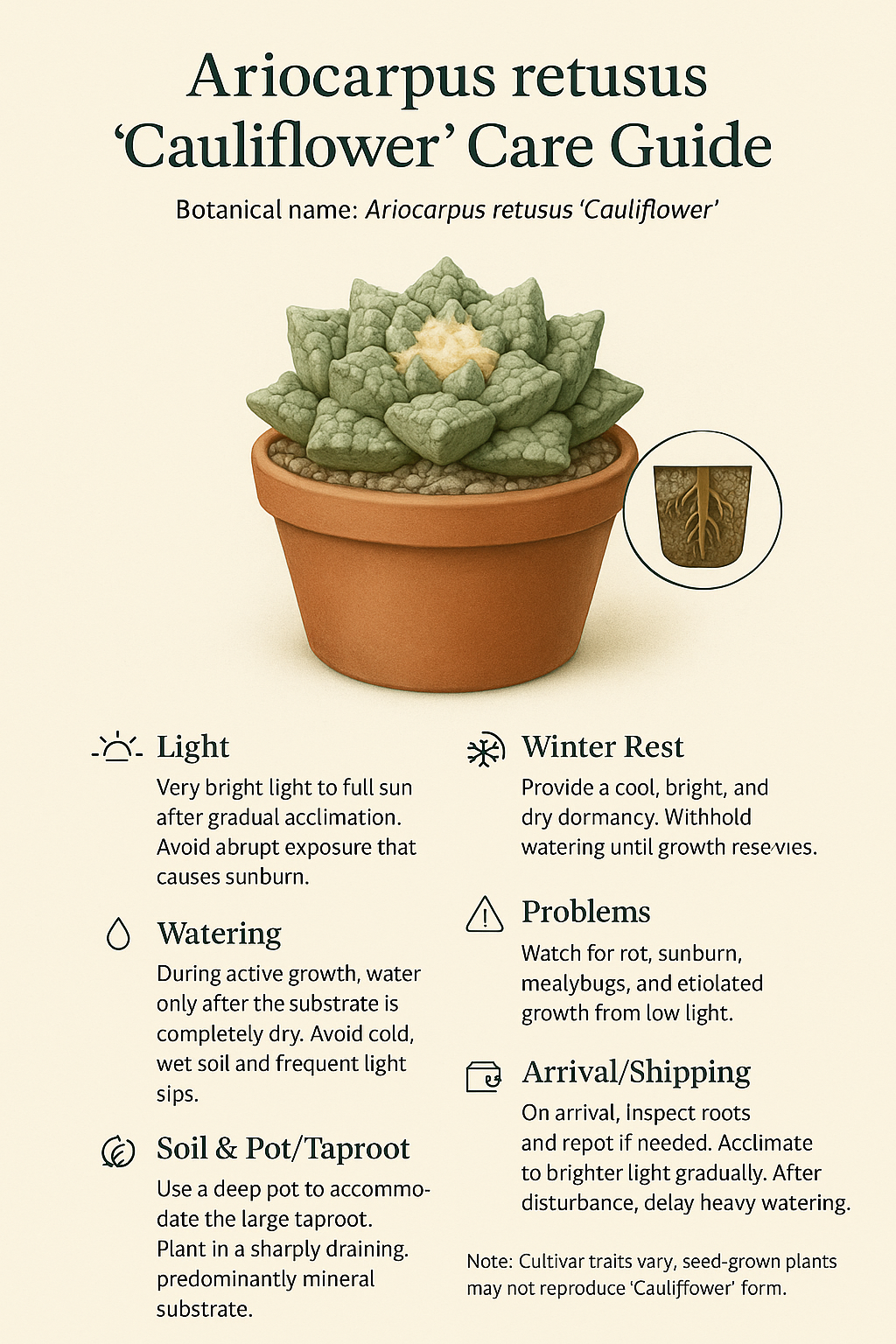
Ariocarpus retusus ‘Cauliflower’ is a cultivated selection associated with the living rock cactus, Ariocarpus retusus. Its distinctive, warty tubercles create a cauliflower-like surface texture. The name describes a horticultural selection, not a formal botanical species or verified hybrid, so care is based primarily on the retusus parent species. The main priorities are very bright light, a deep pot, sharply draining mineral soil, careful watering during active growth, and a dry winter rest to protect its large taproot.
Quick Care Summary
- Provide very bright light to full sun after gradual acclimation.
- Use a deep pot for the large taproot.
- Plant in a sharply draining, predominantly mineral substrate.
- Water only after the substrate has dried completely during active growth.
- Keep the plant cool, bright, and dry through winter dormancy.
- Avoid cold, wet soil and frequent light sips of water.
- Feed sparingly with very dilute, low-nitrogen fertilizer during growth.
- Expect cultivar traits to vary and do not assume seed-grown plants will reproduce ‘Cauliflower’ form.
About Ariocarpus retusus ‘Cauliflower’
‘Cauliflower’ is documented as a Japanese-selected cultivar or collector selection associated with Ariocarpus retusus. Cultivated names and parentage may vary among growers, and reliable sources do not establish it as an interspecific hybrid. The plant is slow-growing and develops a shallow visible rosette above a large, swollen taproot. Its warty, cauliflower-like tubercles are the characteristic feature of this selection.
Light
Provide very bright light to full sun after gradual acclimation. Plants coming from indoor, shaded, or greenhouse conditions should be introduced to stronger light progressively to reduce sunburn. In very intense summer conditions, temporary screening may help protect plants that have not yet hardened to direct sun.
Watering
Water only when the mineral substrate has dried completely and the plant is actively growing. Ariocarpus retusus commonly grows and flowers toward late summer and autumn, so watering should follow actual growth and drying conditions rather than a fixed calendar. Avoid frequent light watering that keeps the root zone damp. Reduce or stop watering as the plant enters winter dormancy; wet dormant roots are highly prone to rot.
Soil and Substrate
Use a sharply draining, predominantly mineral substrate with very limited organic matter. Pumice, lava, granite, or similar grit, with a modest calcareous component such as limestone, is consistent with the retusus parent’s mineral, limestone-associated habitat and cultivation guidance. Avoid peat-heavy, compacted, or moisture-retentive mixes. A calcium-containing component is a grower recommendation, not a verified requirement specific to this cultivar.
Potting and Roots
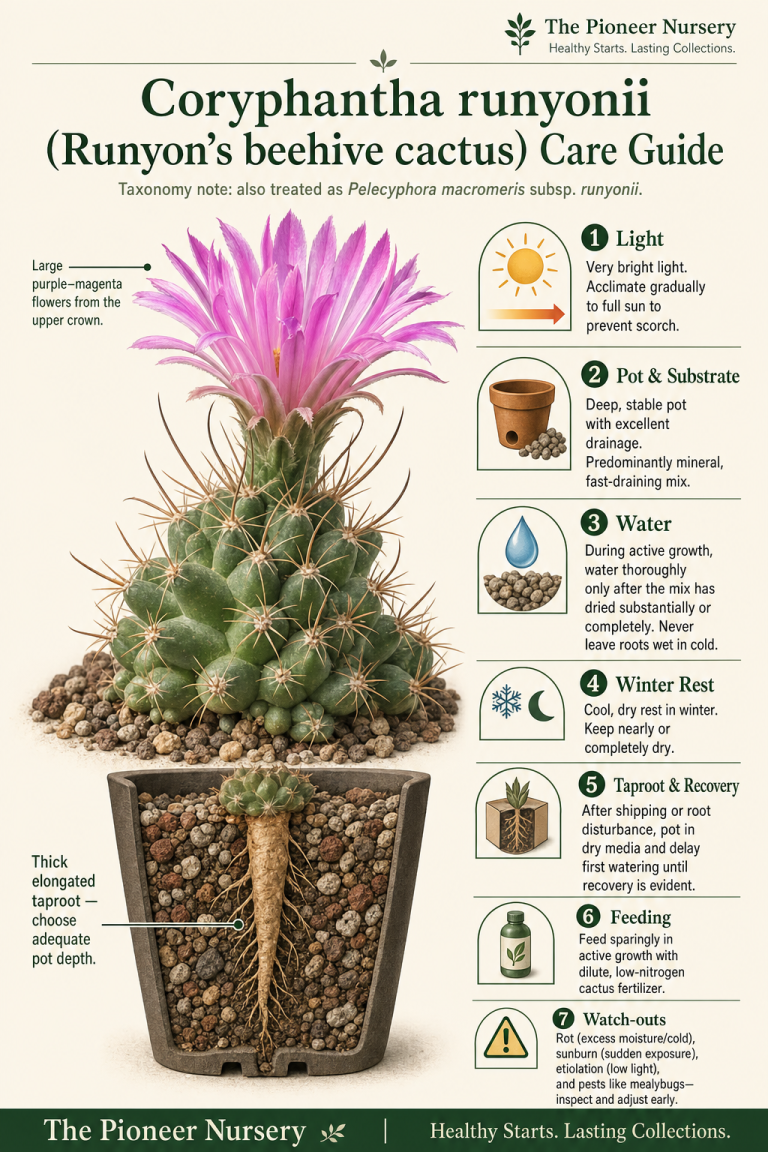
Choose a deep pot that accommodates the large taproot beneath the shallow rosette. Ensure excellent drainage, keep the crown above the substrate, and prevent water from collecting around the root collar. Repot only when necessary because root disturbance can delay recovery. After repotting or substantial root damage, keep the plant dry until damaged tissue has dried and new root activity is likely. Resume watering cautiously rather than immediately saturating the pot. These deep-pot and taproot recommendations are inferred from Ariocarpus retusus and may not apply identically to every ‘Cauliflower’ clone.
Temperature and Air Movement
Provide warm growing conditions with strong light and excellent air movement. Ariocarpus retusus may tolerate brief temperatures below freezing when completely dry, but cold combined with wet substrate greatly increases rot risk. Protect container plants from prolonged cold rain, freezing wet soil, and abrupt exposure to severe outdoor conditions.
Seasonal Growth and Dormancy
Maintain a cool, bright, dry winter rest, withholding water from late autumn through winter until growth resumes. Avoid warm, dim, continuously watered winter conditions, which can encourage weak, etiolated growth and increase the risk of taproot rot. The ‘Cauliflower’ selection does not have sufficiently documented cultivar-specific dormancy differences, so retusus-based seasonal care is the safest approach.
Fertilizer
Feed sparingly during active growth only, using a very dilute, low-nitrogen cactus fertilizer. Some growers may prefer a calcium-containing formulation, but no special fertilizer formula has been verified for ‘Cauliflower’. Avoid heavy feeding, which can encourage soft or distorted growth in this slow-growing cactus.
Flowering
The retusus parent commonly flowers in autumn or early winter, with flowers emerging from the woolly crown and generally ranging from white to pink. Timing and color may vary among cultivated selections. There is not enough reliable cultivar-specific information to guarantee a particular flower color or blooming period for ‘Cauliflower’.
Propagation
Seed propagation is possible for Ariocarpus retusus, but seed-grown offspring will not necessarily retain the named ‘Cauliflower’ traits. A selected cultivar is more reliably maintained through vegetative propagation or grafting when suitable material is available, although cultivar-specific propagation protocols were not located. Grafting is common among collector Ariocarpus and can accelerate growth, but grafted and own-root plants have different growth habits and should not be treated as interchangeable.
Common Problems
Taproot or basal rot is most likely when the substrate stays wet and poorly aerated, especially during dormancy. Sunburn can follow an abrupt move from shade or indoor conditions to full sun. Monitor the substrate and root area for root mealybugs, and inspect woolly crown areas and tubercle junctions for mealybugs. Insufficient light combined with warm, wet winter conditions can cause soft, etiolated growth. Normal drought contraction or hard corking should not be confused with rot; rot is more typically soft, wet, or associated with tissue collapse.
Shipping and Arrival Care
Receive and ship this plant as dry as practical, especially in cool weather. Protect the taproot from prolonged cold and wet packing. After arrival, inspect the plant and acclimate it in bright indirect or filtered light before increasing exposure to stronger sun. For bare-root or recently disturbed plants, check for root damage, allow wounds to dry, and delay heavy watering until recovery is likely. Shipping damage may not become obvious immediately because Ariocarpus are slow-growing and taprooted. Nursery-propagated material with documented origin is preferable to undocumented wild-collected plants, and international movement may be subject to CITES and other regulations.
Frequently Asked Questions
How often should Ariocarpus retusus ‘Cauliflower’ be watered?
Do not use a fixed schedule. Water only when the mineral substrate has dried completely and the plant is actively growing. Reduce or stop watering during winter dormancy.
Does ‘Cauliflower’ need full sun?
It can receive very bright light to full sun after gradual acclimation. Increase light progressively, and use temporary screening during intense conditions if the plant is not hardened.
What kind of pot does this Ariocarpus need?
Use a deep, well-drained pot that accommodates the large taproot beneath the shallow rosette. Avoid burying the crown or allowing water to collect around the root collar.
Will seed-grown plants keep the ‘Cauliflower’ appearance?
Not necessarily. Seed-grown offspring may vary, so the named traits are more reliably maintained through suitable vegetative propagation or grafting.
What flowers should I expect?
The retusus parent commonly produces flowers from white to pink in autumn or early winter, but the specific ‘Cauliflower’ selection does not have sufficiently documented flowering data to guarantee a color or exact bloom period.
How should a shipped plant be handled?
Inspect it on arrival, acclimate it in bright filtered light, and check for root damage. If roots were disturbed, allow wounds to dry and delay heavy watering until recovery is likely.
Ariocarpus retusus ‘Cauliflower’ rewards patience and careful moisture management. Give it strong light, mineral soil, enough depth for its taproot, and a genuinely dry winter rest. Because cultivar-specific research is limited, treat the distinctive name as a selected horticultural identity and use retusus-based care as your foundation.