Euphorbia obesa Care Guide
Learn how to grow Euphorbia obesa, a slow-growing, globe-shaped succulent euphorb requiring bright light, sharp drainage, careful watering, and a dry winter rest.
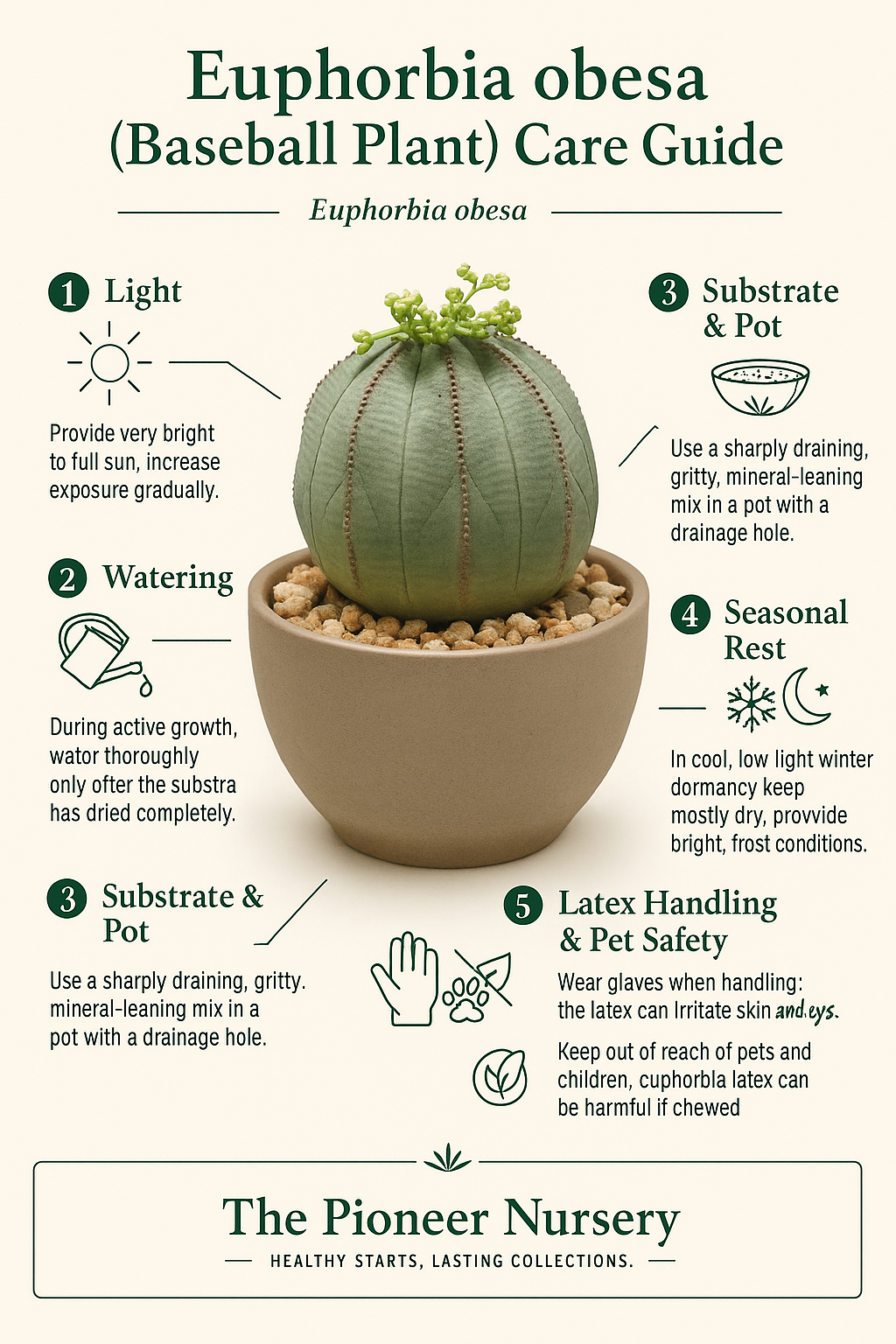
Euphorbia obesa, commonly called the baseball plant, is a slow-growing succulent euphorb from South Africa with a rounded, cactus-like form. It is not a true cactus. Strong light, excellent drainage, careful watering, and dry conditions during cool or low-light periods support healthy growth. Because it produces irritating latex, handle it with gloves and keep it away from children and pets.
Quick Care Summary
- Provide very bright light to full sun, increasing exposure gradually.
- Use a sharply draining, gritty, mineral-leaning substrate in a pot with a drainage hole.
- During active growth, water thoroughly only after the substrate has dried completely.
- Keep the plant substantially drier during cool or low-light winter dormancy.
- Protect it from freezing conditions and cold, wet substrate.
- Wear gloves when handling the plant because its latex can irritate skin and eyes.
About Euphorbia obesa
Euphorbia obesa is a globose succulent subshrub that may become more cylindrical with age and can reach approximately 15–20 cm in cultivation. Its form has inspired names such as baseball plant and gingham golf ball. It is tender and must be grown frost-free. Nursery-propagated plants are preferred.
Light
Provide very bright light to full sun with strong ventilation. A healthy light level supports the plant’s compact, rounded growth, but a plant arriving from shipping or lower light needs a gradual transition. Watch for scorching if intense hot afternoon sun is introduced too abruptly. Increase exposure progressively rather than moving it straight into harsh sun.
Watering
During active growth, wait until the substrate has dried completely before watering thoroughly; then let excess drain away. The dry interval is important because saturated conditions around the roots increase rot risk. In cool or low-light conditions, growth slows and the plant uses less water, so reduce watering substantially and keep it nearly dry during winter dormancy. Resume cautious watering only when warmth, light, and active growth return.
Soil and substrate
Use a sharply draining, gritty, mineral-leaning substrate with good aeration. A loam-and-grit mix is suitable, or amend cactus mix substantially with pumice, grit, or another porous mineral component. The goal is a mix that dries fully between active-growth waterings rather than remaining dense and wet around the roots. Always use a container that drains freely.
Potting and roots
Choose a pot with a drainage hole and avoid oversized containers, which leave more substrate wet for longer. Because Euphorbia obesa may develop a long taproot, provide adequate depth without adding excessive unused soil volume. Repot during active growth and handle the root system carefully; after significant disturbance, allow damaged or disturbed roots to dry before watering.
Temperature and dormancy
Grow Euphorbia obesa warm and frost-free; it should not be exposed to freezing conditions. A winter temperature around or above 10°C/50°F is a cautious cultivation threshold. During cool, low-light periods, slower growth is a signal to reduce moisture and keep the plant dry or nearly dry. Do not return to regular watering until warmth, light, and active growth resume.
Fertilizer
During active growth, apply a dilute, low-nitrogen fertilizer no more than monthly. Light feeding is sufficient for this slow-growing plant. Avoid heavy applications, which can encourage weak or excessively soft growth.
Flowering
Small yellow, cup-shaped flowers appear near the top of mature stems, generally in summer. Euphorbia obesa is dioecious, so male and female flowers occur on separate plants. Seed production therefore generally requires compatible plants of both sexes.
Propagation
Seed is the principal propagation method. Division or cuttings should not be assumed to suit a solitary, non-offsetting specimen. Any cutting work must account for the irritating latex, and wounds should be allowed to dry before rooting.
Shipping and arrival care
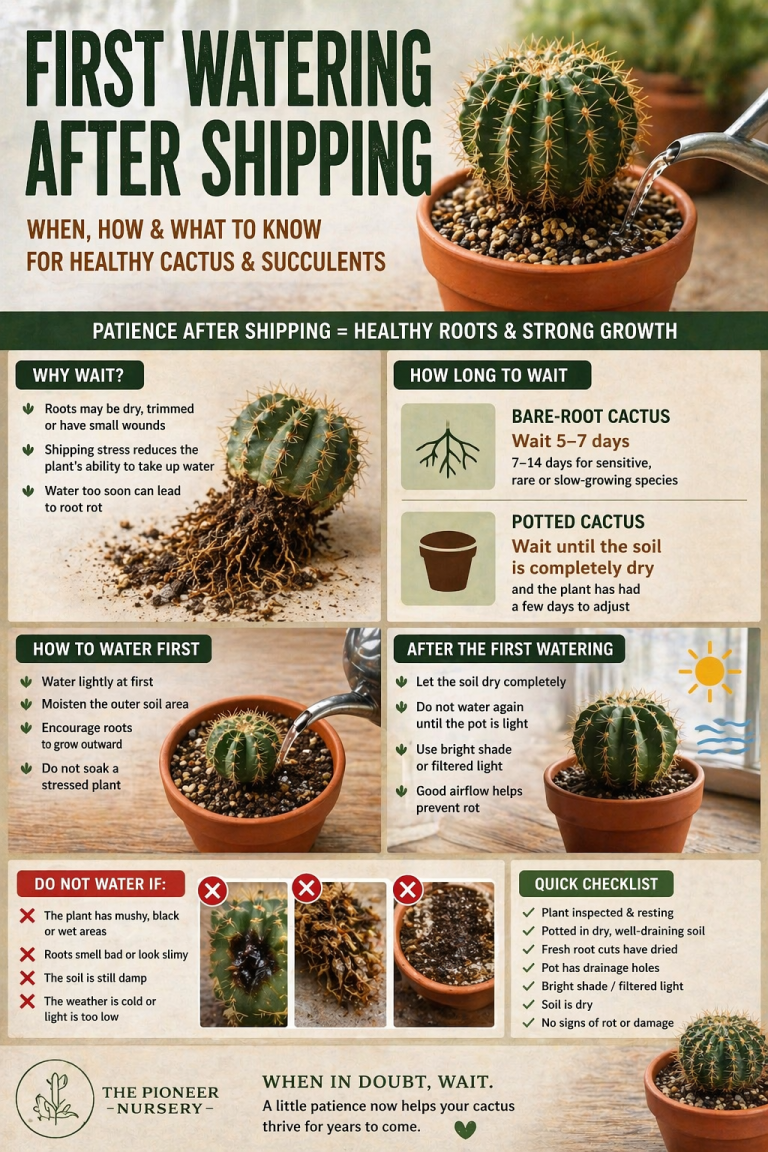
Receive the plant dry and protected from freezing temperatures and prolonged cold, wet packing material. Inspect the stem, roots, and potting area for damage or rot. If roots were disturbed or damaged, allow them to dry before potting or watering. Avoid immediate heavy watering, and acclimate the plant gradually to brighter light so the stem is not scorched.
Safety
The latex can irritate skin and eyes and is harmful if eaten. Wear gloves, avoid contact with sap, and keep the plant away from children and pets.
Common Problems
- Stem or root rot: Usually linked to overwatering, poor drainage, or cold, wet conditions; allow the substrate to dry fully and keep the plant drier when growth slows.
- Sun scorch: If the stem shows scorch after a move into intense light, return to brighter exposure more gradually.
- Mealybugs: Monitor especially indoors or in protected greenhouse conditions.
- Latex irritation: Avoid contact with sap, wear gloves, and keep the plant away from children and pets.
Frequently Asked Questions
How can I tell when Euphorbia obesa needs water?
During active growth, wait until the substrate has dried completely, then water thoroughly and let excess drain. Use substantially less water in cool or low light, keeping the plant nearly dry during winter dormancy.
How should I acclimate Euphorbia obesa after shipping?
Inspect the plant for damage or rot, allow disturbed or damaged roots to dry before potting or watering, and increase light gradually rather than placing it immediately in intense sun.
Does Euphorbia obesa need a deep pot?
It may develop a long taproot, so provide adequate depth while avoiding an oversized container that leaves excessive wet substrate around the roots.
Why is my Euphorbia obesa not producing seed?
The species is dioecious, with male and female flowers on separate plants. Seed production generally requires pollination between compatible plants of both sexes.
Is Euphorbia obesa a cactus?
No. It is a succulent euphorb that resembles a cactus and produces irritating latex, so handle it with gloves.
With bright light, fast drainage, restrained watering, and a dry winter rest, Euphorbia obesa can remain a distinctive long-term container plant. Match watering to warmth, light, and active growth rather than a fixed schedule.