Aloe polyphylla Care Guide
Learn how to grow Aloe polyphylla, the high-altitude spiral aloe: bright light, rapid drainage, careful seasonal watering, and protection from heat and cold wet conditions.
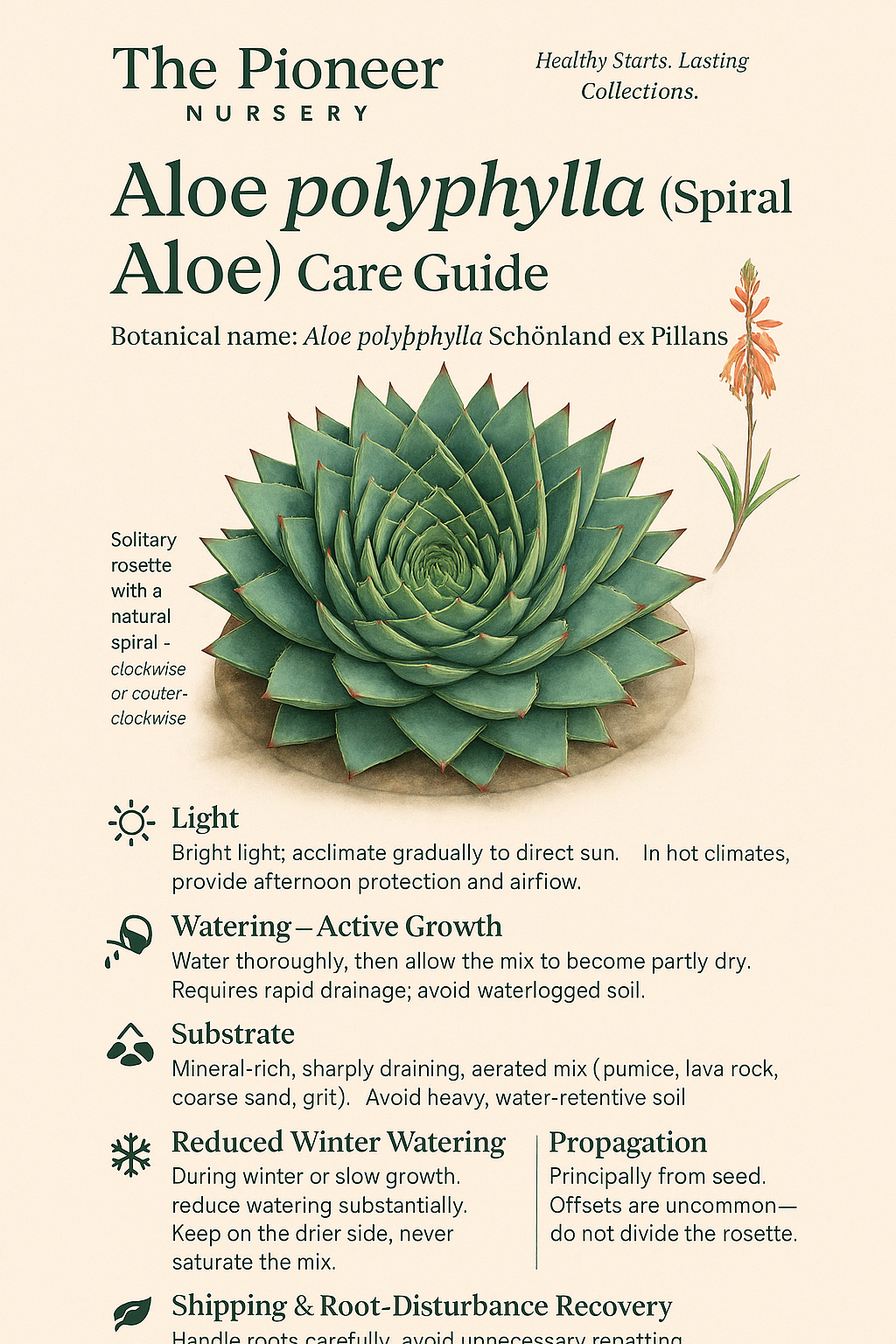
Aloe polyphylla, commonly called spiral aloe or many-leaved aloe, is a distinctive high-altitude species from the Maluti Mountains of Lesotho. Its clockwise or counter-clockwise spiral of leaves is a normal characteristic of the species. Unlike a drought-only aloe, it receives substantial summer moisture in habitat, but that moisture moves rapidly through rocky ground. Successful cultivation depends on excellent drainage, careful active-season watering, cool conditions, and protection from prolonged heat or cold wetness.
Quick Care Summary
- Bright light with gradual acclimation to direct sun.
- Use a sharply draining, mineral-rich substrate.
- Water thoroughly during active growth, then allow the medium to become partly dry.
- Reduce watering substantially during cool winter or slow-growth periods.
- Protect from cold wet soil and prolonged freezing.
- Provide afternoon protection, airflow, and a cool location in hot climates.
- Handle roots carefully and avoid unnecessary repotting.
About Aloe polyphylla
This solitary aloe grows naturally at approximately 2,000–2,500 m in exposed, rocky mountain sites. It is adapted to cool conditions, mist, summer moisture, and rapid drainage. It can be difficult to maintain after severe root disturbance or removal from suitable conditions, so careful handling and a stable growing environment are important. Because the species is endangered, obtain plants only from legally propagated nursery or tissue-culture sources.
Light
Provide bright light with several hours of direct sun, acclimating gradually after shipment or a change from protected conditions. In hot, low-elevation, or humid climates, bright morning sun with protection from intense afternoon heat may be safer than uninterrupted summer exposure. Strong air movement and afternoon protection can help reduce heat stress. Abrupt exposure to intense sunlight may cause sunburn or tissue stress.
Watering
Water thoroughly during active growth, then allow excess water to drain freely and let the substrate become partly dry before watering again. Although this species receives substantial summer moisture in habitat, its rocky growing sites drain rapidly. Reduce watering substantially during winter or other periods of cool, slow growth. Avoid constantly wet roots, particularly when temperatures are low.
Soil and substrate
Use a very free-draining, aerated medium with a substantial mineral component. Cactus soil amended with horticultural grit, pumice, perlite, or similar drainage material is suitable. A moderately fertile, mineral-based medium is consistent with botanical-garden cultivation guidance. Avoid heavy soil that remains wet around the roots.
Potting and roots
Choose a container with excellent drainage and a stable base for the broad rosette. Avoid oversized pots that stay wet for long periods. Repot only when necessary and handle the roots carefully, as this species can decline after disturbance. After major root damage, allow damaged tissue to dry and resume watering cautiously once recovery begins.
Temperature and climate
Aloe polyphylla is a cool-adapted, high-altitude aloe from Lesotho that experiences frost and sometimes snow in habitat. Established plants may tolerate cool conditions and some frost when dry, but prolonged freezing and cold wet soil should be avoided. Hot, stagnant conditions are also risky. Warm-climate growers should provide strong air movement, afternoon protection, and the coolest practical growing location.
Seasonal growth and dormancy
Growth is generally strongest during the cooler, wetter active season. Winter or other periods of cold and reduced light require much less water. Treat dormancy as condition-dependent rather than following a fixed calendar, especially in greenhouse cultivation. Always adjust watering to temperature, light, and how quickly the substrate dries.
Fertilizer
Feed lightly during active growth with a balanced, diluted fertilizer. The RHS recommends a general liquid fertilizer monthly during the principal growing season. Avoid heavy feeding when the plant is dormant, heat-stressed, newly shipped, or recovering from root disturbance.
Flowering
Mature plants may produce branched inflorescences with red, salmon-pink, or occasionally yellow flowers, generally in spring to early summer. Flowering is more likely when plants receive strong light, adequate active-season water, cool conditions, and sufficient maturity.
Propagation
Seed is the principal and most reliable propagation method because plants are usually solitary and do not regularly produce offsets. Sow fresh seed in a clean, sharply draining medium and keep it evenly but lightly moist during germination without waterlogging. Occasional offsets or clumping may occur in cultivation; a well-rooted offset may be separated during active growth, but division should not be assumed to be the normal method.
Shipping and arrival care
Inspect the plant after arrival and protect it from prolonged heat, freezing temperatures, and moisture accumulation. Begin light acclimation gradually rather than placing a recently shipped plant immediately into intense direct sun. If the plant arrives bare-root or with disturbed roots, keep it protected and dry enough for damaged roots to seal before resuming cautious watering. Avoid shipping during severe heat or freezing weather when practical.
Common Problems
- Root or crown rot: Usually associated with poor drainage, excessive watering, or cold wet conditions.
- Heat stress: Hot, humid, low-elevation conditions can cause decline without airflow, cooling, and afternoon protection.
- Mealybugs and scale: Monitor cultivated plants for these reported pests.
- Sunburn: Abrupt exposure to strong direct sunlight can damage tissue.
- Failure after root disturbance: Severe disturbance or removal from suitable conditions can be difficult for this species to survive.
Frequently Asked Questions
How often should I water Aloe polyphylla?
Water thoroughly during active growth, then wait until the substrate has become partly dry and drains freely before watering again. Water much less during cool, slow-growth periods, and never keep the roots constantly wet.
Can Aloe polyphylla grow in hot climates?
It can be stressed by hot, humid, low-elevation conditions. Provide strong air movement, afternoon protection, and the coolest practical growing location, while avoiding stagnant heat.
Can spiral aloe tolerate frost?
Established plants can tolerate cool conditions and some frost when dry, but prolonged freezing and cold wet soil should be avoided.
Why is my Aloe polyphylla not spiraling in the direction I expected?
The spiral may develop clockwise or counter-clockwise. Both directions are normal characteristics of the species.
How is Aloe polyphylla propagated?
Seed is the principal and most reliable method because plants are usually solitary and rarely produce offsets. Well-rooted offsets may occasionally be separated during active growth.
How should I handle a recently shipped plant?
Inspect it, protect it from temperature extremes, acclimate it gradually to direct light, and be especially cautious with watering if roots were disturbed or the plant arrived bare-root.
Aloe polyphylla is best treated as a cool, mountain-dwelling aloe rather than a conventional drought-only plant. Give it bright but carefully acclimated light, rapid drainage, active-season moisture without waterlogging, and protection from both hot stagnant conditions and cold wet soil. Legal nursery propagation also helps protect this endangered species in habitat.