Gymnocalycium ragonesei Care Guide
Learn how to grow Gymnocalycium ragonesei, a small, slow-growing Argentine cactus with white flowers and a strong preference for porous soil, careful watering, and a cool, dry winter rest.
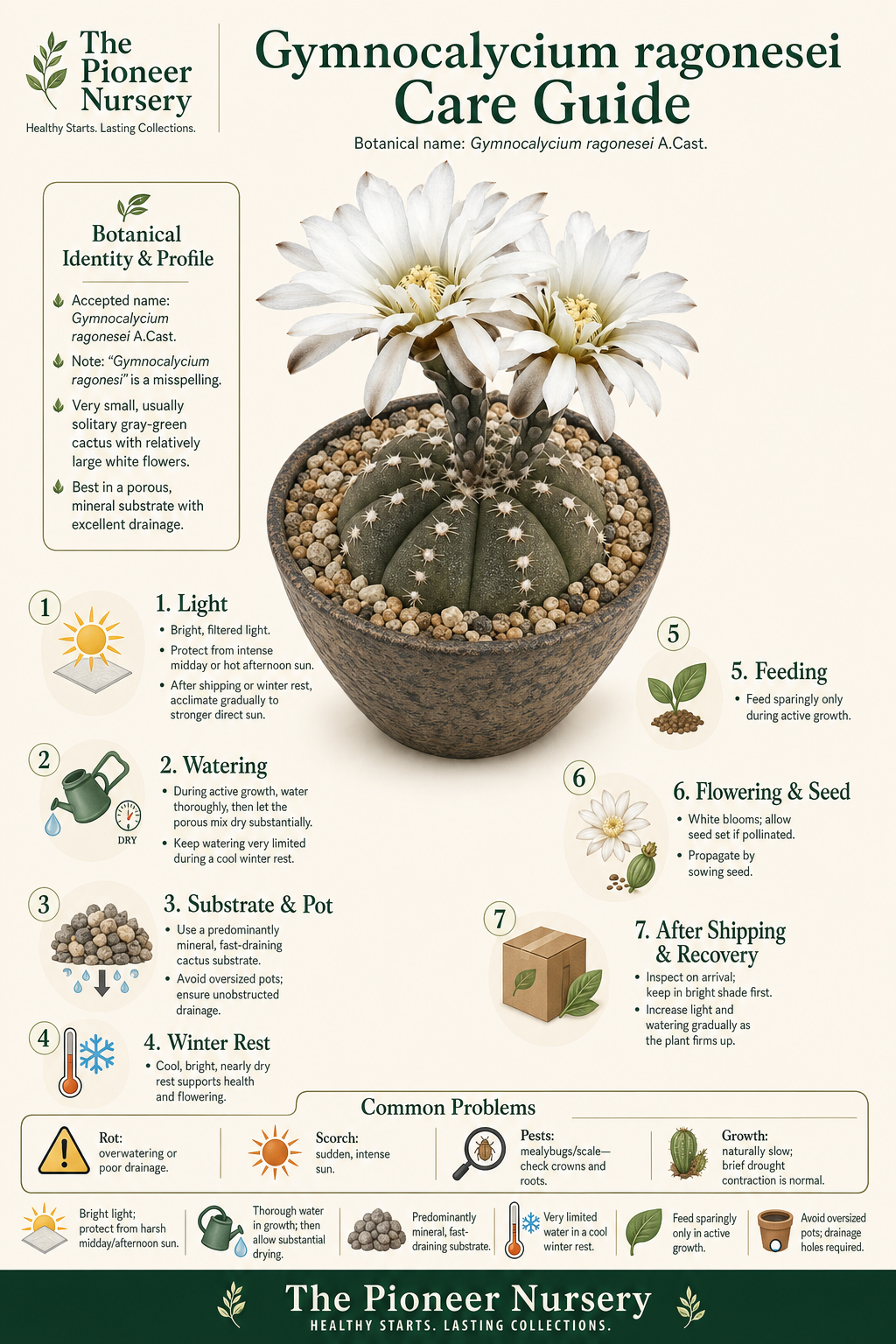
Gymnocalycium ragonesei is a very small, usually solitary cactus from Argentina, known for its slow growth and white flowers. Its main care priorities are excellent drainage, thorough watering during active growth followed by substantial drying, and a cool, bright, nearly dry winter rest. The submitted name “Gymnocalycium ragonesi” is a misspelling or truncated form; the accepted botanical name is Gymnocalycium ragonesei A.Cast.
Quick Care Summary
- Bright light with protection from intense midday or hot afternoon sun.
- Acclimate gradually to stronger direct sunlight after shipping or winter rest.
- Water thoroughly during active growth, then let the porous substrate dry substantially.
- Keep watering very limited during a cool winter rest.
- Use a predominantly mineral, fast-draining cactus substrate.
- Avoid oversized pots and containers without unobstructed drainage.
- Feed sparingly only during active growth.
- Expect slow growth and occasional natural contraction during drought.
About the plant
This small, gray-green cactus is generally solitary and is associated with dry, saline or salt-desert-like habitats in Argentina, including Catamarca and Córdoba. Gymnocalycium plants may contract into the soil during drought and expand again after rainfall, so some shrinkage during a dry rest is not necessarily a sign of decline. It is naturally slow-growing, so patience is important.
Light
Provide bright light with some protection from intense midday or hot afternoon sun. Morning sun or bright filtered light is a safe default. Gradually acclimate the plant to stronger direct sunlight, especially after shipping or winter dormancy. Some direct sun can support flowering, but abrupt, harsh exposure may cause stress or scorch.
Watering
During active growth, water thoroughly and then allow the substrate to dry substantially before watering again. Reduce watering sharply in cool or dormant conditions and keep the plant nearly dry through winter. Constantly wet soil is a major root-rot risk. Let temperature, light, airflow, and substrate dryness guide watering rather than following a fixed calendar.
Soil and substrate
Use a very porous, fast-draining cactus mix with a predominantly mineral component and limited organic matter. A slightly acidic growing medium is appropriate for Gymnocalycium. The goal is a substrate that drains freely and does not remain wet around the roots.
Potting and roots
Choose a pot with an unobstructed drainage hole and avoid an oversized container, which can stay wet too long. Repot only when necessary because this is a small, slow-growing cactus. If repotting or root disturbance damages the roots, allow them to dry and recover before resuming cautious watering.
Temperature and winter rest
Keep the plant warm during active growth with good ventilation. A cool, dry winter rest is generally suitable. Avoid prolonged freezing, particularly when the substrate is wet. The available research does not support assigning a dependable minimum temperature.
Seasonal growth and dormancy
Maintain a cool, bright, dry winter rest with little or no water when the plant is kept cool. As temperatures and light increase in spring, resume watering gradually. Temporary contraction during the dry season can occur naturally.
Fertilizer
Feed sparingly during active growth with a dilute, low-nitrogen or balanced cactus fertilizer. Do not fertilize during winter dormancy, while the plant is rootless, after recent repotting, or when it is otherwise stressed.
Flowering
Gymnocalycium ragonesei is reported to produce white flowers, which may be large relative to the small plant body. Adequate light, healthy active-season growth, and a cool, dry winter rest can help support flowering.
Propagation
Propagation is primarily by seed. Gymnocalycium seed propagation is considered practical, while offsets are reported to be infrequent or may take considerable time to appear.
Common problems
Root rot: Usually associated with dense substrate, poor drainage, or watering while conditions are cool. Sun scorch: Abrupt exposure to intense, unfiltered sunlight can stress or damage the plant; acclimate gradually. Mealybugs and spider mites: Inspect the plant, including around the roots when appropriate. Slow growth: This species is naturally small and slow-growing, so limited visible growth is not necessarily a problem.
Shipping and arrival care
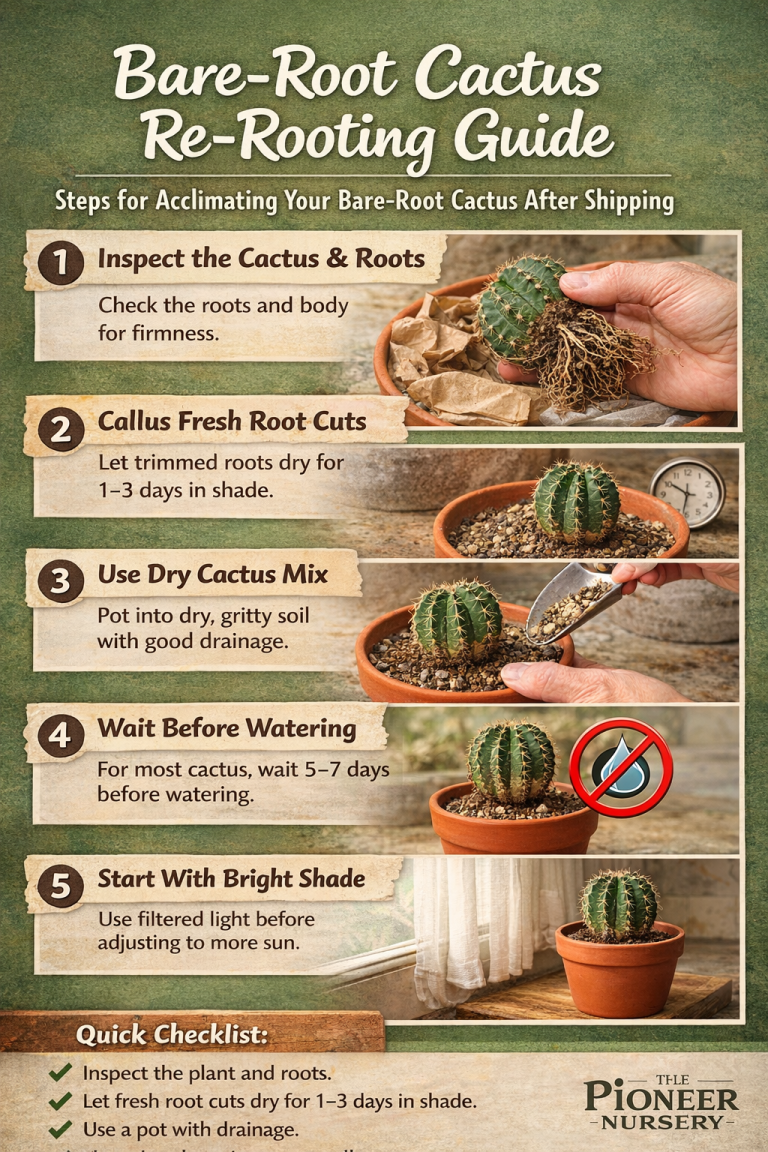
After arrival, inspect the plant for rot or root damage and protect it from crushing, cold, and prolonged humidity. Provide bright but initially filtered light, especially if it has been shipped or was previously kept in lower light. Avoid immediate heavy watering when the plant is bare-rooted, recently repotted, or has damaged roots. Adjust recovery care to the plant’s root condition and the current season.
Frequently Asked Questions
How often should I water Gymnocalycium ragonesei?
There is no reliable fixed schedule. Water thoroughly during active growth, then wait for substantial substrate drying. In cool or dormant conditions, reduce watering sharply and keep the plant nearly dry.
Can Gymnocalycium ragonesei take direct sun?
It benefits from bright light and some direct sunlight may support flowering, but intense midday or hot afternoon sun can cause scorch. Start with morning sun or bright filtered light and acclimate gradually.
Does it need a winter dormancy?
A cool, bright, dry winter rest is generally suitable. When kept cool, Gymnocalycium generally requires little or no winter water. Resume watering gradually as spring light and temperatures increase.
Why is my plant shrinking?
Gymnocalycium plants can contract into the soil during drought and expand after rainfall. Temporary shrinkage during a dry rest is not necessarily a health problem, although persistent softness or signs of rot require inspection.
How is Gymnocalycium ragonesei propagated?
It is primarily propagated by seed. Offsets are reported to be infrequent or may take considerable time to develop.
What should I do when the plant arrives bare-rooted?
Inspect the roots, provide bright but initially filtered light, and avoid immediate heavy watering if roots are damaged or the plant needs recovery. Protect it from cold, crushing, and prolonged humidity.
Gymnocalycium ragonesei rewards careful, restrained care rather than frequent attention. Give it porous soil, strong but acclimated light, thorough active-season watering followed by drying, and a cool, dry winter rest. Its naturally slow growth and occasional seasonal contraction are part of its character.