Dioscorea elephantipes Care Guide
Learn how to grow Dioscorea elephantipes, a deciduous caudex plant with a fissured, corky caudex and seasonal climbing vine. Key priorities are bright light, sharply draining soil, warm conditions, and a substantially dry dormancy.
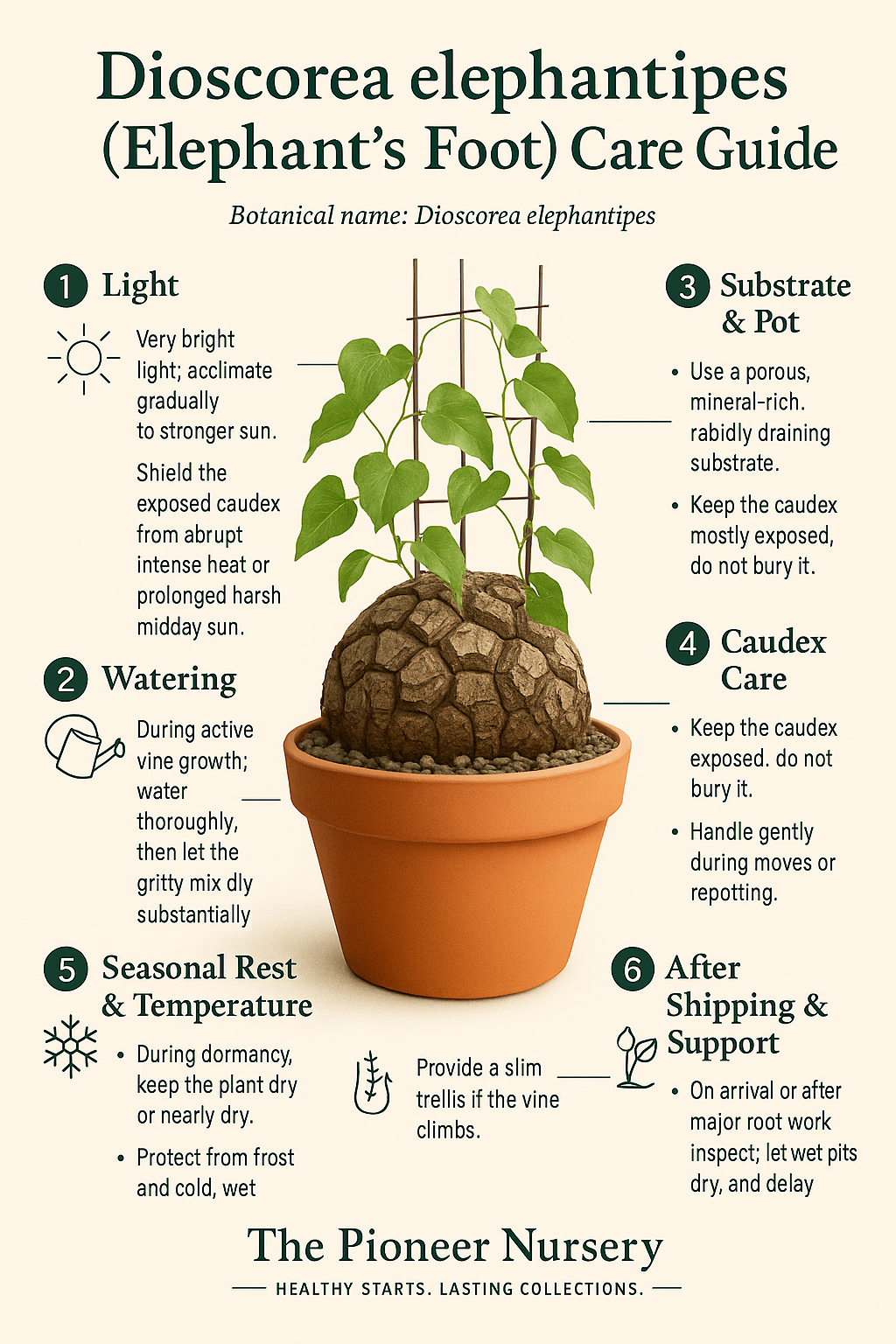
Dioscorea elephantipes, commonly called elephant's foot or tortoise plant, is a deciduous climbing caudex geophyte native to South Africa. Its specialized tuberous caudex develops corky geometric plates slowly over time, while the plant produces a climbing vine during active growth. Successful care depends on matching watering to vine growth, using a porous mineral-rich substrate, protecting the exposed caudex from abrupt intense heat, and keeping the plant warm and dry during dormancy.
Quick Care Summary
- Provide very bright light with gradual acclimation to stronger sun.
- Protect the exposed caudex from abrupt intense heat and prolonged harsh sun.
- Water thoroughly during active vine growth, then allow the gritty substrate to dry substantially.
- Keep the plant dry or nearly dry during dormancy.
- Use a porous, mineral-rich substrate with rapid drainage.
- Keep the caudex exposed and provide enough pot depth for the tuberous root.
- Protect from frost and cold, wet conditions.
- Support the climbing vine with a trellis if needed.
About Dioscorea elephantipes
This species is principally grown as an ornamental caudiciform rather than as an ordinary edible yam. The caudex should remain mostly or entirely above the substrate and may require a trellis or other support for its climbing vine. Older names, including Testudinaria elephantipes and Tamus elephantipes, are documented synonyms or legacy combinations for this species.
Light
Provide very bright light. The leafy vine can take substantial sun after gradual acclimation, but the exposed caudex may suffer damage from prolonged intense heat or sudden full sun. Bright filtered light, morning sun, or partial shade over the caudex is a conservative approach, especially in hot climates or after shipping. Inadequate light can produce weak, stretched vines.
Watering
Water thoroughly only while active vine growth is present, allowing the gritty substrate to dry substantially between waterings. Reduce watering as the vine yellows and dies back. During dormancy, keep the plant dry or nearly dry. Only consider cautious moisture if the caudex shows significant dehydration and conditions are warm, bright, and well ventilated. Resume regular watering gradually when new growth clearly emerges. Dormancy timing varies with hemisphere, temperature, light, and individual behavior, so avoid a fixed calendar schedule.
Soil and substrate
Use a porous, gritty, very well-drained substrate with strong aeration and rapid drainage. A mineral-rich mix containing pumice, coarse grit, lava, perlite, or similar materials is appropriate, with only a modest organic component. Avoid water-retentive soil that stays wet around the tuberous root or caudex.
Potting and roots
Choose a container with generous drainage and enough depth for the tuberous root system. Leave the corky caudex mostly or entirely above the substrate rather than burying it deeply. Repot during dormancy or just before active growth, handling the specialized root and caudex carefully. After substantial root disturbance, keep the plant dry until damaged tissues have had time to seal, then reintroduce water cautiously.
Temperature and protection
Protect Dioscorea elephantipes from frost and freezing temperatures. In temperate regions, grow it in a warm, sheltered greenhouse, conservatory, or protected indoor environment. Cold combined with wet substrate presents a substantial rot risk. The RHS classifies this plant as requiring protected cultivation under glass in cool climates.
Seasonal growth and dormancy
Dioscorea elephantipes is deciduous and enters a pronounced dormant period after the vine dies back. Dormancy is commonly associated with summer in some cultivation regimes, but it may be irregular or reversed by hemisphere and growing conditions. Keep the dormant plant substantially drier and avoid encouraging weak growth in cool, dark conditions.
Fertilizer
During active vine growth, apply a dilute, balanced fertilizer occasionally rather than feeding heavily. Do not fertilize during dormancy or while the plant is recovering from repotting or root disturbance.
Flowering
Mature, healthy plants may produce small, inconspicuous greenish to yellow flowers in axillary racemes during suitable seasonal growth. Flowering is secondary to the ornamental, fissured caudex.
Propagation
Propagation is primarily by seed. Sow fresh seed in a warm, free-draining medium and maintain moisture without saturation during germination. Specialist horticultural references also report propagation from young softwood shoots or cuttings as they arise, but seed is the more dependable species-level method and preserves the caudiciform growth habit from an early stage.
Shipping and arrival care
Receive and ship the plant as dry as practical, particularly when dormant or when temperatures are cool. Protect the caudex from abrasion and impact because damaged cork plates may scar permanently. After arrival, inspect for soft spots or concealed damage, provide bright but initially moderated light, and acclimate gradually. Do not water immediately after bare-root shipping or major root disturbance; wait until the plant is stable, warm, and showing active growth, or until damaged roots have dried and sealed.
Common Problems
- Caudex or root rot: Usually associated with wet substrate, poor drainage, or watering during cool dormancy.
- Sunscald or heat injury: May follow abrupt exposure of the caudex to intense sun or heat.
- Delayed or irregular emergence: Dormancy timing can vary and does not necessarily indicate plant failure.
- Weak, stretched vines: Often associated with inadequate light.
- Growing-vine pests: Aphids and froghoppers may affect the vine.
- Safety concern: The RHS lists the plant as toxic if eaten and potentially irritating to skin; use care around children and pets.
Frequently Asked Questions
How often should I water Dioscorea elephantipes?
Water thoroughly only during active vine growth, allowing the gritty substrate to dry substantially between waterings. Reduce watering as the vine dies back and keep the plant dry or nearly dry during dormancy. Resume gradually when new growth clearly appears.
Should the caudex be buried?
No. Leave the corky caudex mostly or entirely above the substrate. The container should provide depth for the tuberous root system without burying the ornamental caudex deeply.
Does Dioscorea elephantipes need direct sun?
It needs very bright light, and the vine can take substantial sun after gradual acclimation. However, the exposed caudex can be damaged by abrupt full sun or prolonged intense heat, so filtered light, morning sun, or partial caudex shade is a conservative approach.
Why has my plant gone dormant?
The species is deciduous and normally dies back into a pronounced dormant period. Timing can vary with hemisphere, temperature, light, and individual behavior, so delayed or irregular emergence is not necessarily a sign of failure.
Can Dioscorea elephantipes be grown outdoors in winter?
Protect it from frost and freezing temperatures. In cool climates, it requires protected cultivation under glass, and cold conditions combined with wet substrate create a substantial rot risk.
How should I handle a recently shipped plant?
Inspect it for damage, moderate its initial light, and acclimate gradually. After bare-root shipping or major root disturbance, do not water immediately; wait until the plant is stable and warm or damaged roots have dried and sealed.
Dioscorea elephantipes rewards patience. Keep its caudex exposed, provide bright but carefully acclimated light, use fast-draining soil, and let watering follow active vine growth rather than a fixed schedule. During dormancy, dryness and protection from cold are more important than encouraging growth.