Mammillaria magnimamma ‘Erusamu’ Variegated Inermis Care Guide
Learn how to grow this variegated, reduced-spine Mammillaria magnimamma selection with guidance on light, watering, soil, dormancy, flowering, propagation, and shipping recovery.
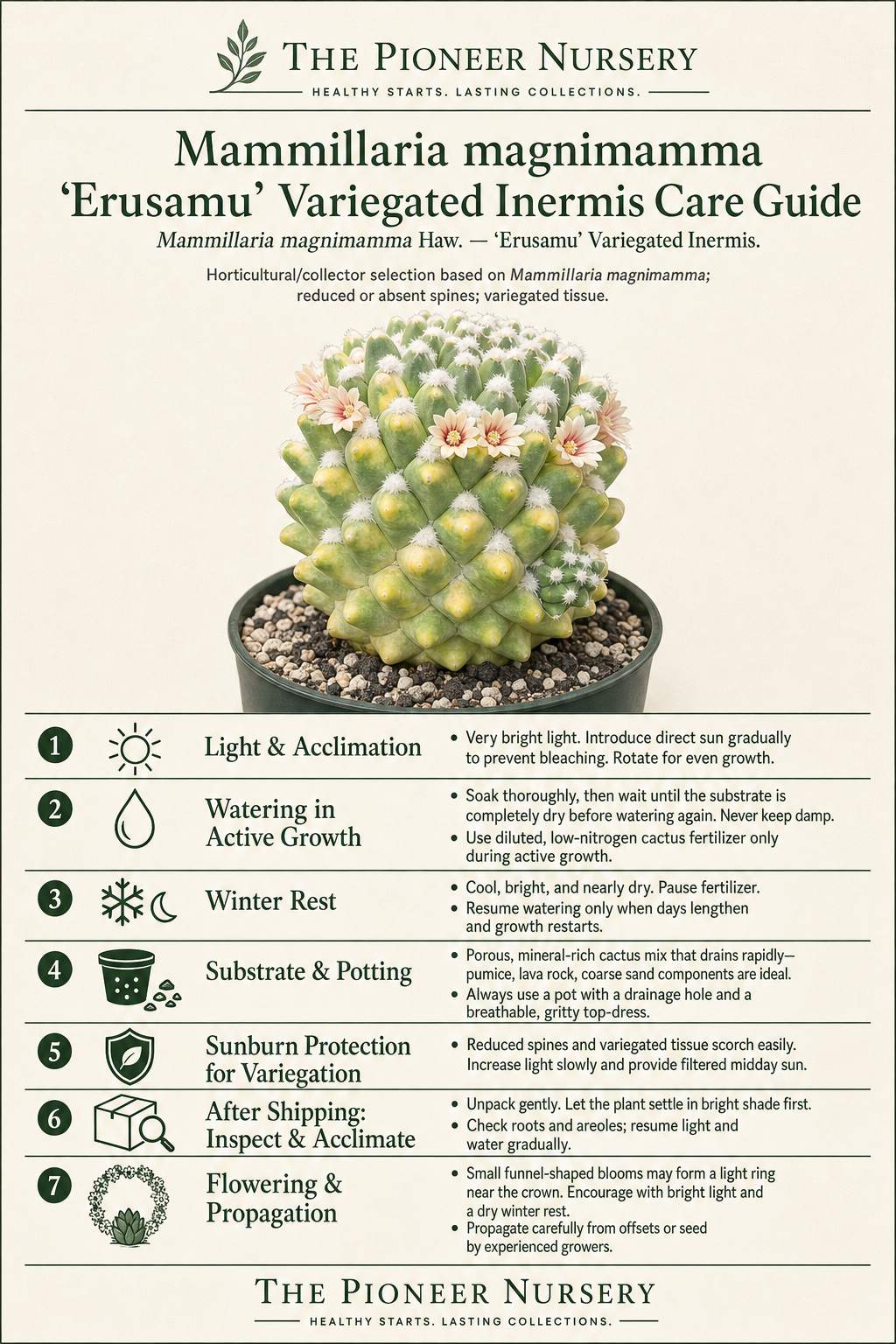
Mammillaria magnimamma ‘Erusamu’ Variegated Inermis is a horticultural selection of the Mexican pincushion cactus with variegated tissue and reduced or absent spines. These traits make it especially important to balance very bright light with gradual sun acclimation, while keeping the porous substrate completely dry between active-season waterings. The plant benefits from a cool, bright, nearly dry winter rest and should be protected from cold, wet conditions.
Quick Care Summary
- Provide very bright light, with gradual acclimation to direct sun.
- Use a porous, mineral-rich cactus substrate that drains rapidly.
- During active growth, water thoroughly only after the substrate dries completely.
- Keep the plant nearly or completely dry during a cool winter rest.
- Protect the reduced-spine, variegated tissue from sudden intense sun.
- Use a diluted, low-nitrogen cactus fertilizer only during active growth.
- Handle carefully during repotting because reduced spination leaves the body exposed.
About Mammillaria magnimamma ‘Erusamu’
Mammillaria magnimamma Haw. is the currently accepted botanical name for the species. ‘Erusamu’ is a horticultural and collector designation associated with Mammillaria bucareliensis, which is treated as a synonym of M. magnimamma. ‘Variegated’ describes areas with reduced chlorophyll, while ‘inermis’ describes reduced or absent spination; neither term represents a separately verified botanical rank. Plants can vary in body form, spination, flower color, and growth habit. This selection may grow more slowly than a fully green plant, particularly where variegated tissue has limited chlorophyll.
Light
Provide very bright light with several hours of direct sun once the plant is acclimated. Introduce stronger light gradually after shipping, repotting, or time in shade. Because this selection has variegated tissue and reduced or absent spines, it is more exposed to sudden sun stress than a heavily spined, fully green specimen. In intense summer climates, bright filtered light or protection from the strongest afternoon sun may be prudent. Pale tissue that yellows, bleaches, or scorches is a sign to reassess light exposure.
Watering
During active growth, water thoroughly only after the substrate has dried completely. Let excess water drain freely, and never leave the pot standing in water. Reduce watering as temperatures and light decline in autumn. During a cool winter rest, keep the plant nearly or completely dry. Cold, wet conditions create a substantial rot risk. Do not use a fixed calendar; watering frequency depends on temperature, light, pot size, substrate, humidity, season, and root condition.
Soil and Substrate
Use a porous, rapidly draining cactus substrate with substantial mineral content, such as pumice, scoria, coarse sand, or perlite combined with a modest amount of organic material. The mix should support active growth while drying quickly and remaining well aerated. Strong air movement and prompt drying after watering are helpful.
Potting and Roots
Choose a container with a drainage hole and use the smallest pot that comfortably accommodates the root system. Repot in spring or early active growth when possible. Handle the plant carefully because reduced spination leaves the body more exposed to abrasion and sun stress. After major root disturbance, allow damaged roots to dry and heal before watering.
Temperature
Protect the plant from freezing and prolonged cold, wet exposure. A conservative winter minimum is approximately 5 °C / 41 °F, while established, completely dry plants may tolerate brief lower temperatures. Warm growing conditions combined with strong light support compact growth.
Seasonal Growth and Dormancy
Mammillaria magnimamma benefits from a cool, bright, dry winter rest. Shorter days, lower temperatures, and reduced watering encourage dormancy. Keep the dormant plant in adequate light rather than darkness, which helps prevent weak, stretched growth and supports later flowering. Resume more active care as growing conditions improve, while allowing the substrate to dry fully between waterings.
Fertilizer
Fertilize only during active spring and summer growth, using a diluted, low-nitrogen cactus fertilizer. Do not fertilize dry, dormant, recently repotted, stressed, or sun-damaged plants. Variegated growth should not be forced with excessive fertilizer or water.
Flowering
Mature plants commonly produce a ring of small, funnel-shaped flowers near the upper part of each stem. Flower color may range from pale yellow or cream to pink, often with a darker central stripe. A bright growing season followed by a cool, dry winter rest can improve flowering.
Propagation
Propagation is possible from seed or rooted offsets when available. The species may gradually form clumps, making offsets a practical way to preserve the parent plant’s traits. Seed-grown offspring will not reliably reproduce the variegation or ‘Erusamu’ inermis phenotype. Highly variegated tissue with insufficient chlorophyll may grow slowly or require grafting, but grafting should not be assumed to be inherently superior to own-root culture.
Shipping and Arrival Care
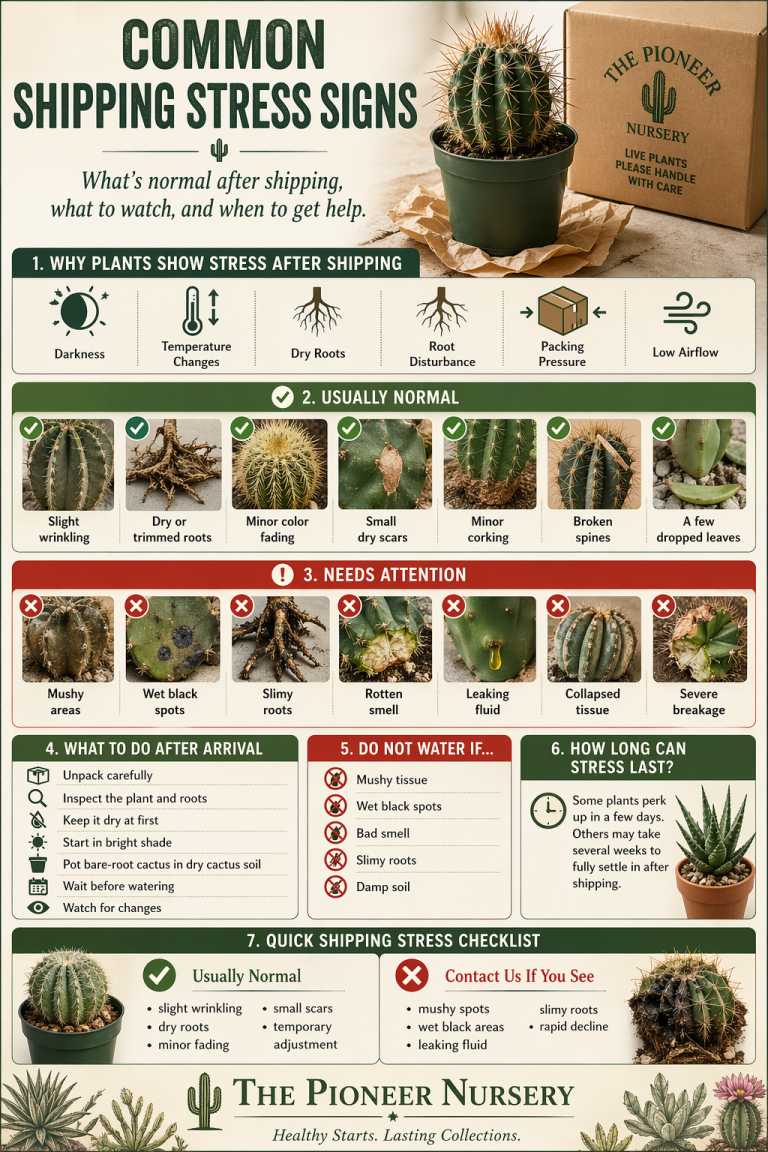
After arrival, inspect the plant for rot, pests, broken tissue, and signs of sun exposure. Place it initially in bright indirect or filtered light, then acclimate it gradually to stronger light. The variegated, low-spine form is particularly vulnerable to sudden sunburn. Avoid immediate heavy watering if the plant has experienced root disturbance or arrives with damaged roots. Ship and receive the plant in dry conditions when practical.
Common Problems
Sunburn: Abrupt exposure to intense direct light can damage variegated or low-spine tissue; acclimate gradually and provide protection in harsh summer conditions.
Root or stem rot: Dense substrate, poor drainage, or watering while cold can keep the plant wet for too long. Use a porous mix and maintain a dry winter rest.
Etiolation: Inadequate light can cause weak, stretched growth. Keep the plant bright during both active growth and winter dormancy.
Mealybugs and scale insects: Monitor protected or greenhouse-grown plants.
Spider mites: Hot, dry conditions can favor infestations; inspect the plant regularly.
Variegated tissue loss or slow growth: Highly variegated portions may have insufficient chlorophyll and can grow slowly. Avoid trying to compensate with excessive water or fertilizer.
Frequently Asked Questions
How often should I water Mammillaria magnimamma ‘Erusamu’?
Do not follow a fixed calendar. During active growth, water thoroughly only after the substrate has dried completely. Reduce watering as light and temperatures decline, and keep the plant nearly or completely dry during a cool winter rest.
Does this variegated form need full sun?
It needs very bright light and can receive several hours of direct sun after acclimation. Introduce direct light gradually, especially after shipping or repotting, because variegated and reduced-spine tissue is more vulnerable to sunburn.
Why is winter dormancy important?
A cool, bright, dry winter rest helps prevent weak growth and supports later flowering. Avoid keeping the dormant plant in darkness or in cold, wet conditions.
Can I grow this plant from seed?
Yes, propagation from seed or rooted offsets is supported. Seed-grown plants will not reliably reproduce the parent’s variegation or ‘Erusamu’ inermis phenotype.
Should I water immediately after repotting?
After major root disturbance, allow damaged roots to dry and heal before watering. The appropriate recovery approach depends on the plant’s root condition and shipping or repotting stress.
What flowers can I expect?
Mature plants commonly produce a ring of small funnel-shaped flowers near the upper stem. Colors may range from pale yellow or cream to pink, often with a darker central stripe.
Give this Mammillaria magnimamma selection strong but carefully acclimated light, fast drainage, thorough drying between active-season waterings, and a cool, bright winter rest. Its variegated, reduced-spine form rewards a gentler approach to sun exposure and careful attention to root moisture.