Mammillaria candida Care Guide: Snowball Pincushion Cactus
Learn how to grow Mammillaria candida, a woolly, white-spined cactus from northeastern Mexico with rose-pink flowers and a preference for bright light, sharply draining soil, and a dry winter rest.
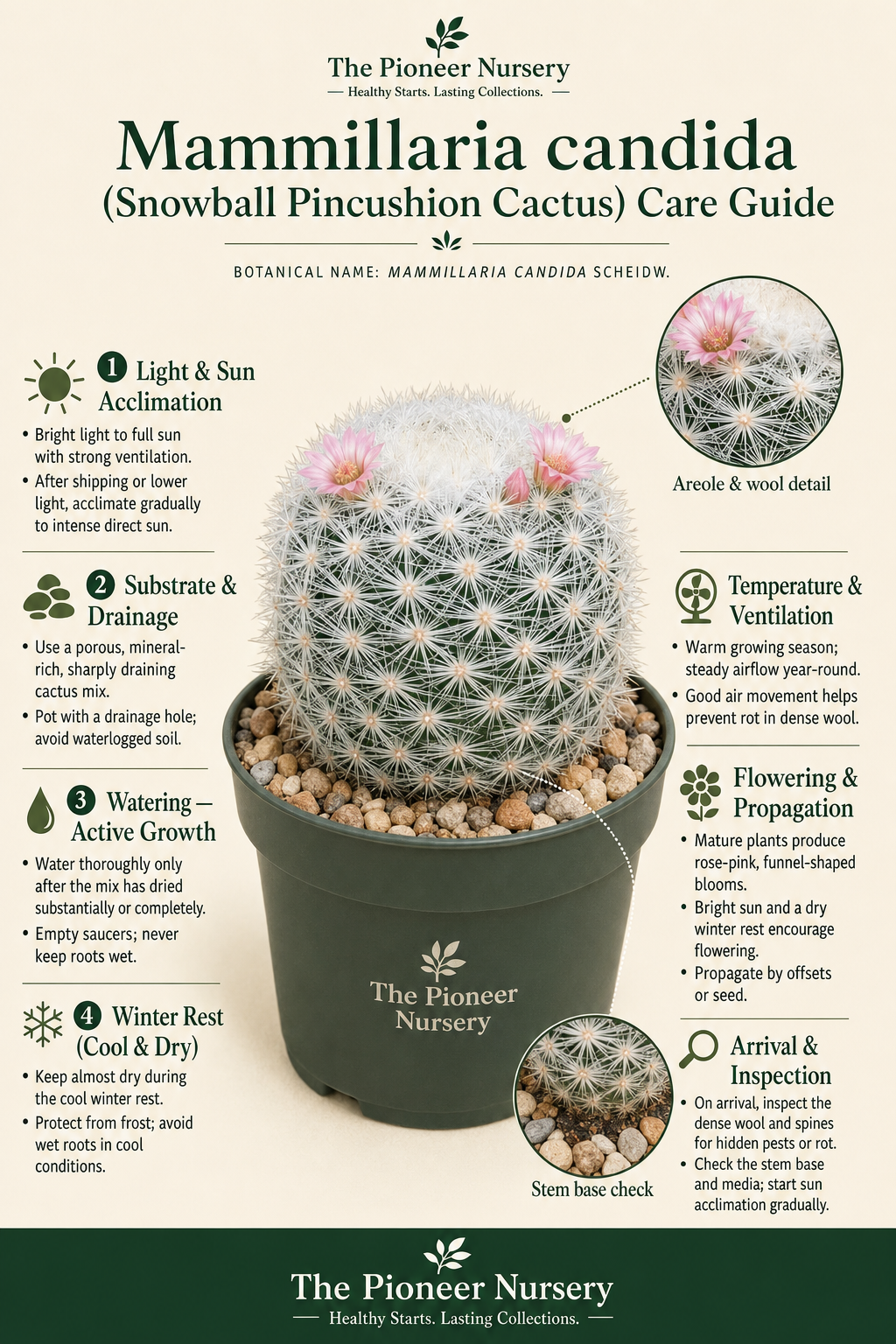
Mammillaria candida, commonly called the snowball pincushion cactus, is a small globose to globose-cylindrical cactus covered in dense white wool and spines. It may grow alone or form clumps, and can reach roughly 12–15 cm in height under cultivation. The main care priorities are strong light, excellent drainage, careful acclimation to direct sun, and substantially reduced watering during the cool season. Some references place this species in Mammilloydia as Mammilloydia candida, while others retain Mammillaria candida; this naming difference does not materially change its practical care.
Quick Care Summary
- Bright light to full sun with strong ventilation.
- Acclimate gradually to intense direct sun after shipping or lower-light conditions.
- Use a porous, mineral-rich, sharply draining cactus substrate.
- Water thoroughly during active growth only after the mix has dried substantially or completely.
- Keep almost dry during the cool winter rest.
- Protect from frost and avoid wet roots in cool conditions.
- Inspect the dense wool and spines carefully for hidden pests or rot.
About the Plant
Native to northeastern Mexico, Mammillaria candida is a compact, woolly cactus with a dense white covering that gives it its snowball-like appearance. Its rose-pink, funnel-shaped flowers are approximately 2 cm long and are commonly associated with late winter through spring. The wool and spines can conceal the areoles and stem base, so careful inspection is important when checking plant health.
Light
Provide bright light to full sun with strong ventilation. Acclimate plants gradually when moving them from lower light, greenhouse shade, indoor conditions, or shipping darkness into intense direct sun. A sudden change can cause sunburn. In very hot glasshouse or desert conditions, light afternoon filtering may help prevent heat stress while maintaining compact growth.
Watering
During active growth, water thoroughly only after the substrate has dried substantially or completely, and allow excess water to drain freely. Reduce watering sharply during winter, keeping the plant almost dry, especially in cool or poorly ventilated conditions. Cold, wet substrate is a significant rot risk. After root disturbance or bare-root shipping, wait until damaged roots have dried and healed before resuming normal watering.
Soil and Substrate
Use a very porous, sharply draining cactus mix with substantial mineral material, such as pumice, lava, coarse sand, or equivalent grit, combined with a smaller proportion of organic material. Avoid dense, moisture-retentive, or poorly aerated mixes, which increase the risk of root and stem rot.
Potting and Roots
Choose a container with drainage holes that is only slightly larger than the root system. Repot during active growth when possible and disturb the roots as little as practical. If roots are damaged or freshly disturbed, allow them to dry and heal before returning to normal watering. The plant is suitable for container culture and may eventually become clump-forming.
Temperature and Ventilation
Provide warm growing conditions under glass or outdoors in suitable climates. Protect the plant from frost. The RHS lists an H2 rating, indicating tolerance of low temperatures but not freezing under UK conditions. Good ventilation is especially important when light is strong and whenever temperatures are cool. Avoid combining cool conditions with wet roots.
Seasonal Growth and Dormancy
Growth is reduced during the cooler, darker season. Maintain a dry winter rest with good ventilation, then resume watering gradually as temperatures, light, and active growth increase. Do not treat winter dryness as a fixed calendar schedule; the plant’s condition and growing environment should guide the transition.
Fertilizer
During active growth, use a dilute balanced liquid fertilizer approximately every two to three weeks, or follow a conservative cactus-fertilizer program. Do not fertilize during the dry winter rest or while the roots are dry and inactive.
Flowering
Mammillaria candida produces rose-pink, funnel-shaped flowers approximately 2 cm long. Flowering is commonly associated with late winter through spring, but timing can vary with light, temperature, plant maturity, and the preceding dormancy conditions.
Propagation
Propagation is possible from seed or offsets. The RHS recommends sowing seed in early spring at approximately 19–24°C. Separated offsets and any cut surfaces should be allowed to dry before planting, and heavy watering should be delayed until rooting has begun.
Shipping and Arrival Care
Plants should be shipped dry rather than immediately after watering, with protection around the wool and spines to prevent compression. On arrival, inspect the plant and roots for damage. After bare-root shipping or repotting, allow damaged roots to dry and heal before watering. Begin with bright but initially filtered light, then acclimate gradually to direct sun. Recovery needs vary according to the amount of root disturbance and the plant’s condition.
Taxonomy and Names
Mammillaria candida Scheidw. is a validly published species name. Plants of the World Online currently treats it as a synonym of Mammilloydia candida, while World Flora Online and recent molecular-taxonomic literature retain the species in Mammillaria. Mammilloydia candida, Chilita candida, and Neomammillaria candida are documented alternative combinations or synonyms for the same species.
Common Problems
- Root or stem rot: Usually associated with dense substrate, poor drainage, low airflow, or watering while the plant is cool and dormant.
- Sunburn: Can follow an abrupt move from shade, indoor conditions, or shipping darkness into intense direct sun; acclimate gradually.
- Mealybugs: Check sheltered areoles and areas within the dense wool rather than relying only on a surface inspection.
- Etiolation: Weak, stretched growth indicates inadequate light.
- Corking or scarring: May be associated with age, stress, or unsuitable environmental conditions.
Frequently Asked Questions
How much light does Mammillaria candida need?
Bright light to full sun is appropriate when paired with strong ventilation. Acclimate gradually after shipping or lower-light conditions to reduce sunburn risk.
When should I water a snowball pincushion cactus?
During active growth, water thoroughly after the substrate has dried substantially or completely, then let excess water drain. Water much less in winter and keep the plant almost dry in cool conditions.
What soil is best for Mammillaria candida?
Use a sharply draining cactus substrate with substantial mineral content, such as pumice, lava, coarse sand, or equivalent grit, plus a smaller proportion of organic material.
How should I care for the plant after bare-root shipping?
Inspect for root damage, allow damaged roots to dry and heal before watering, and begin in bright but initially filtered light. Increase direct sun gradually.
Can Mammillaria candida be propagated from offsets?
Yes. The species can be propagated from seed or offsets. Allow separated offsets or cut surfaces to dry before planting, and delay heavy watering until rooting has begun.
Why does this plant sometimes appear under the name Mammilloydia candida?
Some botanical references place the species in Mammilloydia, while others retain it in Mammillaria. These are alternative taxonomic treatments for the same underlying species and do not materially change its care.
Mammillaria candida performs best when its bright-light needs are balanced with careful acclimation and its roots are kept in a porous, fast-draining substrate. Let the mix dry well during active growth, maintain a nearly dry winter rest, and inspect beneath the dense white covering regularly.