Conophytum bilobum Care Guide
Learn how to grow Conophytum bilobum, a winter-growing South African mesemb with bright-light needs, papery summer sheaths, and a strong preference for fast drainage.
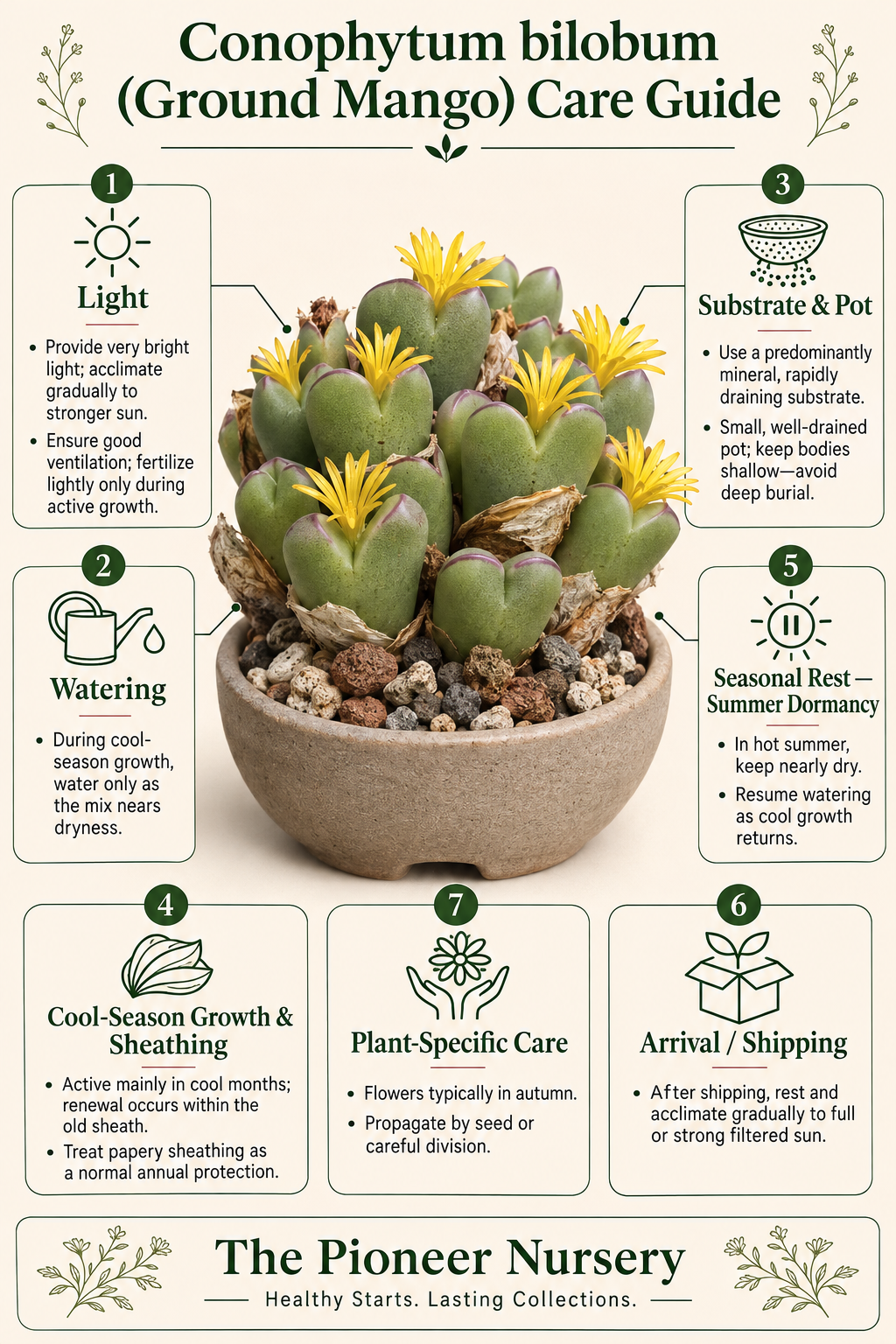
Conophytum bilobum, sometimes called ground mango or two-lobed cone plant, is a compact South African mesemb with a cool-season growth cycle. Its old leaves can dry into a papery sheath around the renewing body, so an apparently dry outer layer is often a normal part of its annual rhythm. The main care priorities are strong but carefully acclimated light, very porous soil, seasonal watering, and a nearly dry summer dormancy.
Quick Care Summary
- Provide very bright light and good ventilation.
- Acclimate gradually to full or strong filtered sun after shipping.
- Use a predominantly mineral, rapidly draining substrate.
- Water more during cool-season growth, only as the mix approaches dryness.
- Keep the plant nearly dry during hot summer dormancy.
- Treat papery sheathing as a normal part of annual renewal.
- Use a small, well-drained pot and avoid deep burial.
- Fertilize lightly only during active growth.
About Conophytum bilobum
This accepted species is associated with South Africa’s Succulent Karoo and grows primarily during the cooler part of the year. New leaf pairs develop beneath older sheaths, and flowers generally emerge from the central fissure during autumn or early active growth. Because the species is assessed as Vulnerable in South Africa, choose nursery-grown, legally sourced plants rather than wild-collected material.
Light and ventilation
Provide very bright light with good airflow. Full sun or strong filtered sun suits the cool active season, but acclimate gradually after shipping or any major change in exposure. During hot summer conditions, provide light shade or protection from intense afternoon sun. Sudden exposure can cause scorch, especially when a plant has been transported in low light or enclosed packaging.
Watering
Water according to growth rather than a fixed calendar. As the plant resumes growth in late summer or autumn, begin with light watering or misting. During active autumn and winter growth, water more regularly only when the substrate is close to dry. As the plant begins to sheath, wrinkle, or enter dormancy in late winter or spring, reduce watering. Keep it nearly dry through hot summer dormancy, offering only minimal moisture if severe shriveling occurs. Never leave the substrate soggy: wet roots combined with heat or cold can lead to rot.
Soil and substrate
Use a very porous, fast-draining, predominantly mineral mix with plenty of air space around the roots. Coarse sand, pumice, grit, perlite, or other stable mineral components can form the main structure, with only a modest organic fraction. After watering, the substrate should drain rapidly rather than remain wet.
Potting and roots
Choose a small pot with excellent drainage, preferably only slightly larger than the root system. Avoid burying the bodies deeply. Repot or divide near the beginning of active growth, handling the compact roots and clustered bodies carefully. After significant root disturbance, keep the plant dry or only minimally moist until damaged roots have callused and new rooting is evident.
Temperature and seasonal rhythm
Conophytum bilobum grows best under cool to mild conditions with strong light and airflow. Cool nights during active growth are beneficial. Protect recently shipped or root-disturbed plants from freezing temperatures, and avoid prolonged heat combined with humidity and wet soil. Hot, dry summer conditions usually bring dormancy or greatly reduced growth. Papery old leaves around the new body are normally part of this renewal cycle; do not force growth with heavy watering during dormancy.
Fertilizer
Fertilize sparingly during active growth only, using a dilute, low-nitrogen cactus or succulent fertilizer. One or a few light applications during the growing season are generally sufficient. Do not fertilize dormant, stressed, freshly divided, or unrooted plants.
Flowering
Flowers generally appear from the central fissure during autumn or the early active-growth period. Strong light, cool-season growth, an appropriate dry summer rest, and avoiding excessive nitrogen support flowering. Flower color can vary among forms and populations, so a formal color form or cultivar should not be assigned without supporting evidence.
Propagation
Propagation is principally by seed or careful division of established clumps. Divide only when individual bodies have sufficient roots and handle them gently. Seeds should be sown in a very well-drained mineral medium during the cool growing season. Keep seedlings evenly but lightly moist with good ventilation, then reduce watering as they mature. Nursery-grown and legally propagated material is the responsible choice for this conservation-sensitive species.
Shipping and arrival care
Inspect the plant after arrival for crushing, damage, or signs of excessive moisture. Keep recently shipped plants dry and well ventilated while they recover, especially if they are bare-root or have damaged roots. Pot them into a dry, porous mix and delay substantial watering until disturbed roots have recovered and new rooting is evident. Reintroduce strong light gradually rather than placing a low-light shipped plant immediately in intense sun. Protect recently shipped plants from prolonged heat, cold, and enclosed humidity.
Common problems
Root or stem rot usually follows waterlogged substrate, poor drainage, inadequate airflow, or watering during hot dormancy. Sun scorch can result from abrupt exposure to intense light. Edema, cracking, or epidermal scarring may follow excessive or poorly timed watering. Root mealybugs and other mealybugs are more likely when plants are stressed or persistently damp. Growth may also fail to enter or leave dormancy when light, temperature, and watering are out of seasonal alignment.
Frequently Asked Questions
How often should I water Conophytum bilobum?
Do not follow a fixed calendar. Begin light watering as growth resumes in late summer or autumn, water when the substrate is close to dry during active cool-season growth, and reduce watering as sheathing and dormancy begin. Keep it nearly dry during hot summer conditions.
Are the dry papery leaves a sign that my plant is dying?
Usually not. Older leaves commonly dry into a papery sheath around the new body as part of the plant’s annual renewal and dormancy cycle.
Can Conophytum bilobum grow in full sun?
Full sun or strong filtered sun is suitable during the cool active season, but acclimate gradually. Provide light shade or protection from intense afternoon sun during hot summer conditions.
What type of pot and soil does it need?
Use a small pot with excellent drainage and a very porous, predominantly mineral substrate. Avoid burying the bodies deeply and do not allow the mix to remain wet.
When does Conophytum bilobum flower?
Flowers generally appear from the central fissure during autumn or the early active-growth period. Strong light, cool-season growth, a dry summer rest, and restrained nitrogen support flowering.
How should I care for a shipped or recently divided plant?
Keep it dry and well ventilated initially, pot it into a dry porous mix, and delay substantial watering after root disturbance until recovery and new rooting are evident. Gradually reintroduce strong light.
Conophytum bilobum rewards growers who follow its seasonal rhythm rather than keeping it constantly moist. Bright light, fast drainage, cool-season watering, and a genuinely dry summer rest provide the foundation for healthy renewal and flowering.