Echinocactus grusonii Care Guide: Golden Barrel Cactus
Learn how to grow Echinocactus grusonii, the golden barrel cactus, with guidance on light, watering, drainage, winter rest, flowering, propagation, and safe handling.
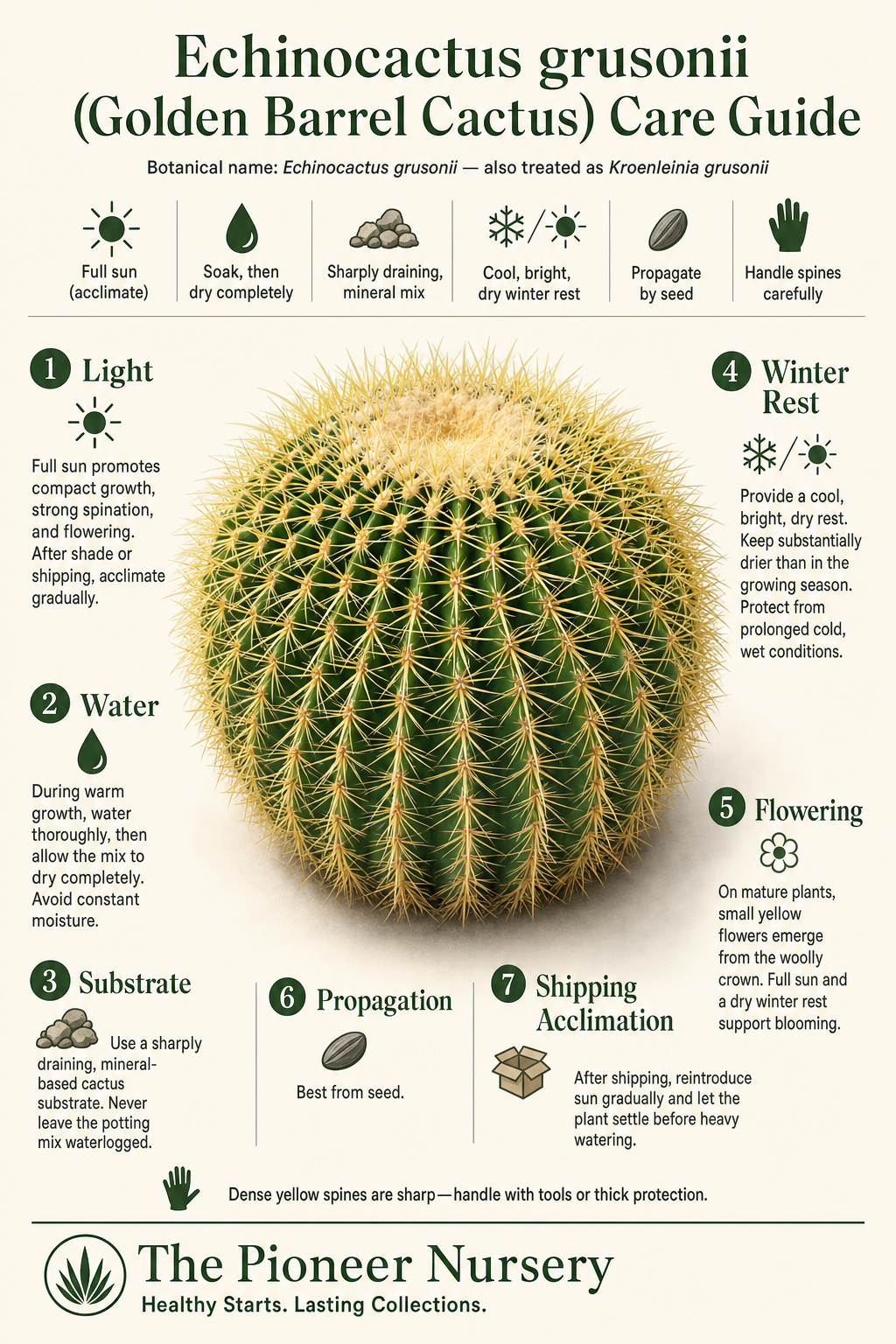
Echinocactus grusonii, commonly called golden barrel cactus, golden ball cactus, or mother-in-law's seat, is a strongly light-demanding barrel cactus known for its rounded form and dense yellow spines. It grows best in full sun, sharply draining soil, and a warm active season followed by a much drier cool rest. The name Echinocactus grusonii remains widely used in horticulture; Plants of the World Online currently treats it as a synonym of Kroenleinia grusonii, while other authorities continue to accept the Echinocactus placement.
Quick Care Summary
- Full sun supports compact growth, strong spination, and flowering.
- Acclimate gradually to intense sun after shipping or shade.
- Water thoroughly during warm growth, then let the substrate dry completely.
- Keep the plant substantially drier during cool winter dormancy.
- Use a sharply draining, mineral-based cactus substrate.
- Protect container plants from freezing and prolonged cold, wet conditions.
- Handle carefully because the dense yellow spines can cause injury.
About the Plant
Golden barrel cactus is slow-growing after its juvenile phase and may take many years to reach mature size and flowering capability. Mature plants produce small yellow flowers from the woolly crown during the warm season. Its stiff, dense yellow spines are attractive but can cause injury, so use suitable protection when moving or repotting the plant. Choose nursery-propagated plants rather than wild-collected specimens.
Light
Full sun supports compact growth, strong spination, and flowering. After shipping or a move from indoor or shaded conditions, begin with bright filtered light and acclimate gradually to stronger sun. Abrupt exposure to intense light can cause sunscald.
Watering
During warm active growth, water thoroughly and then allow the substrate to dry completely before watering again. Reduce watering substantially during cool or dormant conditions, providing little to no water when temperatures are low. Constant moisture is risky, especially when wet roots are combined with cold temperatures.
Soil and Substrate
Use a sharply draining, aerated cactus mix based on mineral grit, sand, or pumice with a modest loam or other organic component. The substrate should drain freely and should not remain waterlogged.
Potting and Root Care
Select a container with a drainage hole and a stable size proportionate to the plant. Avoid unnecessarily oversized pots, which can hold moisture around the roots for too long. Handle the plant with suitable protection because of its dense spines. Repot only when necessary and resume watering cautiously after major root disturbance.
Temperature and Winter Rest
Protect golden barrel cactus from freezing and prolonged cold, wet conditions. Established, dry plants can tolerate brief temperatures in the upper teens Fahrenheit, but container plants are safer with frost protection or an indoor or greenhouse location. Growth slows during cool, short-day conditions. In autumn and winter, provide bright light, good ventilation, and little to no water, particularly when temperatures are low.
Fertilizer
Feed sparingly during active growth with a balanced liquid fertilizer two or three times during the growing season, or use a dilute cactus fertilizer. Do not fertilize during dormancy or while the plant is stressed.
Flowering
Mature plants produce small yellow flowers from the woolly crown, generally during the warm season. Strong light and a cool, dry winter rest can support flowering, but young plants may need many years to reach flowering size.
Propagation
The ordinary species is principally propagated from seed. Sow seed in a warm, bright, clean, well-drained medium, and avoid prolonged saturation after germination. Crested or other abnormal forms may require specialist horticultural methods.
Shipping and Arrival Care
Inspect the plant after arrival and protect the spines and growing point from compression. For bare-root or substantially disturbed plants, keep damaged roots dry long enough for affected surfaces to callus, then reintroduce water cautiously. Begin with bright filtered light and acclimate gradually to full sun. Recovery needs vary with the amount of root disturbance and the plant's condition on arrival.
Common Problems
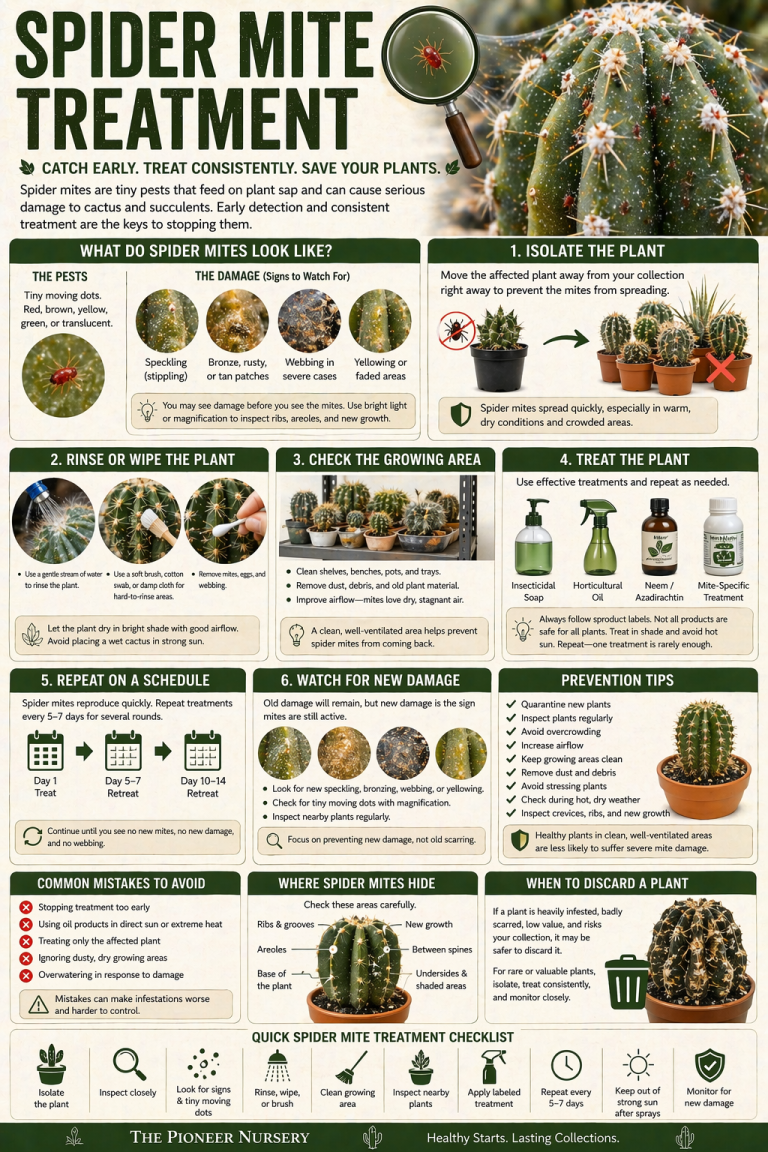
Root or stem rot usually results from poorly drained substrate, excessive watering, or cold wet conditions. Insufficient light can cause etiolation and weakened growth. Mealybugs may occur, particularly in protected or greenhouse conditions. Watch for sunscald after abrupt exposure to intense sun, and use care to prevent physical injury from the stiff spines during handling or shipping.
Frequently Asked Questions
How much light does Echinocactus grusonii need?
Full sun is preferred for compact growth, strong spination, and flowering. Acclimate gradually after shipping or shade to reduce the risk of sunscald.
When should I water a golden barrel cactus?
During warm active growth, water thoroughly and wait until the substrate has dried completely before watering again. Reduce watering substantially in cool conditions and keep the plant dry during cold periods.
Can golden barrel cactus tolerate cold?
Established plants kept dry can tolerate brief temperatures in the upper teens Fahrenheit, but frost protection or an indoor or greenhouse location is safer for container plants. Cold combined with wet roots increases rot risk.
How long does it take to flower?
Young plants may require many years to reach flowering size. Strong light and a cool, dry winter rest can support flowering in mature plants.
How is golden barrel cactus propagated?
The ordinary species is principally propagated from seed. Use a warm, bright, clean, well-drained medium and avoid prolonged saturation after germination.
What should I do if my plant arrives bare-root?
Inspect it, protect the spines, and keep damaged roots dry long enough for affected surfaces to callus before cautiously reintroducing water. Start in bright filtered light and acclimate gradually to full sun.
With strong light, excellent drainage, careful seasonal watering, and a dry cool rest, Echinocactus grusonii can remain a distinctive long-term collection plant. Give the spines respectful handling and avoid cold, wet conditions around the roots.