Tylecodon paniculatus Care Guide
Learn how to grow Tylecodon paniculatus, a winter-growing caudiciform succulent with seasonal leaf drop, a stout trunk, and a strong need for excellent drainage.
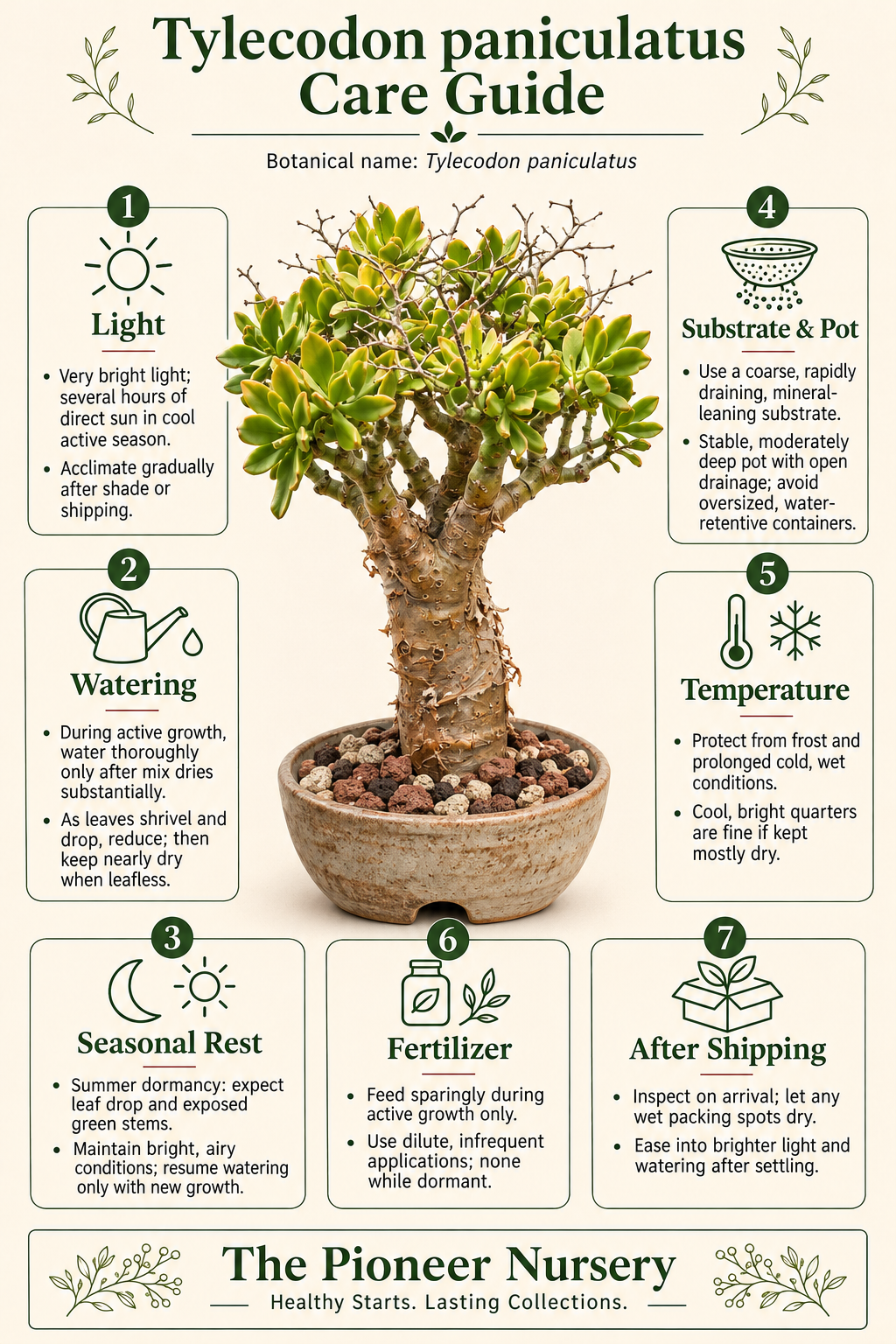
Tylecodon paniculatus, commonly called butterboom or butter tree, is a tree-like caudiciform succulent that grows mainly during the cooler season and commonly sheds its leaves during summer dormancy. Its peeling bark, green stems, and stout trunk are distinctive, but its relatively shallow, weak root system requires careful pot sizing and gentle handling. The main care priorities are strong light, a sharply draining substrate, thorough drying between active-season waterings, and a very dry rest when the plant is leafless.
Quick Care Summary
- Provide very bright light with several hours of direct sun during active cool-season growth.
- Acclimate gradually to direct sun after shipping or protected cultivation.
- Use a coarse, rapidly draining, mineral-leaning substrate.
- Water thoroughly during active growth only after the substrate has dried substantially or completely.
- Reduce watering as leaves shrivel and fall, then keep the plant nearly dry while leafless and dormant.
- Use a stable, moderately deep pot rather than an oversized, water-retentive container.
- Feed sparingly only during active growth.
- Protect from frost, cold wet soil, and prolonged freezing conditions.
About the plant
Tylecodon paniculatus can become a substantial succulent shrub or small tree, potentially reaching about 2 m or more in favorable conditions. It develops a stout caudiciform trunk with peeling papery bark. During dormancy, its green stems may continue limited photosynthesis after the leaves fall. The older name Cotyledon paniculata is a documented synonym, not a separate species.
Light
Provide very bright light with several hours of direct sun, especially during the cool-season growing period. Full winter sun is beneficial. In hot climates, light afternoon shade during summer dormancy can reduce heat stress. After shipping or a move from protected conditions, increase sun exposure gradually; abrupt exposure can cause sunburn.
Watering
During active winter growth, water thoroughly only after the substrate has dried substantially or completely, and let excess water drain away. As leaves shrivel and fall while the plant approaches dormancy, progressively reduce both watering volume and frequency. Keep the plant nearly dry during hot summer dormancy, especially when it is leafless. Watering a dormant plant in cool, humid, or poorly ventilated conditions greatly increases rot risk. Adjust watering for temperature, humidity, light, container size, and root condition rather than following a fixed calendar.
Soil and substrate
Use a very porous, rapidly draining, mineral-leaning succulent mix. A coarse cactus mix amended with pumice, lava rock, coarse sand, or another stable mineral component provides useful root aeration. Avoid heavy clay and any mix that remains wet for extended periods, particularly during dormancy.
Potting and roots
Choose a container with drainage holes and avoid oversizing the pot. Although the plant develops a stout trunk, its root system is reported to be relatively shallow and weak for its size. A stable, moderately deep container with excellent drainage is preferable to a large, water-retentive pot. Repot near the beginning of active growth when possible, disturb the roots as little as practical, and delay substantial watering after major root disturbance until damaged roots have dried and begun to heal.
Temperature and ventilation
Protect Tylecodon paniculatus from freezing and from prolonged cold combined with wet soil. It tolerates heat and has been reported hardy to approximately 25°F (-4°C) in suitable dry conditions, but container plants should generally be protected from frost, cold rain, and freezing substrate. Good ventilation is especially important in humid climates.
Seasonal growth and dormancy
This is usually a winter-growing, summer-dormant succulent. It may shed its leaves as temperatures rise or the seasonal cycle changes, while green stems continue limited photosynthesis. Dormancy timing varies with local temperature, day length, and greenhouse conditions, so leaf loss alone is not necessarily a problem. Reduce watering as dormancy approaches and avoid routine watering while the plant is leafless and inactive.
Fertilizer
Feed sparingly during active growth with a dilute, balanced fertilizer or a low-nitrogen succulent fertilizer. Do not fertilize during summer dormancy or while the plant is leafless and inactive. Heavy feeding can encourage weak, elongated growth and reduce the compact caudiciform habit.
Flowering
Tubular orange-yellow to red flowers are produced on upright inflorescences, often as the plant is entering dormancy and losing its leaves. Strong light, mature size, a pronounced seasonal growth cycle, and an appropriate dry rest support flowering.
Propagation
Tylecodon paniculatus can be propagated from seed or mature stem cuttings. The very fine seed should be surface-sown or only lightly covered on a coarse, well-drained medium during the cooler growing season. For cuttings, use sufficiently mature material, allow the cut surface to callus, and place it in a sharply draining substrate. Rooting may be slow and can take many months to establish a strong root system. Keep new cuttings much drier than established actively growing plants until rooting is confirmed.
Common problems and safety
Root or stem rot is most likely when the plant is watered during summer dormancy, kept in cool wet soil, grown in a poorly draining mix, or exposed to inadequate ventilation. Weak, elongated growth may indicate insufficient light or excessive fertilizer. Sudden softening, blackening, or collapse of the trunk is a serious warning sign rather than normal leaf drop. Stem cuttings may fail if taken from immature material, kept wet before rooting, or watered heavily before roots develop. Tylecodon should be treated as toxic if eaten and kept away from livestock, pets, and children; related poisoning is associated with serious livestock disease in southern Africa.
Shipping and arrival care
When possible, shipping and receiving are best timed for the active cool-season window. On arrival, inspect the shallow root system and any cut surfaces, and check for cold or wet packing conditions. Begin with bright filtered light, then acclimate gradually to direct sun. If the plant arrives bare-root or roots have been disturbed, allow damaged tissue to dry and heal before cautious watering. Recovery needs vary according to root damage, season, temperature, and whether the plant is actively growing.
Frequently Asked Questions
Why is my Tylecodon paniculatus losing its leaves?
Seasonal leaf loss is commonly part of its summer dormancy. Green stems may continue limited photosynthesis. Leaf drop is more concerning when accompanied by trunk softening, blackening, or collapse.
How should I water it during dormancy?
As leaves shrivel and fall, progressively reduce watering. Keep the plant nearly dry while it is hot, leafless, and inactive, especially in cool, humid, or poorly ventilated conditions.
Does Tylecodon paniculatus need full sun?
It benefits from very bright light and several hours of direct sun, particularly during winter growth. Acclimate gradually after shipping or shade to prevent sunburn.
What kind of pot and soil does it need?
Use a drainage-holed, stable, moderately deep container and a coarse, rapidly draining mineral-leaning mix. Avoid oversized pots, heavy clay, and substrates that stay wet.
Can it be propagated from cuttings?
Yes. Use mature stem material, allow it to callus, and root it in sharply draining substrate. Rooting may take many months, and new cuttings should remain much drier than established plants until roots are confirmed.
Is Tylecodon paniculatus safe around pets or livestock?
It should be treated as toxic if eaten. Keep it away from livestock, pets, and children.
Tylecodon paniculatus is best understood as a seasonal plant: bright and actively growing during the cooler period, then increasingly dry and dormant as it sheds its leaves. If you provide strong light, excellent drainage, careful pot sizing, and a genuinely dry summer rest, its sculptural trunk and peeling bark can become the focus of a long-term collection.