Astrophytum capricorne Care Guide: Growing the Goat’s Horn Cactus
Learn how to grow Astrophytum capricorne with strong light, sharply draining mineral soil, careful watering, and a dry winter rest.
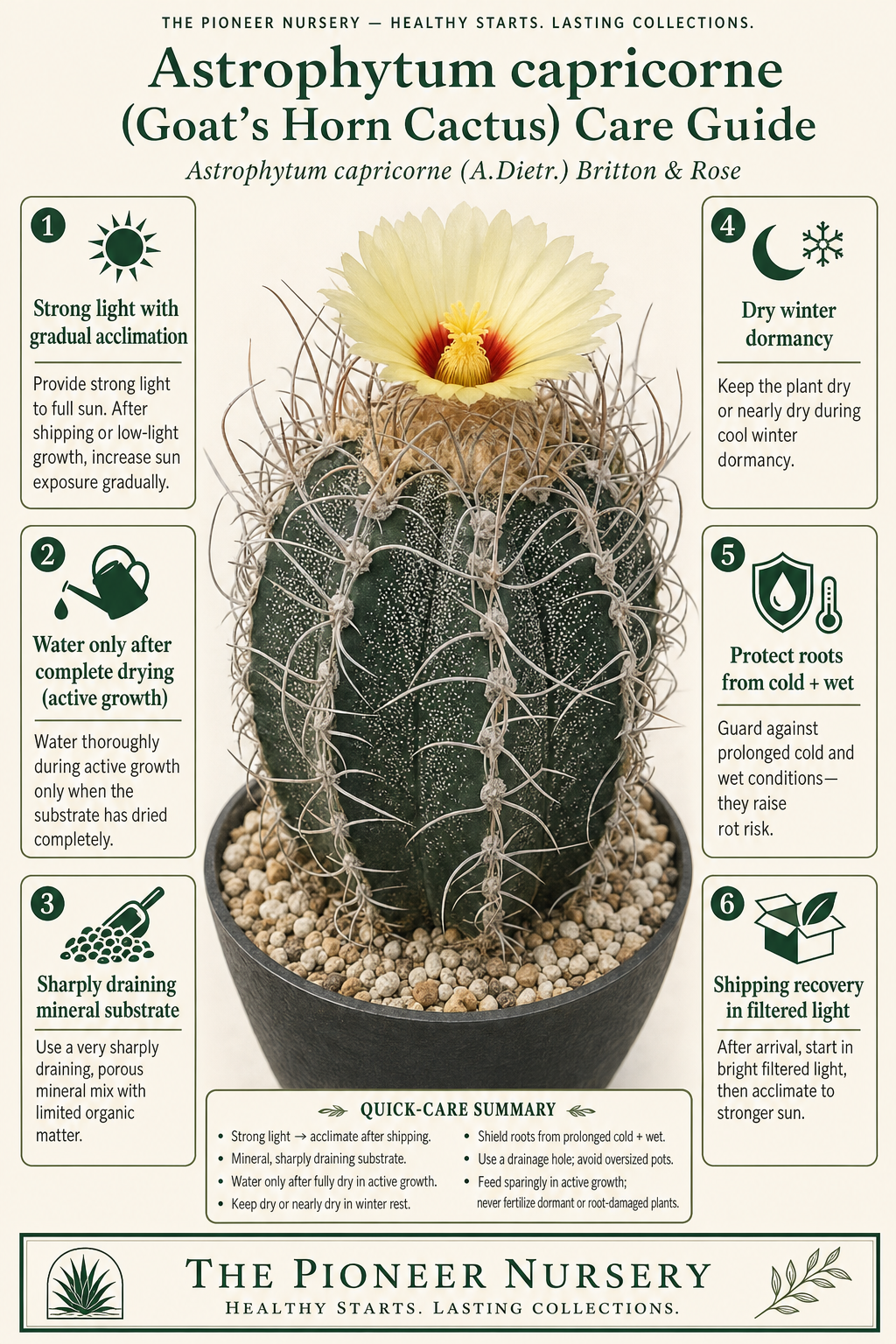
Astrophytum capricorne, commonly called goat’s horn cactus, is recognized by its ribbed stem, long curved or twisted spines, and large yellow flowers often marked with a red or orange-red throat. It is a relatively delicate Astrophytum in cultivation, so the main priorities are excellent drainage, careful root handling, gradual light acclimation, and keeping the plant dry during cool winter conditions.
Quick Care Summary
- Provide strong light to full sun, with gradual acclimation after shipping or low-light growth.
- Use a very sharply draining, porous mineral substrate with limited organic matter.
- Water thoroughly during active growth only after the substrate has dried completely.
- Keep the plant dry or nearly dry during cool winter dormancy.
- Protect roots from prolonged cold and wet conditions, which increase rot risk.
- Use a drainage hole and avoid oversized containers that retain moisture.
- Feed sparingly during active growth and avoid fertilizing dormant or root-damaged plants.
About Astrophytum capricorne
This accepted cactus species is native to northeastern Mexico. Its distinctive long, curved spines and flecked appearance can vary among cultivated plants, but the unusual spine form is one of its most recognizable features. Grafted specimens may be encountered, although grafting is a horticultural method rather than a taxonomic distinction.
Light
Provide strong light to full sun. Protect the plant from extreme heat behind glass and from sudden changes in exposure. After shipping or a move from lower light, begin with bright, filtered light and increase direct sun gradually to reduce the risk of sunburn.
Watering
During active growth, water thoroughly only after the substrate has dried completely, then let excess water drain away. Reduce watering as light and temperatures decline. During cool winter dormancy, keep the plant dry or nearly dry. Avoid repeated wet-and-dry cycles in cold conditions, and never leave the roots standing in water.
Soil and substrate
Use a very sharply draining, porous mineral cactus mix with limited organic matter. Pumice, coarse sand, gravel, and other aerated mineral particles are suitable components. Drainage and rapid aeration are more important than maintaining a precise pH; the substrate may range from mildly acidic to alkaline.
Potting and roots
Choose a container with a drainage hole and avoid oversized pots that hold moisture for too long. Repot only when necessary, preferably during active growth. Handle the roots carefully: older plants can be prone to root decline and may recover poorly after disturbance. Recently repotted or root-damaged plants should not be heavily watered.
Temperature and dormancy
Warm growing conditions are preferred. Protect Astrophytum capricorne from freezing and from prolonged cold combined with moisture. Growth slows in cool, low-light conditions, so maintain a dry winter rest and resume watering cautiously only when warmth and active growth return. Dry, sheltered conditions are safer than cold, wet exposure.
Fertilizer
Feed sparingly during active growth with a dilute, balanced or cactus-appropriate fertilizer. Avoid heavy feeding and do not fertilize plants that are dry, dormant, recently repotted, or recovering from root damage.
Flowering
Mature stem growth can produce large, funnel-shaped yellow flowers, commonly with a red or orange-red throat. Flowering occurs during the warm-season growth period, and flowers may appear over several weeks in summer.
Propagation
Astrophytum capricorne is primarily propagated from seed. Sow in a clean, well-drained medium under warm conditions; the supplied research identifies approximately 21°C in early spring as an RHS recommendation. Grafting may be used when roots are weak or difficult to maintain, but it is not necessary for every plant.
Shipping and arrival care
Handle and ship the plant dry whenever possible, protecting it from crushing and spine damage. After arrival, inspect the plant and provide bright but initially filtered light. Allow recently shipped, bare-root, or disturbed plants to recover and re-establish before substantial watering, then acclimate gradually to direct sun. Avoid immediate heavy watering if the plant is cold or has damaged roots.
Common problems
Root rot is associated with overwatering, poor drainage, and wet conditions during cool weather. Older specimens may experience root loss or decline. Rapid increases in soil moisture can cause stem splitting or skin cracking. Abrupt exposure to full sun can result in sunburn. Under glass, monitor for mealybugs and scale; spider mites may occur in dry, protected cultivation.
Frequently Asked Questions
How often should I water Astrophytum capricorne?
Do not use a fixed calendar. During active growth, water thoroughly after the substrate has dried completely, then allow excess water to drain. Water much less as light and temperatures decline, keeping the plant dry or nearly dry during cool winter dormancy.
Can Astrophytum capricorne take full sun?
Yes, strong light to full sun is suitable, but acclimate gradually after shipping or lower-light conditions. Sudden exposure can cause sunburn, especially behind glass or during extreme heat.
What soil does goat’s horn cactus need?
Use a sharply draining, porous mineral cactus substrate with limited organic matter. Pumice, coarse sand, gravel, or other aerated mineral particles can help provide the needed drainage.
Why should this cactus stay dry in winter?
Growth slows in cool, low-light conditions, and cold combined with moisture substantially increases the risk of root rot. Resume watering cautiously when warmth and active growth return.
Can Astrophytum capricorne be propagated from seed?
Yes. It is primarily propagated from seed, sown in a clean, well-drained medium under warm conditions. The supplied research gives approximately 21°C in early spring as an RHS recommendation.
Should I repot a recently shipped plant immediately?
Repot only when necessary. Bare-root or recently disturbed plants should be allowed to recover and re-establish before substantial watering, and any light exposure should be increased gradually.
Astrophytum capricorne rewards a careful approach. Give it strong but acclimated light, fast drainage, thorough watering only during active growth, and a reliably dry winter rest. Paying close attention to its roots and to changes in moisture or light will help protect this distinctive cactus.