Dorstenia crispa Care Guide
Learn how to grow Dorstenia crispa, a warm-growing, swollen-stemmed Dorstenia associated with crisped or wavy leaves. Discover practical guidance for light, watering, soil, dormancy, shipping, and propagation.
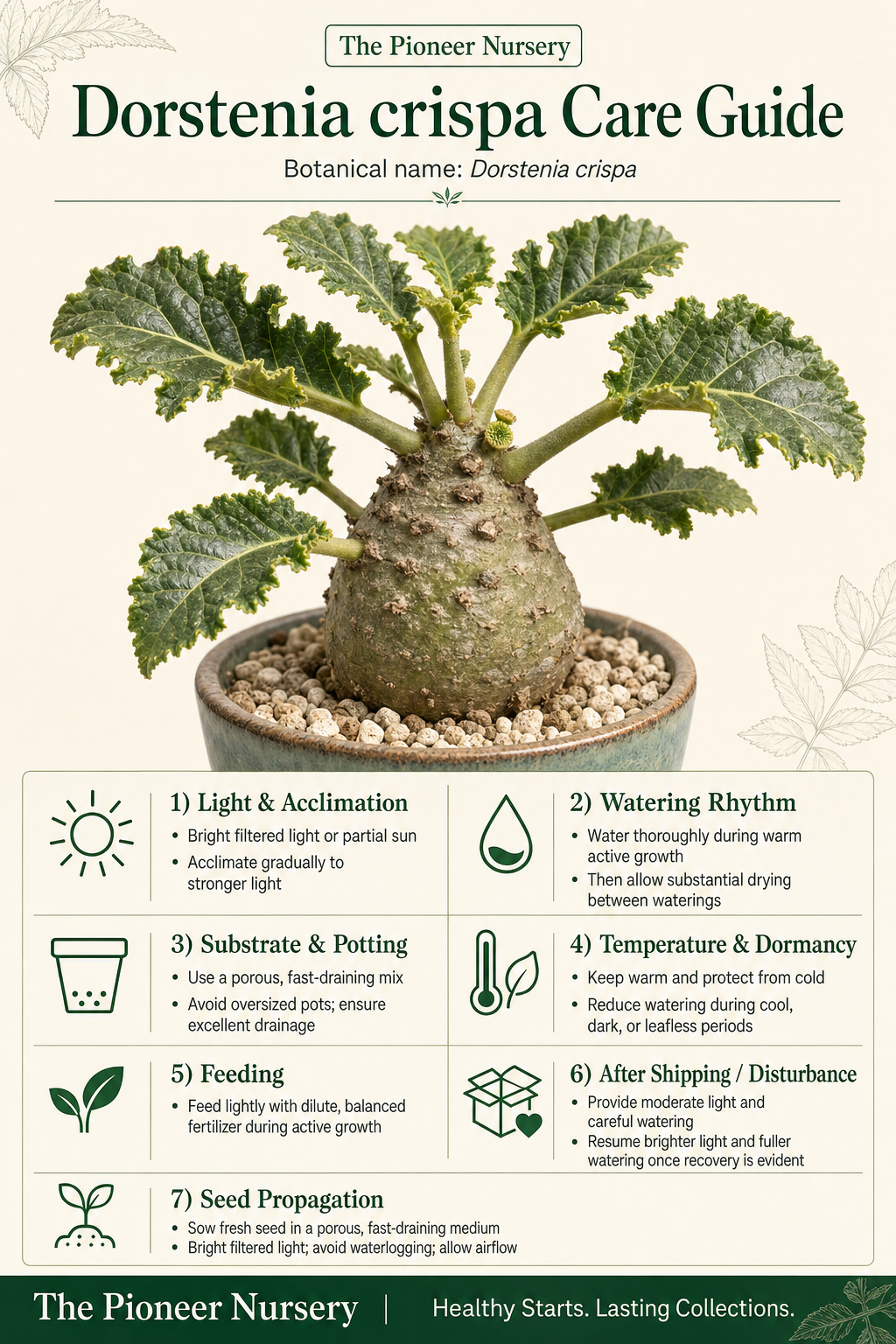
Dorstenia crispa is a warm-growing succulent Dorstenia with a swollen stem and leaves that may be wavy or crisped. Give it bright moderated light, a porous substrate, thorough watering during active growth followed by substantial drying, and protection from cold, wet conditions. Kew treats the name as a synonym of Dorstenia foetida subsp. foetida, while it remains established in horticultural use for plants with this appearance.
Quick Care Summary
- Bright filtered light or partial sun, with gradual acclimation to stronger light.
- Water thoroughly during warm active growth, then allow substantial drying.
- Use a porous, fast-draining substrate and avoid oversized pots.
- Reduce watering during cool, dark, or leafless periods.
- Feed lightly with dilute, balanced fertilizer during active growth.
- After shipping or root disturbance, moderate light and watering until recovery is evident.
About Dorstenia crispa
The crisped leaf character can vary, and the name alone does not confirm a particular clone, locality form, hybrid, or exact identification. These care recommendations follow Dorstenia foetida and specialist guidance for pachycaulous Dorstenia.
Light
Provide bright filtered light or partial sun as a conservative starting point. Protect the plant from abrupt exposure to intense direct sun, particularly after shipping or relocation, and acclimate gradually. Too much shade may result in weak, elongated growth, while sudden strong sun can scorch the leaves.
Watering
Water thoroughly during warm, active growth, then allow the substrate to dry substantially before watering again. Reduce watering during cool, dark, or leafless periods, and never keep the roots constantly wet.
Soil and substrate
Use a porous, fast-draining mix with strong aeration and only a modest organic component. Mineral grit, pumice, perlite, or similar materials can help prevent prolonged wetness. Avoid dense, water-retentive potting soil.
Potting and roots
Choose a container with effective drainage and avoid oversized pots that stay wet too long. Repot during warm active growth when possible. Handle the swollen stem and roots carefully. If roots are damaged, allow them to dry and callus as appropriate, then delay heavy watering until recovery is evident.
Temperature and seasonal growth
Dorstenia crispa prefers warm conditions. Protect it from cold, especially when the plant or substrate is wet; protected cultivation is advisable as temperatures approach approximately 10 °C / 50 °F. Growth may slow or stop in cooler, darker conditions, and leaves may drop. Treat this as a reduced-water period, resuming more regular watering when warmth, light, and active growth return.
Fertilizer
Feed lightly and regularly during active growth with a dilute, balanced fertilizer. Avoid heavy feeding during dormancy or when roots are compromised. No species-specific fertilizer rate is established for this plant.
Flowering
Mature, well-grown plants may produce Dorstenia-type pseudanthodia, also called hypanthodia, from the leaf axils. Flowering can repeat, and seed may be dispersed forcefully from the inflorescence. The crisped leaf margin is variable and should not be used alone for identification.
Propagation
Seed is the best-supported method when maintaining a verified seed line. Warmth and some humidity support germination, but seed-grown plants may vary in leaf form. Stem or branch cuttings may be possible in suitable material, though their success and preservation of the swollen base are uncertain.
Shipping and arrival care
After arrival, inspect for root damage or rot. Protect the plant from prolonged cold, especially if it is bare-root or recently watered. If roots were significantly disturbed, allow damaged areas to dry as appropriate and delay heavy watering until recovery is evident. Start with bright, moderated light and acclimate gradually.
Common Problems
- Root or swollen-stem rot can result from cold, wet conditions or poorly aerated substrate; improve drainage and avoid constant wetness.
- Sunburn may follow abrupt movement into intense direct sun; acclimate gradually.
- Leaf drop or weak growth may occur in cool, dark conditions or after environmental stress; reduce watering during reduced growth.
- Mealybugs, scale, and other sap-feeding pests may affect stressed plants; inspect regularly.
- Plants sold under Dorstenia crispa, D. foetida, D. lancifolia, or hybrid labels may not share a confirmed identity.
Frequently Asked Questions
How often should I water Dorstenia crispa?
Water thoroughly while it is warm and actively growing, then allow the substrate to dry substantially. Reduce watering during cool, dark, or leafless periods rather than following a fixed calendar.
Can Dorstenia crispa take direct sun?
It can receive partial sun, but begin with bright filtered light and acclimate gradually. Sudden exposure to intense sun may scorch the leaves.
Why is my plant losing leaves?
Leaf drop can occur when growth slows in cool, dark conditions or after environmental stress. Reduce watering during this period and increase it only when warmth, light, and active growth return.
What soil should I use?
Use a porous, fast-draining substrate containing aerating mineral materials such as pumice, perlite, or grit, with only a modest organic component.
Is Dorstenia crispa the same as Dorstenia foetida?
Kew treats Dorstenia crispa as a synonym of Dorstenia foetida subsp. foetida. Other references differ in rank presentation, and plants sold under the name may represent a crisped-leaf form, hybrid, or misidentified Dorstenia.
Can I propagate it from seed?
Seed is the best-supported propagation method for maintaining a verified seed line. Warmth and some humidity support germination, but seed-grown plants may vary in leaf form.
With warmth, bright moderated light, porous soil, and carefully adjusted watering, Dorstenia crispa can make a distinctive collector plant. The main risks are abrupt sun exposure and cold, wet roots, so adjust care to the plant’s growth and environmental conditions.