Dorstenia gigas Care Guide: Growing the Socotran Dorstenia
Learn how to grow Dorstenia gigas, a distinctive Socotran caudex shrub that needs bright light, warm conditions, rapid drainage, and careful watering.
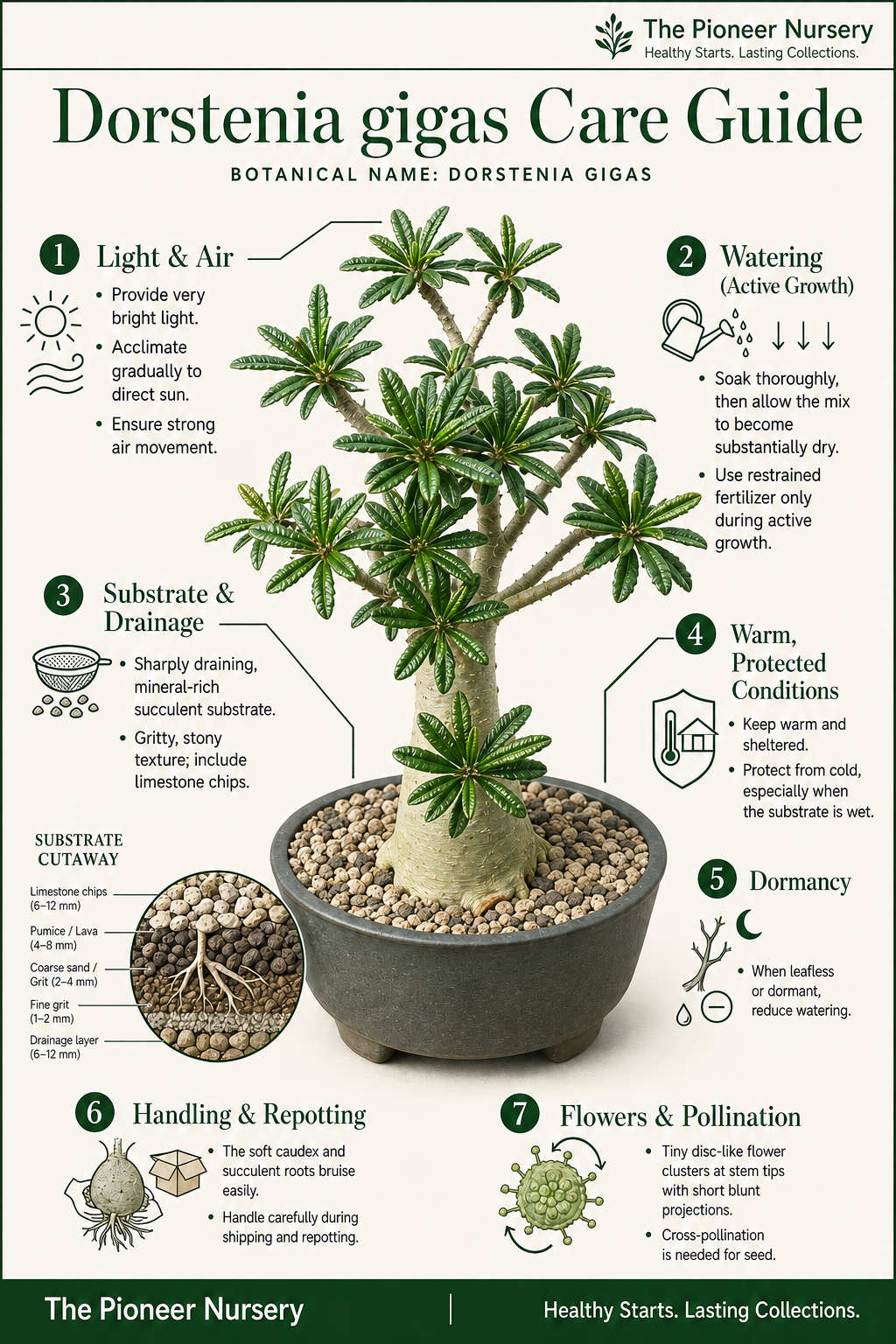
Dorstenia gigas, also called Socotran dorstenia or Kartab, is a pachycaulous shrub from Socotra with a swollen caudex, succulent roots, and a soft epidermis that can be easily damaged. Its limestone-cliff habitat helps explain its cultivation needs: very bright light, strong air movement, sharply draining soil, and careful irrigation. The plant can be challenging, especially in cool climates, where cold conditions combined with wet substrate increase the risk of rot problems.
Quick Care Summary
- Provide very bright light, strong air movement, and gradual acclimation to direct sun.
- Use a sharply draining, mineral-rich succulent substrate.
- Water during active growth, then allow the substrate to become substantially dry.
- Reduce watering when the plant is leafless or dormant.
- Protect the plant from cold, especially when the substrate is wet.
- Handle the soft caudex and succulent roots carefully during shipping and repotting.
- Use restrained fertilizer only during active growth.
About Dorstenia gigas
Dorstenia gigas belongs to the Moraceae family and is native to Socotra. It is a caudex-forming, pachycaulous shrub that anchors its succulent root system in holes and fissures in limestone. Plants may become substantially larger in habitat than they typically do in cultivation. The swollen caudex and soft outer surface require careful handling during potting, shipping, and everyday maintenance.
Light
Provide very bright light with strong air movement. Established plants can receive substantial direct sun, but acclimate them gradually. Plants arriving from shipping or moving from indoor conditions are especially vulnerable to sunburn if placed immediately in intense sunlight. Increase exposure progressively while watching the epidermis for damage.
Watering
During active growth, use a careful soak-and-dry approach: water thoroughly enough for the substrate to drain fully, then allow it to become substantially dry before watering again. Do not let the caudex or roots remain wet. Reduce irrigation when the plant is leafless or clearly inactive. Avoid watering into cold conditions, since cool, wet substrate increases the risk of caudex and root rot.
Soil and substrate
Use a sharply draining, aerated succulent substrate with a substantial mineral component. Dorstenia gigas naturally grows in rapidly drained limestone habitats, so avoid dense or water-retentive compost. The goal is a medium that supports the plant while allowing excess water to leave the root zone quickly.
Potting and roots
Choose a container with excellent drainage and enough depth and volume for the swollen caudex and succulent root system. Avoid leaving excessive unused wet substrate around the plant. Repot only when necessary, because the roots help anchor the plant and unnecessary disturbance should be avoided. Handle both the soft caudex and roots carefully to prevent wounds.
Temperature and protection
Maintain warm conditions, particularly in northern climates. Warm greenhouse or comparable protected conditions are recommended. Exact minimum temperature limits were not established by the available research, so protect the plant from cold and never combine low temperatures with wet substrate.
Seasonal growth and dormancy
Growth is influenced by temperature and rainfall. In native Socotra, foliage production and flowering are associated with cooler, wetter autumn-to-winter conditions, while cultivated plants may show irregular or partial dormancy. Use the plant's condition rather than a fixed calendar: reduce irrigation when it is leafless or inactive, and resume more careful watering when warmth and active recovery return.
Fertilizer
Use a restrained, balanced fertilizer only during active growth and only when the substrate is already properly moist. Do not heavily feed a stressed, recently shipped, dormant, or recently repotted plant. Exact fertilizer rates were not established by the supplied research, so adapt feeding to local greenhouse conditions.
Flowering
Flowers occur in distinctive clusters at the stem tips. These inflorescences are specialized Moraceae structures with small flowers surrounded by short, blunt projections. Cultivated plants have been reported as self-incompatible, so producing seed may require genetically different, compatible plants and effective cross-pollination.
Propagation
Cuttings are generally used for propagation in cultivation. Seed propagation is possible, but reported self-incompatibility means successful seed production may require cross-pollination between compatible plants. Cuttings need careful rooting management because excess moisture can cause rot.
Shipping and arrival care
Because the epidermis is soft and easily breached, protect the caudex from pressure and handling damage. Keep the root zone on the dry side during shipping and recovery. After bare-root shipping or significant root disturbance, allow wounds to dry and resume watering cautiously only when warmth, good drainage, and active recovery are evident. Acclimate gradually to strong light.
Common Problems
- Caudex or root rot: often associated with poor drainage, repeated watering in cool conditions, or insufficient drying.
- Sunburn: can follow abrupt exposure to intense direct light after indoor culture or shipping.
- Mechanical damage: the soft epidermis is easily breached, creating a risk of infection.
- Weak or etiolated growth: may result from insufficient light or poor air movement.
- Failure to set seed: may occur when only one genetically compatible flowering plant is available.
Frequently Asked Questions
How often should I water Dorstenia gigas?
Do not follow a fixed calendar. During active growth, water thoroughly, allow full drainage, and wait until the substrate is substantially dry. Water less when the plant is leafless or inactive, and avoid watering in cold conditions.
Can Dorstenia gigas take direct sun?
Established plants can receive substantial direct sun when acclimated gradually. Increase exposure progressively after shipping or indoor cultivation to reduce sunburn.
What soil does Dorstenia gigas need?
Use an aerated, sharply draining succulent substrate with a substantial mineral component. Avoid dense, water-retentive compost.
Does Dorstenia gigas go dormant?
Cultivated plants may show irregular or partial dormancy. Reduce irrigation when the plant is leafless or clearly inactive rather than relying on a fixed seasonal schedule.
How is Dorstenia gigas propagated?
Cuttings are generally used in cultivation. Seed is also possible, but reported self-incompatibility may mean that genetically different compatible plants are needed for cross-pollination and seed production.
How should I care for a shipped plant?
Protect the soft surface from impact, keep the root zone on the dry side, and acclimate gradually to strong light. After significant root disturbance, wait for wounds to dry and resume watering only when warm conditions and active recovery are evident.
Dorstenia gigas rewards a careful approach rather than a fixed routine. Give it strong light, warmth, rapid drainage, and enough drying time between waterings, while paying close attention to seasonal activity and the condition of its caudex and roots. Because precise temperature and feeding parameters vary with local conditions, adapt the guide to your greenhouse environment and monitor the plant closely.