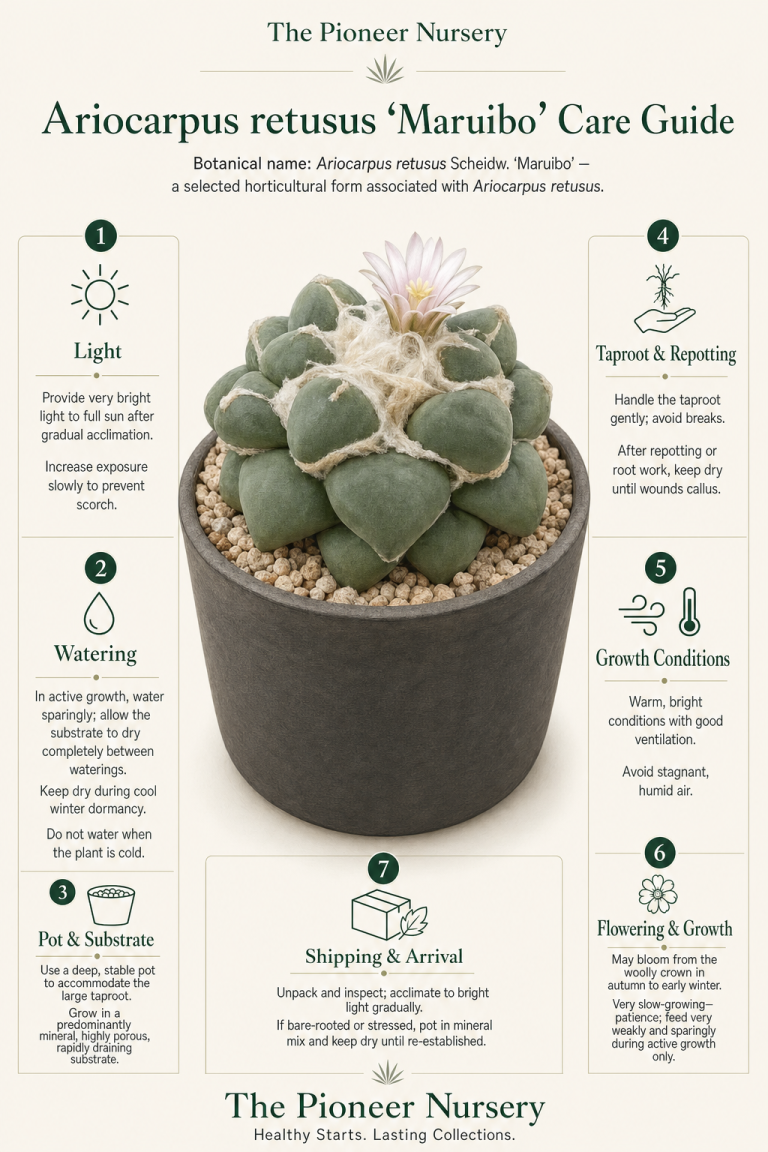
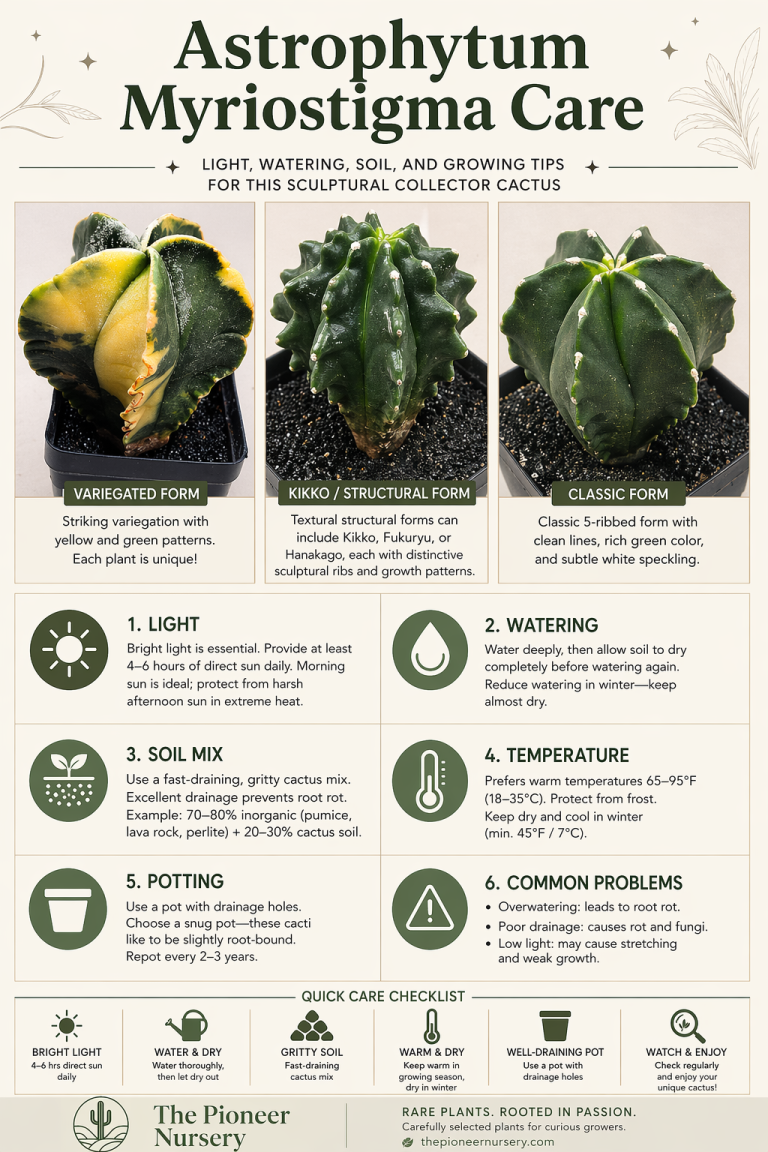
Dorstenia crispa Cristata Care Guide
Learn how to grow Dorstenia crispa Cristata, the crested horticultural form associated with Dorstenia foetida, with guidance on light, watering, soil, dormancy, shipping, and rot prevention.
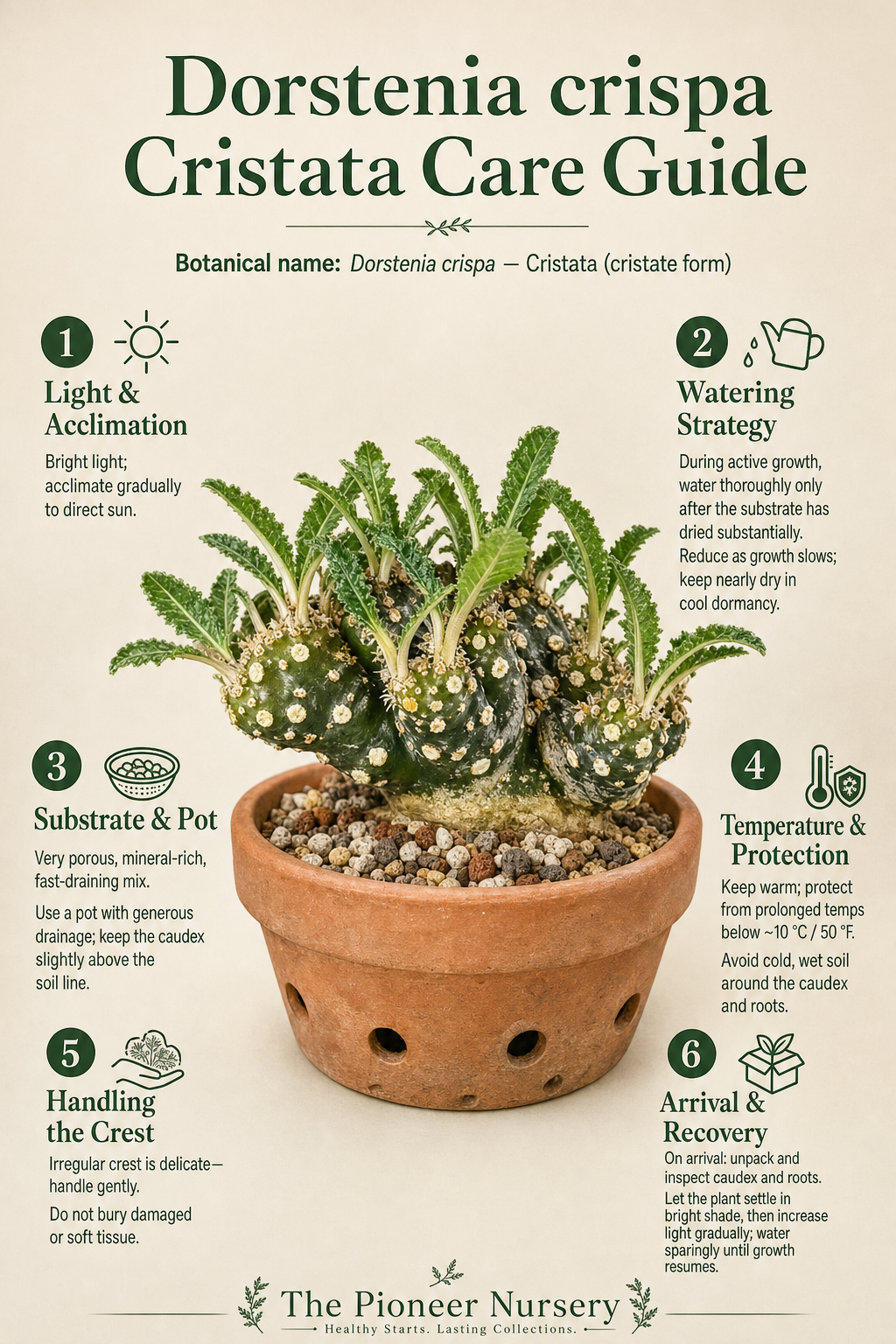
Dorstenia crispa Cristata is a crested horticultural form associated with Dorstenia foetida. The name Dorstenia crispa is treated as a synonym of Dorstenia foetida, while “Cristata” describes the plant’s cresting growth form rather than a formally established botanical variety or cultivar. Its irregular crest may grow slowly and unpredictably, so the main care priorities are warm conditions, bright acclimated light, very porous soil, and careful watering that avoids cold, persistent moisture around the caudex and roots.
Quick Care Summary
- Bright light with gradual acclimation to direct sun.
- Use a very porous, mineral-rich, fast-draining substrate.
- Water thoroughly during active growth after the substrate has dried substantially.
- Reduce watering as growth slows and keep nearly dry during cool dormancy.
- Keep warm and protect from prolonged temperatures below approximately 10 °C / 50 °F.
- Avoid cold, wet soil around the caudex and roots.
- Handle the irregular crest gently and avoid burying damaged or soft tissue.
About the Plant
This plant is a crested Dorstenia foetida with an irregular growth surface that may change shape over time. Crested plants can have altered growth points and may be more vulnerable to mechanical damage or prolonged wetness at the growing edge. Species-level care is based on Dorstenia foetida, but the crest itself may grow more slowly and less predictably than normal growth.
Light
Provide bright light and acclimate gradually after shipping or whenever the growing location changes. Several hours of gentle direct sun may be tolerated, while bright filtered light or light shade is generally safer in hot climates and can encourage fuller leaf growth. Avoid placing a recently shipped or greenhouse-grown plant directly into intense midday sun, which can cause sunburn.
Watering
During active growth, water thoroughly once the substrate has dried substantially, then allow all excess water to drain. Do not keep the caudex or roots constantly wet. Reduce watering as growth slows or leaves are shed, and keep the plant nearly dry during cool dormancy. Resume cautiously when conditions are warm and new growth appears. Cold plants and recently disturbed roots should not be watered until they are warm and able to drain rapidly.
Soil and Substrate
Use a very porous, fast-draining mix with substantial mineral content. Suitable components include pumice, perlite, coarse sand, lava rock, or another aerated aggregate combined with a modest organic component. Avoid compact mixes that stay wet around the caudex.
Potting and Roots
Choose a container with generous drainage holes and only modest extra space beyond the root system. Keep the caudex out of water-retentive pockets. Repot during warm active growth when possible. Handle the irregular crest gently, avoid burying soft or damaged portions, and take particular care not to injure its growing edge.
Temperature
Keep the plant warm, especially while the substrate is wet. Protect it from frost and prolonged temperatures below approximately 10 °C / 50 °F. Cold combined with wet soil substantially increases the risk of caudex or root rot. Although warm conditions generally support stronger growth, excessive heat with stagnant air may reduce vigor.
Seasonal Growth and Dormancy
Dorstenia foetida may enter seasonal rest under shorter, cooler, or drier conditions. Growth may slow and some leaves may be shed. During this period, reduce watering substantially while maintaining warmth and ventilation. Do not use a fixed calendar schedule; assess temperature, leaf condition, and how quickly the substrate dries. Resume more active watering only when warm conditions and new growth return.
Fertilizer
Feed sparingly during active growth with a balanced, diluted fertilizer. Do not fertilize a dormant, recently shipped, root-disturbed, or visibly stressed plant. Excessive nitrogen can encourage weak, elongated growth and is unnecessary for maintaining a compact caudex.
Flowering and Seed
The plant produces distinctive Dorstenia inflorescences, called hypanthodia, on stalks near the stems or leaf axils. Mature plants may produce seed readily. Ripe seed can be forcibly ejected, so collecting it may require covering or isolating developing seed heads. Self-sown seedlings may appear around the parent plant.
Propagation
Fresh seed is the preferred propagation method. Sow it in a warm, lightly moist, well-drained medium, and provide warmth, humidity, and good air movement while seedlings establish. Stem cuttings may be possible from suitable non-crested growth; allow cut surfaces to dry and callus before planting, then protect them from excessive moisture. Crested growth may be difficult to reproduce true to form because the crest is a growth mutation rather than a reliably seed-transmitted cultivar trait.
Shipping and Arrival Care
Receive and ship this plant warm whenever possible, avoiding prolonged cold exposure. A dry or nearly dry shipment is safer than packing the plant wet. After arrival, inspect the caudex and roots for damage, provide bright filtered light, and acclimate gradually. Do not water immediately after major root disturbance or while the plant is cold. Let damaged areas dry and begin watering only when the plant is warm and the substrate can drain rapidly.
Common Problems
- Caudex or root rot: Usually associated with cold, wet, poorly aerated substrate.
- Sunburn: Can follow abrupt exposure to strong direct light after indoor or greenhouse conditions.
- Weak or elongated growth: May result from insufficient light or excessive moisture.
- Leaf loss or dormancy: May occur under cool, dry, or low-light conditions.
- Crest damage and dieback: Mechanical injury or prolonged wetness can damage the irregular growing edge.
- Self-sown seedlings: Mature inflorescences can eject seed around the parent plant.
Frequently Asked Questions
How should I water Dorstenia crispa Cristata in winter?
Reduce watering substantially as growth slows or leaves are shed, and keep the plant nearly dry during cool dormancy. Judge by temperature, leaf condition, and substrate dryness rather than a fixed schedule.
Can this plant take direct sun?
Several hours of gentle direct sun may be tolerated, but acclimate gradually. Bright filtered light or light shade is safer in hot climates, and abrupt midday sun can cause sunburn.
What soil is best for the crested form?
Use a very porous, fast-draining mix with substantial mineral material such as pumice, perlite, coarse sand, or lava rock, plus a modest organic component.
Why is the crest changing shape?
Crested growth can develop irregularly and change shape over time. The form may also grow more slowly and less predictably than normal Dorstenia foetida growth.
How should I care for it after shipping?
Inspect the caudex and roots, provide bright filtered light, and acclimate gradually. Avoid watering while the plant is cold or after major root disturbance; wait until it is warm and the substrate can drain rapidly.
Can the crest be propagated from seed?
Fresh seed is the preferred propagation method for the species, but crested growth may not reproduce true to form because the crest is a growth mutation rather than a reliably seed-transmitted cultivar trait.
With warmth, bright acclimated light, porous soil, and careful seasonal watering, Dorstenia crispa Cristata can maintain its distinctive caudex and unusual crested growth. The most important precaution is to keep the plant from remaining cold and wet, especially after shipping or root disturbance.