Echinopsis eyriesii Care Guide
Learn how to grow Echinopsis eyriesii, a clumping cactus known for vigorous growth and fragrant, short-lived evening flowers. Discover its light, watering, soil, dormancy, and shipping-care needs.
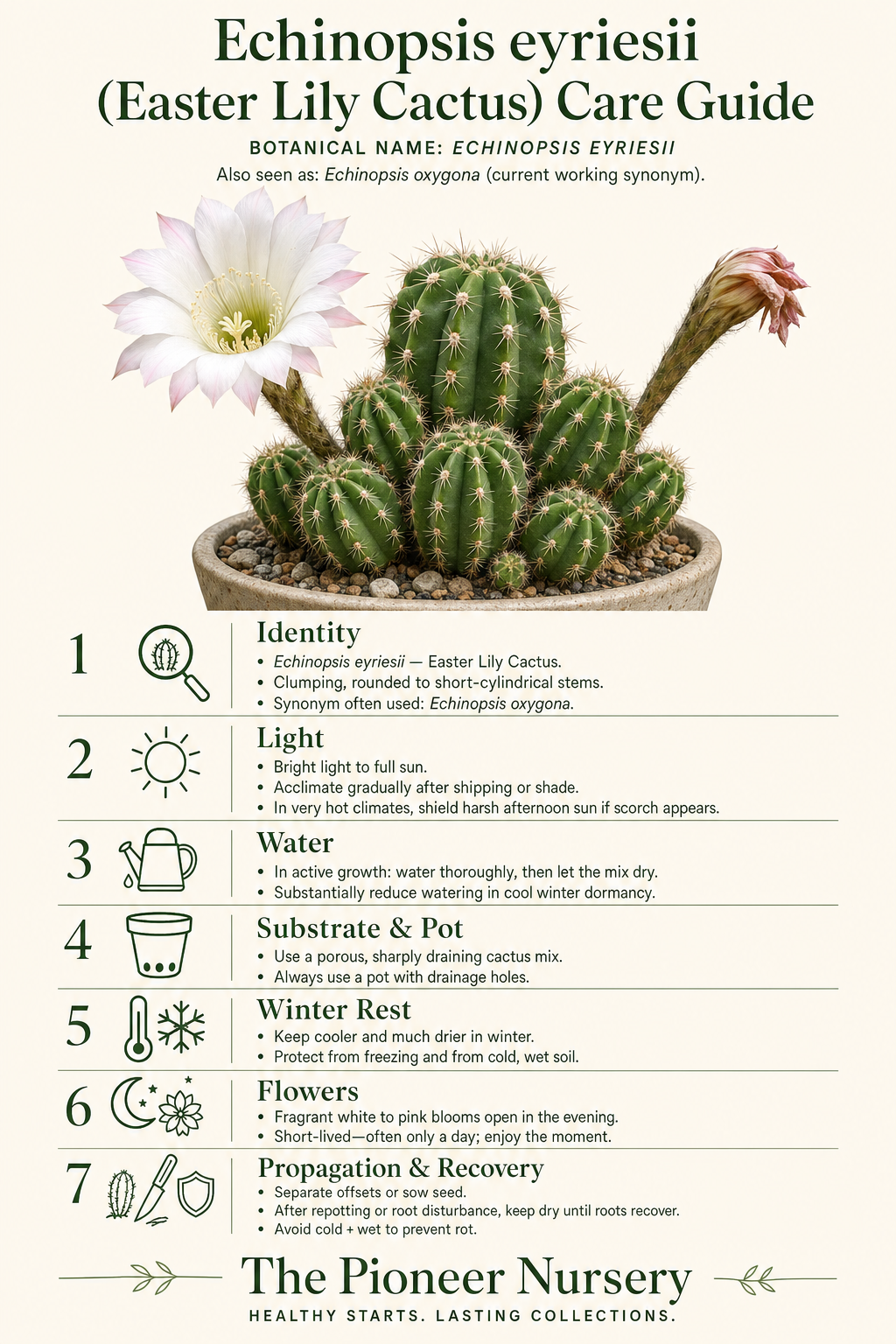
Echinopsis eyriesii, commonly called Easter lily cactus, is a clumping and relatively vigorous cactus valued for its large, fragrant white to pink flowers. Plants need bright light, sharply draining soil, thorough watering during active growth, and a much drier winter rest. Plants of the World Online currently treats Echinopsis eyriesii as a synonym of Echinopsis oxygona, although the submitted name remains a legitimate published botanical name and is retained here as the primary content identity. Cultivated plants may also include established clones or Echinopsis hybrids, so flower traits alone do not confirm species identity.
Quick Care Summary
- Bright light to full sun, with gradual acclimation after shipping or shade.
- Protect from intense afternoon sun in very hot climates if scorch develops.
- Water thoroughly during active growth, then let the substrate dry.
- Reduce watering substantially during cool winter dormancy.
- Use a porous, sharply draining cactus mix and a pot with drainage holes.
- Keep the plant dry after significant root disturbance until damaged roots recover.
- Protect from freezing temperatures and cold, wet soil.
- Expect fragrant white to pink flowers that open in the evening and may last only one day.
About the Plant
Echinopsis eyriesii is a clumping cactus with a relatively vigorous growth rate compared with slower-growing desert cacti. It is suitable for container culture when drainage is excellent. Common names include Easter lily cactus, Pink Easter lily cactus, sea-urchin cactus, night-blooming hedgehog cactus, and Eyries cactus.
Light
Provide bright light to full sun. Acclimate gradually after shipping or when moving the plant from shade into stronger light. In very hot climates, afternoon protection can help reduce scorch. Insufficient light may cause elongated, weak growth and reduced flowering.
Watering
Water thoroughly during active spring-to-summer growth, then allow the substrate to dry before watering again. This relatively vigorous cactus may accept somewhat more water during active growth than slower-growing desert cacti, but it should never remain constantly wet. Reduce watering substantially during winter dormancy, especially when conditions are cool.
Soil and Substrate
Use a porous, sharply draining cactus substrate based on mineral grit, sand, or pumice with an organic component. Well-drained loam, sandy media, or rocky mixes are suitable. The goal is quick drainage and a root zone that can dry between waterings.
Potting and Roots
Choose a container with drainage holes and avoid an oversized pot that holds excess moisture. Repotting during active growth is practical when needed. After root disturbance or damage, allow the roots to dry and recover before resuming careful watering. No enlarged taproot or specialized caudex treatment is required based on the reviewed research.
Temperature and Winter Care
Warm growing conditions are preferred. The plant may tolerate a light frost when kept dry, but freezing temperatures and cold, wet soil create a significant rot risk. During winter, keep it cooler and much drier than during the growing season.
Seasonal Growth and Dormancy
Growth slows during winter. Treat this period as a dry rest: reduce watering substantially and avoid prolonged combinations of cold temperatures and wet soil. Resume more attentive watering as active growth returns, always allowing the substrate to dry between waterings.
Fertilizer
Apply a balanced liquid fertilizer sparingly two or three times during the growing season, preferably when the root zone is already moist. Do not fertilize during winter dormancy.
Flowering
Mature plants can produce large, funnel-shaped, fragrant flowers in white to pink shades, generally from spring into summer. Flowers open in the late afternoon or evening and may last only through the following day, particularly in hot weather. Mature plants may produce several flowers at once. Bright light, adequate seasonal growth, and restrained winter watering support flowering, while insufficient light or excessive winter moisture may reduce it.
Propagation
Propagate by sufficiently developed offsets or by seed. Offsets may root readily. Seed propagation preserves sexual reproduction but is slower to flowering than establishing an offset.
Shipping and Arrival Care
Inspect the plant after arrival, particularly if it was shipped bare-root or experienced root disturbance. Keep it dry whenever possible during recovery, and do not immediately apply heavy watering to damaged or freshly disturbed roots. Reintroduce it gradually to strong light to reduce scorch risk. Protect a recovering plant from cold, wet conditions. Recovery needs vary according to root condition, season, and shipping conditions.
Common Problems
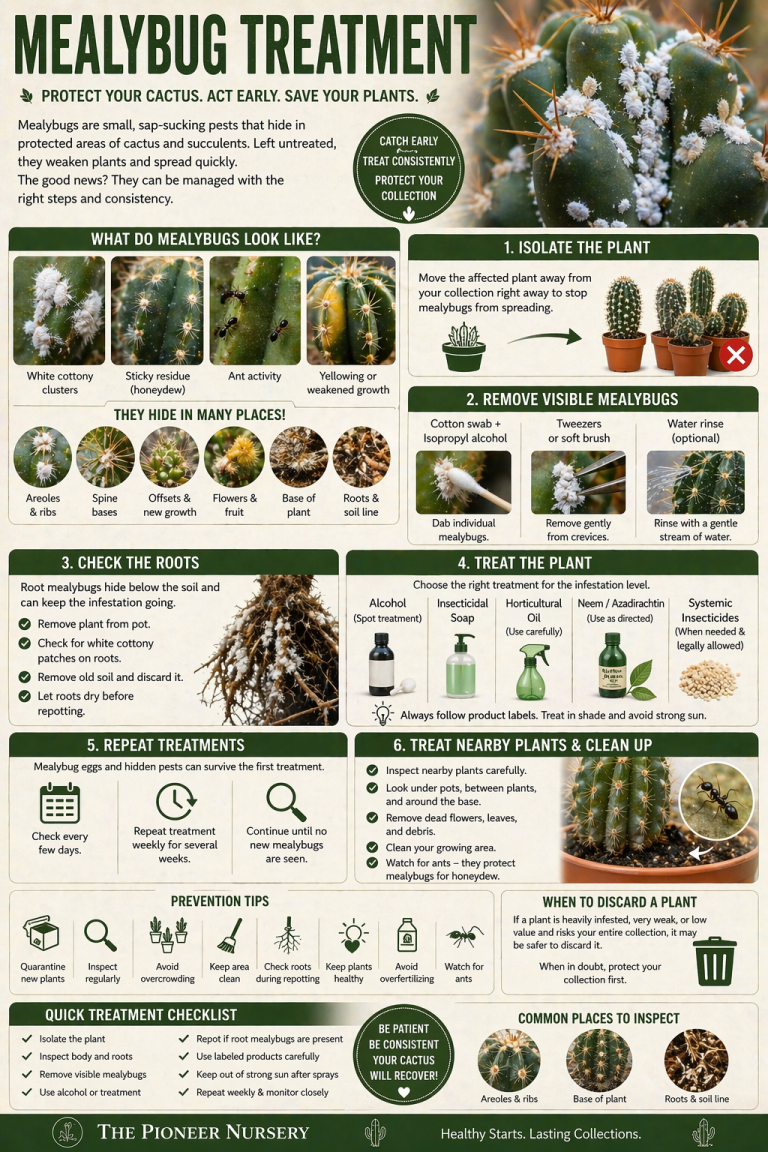
Root or stem rot can result from poorly drained substrate, overwatering, or cold wet conditions. Sun scorch may occur after abrupt exposure to intense direct sun, especially following indoor or shaded shipping conditions. Insufficient light can produce etiolated, weak growth and reduce flowering. Monitor for mealybugs and other common cactus pests. Excessive winter watering or inadequate seasonal growth may also reduce flowering.
Frequently Asked Questions
How often should I water Echinopsis eyriesii?
Water thoroughly during active spring-to-summer growth, but wait until the substrate dries before watering again. Water substantially less during winter dormancy, particularly when conditions are cool.
Can Echinopsis eyriesii grow in full sun?
Yes. Bright light to full sun is suitable, but acclimate gradually after shipping or shade. Afternoon protection may help in very hot climates.
How should I care for it in winter?
Keep it cooler and much drier than during active growth. Avoid prolonged cold combined with wet soil, since this creates a significant rot risk.
Why are the flowers open at night?
Its large, fragrant flowers generally open in the late afternoon or evening and may last only through the following day, especially in hot weather.
Can I propagate it from an offset?
Yes. Sufficiently developed offsets may root readily. It can also be grown from seed, although seedlings are slower to flower.
Is Echinopsis eyriesii the same as Echinopsis oxygona?
Plants of the World Online currently treats Echinopsis eyriesii as a synonym of Echinopsis oxygona, while other historical or alternative treatments have accepted E. eyriesii. Cultivated plants sold under the name may also include clones or hybrids.
With bright light, fast drainage, thorough active-season watering, and a much drier winter rest, Echinopsis eyriesii can make a vigorous and rewarding container cactus. Handle recently shipped or disturbed plants cautiously, especially around watering and strong sun.