Mammillaria lenta Care Guide
Learn how to grow Mammillaria lenta with bright light, fast-draining mineral soil, careful watering, and a cool, dry winter rest.
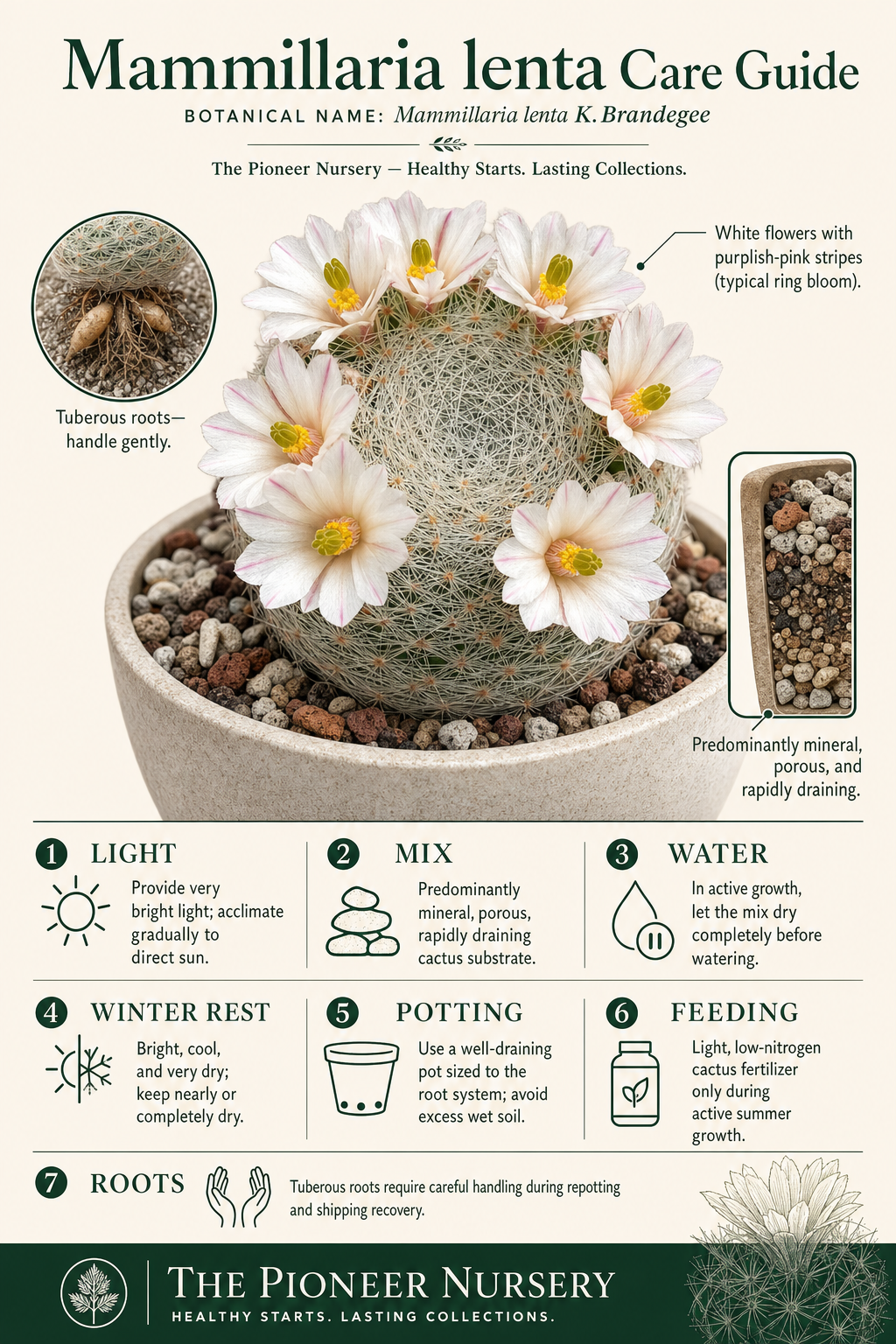
Mammillaria lenta is a slow-growing pincushion cactus from arid and semi-desert regions of northeastern Mexico. Its reported tuberous roots make excellent drainage and careful watering especially important. Give it very bright light, allow the mineral substrate to dry completely between waterings during active growth, and keep it nearly or completely dry during its cool winter rest.
Quick Care Summary
- Provide very bright light with gradual acclimation to direct sun.
- Use a predominantly mineral, porous, rapidly draining cactus substrate.
- Allow the substrate to dry completely before watering during active growth.
- Keep the plant nearly or completely dry during cool winter dormancy.
- Use a well-draining pot sized to the root system without excess wet soil.
- Feed lightly with low-nitrogen cactus fertilizer only during active summer growth.
- Handle the tuberous roots carefully during repotting and shipping recovery.
About Mammillaria lenta
Mammillaria lenta is an accepted botanical species attributed to K. Brandegee and first published in 1904. Historical combinations include Chilita lenta, Escobariopsis lenta, and Neomammillaria lenta. It is naturally associated with arid or semi-desert conditions in Mexico and grows slowly. The tuberous root system is particularly sensitive to prolonged moisture.
Light
Provide very bright light with substantial direct sun. Acclimate plants gradually when moving them outdoors or from greenhouse or indoor protection into stronger sunlight. In exceptionally hot conditions, afternoon shade may help if the plant shows heat or sun stress. Sudden exposure to intense sun can cause sunburn.
Watering
During active growth, water thoroughly only after the mineral substrate has dried completely, then allow excess water to drain freely. Never keep the roots continuously damp. Reduce watering in autumn and keep the plant nearly or completely dry during cool winter dormancy. Cold conditions combined with wet soil create a serious rot risk. Adjust watering according to temperature, light, pot size, substrate, airflow, season, and root condition rather than following a fixed calendar.
Soil and substrate
Use a very porous, rapidly draining, predominantly mineral cactus substrate. Pumice, coarse grit, lava, or similar aerated mineral components should form the main structure, with only a limited amount of organic material. This fast-draining mix is especially important because of the species' tuberous roots and sensitivity to excess moisture.
Potting and roots
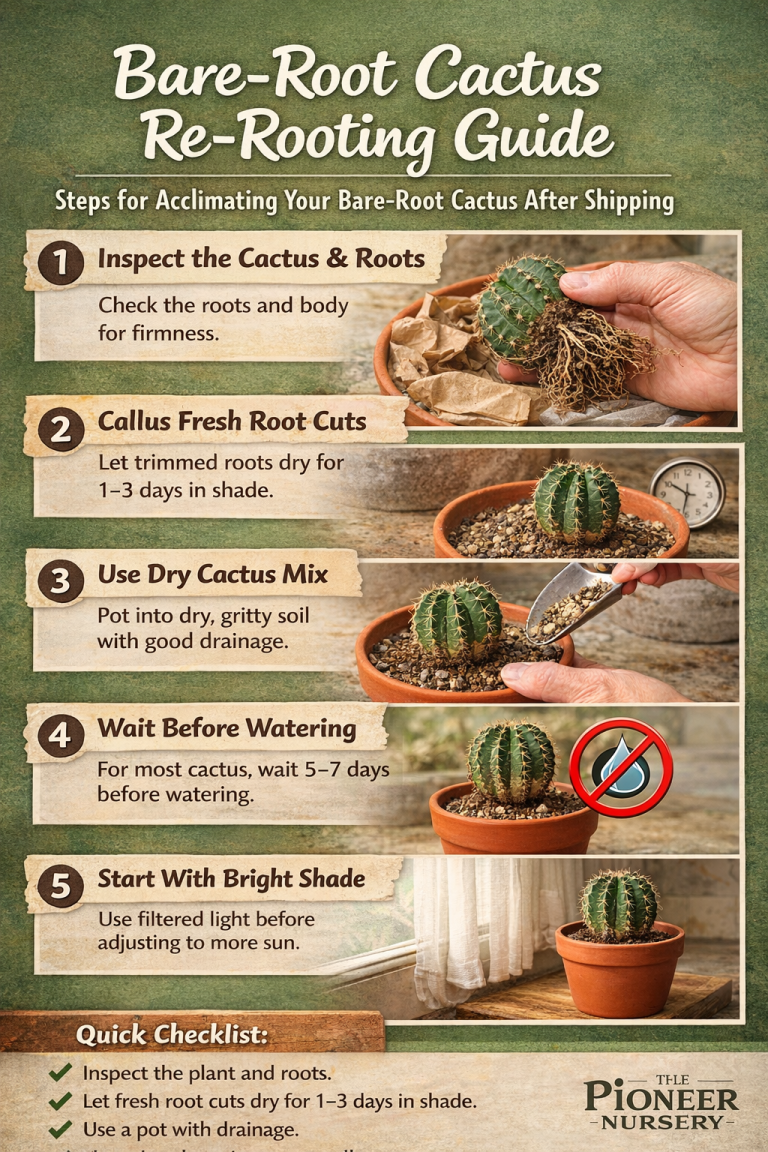
Choose a pot with excellent drainage that accommodates the root system without leaving a large volume of persistently wet substrate. Avoid unnecessary root disturbance. After repotting, or after bare-root shipping, allow damaged roots to dry and heal before cautious rewatering.
Temperature and winter dormancy
Provide warm conditions during active growth. A bright, dry winter rest at approximately 8–10°C or above is a conservative cultivation recommendation. Some specialist cultivation sources report greater frost tolerance when the plant is completely dry, but this should not be treated as permission to expose it to freezing, wet conditions. Withhold or nearly withhold water during dormancy, especially in cool or poorly ventilated conditions.
Fertilizer
Feed only during active summer growth, using a dilute cactus fertilizer with relatively low nitrogen. A higher-potassium formulation is suitable. Do not fertilize while the plant is dormant.
Flowering
Mature plants may produce a ring of relatively large white flowers marked with purplish-pink stripes around the upper part of the stem. Flowering commonly occurs in spring when the plant receives suitable light and a seasonal cool, dry rest.
Propagation
Propagation is principally by seed. Offsets or cuttings may be used when available, and grafting is possible, although it is generally unnecessary for ordinary cultivation.
Shipping and arrival care
Inspect the plant on arrival and protect its root system from crushing. Because Mammillaria lenta has tuberous roots and can rot in wet conditions, it may be shipped bare-root or nearly dry when appropriate. If roots were disturbed or damaged, allow them to dry and heal before cautious rewatering. Reintroduce bright light gradually after shipping and resume watering only after the plant and roots have had time to recover.
Common Problems
- Root or basal rot: usually associated with overwatering, poor drainage, or cool wet conditions.
- Weak or stretched growth: may indicate inadequate light.
- Mealybugs, including root mealybugs, and occasional scale or spider mites: inspect the plant and roots regularly.
- Sunburn: acclimate gradually before exposing a protected plant to strong direct sun.
- Slow growth: natural for this species, so rapid size increase should not be expected.
Frequently Asked Questions
How often should I water Mammillaria lenta?
Do not use a fixed schedule. During active growth, water thoroughly only when the mineral substrate has dried completely. Reduce watering in autumn and keep the plant nearly or completely dry during cool winter dormancy.
Does Mammillaria lenta need direct sun?
Very bright light with substantial direct sun is appropriate. Acclimate gradually, especially after shipping or greenhouse cultivation, and provide afternoon shade in exceptionally hot conditions if the plant shows stress.
Why is the soil mix so mineral and fast-draining?
The species has reported tuberous roots and is sensitive to excess moisture. A porous mineral substrate helps prevent the roots from remaining wet for long periods.
Can Mammillaria lenta flower indoors?
Mature plants may flower when they receive suitable light and a seasonal cool, dry rest. Its flowers form a ring around the upper stem and are white with purplish-pink striping.
How should I water after repotting or shipping?
If roots were disturbed or damaged, allow them to dry and heal before cautious rewatering. Avoid wet conditions while the plant is recovering, and reintroduce bright light gradually after shipping.
How is Mammillaria lenta propagated?
Propagation is principally by seed. Offsets or cuttings may be used when available, and grafting is possible but generally unnecessary for ordinary cultivation.
Mammillaria lenta rewards patience and careful moisture control. Bright light, a strongly mineral substrate, complete drying between waterings, and a bright, dry winter rest address the main needs of this slow-growing, tuberous-rooted cactus.