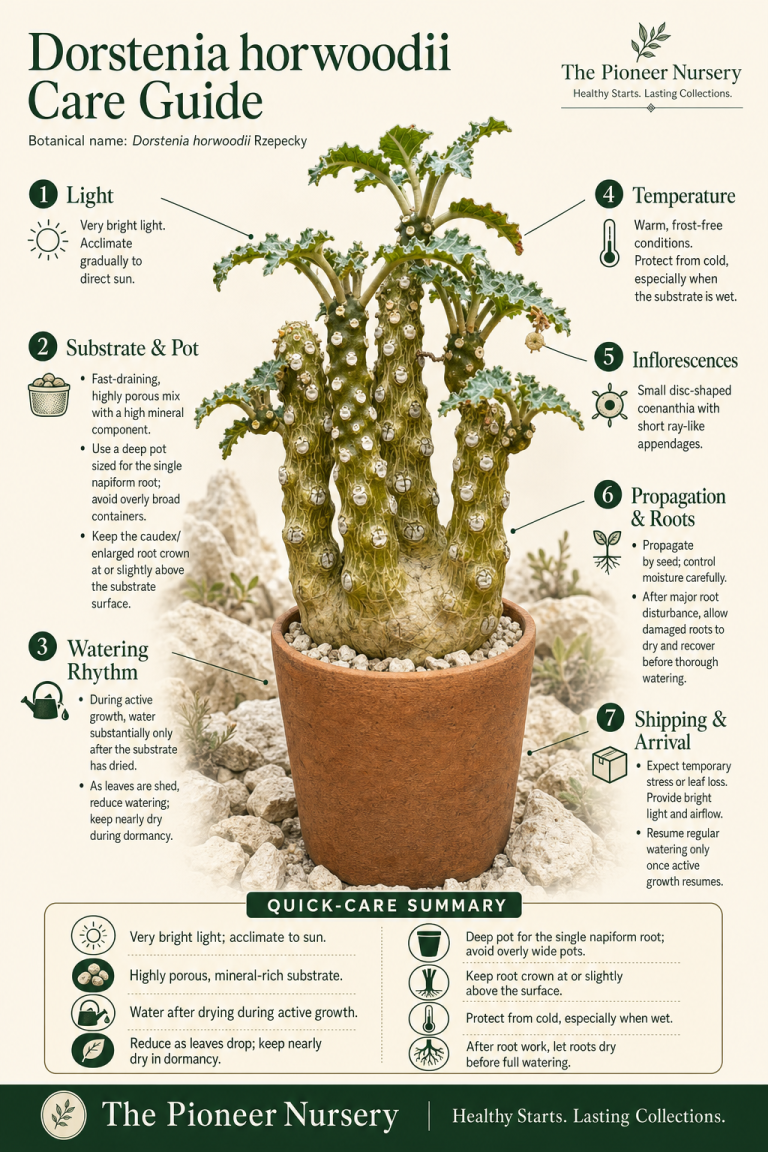
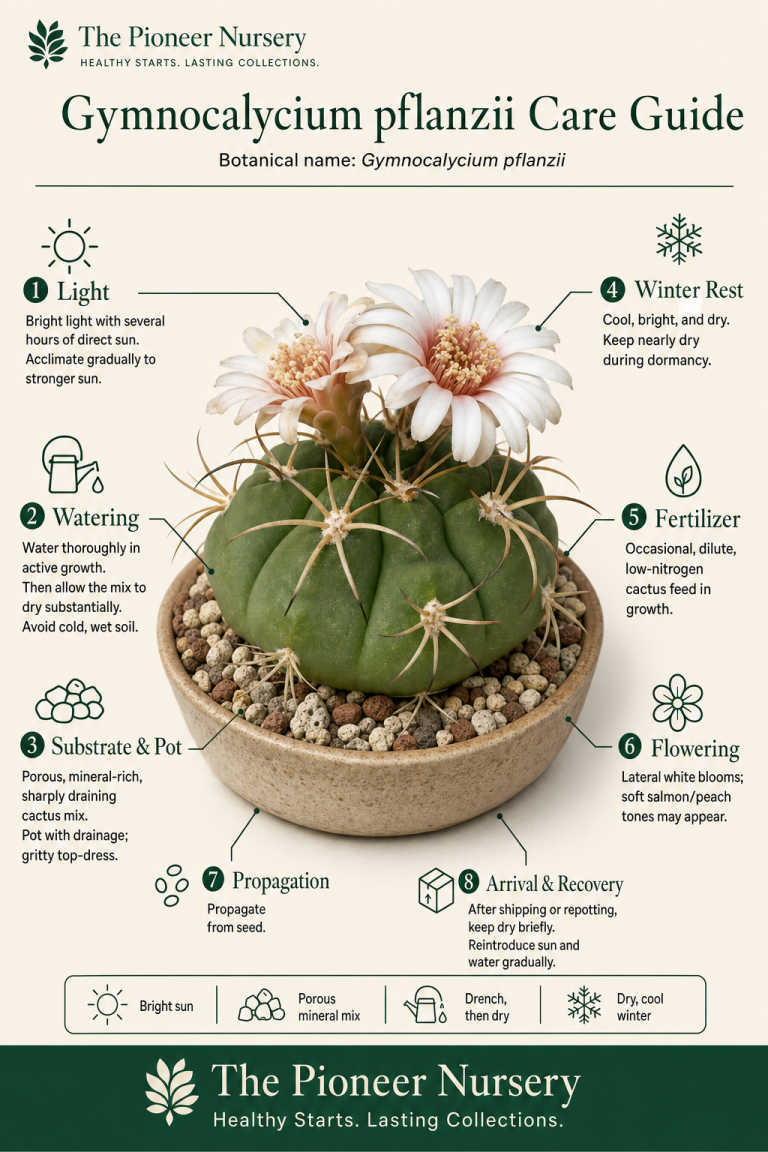
Dorstenia horwoodii — Variegated Care Guide
Learn how to grow variegated Dorstenia horwoodii with bright acclimated light, mineral soil, careful watering, and a dry winter rest.
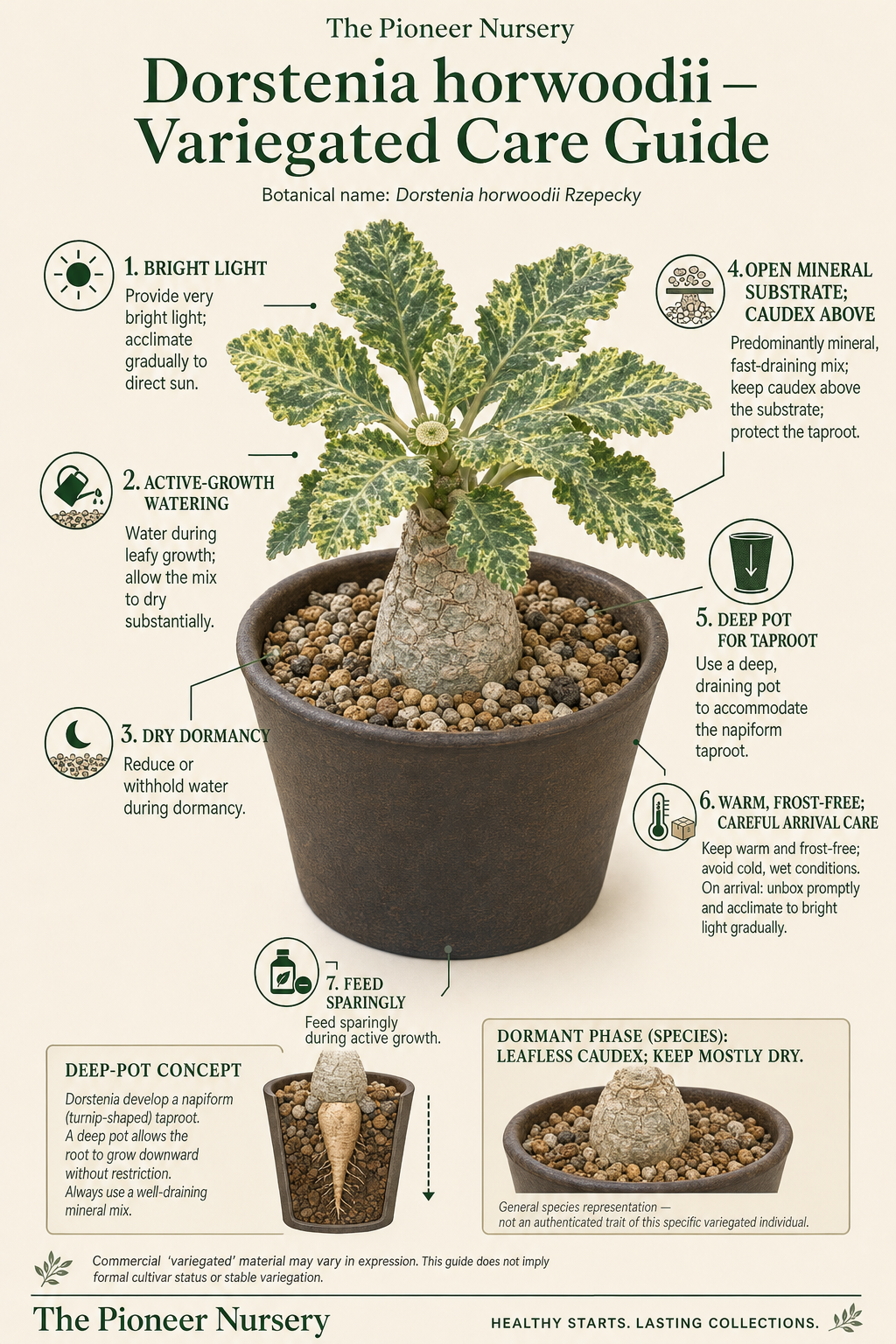
Dorstenia horwoodii — Variegated is a horticultural form attributed to a small, deciduous succulent with a napiform taproot, squat enlarged base, and crisped bicrenate leaves. Give it very bright but gradually acclimated light, an open mineral substrate, seasonal watering, and protection from cold, wet conditions. “Variegated” describes the horticultural form; commercial plants may vary, so care should be adjusted to the individual plant.
Quick Care Summary
- Provide very bright light and acclimate gradually to direct sun.
- Use a predominantly mineral, fast-draining substrate.
- Water during leafy growth, allowing the mix to dry substantially.
- Reduce or withhold water during dormancy.
- Keep the caudex above the substrate and protect the taproot.
- Avoid frost and cold, wet conditions.
- Feed sparingly during active growth.
About the plant
Dorstenia horwoodii is a small succulent described from limestone habitat, with the species recorded in Somalia. Commercial plants sold as variegated D. horwoodii may vary in identity. The described species develops a single napiform taproot, a squat enlarged base, crisped bicrenate leaves, and small disc-shaped inflorescences. The original description records an approximate mature size of 6 cm tall and 8 cm wide, although cultivated plants may become less compact with heavy feeding. “Variegated” is a horticultural descriptor rather than a verified formal cultivar or botanical variety name.
Light
Provide very bright light with several hours of direct sun once the plant is acclimated. After shipping or shade, increase exposure gradually. Variegated tissue may scorch or bleach after an abrupt change, so provide light shade during the hottest part of the day if scorch, bleaching, or heat stress develops. Insufficient light may produce weak, elongated growth.
Watering
Water thoroughly while the plant is actively growing and carrying leaves, then allow the mineral substrate to dry substantially before watering again. Reduce watering as leaves yellow or fall. During dormancy, keep the plant dry or nearly dry, especially in cool conditions. Avoid a fixed calendar schedule: cold, wet substrate creates a serious rot risk.
Soil and substrate
Use a very open, fast-draining, predominantly mineral mix with excellent root aeration. Pumice, scoria, coarse sand, akadama, or other stable mineral particles are suitable. A small amount of organic material may be included, but the finished mix should not remain moisture-retentive.
Potting and roots
Choose a draining pot deep enough for the napiform taproot without bending or crowding it. Avoid oversized containers, which stay wet too long. Keep the enlarged base above the substrate surface. Repot only when necessary and handle the taproot carefully. If roots are damaged or substantially disturbed, allow them to dry and heal before cautious watering. Small, well-drained clay pots suit this caudiciform.
Temperature
Keep the plant warm during active growth and protect it from frost and cold, wet conditions. A conservative winter minimum is approximately 7–10°C (45–50°F), with extra caution when the plant is dormant or the substrate is not completely dry. Avoid prolonged cold exposure.
Seasonal growth and dormancy
Dorstenia horwoodii is deciduous and may naturally become nearly leafless during dormancy. Reduce or withhold water during this period, then resume gradually when conditions are warm and new growth appears. Leaf loss can also result from cold stress, root damage, or excessive drought during active growth, so check conditions before watering.
Fertilizer
Feed sparingly during active growth with a balanced, dilute fertilizer. One or a few low-strength applications are preferable to heavy feeding. Stop or greatly reduce fertilizer during dormancy or when light and temperature are inadequate.
Flowering and seed
The flowers are arranged in small, flattened, disc-shaped coenanthia with short ray appendages. The species is monoecious, and staminate flowers reportedly outnumber pistillate flowers and mature first. Dorstenia may disperse seed ballistically, so developing infructescences may need to be enclosed if seed is being collected.
Propagation
Seed propagation is the most defensible method for producing plants with the characteristic root and caudex development. Sow fresh seed in a warm, highly draining medium and maintain careful moisture while seedlings establish, avoiding persistent saturation. Vegetative propagation and stable inheritance of variegation are not adequately documented, so variegated offspring should not be assumed to remain true to the parent.
Shipping and arrival care
Whenever possible, ship and receive this plant during a warm, frost-free period. On arrival, inspect the roots and caudex for damage or rot. Start with bright, filtered light and acclimate gradually to direct sun. After bare-root shipping or major root disturbance, allow damaged roots to dry and heal before cautious watering.
Common Problems
- Root or caudex rot from cool, poorly aerated, persistently wet substrate; use a more open mix and keep the plant drier in cool conditions.
- Sun scorch or bleaching after sudden intense light; acclimate gradually and use light shade during the hottest part of the day if needed.
- Weak, elongated growth from insufficient light; provide brighter conditions gradually.
- Leaf loss may be normal dormancy or may reflect cold stress, root damage, or excessive drought during active growth; check conditions before watering.
- Plants sold under this name may vary, so observe the individual plant rather than relying on the label alone.
Frequently Asked Questions
How should I water a variegated Dorstenia horwoodii?
Water thoroughly while it is actively growing and has leaves, allowing the mineral mix to dry substantially afterward. Reduce watering as leaves fall and keep the plant dry or nearly dry during cool dormancy.
Does this plant need direct sun?
It needs very bright light and can receive several hours of direct sun after acclimation. Increase exposure gradually because variegated tissue may scorch or bleach after an abrupt change.
Why has my plant lost its leaves?
Leaf loss may be normal seasonal dormancy, but it can also reflect cold stress, root damage, or excessive drought during active growth. Check conditions before watering.
What type of pot does it need?
Use a draining pot deep enough for the napiform taproot, but avoid an oversized container. Keep the enlarged base above the substrate surface.
Can I propagate the variegated form from cuttings?
Vegetative propagation and stable inheritance of variegation are not adequately documented in the supplied research. Seed propagation is the most defensible method for producing characteristic root and caudex growth.
Is every plant sold as variegated D. horwoodii pure species?
Not necessarily. Commercial plants may include hybrids or misidentified material, so the label alone does not confirm genetic purity or stable variegation.
Treat this plant as a small, deciduous caudiciform: provide strong, gradually acclimated light, an airy mineral mix, seasonal watering, and a dry rest when leafless. Watch how your individual plant responds and adjust within these care principles.