Turbinicarpus alonsoi Care Guide
Learn how to grow Turbinicarpus alonsoi, a slow-growing geophytic cactus with a substantial root system, bright-light needs, mineral soil preferences, and a careful winter dormancy cycle.
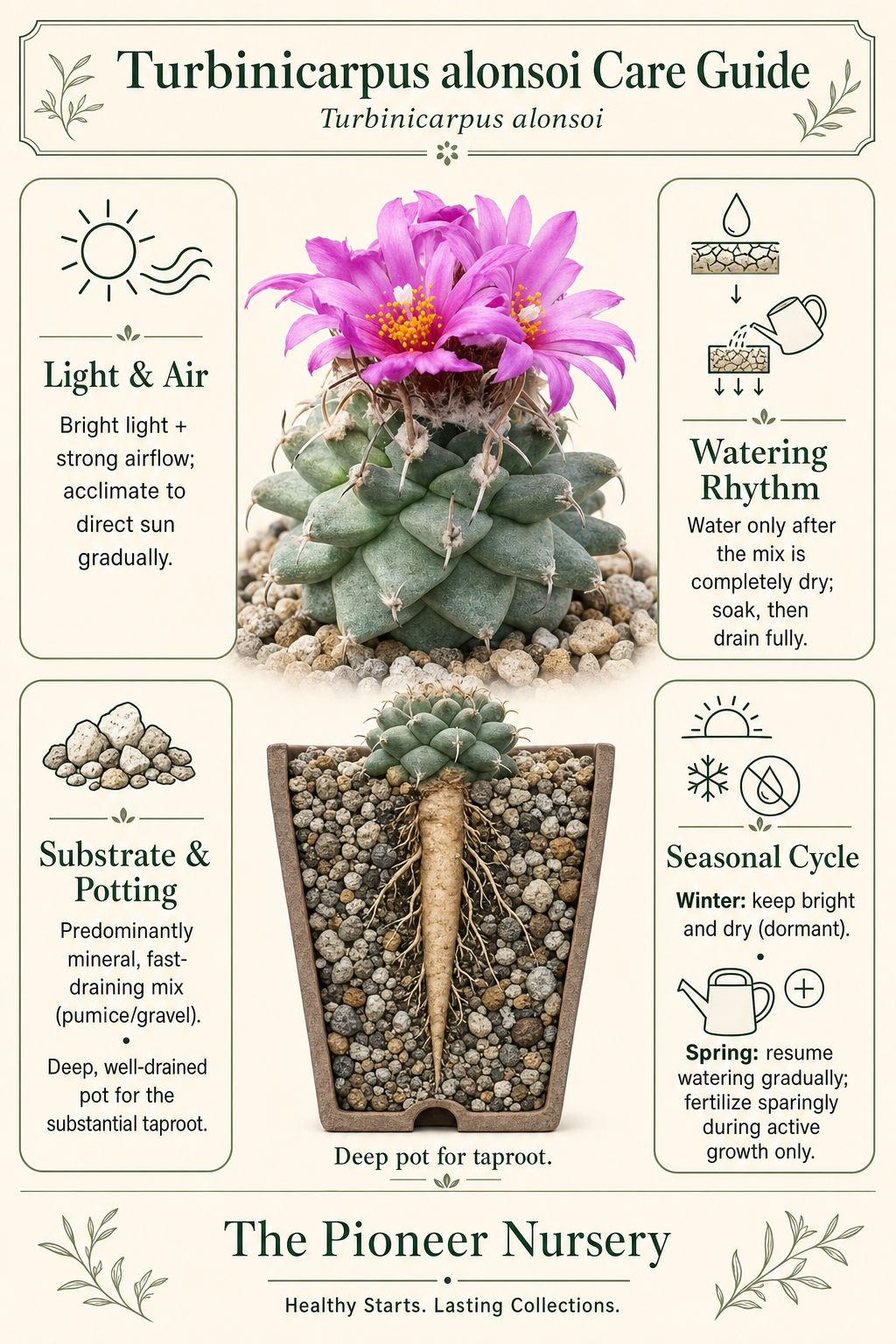
Turbinicarpus alonsoi is a slow-growing, geophytic cactus from rocky, dry habitats in Mexico. Its substantial taproot or tuberous root stores water and makes this species different from a shallow-rooted generic cactus. Successful cultivation depends on bright light, excellent ventilation, a predominantly mineral substrate, careful watering during active growth, and a dry winter rest.
Quick Care Summary
- Bright light, strong air movement, and gradual acclimation to direct sun.
- Use a predominantly mineral, fast-draining substrate with substantial pumice or gravel.
- Water thoroughly only after the substrate has dried completely during active growth.
- Resume spring watering gradually and keep the plant bright and dry during winter dormancy.
- Use a deep, well-drained pot suited to the substantial taproot or tuberous root.
- Fertilize sparingly during active growth only.
About Turbinicarpus alonsoi
This compact cactus develops a woolly apical region and produces showy rose to magenta flowers during the active growing season. Its large taproot or tuberous root provides anchorage and water storage, but it is vulnerable to prolonged moisture and disturbance. The name Pediocactus alonsoi (Glass & S.Arias) Halda is recorded as a homotypic synonym; Turbinicarpus alonsoi remains the primary botanical identity for this guide.
Light and air movement
Provide bright light with strong air movement. Once acclimated, the plant can receive several hours of direct sun, but protect it from the harshest midday or summer greenhouse sun if scorching develops. Acclimate gradually after shipping or a period in shade. Insufficient light can cause weak, elongated growth.
Watering
During active growth, water thoroughly only after the mineral substrate has dried completely. Begin spring watering gradually: sudden heavy watering after dormancy or prolonged dryness can contribute to splitting. Reduce or stop watering during winter dormancy and whenever conditions are cool. Avoid persistent moisture around the specialized root; dry conditions with good ventilation are safer than a fixed watering schedule.
Soil and substrate
Use a very porous, fast-draining, predominantly mineral cactus mix containing substantial pumice, gravel, or other stable inorganic material. A neutral to slightly alkaline medium is appropriate, and a small amount of limestone or lime may suit a compatible collection mix. The goal is rapid drainage and reliable drying rather than moisture retention.
Potting and roots
Choose a pot with excellent drainage and enough depth for the substantial taproot or tuberous root system. Avoid an unnecessarily oversized container, which may remain wet too long. Repot carefully because disturbed roots and delayed drying increase rot risk. After major root work, allow damaged roots to dry and heal before cautious rewatering.
Temperature and winter dormancy
Keep the plant warm, bright, and well ventilated during active growth. It is generally dormant in winter, so provide a cool-to-mild, bright, dry rest. Brief light frost may be tolerated only when the plant and substrate are completely dry, but routine cultivation should avoid freezing conditions. Short growth pauses may also occur during periods of extreme summer heat.
Fertilizer
Fertilize sparingly during active growth only. A dilute, low-nitrogen cactus fertilizer, or a formulation relatively higher in potassium, may be applied occasionally to actively growing, well-hydrated plants. Do not fertilize during dormancy or while the root zone remains wet. Excess fertilizer can cause soft, distorted, elongated growth.
Flowering
Turbinicarpus alonsoi produces rose to magenta flowers from its woolly apical region, commonly during the active growing season. Mature plants, strong light, adequate ventilation, and a dry winter rest support flowering.
Propagation
Seed is the primary propagation method because offsets are uncommon. Seedlings are slow-growing and need bright filtered light, warmth, ventilation, and carefully controlled moisture. Grafting is possible for faster production but is not required for successful cultivation.
Shipping and arrival care
Inspect the plant after arrival and protect it from cold, prolonged wet conditions, crushing, and severe root disturbance. Acclimate gradually to strong light. If roots were disturbed, wait to water until damaged roots have dried and healed and the substrate is fully dry.
Common Problems
- Root or basal rot: Usually associated with overwatering, poor aeration, or cold, wet conditions.
- Stem splitting: Sudden heavy watering after dormancy or prolonged dryness can contribute to splitting.
- Sunburn: Abrupt exposure to intense direct sun after shade or shipping can scorch the plant.
- Etiolation: Insufficient light produces weak, elongated growth.
- Mealybugs: Root mealybugs may hide below the substrate, while aerial mealybugs can occur among the wool.
- Soft growth: Overfertilization can produce distorted, elongated growth.
Frequently Asked Questions
How often should I water Turbinicarpus alonsoi?
Do not follow a fixed calendar. During active growth, water thoroughly only after the mineral substrate has dried completely. Water less or stop during winter dormancy and cool conditions.
Does Turbinicarpus alonsoi need direct sun?
Provide bright light and several hours of direct sun once acclimated. Acclimate gradually, especially after shipping or shade, and protect from the harshest midday or summer greenhouse sun if scorching appears.
Why does this cactus need a deeper pot?
Turbinicarpus alonsoi has a substantial taproot or tuberous root system, so it needs enough depth for the root. The container must still drain freely and should not be unnecessarily oversized.
How should I handle winter dormancy?
Keep the plant bright and dry in a cool-to-mild, frost-protected location. Resume watering gradually in spring when active growth is evident.
Can Turbinicarpus alonsoi be propagated from cuttings or offsets?
Seed is the primary method because offsets are uncommon. Seedlings are slow-growing; grafting is possible for faster production but is not required.
Should I water immediately after the plant arrives?
Inspect the roots and substrate first. Water only when the substrate is fully dry; if roots were disturbed, wait until they have dried and healed.
Turbinicarpus alonsoi rewards patient cultivation. Give its substantial root system depth, mineral soil, bright light, moving air, and a genuinely dry winter rest. Gradual changes in watering and light help keep this slow-growing cactus healthy.