Haworthiopsis attenuata Care Guide
Learn how to grow Haworthiopsis attenuata, a clumping zebra succulent that prefers bright filtered light, fast-draining soil, and careful watering between substantial dry periods.
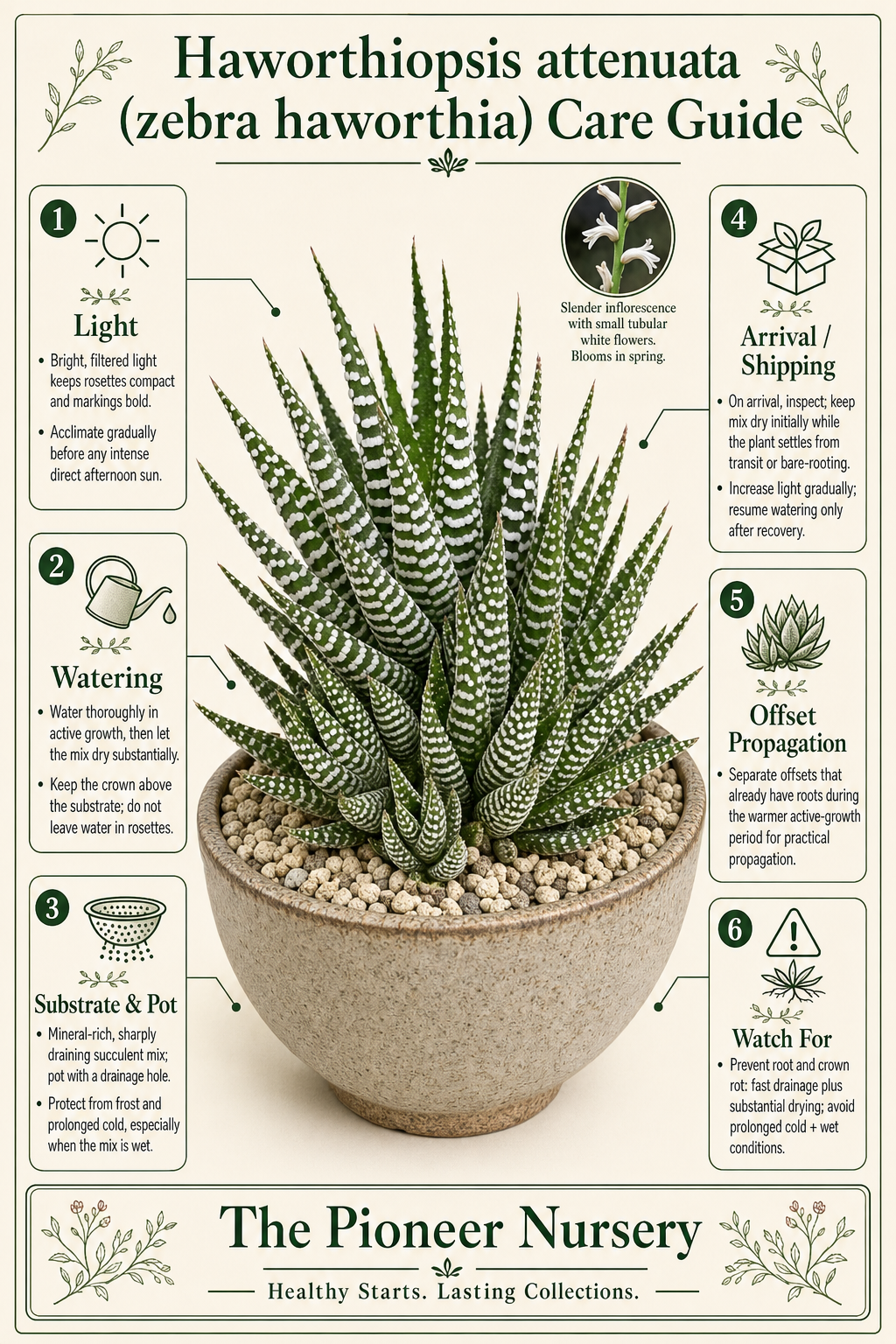
Haworthiopsis attenuata, commonly called zebra haworthia or zebra plant, is a small, stemless succulent that forms offsets and dense rosette clusters. Its white tubercles occur on both the upper and lower leaf surfaces, a useful feature when distinguishing it from the similar Haworthiopsis fasciata. For reliable growth, provide bright filtered light, a porous mineral-rich substrate, and thorough watering followed by substantial drying. Formerly widely known as Haworthia attenuata, that name is a documented legacy combination for the same species.
Quick Care Summary
- Bright filtered light supports compact rosettes and stronger markings.
- Acclimate gradually before exposing the plant to intense direct afternoon sun.
- Water thoroughly during active growth, then let the porous substrate dry substantially.
- Reduce watering during cool, dim winter conditions.
- Use a mineral-rich, sharply draining succulent mix and a container with drainage.
- Keep the rosette above the soil and prevent water from collecting around the crown.
- Protect from frost and prolonged cold, especially when the substrate is wet.
- Separate rooted offsets during the warmer active-growth period for practical propagation.
About the plant
This South African succulent grows as compact, clumping rosettes and commonly produces offsets. It tolerates somewhat lower indoor light than many succulents, but consistently dark conditions lead to elongated growth, weaker rosettes, and faded markings. Nursery-propagated and legally sourced plants are preferred because the species has been assessed as Vulnerable in South African conservation information.
Light
Give Haworthiopsis attenuata bright filtered or indirect light. Partial shade or sheltered bright light is suitable, and brighter conditions help maintain compact growth and stronger leaf patterning. Acclimate gradually before increasing direct sun exposure; abrupt intense afternoon sun can scorch the leaves. Although this plant is relatively tolerant of lower indoor light, it should not be kept in consistently dark conditions.
Watering
During active growth, water thoroughly, then allow the substrate to dry substantially before watering again. The goal is a complete wetting followed by a meaningful dry period, not constantly damp roots. Reduce watering when conditions are cool and dim, and adjust for indoor warmth, light, airflow, and root condition rather than following a fixed calendar. Frequent moisture, especially in cool conditions or poorly ventilated spaces, can cause root or crown rot.
Soil and substrate
Use a porous, sharply draining cactus or succulent substrate with substantial mineral content. Pumice, perlite, coarse sand, or other grit can be combined with a limited amount of organic potting material. The finished mix should hold enough moisture for root uptake while drying promptly after watering.
Potting and roots
Choose a container with a drainage hole and only modestly more space than the root system requires. Terracotta may help the substrate dry in humid conditions. Repot when the mix has degraded, the plant has filled its container, or offsets are ready for separation. Keep the rosette above the soil line and prevent water from collecting around the crown.
Temperature and seasonal growth
Protect the plant from frost, cold drafts, and prolonged cold. Normal indoor temperatures are suitable. Avoid extended exposure below approximately 10°C/50°F, particularly when the substrate is wet. Growth may slow during cool, low-light winter conditions. During prolonged winter coolness, keep the plant nearly dry, while avoiding complete drought if it remains warm, bright, and actively growing.
Fertilizer
Feed only during active growth. Apply a dilute, balanced or relatively low-nitrogen succulent fertilizer once or twice. Do not fertilize plants that are stressed, recently repotted, dormant, or severely dry.
Flowering
Mature plants may produce slender inflorescences with small tubular white flowers marked by greenish veins. Flowering is typically associated with spring or summer, depending on hemisphere and growing conditions. Indoor plants may flower infrequently when light or seasonal temperature changes are insufficient.
Propagation
Separating rooted offsets during the warmer active-growth period is the most practical propagation method. Leaf cuttings can work under suitable conditions but are less predictable. Seed propagation is possible but slower; sow seed in a fine, well-drained medium and keep it lightly and consistently moist until germination.
Shipping and arrival care
Inspect the plant after arrival for damage, wet packaging, and signs of root disturbance. Place it in bright but initially filtered light, then acclimate gradually to stronger sun. Protect it from freezing temperatures. If it arrived bare-root or with substantial root disturbance, allow damaged roots to dry and recover before watering. Once the plant is stable and the medium is appropriate, resume irrigation cautiously rather than immediately soaking a compromised root system.
Common problems
Root or crown rot usually follows frequent watering, poor drainage, or wet conditions during cool weather. Leaf scorch can result from abrupt exposure to intense direct sun. Mealybugs and scale may hide in dense clumps or leaf axils. Fungal or leaf-spot problems are more likely when foliage stays wet and air circulation is poor. Faded markings, elongated growth, and weak rosettes indicate inadequate light. In commerce, Haworthiopsis attenuata is sometimes confused with H. fasciata; the two should not be treated as interchangeable identification claims.
Frequently Asked Questions
How often should I water Haworthiopsis attenuata?
Do not use a fixed calendar. Water thoroughly during active growth, then wait until the substrate has dried substantially. Water less in cool, dim conditions and be especially cautious when roots have been disturbed.
Can zebra haworthia grow in low light?
It tolerates somewhat lower indoor light than many succulents, but it should not be kept in consistently dark conditions. Insufficient light can cause elongated growth, weaker rosettes, and faded markings.
Does Haworthiopsis attenuata need direct sun?
Bright filtered or indirect light is appropriate. If increasing direct sun, acclimate gradually because intense afternoon light can scorch the leaves.
How do I propagate zebra haworthia?
Separate rooted offsets during the warmer active-growth period. Leaf cuttings may work but are less predictable, while seed propagation is slower.
Why should watering be reduced in winter?
Cool, low-light conditions can slow growth and reduce water use. Keeping the substrate wet during this period increases the risk of root or crown rot, although warm, bright indoor plants may need different treatment.
What should I do if my plant arrives bare-root?
Inspect the roots and allow damaged roots to dry and recover before watering. Keep the plant in bright filtered light initially, then resume irrigation cautiously once it is stable in an appropriate draining medium.
With bright filtered light, fast drainage, and watering that follows growth and drying conditions, Haworthiopsis attenuata can develop compact rosettes and a healthy clumping habit. The main risks are prolonged wetness, abrupt sun exposure, and cold combined with damp roots.