Myrtillocactus geometrizans ‘Boobie’ Care Guide
Learn how to grow the Boobie cactus, a distinctive monstrose form of Myrtillocactus geometrizans, with guidance on light, watering, soil, winter rest, propagation, and shipping recovery.
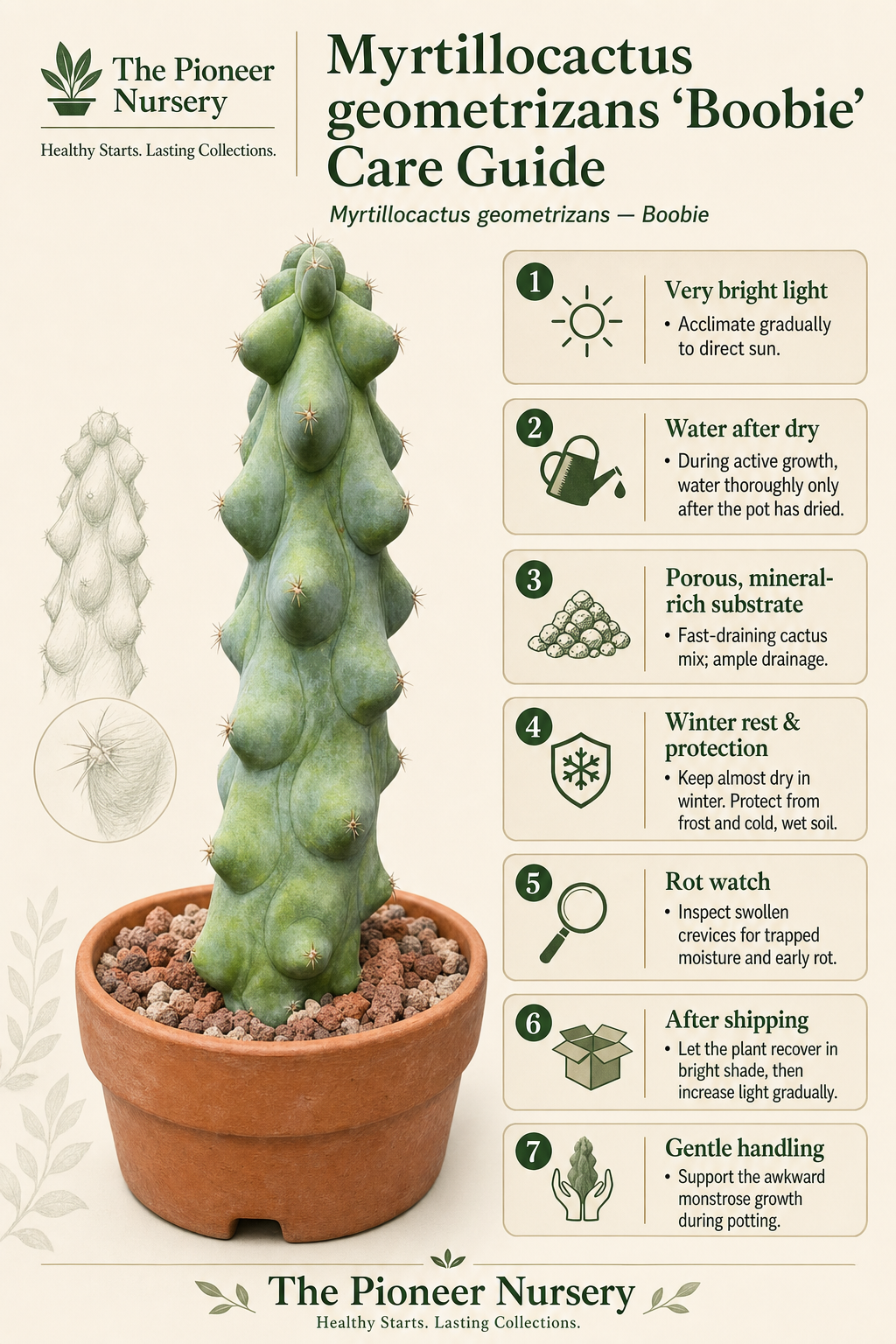
Myrtillocactus geometrizans ‘Boobie’ is a distinctive monstrose horticultural form of the branching blue myrtle cactus, commonly associated with the cultivar name ‘Fukurokuryuzinboku’. Its swollen, sagging growth gives it an unusual appearance, but the main care priorities remain those of the species: very bright light, porous soil, thorough watering only after drying, and a substantially drier winter rest. Because its irregular growth can retain moisture in crevices, careful inspection for rot is especially important.
Quick Care Summary
- Provide very bright light and acclimate gradually to direct sun.
- Use a porous, mineral-rich, fast-draining cactus substrate.
- Water thoroughly during active growth only after the pot has dried.
- Keep the plant almost dry during cool winter conditions.
- Protect from frost and cold, wet soil.
- Inspect swollen crevices for trapped moisture and rot.
- Handle the awkward monstrose growth carefully during potting.
About the plant
Myrtillocactus geometrizans is a tree-like, branching columnar cactus native to Mexico. It develops blue-green to glaucous stems and can become large in the ground, while container plants generally remain smaller. The “Boobie” name describes a nursery and collector form with swollen, sagging rib or areole growth. It is not a separate species or botanical rank. This form may grow more slowly and less regularly than standard plants.
Light
Provide very bright light, ideally with several hours of direct sun daily once the plant is acclimated. Young, recently shipped, greenhouse-grown, or indoor plants should be introduced to stronger sun gradually to reduce the risk of sunburn. Some light shade may be tolerated, but insufficient light can cause elongated, weak growth and reduce flowering. Strong light also helps preserve compact, characteristic growth.
Watering
During active growth, water thoroughly only after the substrate has dried completely or is nearly dry throughout the pot. Let excess water drain fully, and never leave the container standing in water. Reduce watering substantially when light and temperatures decline. Keep the plant almost dry during winter, watering only sparingly when conditions are cool. Cold, wet soil is a significant rot risk. Check crevices in the swollen growth because they may dry more slowly.
Soil and substrate
Use a porous, fast-draining cactus substrate with substantial mineral material such as pumice, perlite, coarse sand, or durable grit, combined with a modest amount of organic material. Avoid peat-rich or water-retentive mixes. Good drainage and root aeration are more important than a rich growing medium.
Potting and roots
Choose a container with an unobstructed drainage hole and only slightly more space than the root system needs. Oversized pots can remain wet too long. Repot approximately every two years or when the plant outgrows its container, preferably during warm active growth. Handle the swollen stems carefully, as they can be awkward and easily damaged. If roots are disturbed or damaged, allow them to dry before resuming normal irrigation. Do not allow swollen growth or a low-growing crest to rest against persistently damp substrate.
Temperature
Warm conditions are preferred. Protect the plant from frost and extended cold, especially when the substrate is damp. Established, dry plants may tolerate brief temperatures near 26°F (-3°C), but this is not a recommended minimum for container plants, recently shipped plants, or watered specimens. For routine cultivation, keep the plant safely above freezing and provide protection during cold weather.
Winter dormancy
Growth slows during winter or whenever light and temperatures decline. Provide a bright, cool-to-mild, dry rest period with minimal irrigation. As spring brings increasing warmth and light, gradually resume more regular watering rather than immediately keeping the substrate wet.
Fertilizer
Fertilize during active growth with a diluted, low-nitrogen cactus fertilizer. Monthly feeding during the growing season is supported by horticultural guidance, while an annual spring feeding is also used in desert-garden cultivation. Avoid heavy feeding or high-nitrogen fertilizer, which can encourage weak, overly lush growth.
Flowering
Mature plants can produce small white to cream or greenish-white, somewhat fragrant flowers, generally during the warm season or from spring into early summer under suitable conditions. Strong light, adequate active-season growth, and a drier winter rest can improve flowering potential. The swollen Boobie form may flower less predictably than the standard species.
Propagation
Propagation is possible from seed or stem cuttings. Take cuttings during warm weather, allow the cut surfaces to callus completely, and keep them dry in a warm, bright location until rooting begins. Do not water freshly cut or unrooted pieces. The named Boobie form is normally maintained vegetatively because seed will not reliably reproduce its distinctive monstrose appearance.
Shipping and arrival care
After arrival, inspect the plant for bruising, rot, or stem damage. Provide bright but filtered light initially, then acclimate it gradually to direct sun. Keep the plant as dry as practical during cold shipping periods and avoid watering immediately before or during cold transit. If roots were disturbed or the plant arrived bare-root, allow damaged roots to dry and recover before watering. Recovery needs vary according to root condition, temperature, and shipping stress.
Common Problems
- Root or stem rot can result from wet soil, poor drainage, or watering during cold conditions.
- Sunburn may occur after abrupt movement from indoor or greenhouse light to intense sun.
- Insufficient light can cause elongated, weak growth and reduce flowering.
- Mealybugs may shelter in areoles or dense monstrose growth.
- Scarring, corking, or localized damage can follow injury, temperature stress, or excess moisture.
- The ‘Fukurokuryuzinboku’ form may grow slowly or irregularly compared with standard plants.
- Oversized containers can keep the root zone wet too long.
Frequently Asked Questions
How much light does a Boobie cactus need?
Give it very bright light, ideally several hours of direct sun after gradual acclimation. Young, indoor, greenhouse-grown, and recently shipped plants need a slower transition to strong sun.
When should I water Myrtillocactus geometrizans ‘Boobie’?
Water thoroughly during active growth only after the substrate has dried completely or nearly completely throughout the pot. Drain excess water fully, and water very sparingly during cool winter conditions.
Does the Boobie cactus need special soil?
Use a porous, fast-draining cactus mix with substantial mineral material such as pumice, perlite, coarse sand, or durable grit. Avoid mixes that stay peat-rich and wet.
Why should I check the swollen growth?
The irregular swollen growth can retain moisture in crevices and may dry more slowly. Inspect it regularly and avoid allowing it to remain against persistently damp substrate.
Can I propagate the Boobie form from seed?
The species can be propagated from seed, but seed will not reliably reproduce the distinctive monstrose form. Stem cuttings are normally used to maintain this named form.
How should a shipped plant be acclimated?
Inspect it on arrival, begin with bright filtered light, and gradually introduce direct sun. If roots were disturbed or the plant arrived bare-root, allow damaged roots to dry and recover before watering.
With bright light, fast drainage, careful active-season watering, and a dry winter rest, Myrtillocactus geometrizans ‘Boobie’ can maintain its unusual swollen form while avoiding the moisture and sun-acclimation problems that most often affect it.