Conophytum calculus Care Guide
Learn how to grow Conophytum calculus, a slow-growing pebble-like succulent with cool-season growth, autumn flowers, and a dry summer dormancy.
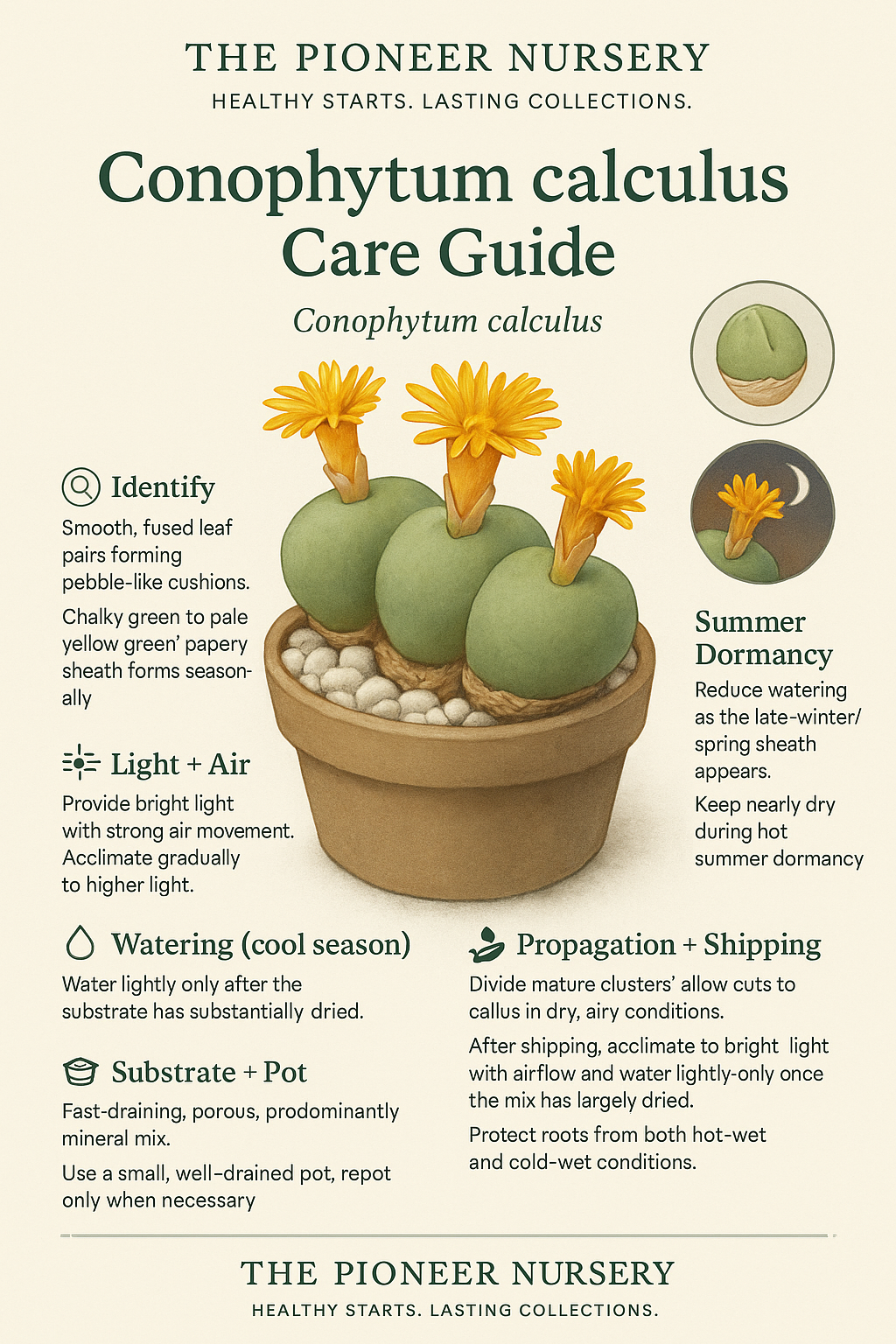
Conophytum calculus is a slow-growing, pebble-like succulent whose smooth, rounded leaf bodies can form dense cushions. It grows mainly during the cooler autumn and winter period, flowers in autumn, and rests through hot summer conditions. The main care priorities are bright acclimated light, a porous mineral substrate, careful seasonal watering, and keeping roots dry during dormancy or unfavorable weather.
Quick Care Summary
- Provide bright light with strong air movement and gradual acclimation.
- Use a fast-draining, porous substrate with a predominantly mineral component.
- Water lightly during cool-season growth only after the substrate has substantially dried.
- Reduce watering as the plant enters its late-winter or spring sheath period.
- Keep the plant nearly dry during hot summer dormancy.
- Use a small, well-drained pot and repot only when necessary.
- Protect roots from both hot wet conditions and cold wet conditions.
About Conophytum calculus
This Aizoaceae succulent is also known as cone plant, dumpling, button plant, sphaeroid, living pebble, knopies, toontjies, and waterblasies. Its chalky green to pale yellow-green bodies are formed from completely fused leaf pairs. In habitat it is associated with white quartz-pebble areas of the Knersvlakte, a cool, arid environment with intense sunlight. Conophytum calculus includes more than one accepted subspecies; this guide addresses the species at that level.
Light and air movement
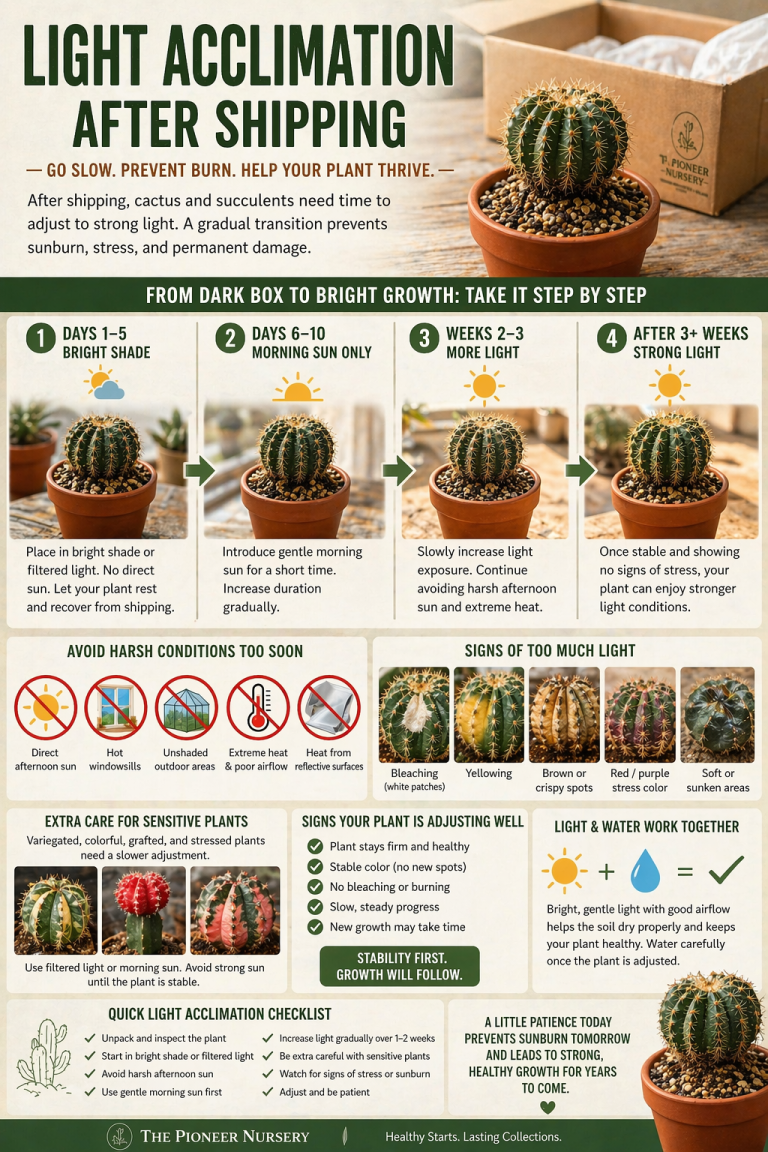
Provide bright light with strong air movement. Bright morning light or filtered light is suitable, with protection from intense afternoon heat, especially in hot climates. During the cool active season, plants can accept higher light, but acclimate gradually after shipping or any change in exposure. Sudden strong sun can cause sunburn.
Watering
Treat Conophytum calculus as a predominantly winter-growing plant. Begin light watering or fine spraying when new growth emerges in late summer or autumn. During the cool active season, water modestly only after the substrate has substantially dried. As the plant begins to sheath or wrinkle in late winter or spring, reduce watering. Keep it nearly dry through hot summer dormancy. Never leave the roots in constantly wet soil, and avoid watering when the plant is dormant in hot, poorly ventilated conditions or when conditions are cold and wet.
Soil and substrate
Use a very fast-draining, porous mix with a predominantly mineral component, such as coarse sand, pumice, grit, or another stable aggregate. A slightly acidic medium has been reported, but drainage and aeration are more important than maintaining a precise pH. Avoid dense, water-retentive mixes.
Potting and roots
Choose a small pot with excellent drainage. Conophytum are adapted to confined rocky spaces and generally do not need a large container. Repot only when necessary, preferably near the beginning of active growth. Handle the shallow body and attached root or stem system carefully. Remove damaged material and allow significant root disturbance or cuts to dry before resuming light watering.
Temperature and seasonal growth
Favor cool to mild temperatures during autumn and winter growth. Protect the plant from prolonged freezing, extreme heat, and wet roots during either hot or cold conditions. Summer dormancy is expected: the old body gradually becomes a thin papery or beige sheath as the new body develops inside it. Keep dormant plants shaded from the fiercest heat, well ventilated, and essentially dry. Exact minimum temperature tolerance is not sufficiently established to recommend a universal frost threshold.
Fertilizer
Use little fertilizer. If growth is vigorous, apply a very dilute, low-nitrogen fertilizer no more than occasionally during the active season and only after the plant has been watered. Do not fertilize during dormancy or while roots are dry, damaged, or recently disturbed.
Flowering
Flowers typically appear in autumn. They are golden yellow to dark orange, strongly clove-scented, and open at night. Cool, bright conditions during active growth support flowering. In habitat, the flowers are pollinated by night-flying insects.
Propagation
Propagation is possible from seed or cuttings. For cuttings, take material just below the growing point where the body joins older stem or sheath material. Allow the cutting to dry, then root it in a porous medium at the beginning of active growth. Seed propagation is slower but useful for conservation and genetic diversity. Use legally obtained nursery- or seed-grown material.
Shipping and arrival care
Plants should be shipped dry and protected from crushing, prolonged heat, freezing temperatures, and stagnant humidity. After arrival, inspect for rot or damaged roots and provide bright but initially softened light. Allow major root disturbance or fresh wounds to dry before watering, then reintroduce moisture gradually according to the seasonal growth cycle. Do not water immediately simply because the plant has arrived if it is dormant or conditions are hot and poorly ventilated.
Conservation and responsible sourcing
Current conservation information reports severe concern for the type subspecies because of illegal collection pressure. Prefer nursery-propagated or legally sourced plants, and do not encourage wild collection.
Common Problems
- Root or body rot can result from summer watering, dense substrate, poor drainage, or cold wet conditions.
- Sunburn may follow abrupt exposure to strong direct light, especially after shipping or indoor cultivation.
- Insufficient light, excessive warmth, or interruption of the dry rest can reduce flowering.
- Mealybugs may hide between clustered bodies or inside old sheaths; root mealybugs may occur below the substrate.
- Some shriveling during dormancy is normal, but soft, translucent, foul-smelling tissue indicates rot.
Frequently Asked Questions
When should I water Conophytum calculus?
Begin light watering or fine spraying when new growth emerges in late summer or autumn. During cool-season growth, water modestly only after the substrate has substantially dried. Reduce watering as the plant sheaths and keep it nearly dry during hot summer dormancy.
Does Conophytum calculus need full sun?
Provide bright light with strong air movement, but acclimate gradually. Bright morning or filtered light is appropriate, with protection from intense afternoon heat, particularly in hot climates.
Is summer shriveling normal?
Some shriveling and the development of a thin papery or beige sheath are normal as the plant enters dormancy. Soft, translucent, foul-smelling tissue is not normal and suggests rot.
Why is my Conophytum calculus not flowering?
Insufficient light, excessive warmth, or disrupting the seasonal dry rest can interfere with flowering. Cool, bright conditions during active growth support its autumn, nocturnal flowers.
Can Conophytum calculus be propagated from cuttings?
Yes. Cuttings can be taken just below the growing point, allowed to dry, and rooted in a porous medium at the start of active growth. Seed propagation is also possible but slower.
Should I water immediately after the plant arrives?
Not necessarily. Inspect the plant first, provide initially softened bright light, and allow major root disturbance or fresh wounds to dry. Follow the plant's seasonal growth cycle rather than watering solely because it has arrived.
Conophytum calculus rewards restraint: bright, well-ventilated conditions, porous soil, careful cool-season watering, and a genuinely dry summer rest are more helpful than constant attention. Grow legally sourced plants and adjust the timing to your local temperature, light, and ventilation.