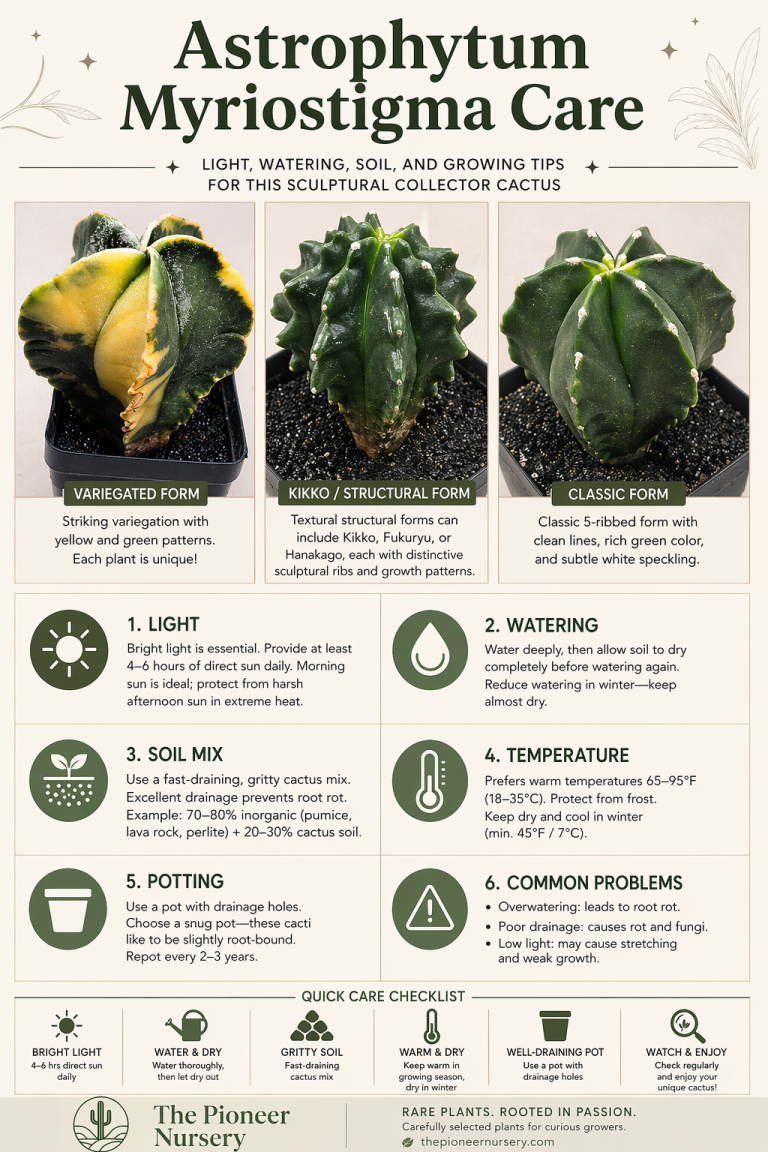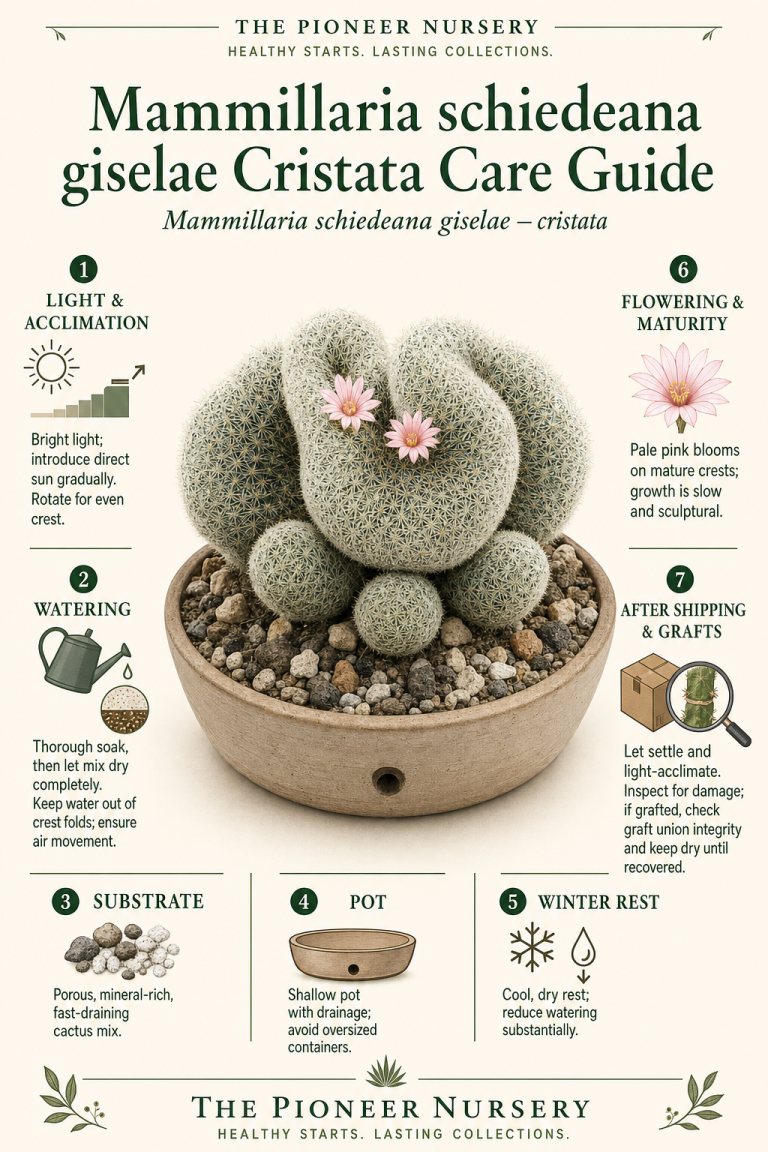
Astrophytum coahuilense Care Guide
Learn how to grow Astrophytum coahuilense with bright acclimated light, mineral soil, careful active-season watering, and a cool, dry winter rest.
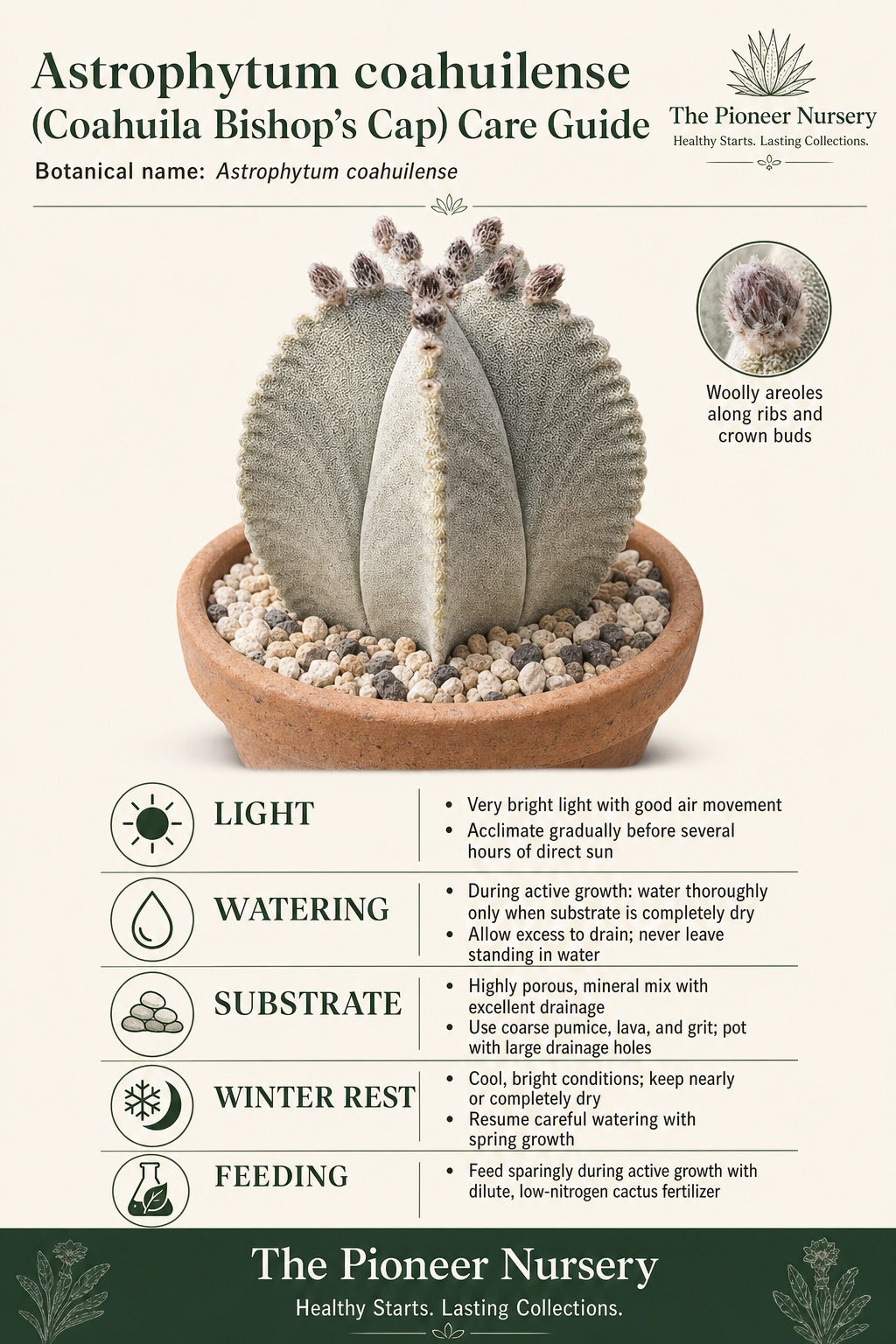
Astrophytum coahuilense, commonly called Coahuila bishop’s cap, is a slow-growing cactus from seasonally dry regions of Coahuila, Mexico. It grows best in very bright light, a highly porous mineral substrate, and a watering routine that allows the soil to dry completely. The name also appears in older literature as Astrophytum myriostigma subsp. coahuilense or var. coahuilense; Astrophytum coahuilense is the currently accepted species treatment used here.
Quick Care Summary
- Provide very bright light with good air movement.
- Acclimate gradually before several hours of direct sun.
- Use a highly porous, mineral substrate with excellent drainage.
- Water thoroughly only when the substrate is completely dry during active growth.
- Keep the plant nearly or completely dry during a cool, bright winter rest.
- Feed sparingly with dilute, low-nitrogen cactus fertilizer during active growth.
About the Plant
Astrophytum coahuilense is associated with calcareous gravel and sand with limited organic accumulation, supporting a potting approach built around drainage and aeration rather than moisture retention. It is slow-growing. Older or senescent specimens may develop root weakness and decline. Nursery-propagated and legally sourced plants are preferable because the species is assessed as Vulnerable in the IUCN information reported by Kew.
Light
Provide very bright light with good air movement. Mature plants can receive several hours of direct sun, but acclimate gradually after shipping, repotting, or moving from shade. In very hot climates, light afternoon shade can help reduce sunburn and heat stress.
Watering
Water thoroughly only after the substrate has dried completely, and allow excess water to drain fully. Water primarily during active warm-season growth, then reduce substantially as temperatures fall. During a cool, bright winter rest, keep the plant nearly or completely dry.
Soil and Substrate
Use a loose, fast-draining mineral cactus mix containing substantial pumice, lava, coarse sand, gravel, or similar aerating material. A modest limestone or other alkaline mineral component is appropriate for this species’ calcareous natural substrate. Avoid dense or water-retentive soil.
Potting and Roots
Choose a container with an unobstructed drainage hole and avoid an unnecessarily oversized pot. Repot at the beginning of active growth or when the substrate has degraded. Handle the roots gently. If roots are damaged or substantially disturbed, allow them to dry and callus before watering.
Temperature and Winter Rest
Keep the plant warm during active growth. During winter rest, a cool, bright environment around 41–50°F (5–10°C) is suitable when the plant is kept dry. Protect it from prolonged freezing, frost, and cold wet conditions. Resume cautious watering when temperatures, light, and active growth have returned.
Fertilizer
Feed sparingly during active growth with a dilute, low-nitrogen cactus fertilizer. Do not fertilize during winter rest or while the roots are dry, damaged, or newly repotted.
Flowering
Mature plants produce large yellow flowers, commonly with a reddish or orange-red throat. Strong light, adequate growing-season nutrition, and a cool, dry winter rest support flowering. Flowering age varies with plant size and cultivation conditions.
Propagation
Propagation is primarily by seed. Seedlings need more even moisture and protection from strong direct sun than established plants, while still requiring an airy, non-compacting medium. Grafting is also possible for accelerating growth or maintaining difficult selections, but plants can grow on their own roots.
Shipping and Arrival Care
After arrival, inspect the plant for mechanical injury, rot, or root damage. Keep it shaded and well ventilated while it acclimates, then increase light exposure gradually. If it arrives bare-rooted or has suffered root disturbance, delay substantial watering until the roots have recovered and dried appropriately.
Common Problems
- Root rot: Often associated with dense soil, poor drainage, or watering while conditions are cool.
- Sunburn: Can follow abrupt exposure to strong direct light; acclimate gradually.
- Cold, wet damage: Protect the plant from frost and prolonged freezing.
- Slow growth: This species is naturally slow-growing, with stress potentially slowing it further.
- Root weakness: Older or senescent specimens may experience weakness and sudden decline.
- Pests: Mealybugs, scale, and other common cactus pests may hide around areoles or beneath the plant body.
Frequently Asked Questions
How often should I water Astrophytum coahuilense?
Do not follow a fixed calendar. Water thoroughly during active warm-season growth only after the substrate has dried completely, then reduce watering as temperatures fall. Keep the plant nearly or completely dry during its cool winter rest.
Can Astrophytum coahuilense take direct sun?
Yes. Mature plants can receive several hours of direct sun, but acclimate gradually after shipping, repotting, or shade. Light afternoon shade may help in very hot climates.
What soil does this cactus need?
Use a loose, fast-draining mineral substrate containing materials such as pumice, lava, coarse sand, or gravel. A modest alkaline mineral component is appropriate; avoid dense, water-retentive soil.
Should I water after repotting?
Not immediately after major root disturbance. Allow damaged or disturbed roots to dry and callus before watering, then resume cautiously according to the plant’s conditions.
How is Astrophytum coahuilense propagated?
Propagation is primarily by seed. Grafting is possible for accelerating growth or maintaining difficult selections, while plants can also grow on their own roots.
With bright acclimated light, mineral drainage, careful active-season watering, and a cool, dry winter rest, Astrophytum coahuilense can be a rewarding long-term collection plant.