Cleistocactus colademononis (Colademononis) Care Guide
Learn how to grow the trailing, white-haired monkey tail cactus with bright light, sharply draining soil, careful watering, and a cool, mostly dry winter rest.
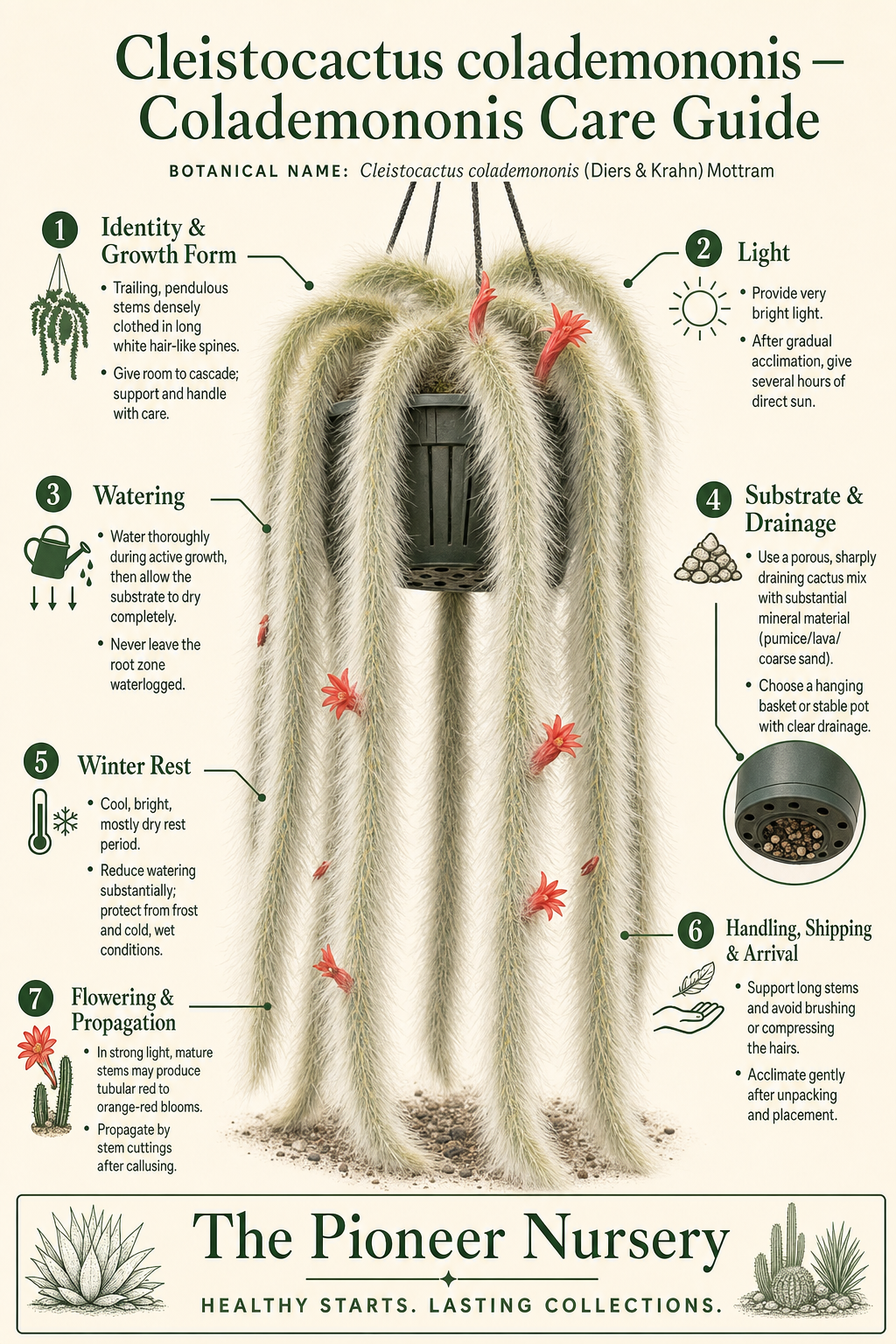
Cleistocactus colademononis is the accepted botanical name for the trailing, densely hairy cactus listed with the common names monkey tail cactus, monkey’s tail cactus, and Colademono. It produces long pendulous stems covered in soft-looking hair-like spines and may produce reddish to orange-red tubular flowers when mature. Its main care priorities are very bright light, fast drainage, thorough watering during active growth followed by complete drying, and a cool, mostly dry winter rest. The nursery-style name Cleistocactus winteri — Colademononis refers to this Colademononis taxon; Cleistocactus winteri without the Colademononis designation is a separate accepted species.
Quick Care Summary
- Provide very bright light and several hours of direct sun after gradual acclimation.
- Use a porous, sharply draining cactus substrate with substantial mineral material.
- Water thoroughly during active growth, then allow the substrate to dry completely.
- Reduce watering substantially during cool, low-light winter rest.
- Keep the plant protected from frost and cold, wet conditions.
- Use a hanging basket or stable pot that gives trailing stems room to grow.
- Handle the long hairy stems gently to prevent matting, abrasion, or breakage.
About the plant
This is a trailing or pendulous, hairy cactus rather than the less densely white-haired golden rat-tail form commonly sold as Cleistocactus winteri. Its long stems are vulnerable to crushing, tangling, matting, and breakage, so handling and display conditions matter. A hanging basket or stable container that gives the stems room to trail is suitable.
Light
Provide very bright light with several hours of direct sun once the plant is acclimated. Indoors, use the brightest available window or supplemental lighting. Outdoors, introduce stronger sun gradually; morning sun with protection from intense afternoon heat is a cautious starting point. Gradual acclimation is especially important after shipping, since abrupt exposure can cause sunburn.
Watering
During active growth, water thoroughly until excess drains from the container, then allow the substrate to dry completely before watering again. Do not follow a fixed calendar: adjust watering for light, temperature, pot size, substrate, and airflow. Reduce watering substantially during cool, low-light winter conditions and provide only enough to prevent severe shriveling. Never keep the roots constantly wet, and avoid allowing water to remain trapped in dense hair or at damaged stem wounds.
Soil and substrate
Use a fast-draining, porous cactus substrate containing substantial mineral material such as pumice, perlite, coarse sand, or grit. The medium should drain rapidly and remain well aerated rather than compacting or holding water for long periods. Poor drainage and prolonged wetness increase the risk of root or stem rot.
Potting and roots
Choose a container with an unobstructed drainage hole. Avoid an unnecessarily large pot because it can increase drying time and rot risk. Repot during active growth, preferably in spring. Handle the hairy stems carefully to avoid matting, abrasion, or breakage, and keep water away from damaged stem wounds.
Temperature and winter rest
Warm conditions suit active growth. When light levels and temperatures decline, provide a cool, bright, mostly dry winter rest. Approximately 45–55°F (7–13°C) is a reasonable cultivation range for winter rest. Protect the plant from frost and from cold, wet conditions, which substantially increase rot risk. As warmer, brighter growing conditions return, resume deeper watering gradually.
Fertilizer
Fertilize sparingly during active growth, approximately once or twice in late spring and summer, with a balanced or cactus fertilizer diluted to about one-half the label rate. Do not fertilize during winter rest or while the plant is stressed, freshly shipped, or recovering from root disturbance.
Flowering
Mature plants can produce showy tubular flowers, typically in reddish to orange-red tones. Strong light, healthy active-season growth, and a cool, dry winter rest encourage flowering. Excess warmth, low light, or winter overwatering may reduce flowering.
Propagation
Stem cuttings are the practical nursery method. Allow a cutting to dry and callus before placing it in a sterile, sharply draining medium. Keep the medium only lightly moist after rooting begins, and avoid heavy watering before roots are established. Seed propagation is also possible.
Common problems
Root or stem rot is associated with poorly draining substrate, prolonged wetness, or cold combined with moisture. Etiolation produces weak, sparse growth when light is insufficient. Sunburn can follow abrupt transfer from protected conditions to intense direct sun. Mealybugs or scale may be difficult to detect in dense hairy growth. Rough handling or unsuitable shipping and display conditions can flatten the hair, tangle the spines, or break stems.
Shipping and arrival care
The long, soft hair-like spines can be crushed, tangled, or abraded by tight packaging, so inspect the stems after arrival and handle them gently. Protect shipments from freezing temperatures and prolonged cold exposure. Place the plant in bright but initially filtered light and acclimate gradually. If it arrives bare-rooted or with substantial root disturbance, allow damaged roots to dry and avoid immediate heavy watering.
Frequently Asked Questions
How often should I water Cleistocactus colademononis?
There is no reliable fixed schedule. During active growth, water thoroughly and allow the substrate to dry completely before watering again. Adjust frequency for light, temperature, pot size, substrate, and airflow. Water much less during cool, low-light winter conditions.
Does monkey tail cactus need direct sun?
It needs very bright light and several hours of direct sun once acclimated. Introduce outdoor plants gradually, beginning with morning sun and protection from intense afternoon heat.
What temperature is suitable during winter rest?
A cool, bright, mostly dry location is beneficial, with approximately 45–55°F (7–13°C) a reasonable cultivation range. Protect the plant from frost and cold, wet conditions.
Can I grow this cactus in a hanging basket?
Yes. A hanging basket or stable pot that accommodates its trailing stems is suitable, provided it has an unobstructed drainage hole and does not hold excess moisture.
How do I propagate monkey tail cactus?
Stem cuttings are the practical nursery method. Let a cutting dry and callus before placing it in sterile, sharply draining medium. Keep the medium only lightly moist after rooting begins.
Why should I handle the stems carefully?
The long, soft hair-like spines can be crushed, tangled, flattened, or abraded, and the stems can break during handling, shipping, or unsuitable display.
With strong light, fast drainage, careful drying between waterings, and a cool, mostly dry winter rest, Cleistocactus colademononis can develop its distinctive trailing, hairy form while reducing the main risks of rot, sunburn, weak growth, and stem damage.