Frailea castanea Care Guide
Learn how to grow Frailea castanea, a tiny cactus known for dark coloration, seasonal retraction, brief yellow flowers, and cleistogamous seed production.
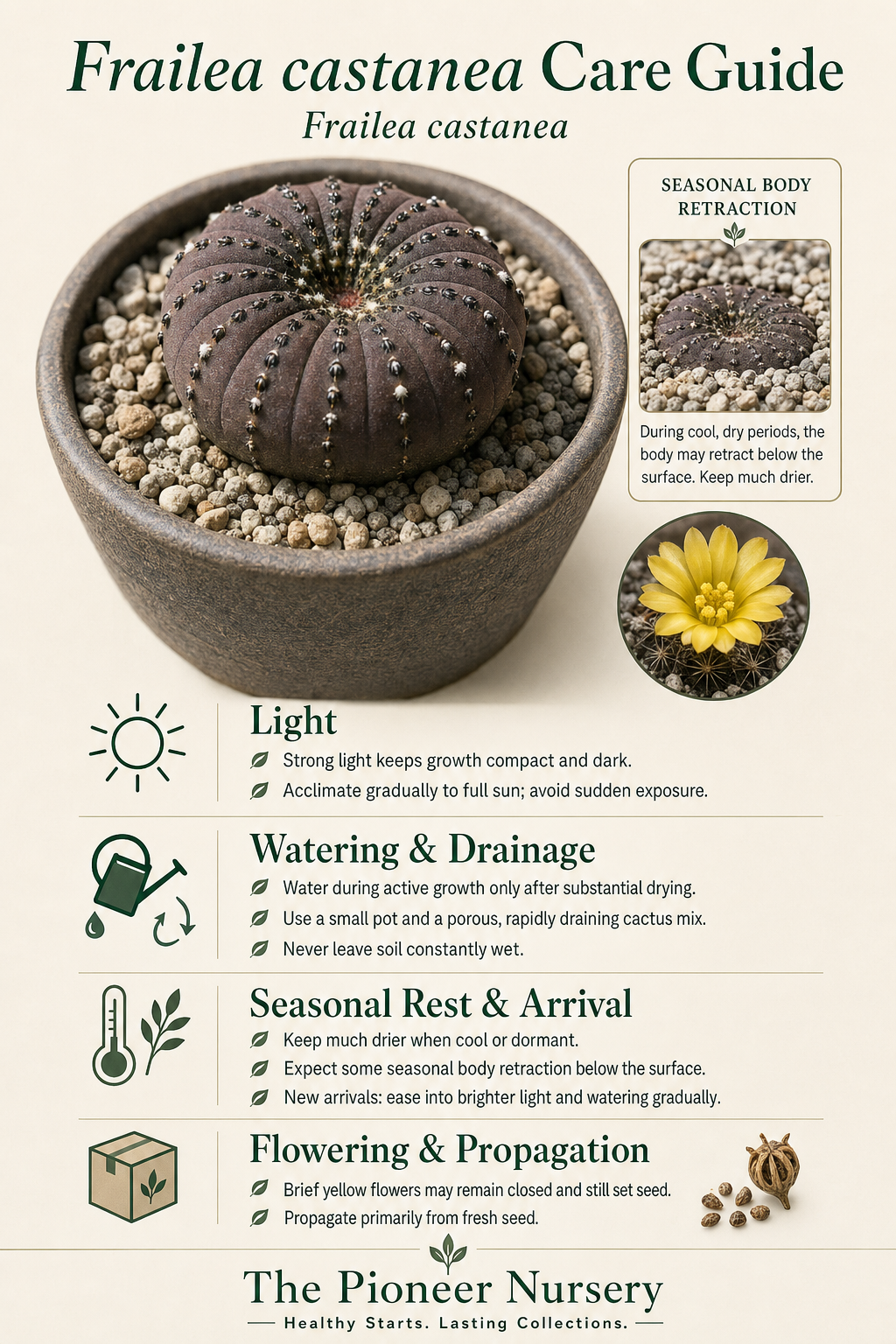
Frailea castanea is a very small cactus from northeastern Argentina, southern Brazil, and Uruguay. Successful cultivation depends on gradual light acclimation, excellent drainage, careful active-season watering, and keeping roots dry during cool conditions.
Quick Care Summary
- Use strong light with gradual acclimation to full sun.
- Water during active growth only after substantial drying.
- Keep the plant much drier during cool or dormant conditions.
- Use a small pot and porous, rapidly draining substrate.
- Expect some seasonal body retraction.
Quick care at a glance
Provide strong light with gradual acclimation to full sun. During active growth, water only after the porous substrate has dried substantially, then keep the plant much drier during cool or dormant conditions. Use a small pot with excellent drainage, and expect some seasonal body retraction.
About Frailea castanea
Frailea castanea is an accepted species in the cactus family. Historical names such as Frailea asterioides and Frailea perumbilicata are treated by Kew as synonyms or subordinate names. This miniature cactus commonly remains only a few centimeters across, and its body may retract almost completely beneath the substrate when dry.
Light and ventilation
Provide strong light with good ventilation. Full sun can encourage dark reddish-brown to nearly black coloration, but acclimate gradually after shipping or a major change in conditions. Bright filtered light or partial shade is safer during acclimation and very hot conditions. Abrupt exposure can cause sunburn.
Watering, soil, and potting
Use a very porous, rapidly draining cactus substrate with substantial mineral content and enough organic material to hold limited moisture without staying wet. During active growth, water only after the substrate has dried substantially, then allow excess water to drain completely. Choose a small pot with an effective drainage hole; handle the fine roots carefully, and allow disturbed roots to dry and heal before cautious watering. Keep the plant substantially drier during cool or dormant conditions.
Temperature and seasonal rest
Warm conditions suit active growth. Protect the plant from frost and prolonged cold combined with wet substrate. A cool, dry winter rest is appropriate when growth slows, provided the plant remains above freezing. Resume watering gradually as temperature, light, and growth increase.
Common problems
• Root or stem rot: Usually associated with wet substrate, poor drainage, inadequate ventilation, or watering during cool conditions.
• Sunburn: Can follow abrupt movement from shade, shipping darkness, or greenhouse cover into intense direct sun.
• Etiolation: Insufficient light can cause stretching and loss of the compact, dark form.
• Normal retraction mistaken for damage: Some shrinkage is expected during dry conditions; persistent collapse should be evaluated alongside the roots and growing point.
Fertilizer
If fertilizing, use a dilute, low-nitrogen cactus fertilizer only during active growth and only when the plant is already hydrated. Do not fertilize during dormancy or when roots are dry, damaged, or recently disturbed.
Flowering and propagation
Flowers are typically yellow and may open only briefly in bright sun and warm conditions. Frailea commonly produces cleistogamous flowers, which can self-fertilize and develop seed without opening. Fresh seed is the principal propagation method; grafting is possible but is not normally necessary for standard propagation.
Shipping and arrival care
Receive and ship the plant as dry as practical, especially in cool weather. Inspect it on arrival and begin with bright but moderated light. If it arrives bare-root, has broken roots, or has been exposed to cold, delay watering and allow root injuries to dry before rehydration.
Legal and collection note
Frailea spp. are included in CITES Appendix II. Where applicable, nursery material should be documented as legally propagated.
Additional note
Short longevity has been reported for Frailea generally, although cultivated plants may live considerably longer under suitable conditions.
Frequently Asked Questions
How often should I water Frailea castanea?
Do not use a fixed schedule. During active growth, wait until the substrate has dried substantially, then allow excess water to drain. Keep it much drier during cool or dormant conditions.
Can Frailea castanea grow in full sun?
Yes, but acclimate gradually. Bright filtered light or partial shade is safer during acclimation and extreme heat.
Why has my Frailea castanea shrunk or disappeared into the soil?
Frailea may retract almost completely beneath the substrate during dry-season or cool-season rest. Persistent collapse should be assessed with the roots and growing point.
Why has it not produced an open flower?
Frailea can produce seed through cleistogamous flowers without opening, so an unseen open flower does not necessarily indicate a fertility problem.
What is the best way to propagate Frailea castanea?
Fresh seed is the principal propagation method. Grafting is possible but is not normally necessary for standard propagation.
How should I care for a newly shipped plant?
Inspect it, start with bright but moderated light, and delay watering if it arrived bare-root, has broken roots, or was exposed to cold.
Frailea castanea rewards careful observation rather than a rigid routine. Keep the root zone open and fast-draining, match watering to active growth and warmth, and introduce strong light gradually. Its seasonal retraction and ability to produce seed without an open flower are distinctive parts of growing this miniature cactus.