Echinopsis lageniformis ‘Chocolate’ Care Guide
Learn how to care for Echinopsis lageniformis ‘Chocolate’ with bright light, excellent drainage, careful watering, and a drier winter rest.
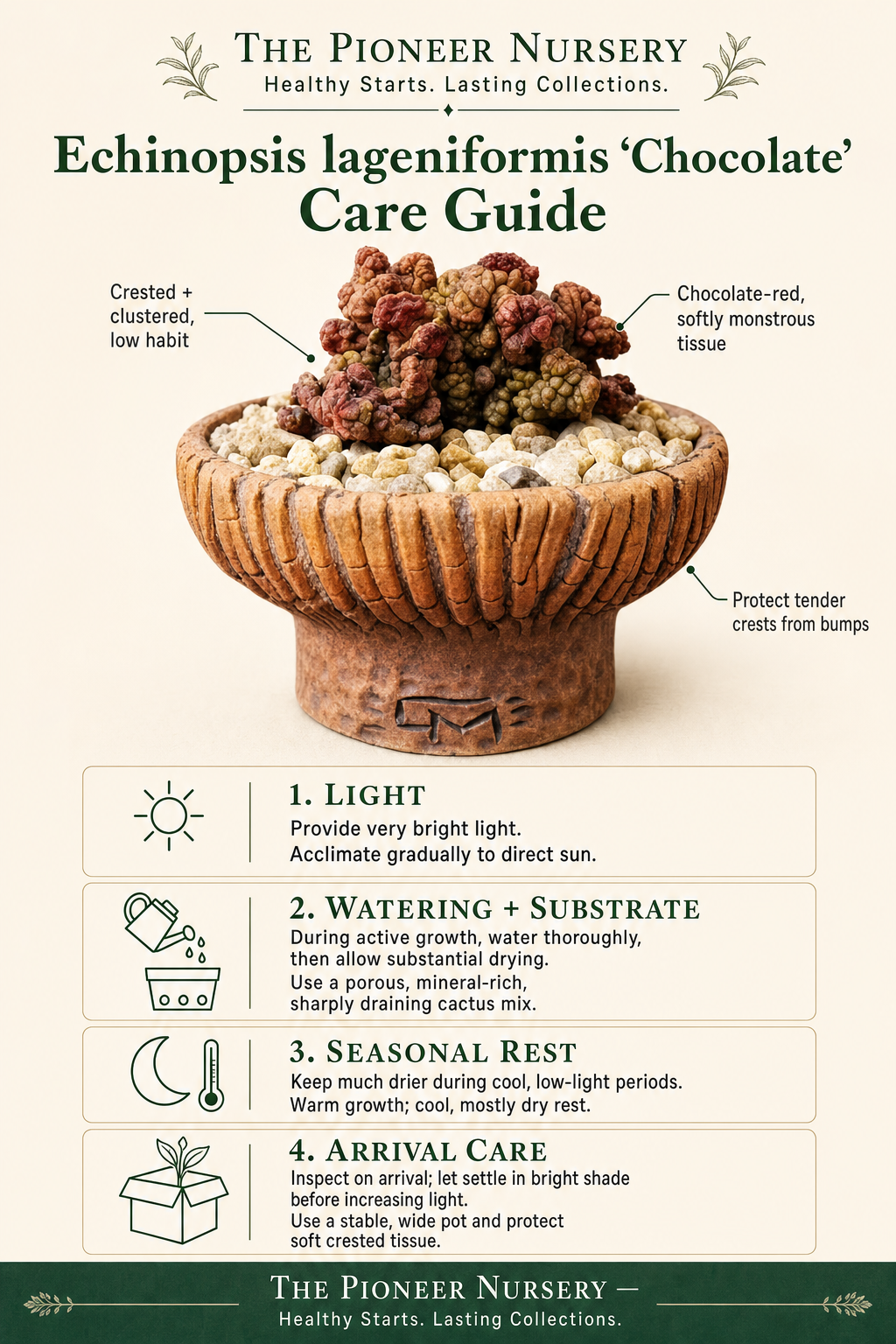
Echinopsis lageniformis ‘Chocolate’ is sold as a distinctive horticultural Echinopsis form with soft, chocolate-red, irregular growth that may be crested and monstrous. Its exact parentage is not reliably documented. For dependable care, provide very bright light, porous drainage, thorough watering during active growth, and a much drier routine in cool conditions.
Quick Care Summary
- Provide very bright light and acclimate gradually to direct sun.
- Use a porous, mineral-rich, sharply draining cactus substrate.
- Water thoroughly during active growth, allowing substantial drying between waterings.
- Keep the plant much drier during cool, low-light conditions.
- Use a stable, wide-enough pot and protect soft crested tissue from damage.
Quick care priorities
Place the plant in very bright light, acclimating gradually to direct sun. Use a porous, sharply draining substrate and water thoroughly during active growth, allowing substantial drying between waterings. Keep it much drier during cool, low-light conditions and protect its soft growth from damage.
About the plant
Echinopsis lageniformis is an accepted species native to Bolivia and is commonly known as Bolivian torch cactus. ‘Chocolate’ is a horticultural designation, not a formal botanical rank. Specialist descriptions characterize plants sold under this name as chocolate-red, soft, low, clustered, crested, and monstrous. Because the exact parentage is not reliably documented, plants sold as ‘Chocolate’ may not be genetically identical.
Light
Give the plant very bright light. Established plants can receive several hours of direct sun, but acclimate gradually after shipping, repotting, or indoor cultivation. Sudden intense midday sun can burn soft, irregular tissue, especially on crested growth. Inadequate light may cause weak, narrow, etiolated growth.
Watering
Water thoroughly during active growth, then let the substrate dry substantially before watering again. Reduce watering as light and temperatures decline. Keep the plant much drier during cool winter conditions. Avoid prolonged moisture in crevices or around damaged soft tissue.
Soil and substrate
Use a porous, sharply draining cactus substrate with substantial mineral content and good root aeration. A modest organic component is acceptable during active growth, but the mix should not remain wet after irrigation.
Potting and roots
Use a stable container with drainage holes and enough width to accommodate the plant’s low, clustered growth and weight. Repot only when needed, handling crested tissue carefully. If roots are disturbed or damaged, let them dry and callus before resuming cautious watering.
Temperature and seasonal rest
Provide warm conditions during active growth and protect the plant from freezing, especially when it or the substrate is wet. Specialist Echinopsis guidance recommends avoiding winter temperatures below approximately 10 °C / 50 °F. Some established columnar plants may tolerate cooler, dry conditions depending on provenance and acclimation. During the cool, low-light season, keep the plant bright, cool to mild, and with little or no water while inactive. Resume watering gradually as warmth and light increase.
Fertilizer
During active growth, use a dilute, balanced or cactus-formulated fertilizer occasionally. Do not fertilize dry, dormant, recently shipped, or root-damaged plants.
Flowering
Echinopsis commonly produces large, funnel-shaped, often fragrant flowers on elongated tubes, frequently opening in the evening or at night. Flowering depends on maturity, strong light, adequate summer growth, and a drier winter rest. Reliable flowering information specific to ‘Chocolate’ was not located.
Propagation
Use offsets or cuttings when available to preserve the distinctive crested and monstrous characteristics. Seed-grown plants should not be expected to reproduce the named form consistently. Let cut surfaces callus fully before rooting them in a dry, porous medium.
Shipping and arrival care
Inspect the plant for bruising, breaks, wounds, or root disturbance. Begin with bright, filtered light and acclimate gradually to stronger sun. If roots were disturbed or wounds are fresh, allow recovery and callusing before watering.
Common Problems
- Root or basal rot: Often linked to poor drainage, frequent watering, or cool, wet conditions.
- Sunburn: Usually follows an abrupt move into strong direct sun; acclimate gradually.
- Soft-tissue damage and secondary rot: Protect crested growth from impact, freezing, and retained moisture.
- Etiolation: Weak, narrow growth indicates inadequate light.
- Scarring, corking, or discoloration: Check whether tissue is firm or soft and spreading before assuming active rot.
Frequently Asked Questions
How often should I water Echinopsis lageniformis ‘Chocolate’?
Water thoroughly during active growth, then wait until the substrate has dried substantially. Reduce watering as light and temperatures decline, and keep the plant much drier during cool winter conditions.
Can this plant take full sun?
Established plants can receive several hours of direct sun, but acclimate gradually. Sudden intense midday sun can burn its soft crested tissue.
Why is a stable, wider pot useful?
This low, clustered, crested form needs a container that accommodates its width and weight.
How should I care for it after shipping?
Inspect for damage and begin with bright, filtered light. Delay watering if roots were disturbed or wounds are fresh, then acclimate gradually to stronger sun.
Will seedlings reproduce the ‘Chocolate’ form?
Not consistently. Vegetative propagation from offsets or cuttings is more appropriate for preserving the named characteristics.
Echinopsis lageniformis ‘Chocolate’ rewards observation rather than a fixed schedule. Keep its soft, irregular growth bright, let the substrate dry between appropriate waterings, and protect it from cold, wet conditions and physical damage.