Mammillaria magnimamma ‘Erusamu’ Cristata Care Guide
Learn how to grow Mammillaria magnimamma ‘Erusamu’ cristata with guidance on light, watering, drainage, winter rest, flowering, propagation, and protecting its distinctive crested growth.
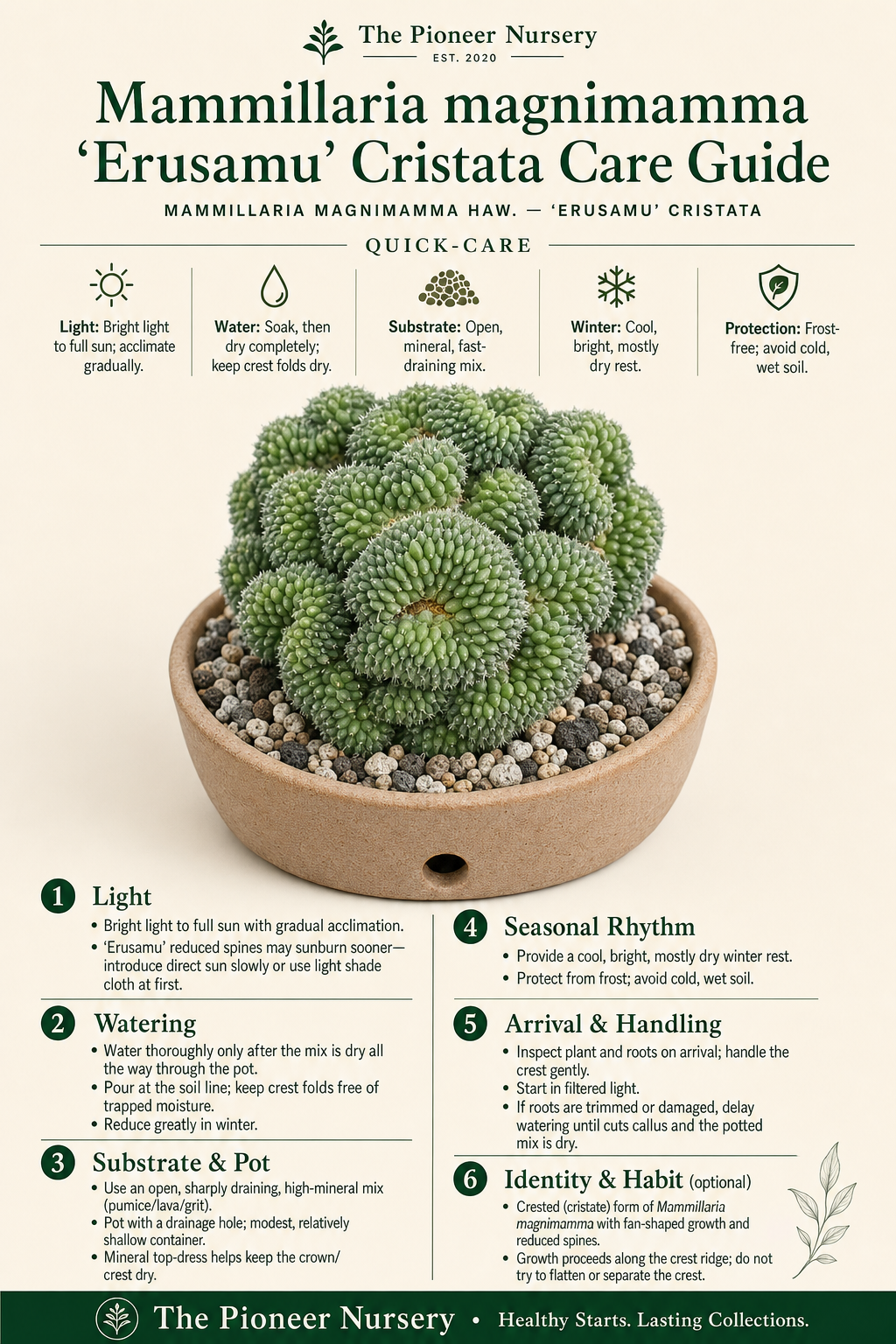
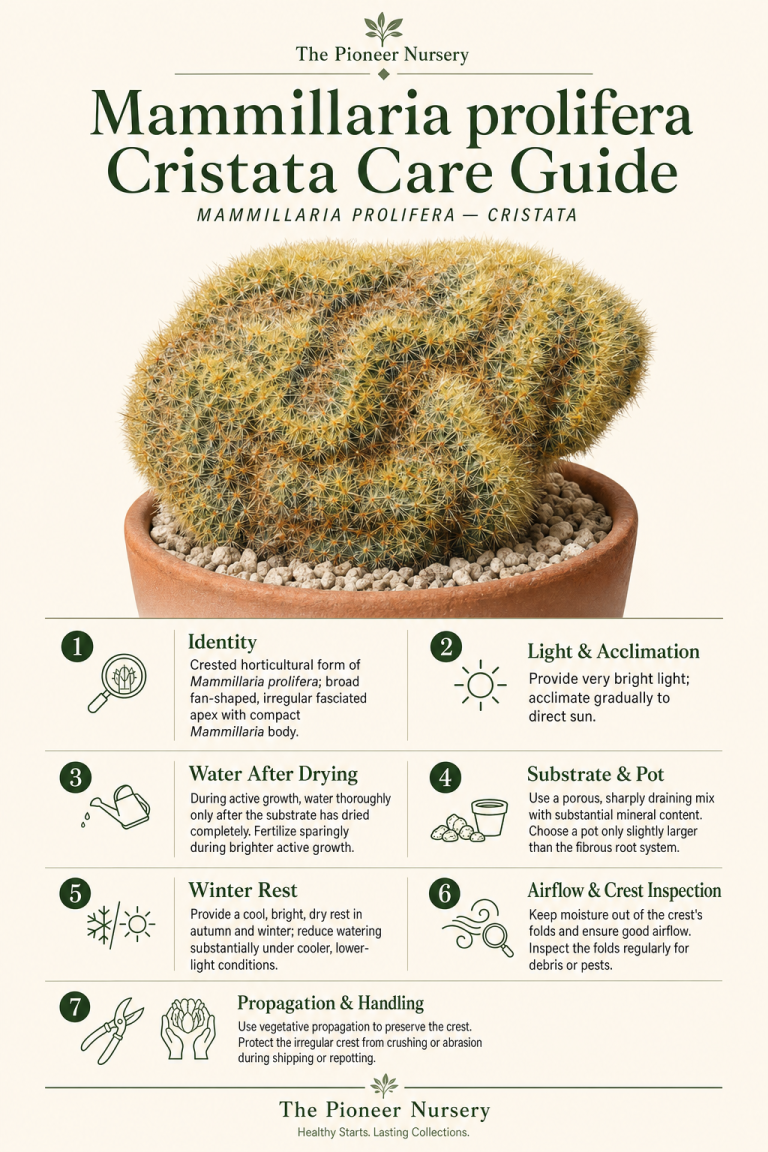
Mammillaria magnimamma ‘Erusamu’ cristata is a crested form of the Mexican pincushion cactus, associated in cultivation with the horticultural designation ‘Erusamu’. Its fan-shaped, convoluted growth makes it especially attractive but also creates folds where moisture can linger. Give it strong acclimated light, a sharply draining mineral substrate, thorough watering only after complete dry-down during active growth, and a cool, bright, mostly dry winter rest.
Quick Care Summary
- Bright light to full sun, with gradual acclimation to strong direct light.
- The reduced-spine ‘Erusamu’ form may sunburn more readily.
- Water thoroughly only after the substrate has dried completely through the pot.
- Use an open, sharply draining substrate with a high mineral component.
- Keep the crest’s folds free from trapped moisture.
- Provide a cool, bright, mostly dry winter rest.
- Protect from frost and avoid cold, wet soil.
- Handle the crest carefully during shipping and repotting.
About the plant
Mammillaria magnimamma Haw. is the accepted species name used for this cactus. Mammillaria bucareliensis, the name commonly associated with ‘Erusamu’, is treated as a synonym of Mammillaria magnimamma by Kew. ‘Erusamu’ is a horticultural or collector designation, while cristata describes the crested growth form rather than a separate species or botanical variety. The crest is not a disease; it is an irregular, fan-shaped growing form that requires extra attention to airflow, dry-down, and handling.
Light
Provide bright light to full sun during active growth, but acclimate the plant gradually to strong direct sun, especially after shipping or when moving it outdoors. The reduced-spine or lightly spined ‘Erusamu’ form may sunburn more readily than heavily spined plants. If the crest shows bleaching, corking, or scorch, move it to strong filtered light or gentler morning sun. Insufficient light can lead to etiolated or weakened growth.
Watering
During spring and summer growth, water thoroughly only after the substrate has dried completely through the pot. Allow all excess water to drain away, and use generous but infrequent watering rather than a fixed calendar. Reduce watering substantially during cool, low-light periods and keep the plant nearly or completely dry in winter. Avoid water collecting in the crest’s folds, and take particular care to avoid cold, wet conditions, which can contribute to rot.
Soil and substrate
Use an open, sharply draining cactus substrate with a high mineral component, such as pumice, lava, coarse grit, or similar aggregate. The mix should retain enough moisture for active growth but dry rapidly and remain well aerated. Poorly draining soil and prolonged moisture are major risks for this plant.
Potting and roots
Choose a pot with a drainage hole and avoid oversized containers. A modestly sized, relatively shallow pot generally helps the root zone dry promptly. Because a mature crest can become top-heavy, provide additional stability when needed. Repot during active growth only when necessary. After repotting or significant root disturbance, allow damaged roots to dry and heal before resuming careful watering.
Temperature and ventilation
Warm growing conditions are preferred. Protect the plant from frost and prolonged cold. RHS lists approximately 5°C as a minimum cultivation temperature; if conditions approach that threshold, keep the plant dry and avoid combining cold with wet soil. Good ventilation is important in warm, humid conditions.
Seasonal growth and winter rest
This cactus typically benefits from a cool, bright, dry winter rest. Growth may slow or stop with short days, low temperatures, or inadequate light. Resume watering gradually in spring as temperatures, light, and active growth improve.
Fertilizer
Feed sparingly during active growth with a dilute, low-nitrogen cactus fertilizer. Do not fertilize dry, dormant, recently repotted, or stressed plants. Heavy feeding can encourage weak, soft growth.
Flowering
Mammillaria magnimamma produces small flowers in a ring near the upper part of each stem, generally in spring and potentially again later in the growing season. Reported colors include pink, yellow, cream, and reddish tones; ‘Erusamu’ is commonly described with pink to purple flowers. Strong light during growth and a dry winter rest support flowering.
Propagation
Carefully remove and root offsets when available. The ordinary species may also be propagated from seed in spring or summer. Seed-grown offspring should not be expected to retain the ‘Erusamu’ characteristics or crested growth. Vegetative propagation is more appropriate when preserving a selected crested form.
Shipping and arrival care
Receive and ship the plant dry and protect it from freezing or excessive heat. After arrival, inspect the roots and crest for damage and quarantine if practical. Provide bright but initially filtered light, then acclimate gradually to direct sun. If the plant has bare roots, fresh root damage, or cuts, do not water immediately; allow wounds to dry and resume watering only after it is settled in a dry, well-drained medium.
Common Problems
- Root or stem rot can result from wet substrate, poor drainage, oversized pots, or watering in cool conditions.
- Sunburn may occur after abrupt exposure to intense direct light, especially on reduced-spine growth.
- Moisture trapped in crest folds can encourage localized rot or fungal damage.
- Mealybugs may hide among tubercles, wool, or convoluted crest tissue.
- Red spider mite and whitefly may occur in hot, dry, poorly ventilated growing areas.
- Insufficient light can cause etiolated or weakened growth.
- Non-crested shoots may revert and eventually grow faster than the crest.
- The crest is vulnerable to mechanical damage during handling or repotting.
Frequently Asked Questions
How often should I water Mammillaria magnimamma ‘Erusamu’ cristata?
Do not use a fixed calendar. During active growth, water thoroughly after the substrate has dried completely through the pot, then let excess water drain fully. Water much less during cool, low-light periods and keep the plant nearly or completely dry in winter.
Does the crested form need different light?
It needs bright light to full sun, but gradual acclimation is especially important. The reduced-spine ‘Erusamu’ form may sunburn more readily, so use strong filtered light or morning sun if bleaching, corking, or scorch appears.
Why should I keep water out of the crest?
The folds of a cristate plant can trap moisture. This may encourage localized rot or fungal damage, particularly when the plant is cool or poorly ventilated.
Can I grow ‘Erusamu’ cristata from seed?
The ordinary species may be grown from seed, but seed-grown plants should not be assumed to retain the ‘Erusamu’ characteristics or crested growth. Use offsets when available to preserve a selected crested form.
What should I do after the plant arrives?
Inspect the roots and crest, provide bright but initially filtered light, and acclimate gradually to direct sun. If there are bare or damaged roots or fresh cuts, allow wounds to dry before careful watering.
The key to growing Mammillaria magnimamma ‘Erusamu’ cristata is balancing strong light with fast drainage and careful moisture control. Keep its unusual folds ventilated and dry between waterings, give it a bright winter rest, and handle the crest gently during every move.