Mammillaria schiedeana subsp. giselae Cristata Care Guide
Learn how to grow this crested Mammillaria with bright acclimated light, fast drainage, careful watering, and a cool, dry winter rest.
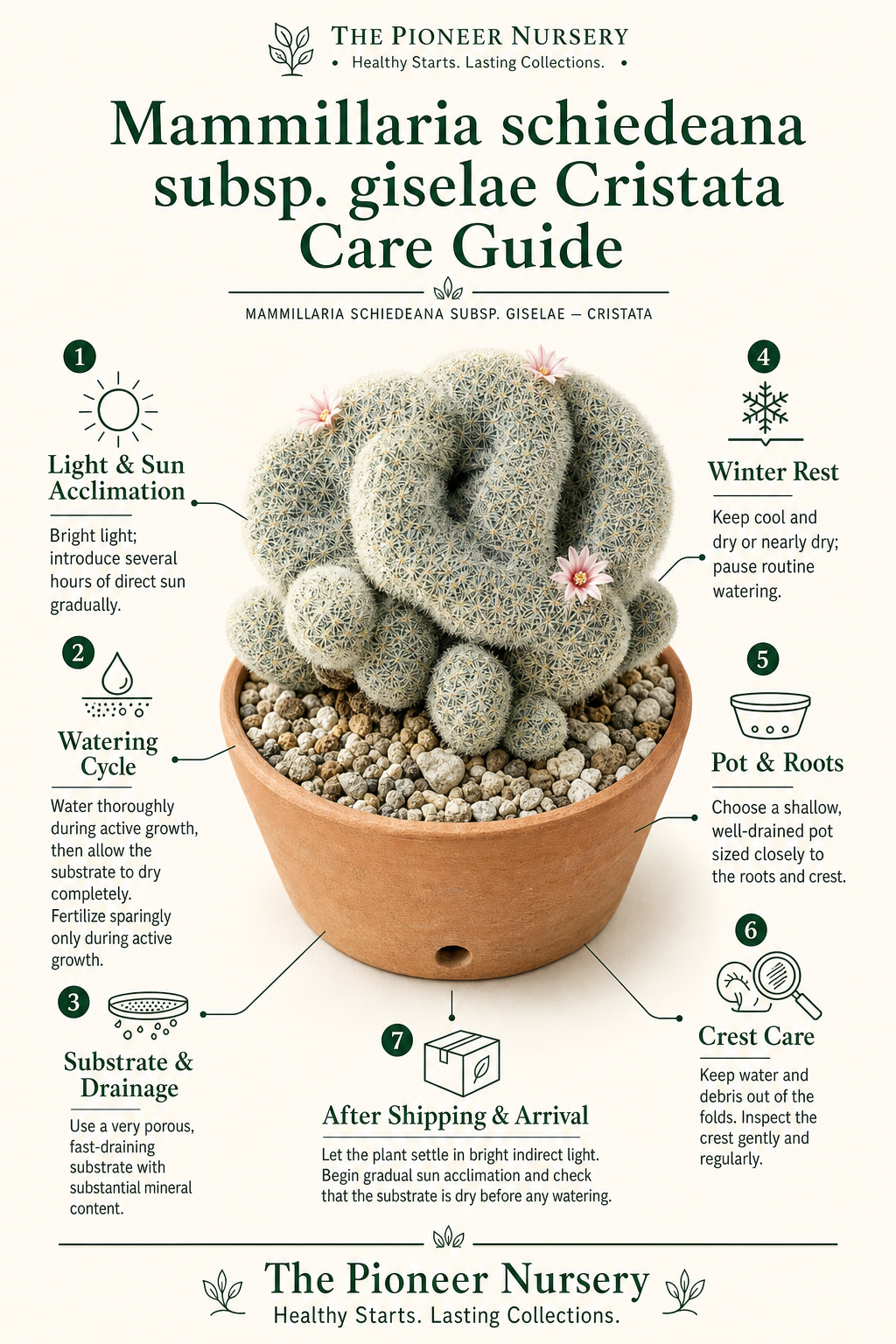
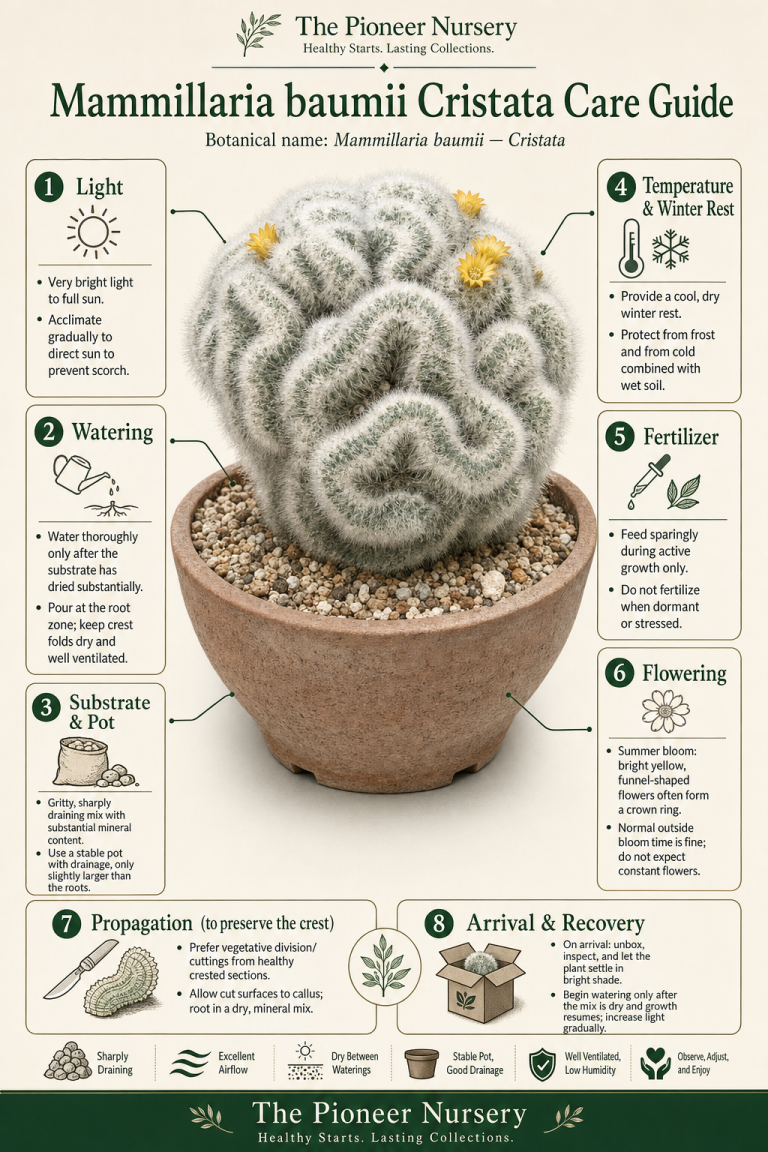
Mammillaria schiedeana subsp. giselae — cristata is the crested, fan-shaped growth form of Mammillaria schiedeana subsp. giselae. Its convoluted crest can trap water and debris, so excellent drainage and careful watering are especially important. “Cristata” describes the horticultural growth form rather than a separate species. Provide bright gradually acclimated light, porous soil, thorough watering during active growth, and a cool, dry winter rest.
Quick Care Summary
- Bright light with gradual acclimation to several hours of direct sun.
- Use a very porous, fast-draining substrate with substantial mineral content.
- Water thoroughly during active growth, then allow the substrate to dry completely.
- Keep the plant dry or nearly dry during cool winter rest.
- Use a shallow, well-drained pot sized closely to the roots and crest.
- Keep water and debris out of the folds of the crest.
- Fertilize sparingly only during active growth.
About the Plant
This Mammillaria has an irregular fan-shaped or convoluted crested body. The crest is a horticultural growth abnormality, not evidence of a separate species. The giselae form is reported to produce pale pink to pink flowers, often with a darker central stripe. Plants may be grown on their own roots or grafted; a graft does not change the accepted botanical identity of the scion.
Light
Provide bright light with several hours of direct sun after gradual acclimation. Strong light supports compact growth, spine development, and flowering. Avoid moving the plant abruptly from shade or greenhouse conditions into intense sun. In hot climates, morning sun followed by afternoon light shade is a safer outdoor arrangement.
Watering
During active growth, water thoroughly until excess drains from the pot, then allow the substrate to dry completely before watering again. Reduce watering substantially in cool or low-light winter conditions and keep the plant dry during its winter rest. Excess moisture is a major rot risk, especially when conditions are cold or water remains trapped in the folds of the crest.
Soil and Substrate
Use a very porous, fast-draining cactus mix with strong root aeration and a substantial mineral component. Avoid dense, moisture-retentive soil. A modest organic fraction is acceptable if the finished medium dries promptly after watering.
Potting and Roots
Choose a pot with drainage holes and use the smallest container that comfortably accommodates the crest and roots. A shallow pot suits this relatively small cactus. Repot in spring when roots are crowded or the substrate has degraded. After repotting or significant root disturbance, keep the plant dry for about a week or longer if roots were damaged.
Temperature and Winter Rest
Keep the plant warm during active growth and provide a cool, dry winter rest. Growth commonly slows during the cooler, darker part of the year. Maintain bright light and dry or nearly dry substrate through winter, resuming more substantial watering when warmer temperatures and stronger light indicate renewed growth. A specialist cactus source reports tolerance to approximately -5 °C when completely dry, but potted crested plants should be protected from freezing temperatures, prolonged cold, and wet soil.
Fertilizer
Fertilize sparingly during active summer growth with diluted cactus fertilizer. A relatively low-nitrogen formulation with adequate potassium is appropriate. Do not fertilize dry, dormant, recently repotted, or stressed plants.
Flowering
Flowers are reported as pale pink to pink, often with a darker central stripe, and may appear on crested growth. High light, a cool dry winter rest, and adequate active-season growth support flowering.
Propagation
The species can be grown from seed, while offsets or vegetative cuttings may be used when available. To preserve the crested growth pattern, vegetative propagation is preferred because seedlings will not reliably retain the crest. Crested specimens may also be grafted, although grafting is not required for every plant.
Shipping and Arrival Care
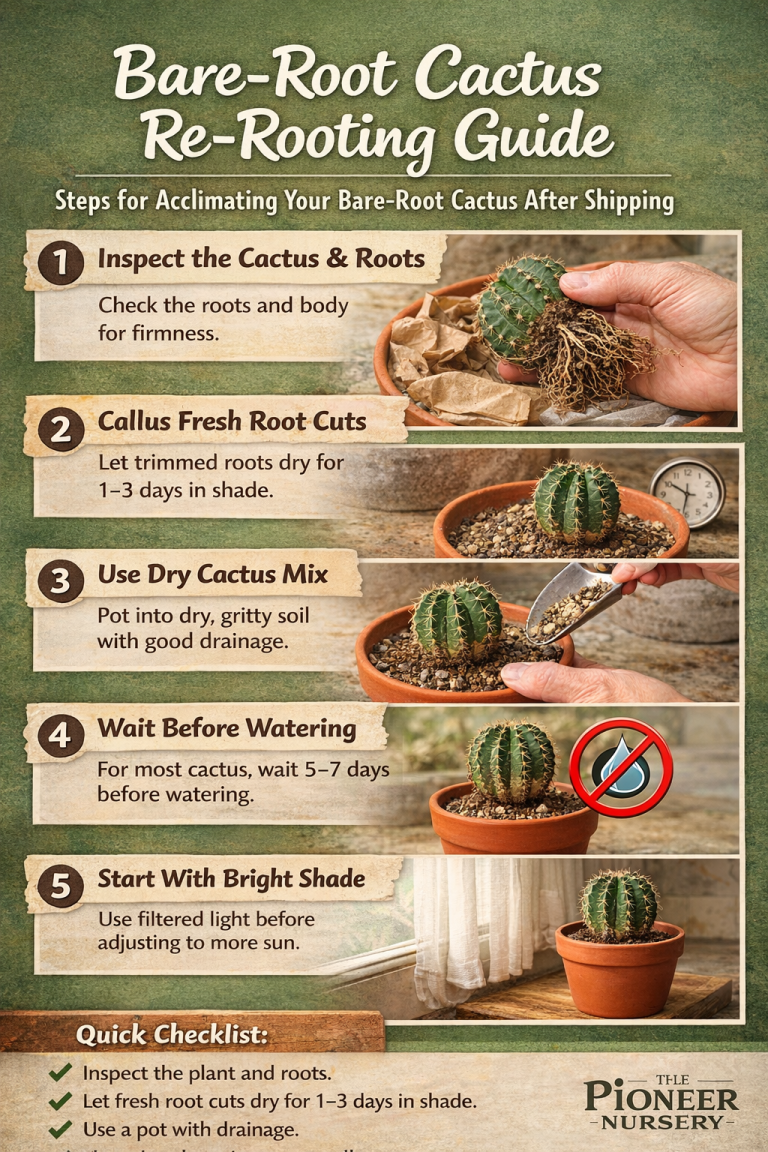
Receive and ship the plant with dry substrate whenever possible. Protect the fan-shaped crest from compression and abrasion, and inspect its folds for concealed moisture or damage. After arrival, provide bright but filtered light initially, acclimate gradually to stronger sun, and delay watering until the plant has recovered from handling and any root disturbance has dried.
Common Problems
Root or stem rot is associated with overwatering, poor drainage, or cold wet conditions. Sudden intense sun can cause sunburn, while insufficient light may produce weak or etiolated growth. Mealybugs and scale can be harder to notice in sheltered, densely spined areas. Water or debris trapped in the crest can also cause localized rot.
Frequently Asked Questions
How often should I water Mammillaria schiedeana subsp. giselae Cristata?
During active growth, water thoroughly and then wait until the substrate has dried completely before watering again. Water much less in cool, low-light winter conditions and keep the plant dry during its winter rest.
Does the crest need special care?
Yes. The folds of the fan-shaped crest can retain water and debris, increasing localized rot risk. Water carefully, use fast-draining soil, and inspect the folds after shipping or watering.
Can this crested Mammillaria grow in direct sun?
Yes, after gradual acclimation. Bright light and several hours of direct sun support compact growth, spines, and flowering. In hot climates, morning sun with afternoon light shade is safer.
Will seedlings remain crested?
Not reliably. Seed propagation can produce the species, but vegetative propagation is preferred when preserving the crested growth pattern is important.
Should a grafted plant be considered inferior?
No. Crested plants may be own-rooted or grafted, and grafting is not required for every plant. A graft does not change the accepted botanical identity of the scion.
Give this crested Mammillaria strong acclimated light, excellent drainage, and a clear dry period between waterings. The most important seasonal adjustment is keeping it cool and dry through winter, while preventing moisture from lingering in the crest.