Discocactus gigantea Care Guide
Learn how to provisionally care for Discocactus gigantea, a warm-growing, root-sensitive Discocactus requiring bright filtered light, porous acidic substrate, careful watering, and protection from cold, wet conditions.
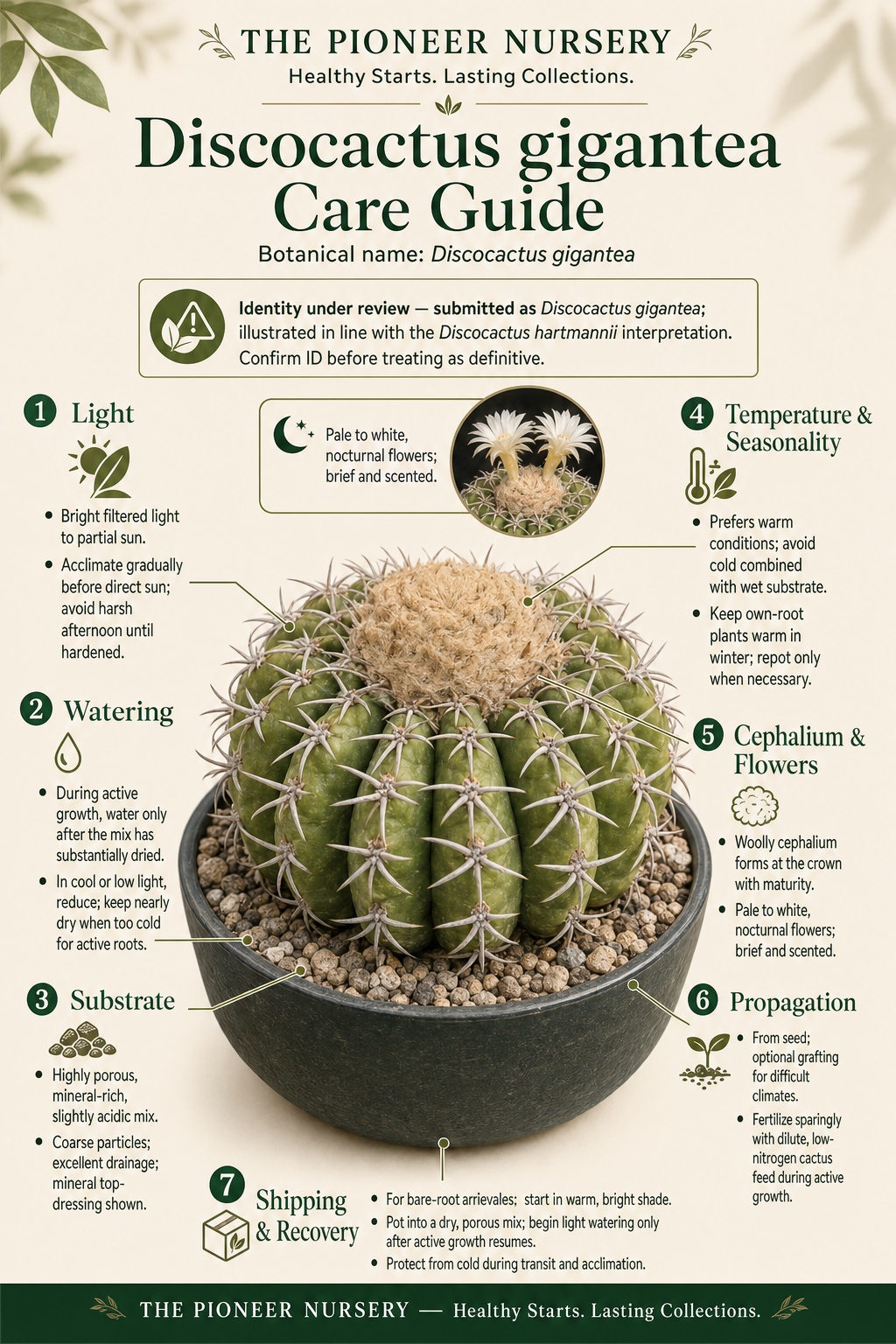
Discocactus gigantea is a provisional identity for a specialized, warm-growing Discocactus associated with a woolly cephalium and nocturnal, fragrant flowers. Because the submitted name may refer either to Discocactus hartmannii or to a collector treatment associated with Discocactus placentiformis, this guide should be used alongside accession records, provenance, photographs, or supplier confirmation. For the provisional Discocactus hartmannii interpretation, prioritize bright filtered light, highly porous slightly acidic substrate, cautious watering, warm winter conditions, and minimal root disturbance.
Quick Care Summary
- Bright filtered light to partial sun, with gradual acclimation to direct sunlight.
- Use a highly porous, mineral-rich, slightly acidic substrate.
- Water during active growth only after the mix has substantially dried.
- Reduce watering in cool or low-light conditions and keep the plant nearly dry when too cold for active roots.
- Keep own-root plants warm in winter; avoid cold combined with wet substrate.
- Repot only when necessary because disturbed roots may recover slowly.
- Fertilize sparingly with dilute, low-nitrogen cactus fertilizer during active growth.
- Confirm the plant’s identity before treating Discocactus hartmannii as definitive.
About the plant and its identity
The submitted name Discocactus gigantea was not verified as an accepted botanical name. The strongest match is Discocactus hartmannii, with Discocactus hartmannii subsp. giganteus treated by Kew as a synonym. However, similar collector usage may connect the name with Discocactus tricornis var. giganteus, now treated under Discocactus placentiformis. Confirm the plant’s identity before publishing species-specific claims or relabeling established records.
Light
Provide bright filtered light to partial sun. Strong light is useful, but protect the plant from intense afternoon heat, particularly after shipping or a greenhouse-to-outdoor transition. Acclimate gradually to direct sun to reduce the risk of sunscald.
Watering
During active growth, water only after the porous mix has substantially dried. Discocactus may appreciate more summer moisture than some arid cacti, but constantly wet roots are unsafe. Reduce watering during cool or low-light periods, and keep the plant nearly dry when temperatures are too low for active root function. Cold combined with wet substrate can cause rot and collapse.
Soil and substrate
Use a highly porous, mineral-rich cactus substrate with excellent aeration. Coarse sand, pumice, scoria, decomposed granite, or similar mineral components are appropriate. A slightly acidic mix is generally preferable. Avoid dense, water-retentive, or strongly calcareous substrates.
Potting and roots
Choose a pot with an unobstructed drainage hole. A relatively deep pot may help plants retaining a substantial root system, but avoid excessive unused soil volume. Repot only when necessary because Discocactus can resent root disturbance and may establish slowly afterward. After repotting, allow damaged roots to dry and resume watering cautiously once active recovery is evident.
Temperature and seasonal growth
Cultivate this plant warmly and protect it from frost and prolonged cool conditions. Own-root plants require especially warm winter conditions; specialist guidance commonly recommends keeping them above approximately 15 °C. Grafted plants may tolerate somewhat cooler conditions if kept dry. Discocactus does not necessarily need a severe cold winter dormancy: growth may slow during the cooler, darker season, but the plant should remain warm, well ventilated, and much drier.
Fertilizer
Fertilize sparingly during active growth with a dilute, low-nitrogen cactus fertilizer. A formulation with relatively higher potassium may be suitable. Do not fertilize recently repotted, stressed, dormant, or root-damaged plants.
Flowering and the cephalium
Mature plants produce nocturnal, fragrant, generally pale to white flowers from a woolly cephalium. Flowering is associated with mature cephalium development and strong, warm cultivation. The flowers are short-lived and may fade by the following morning.
Propagation
Propagation is primarily by seed. Germination can be relatively quick under warm, humid, sterile propagation conditions, but seedlings are slow to reach flowering maturity. Grafting is commonly used for difficult or root-sensitive Discocactus and may improve establishment and growth, but it is not required for every plant.
Shipping and arrival care
Ship and receive Discocactus in warm conditions whenever possible, protecting it from chilling. Inspect the plant on arrival. Bare-root or recently disturbed plants should remain dry until root wounds have callused and recovery begins. After arrival, provide bright but initially filtered light, good airflow, and gradual acclimation. Do not water immediately after major root disturbance or when the plant has been exposed to cold during transit.
Conservation and trade
Discocactus species are protected under international trade regulations. Propagation and shipment should comply with applicable CITES and local requirements.
Common Problems
- Root or basal rot: Usually associated with wet substrate and cool temperatures; improve drainage, warmth, and ventilation.
- Poor re-establishment: Bare-root shipping or root disturbance can delay recovery; keep damaged roots dry initially and resume watering cautiously.
- Sunscald: Abrupt exposure to intense direct sunlight can damage the plant; acclimate gradually.
- Mealybugs: Inspect hidden root areas and the woolly cephalium as well as visible surfaces.
- Slow recovery: Dense, alkaline, or poorly aerated media can hinder establishment.
- Cold damage and collapse: Chilled, wet conditions are particularly dangerous.
Frequently Asked Questions
How should I water Discocactus gigantea?
Water during active growth only after the porous substrate has substantially dried. Reduce watering in cool or low-light conditions, and keep the plant nearly dry when temperatures are too low for active root function.
Does this Discocactus need full sun?
Bright filtered light to partial sun is appropriate. Stronger direct sun should be introduced gradually, especially after shipping or a greenhouse-to-outdoor transition.
Should Discocactus be kept cold and dry for winter dormancy?
No severe cold dormancy is necessarily required. Keep the plant warm, well ventilated, and much drier as growth slows during the cooler, darker season.
Why is a mineral substrate important?
Discocactus has sensitive roots and is vulnerable to problems in dense or water-retentive media. Use a highly porous, well-aerated, slightly acidic, mineral-rich mix.
Can Discocactus be grafted?
Yes. Grafting is commonly used for difficult or root-sensitive Discocactus and may improve establishment and growth, although it is not required for every plant.
What should I do after receiving a bare-root plant?
Protect it from cold, provide bright but initially filtered light and good airflow, and keep it dry until root wounds have callused and recovery begins.
Discocactus gigantea should be treated as a provisional identity until the plant can be confirmed from records, provenance, photographs, or supplier information. In the meantime, warm conditions, porous slightly acidic media, careful watering, gradual light acclimation, and gentle root handling provide the safest general approach.