Mammillaria baumii Care Guide
Learn how to grow Mammillaria baumii with bright light, careful seasonal watering, porous soil, and a cool, dry winter rest.
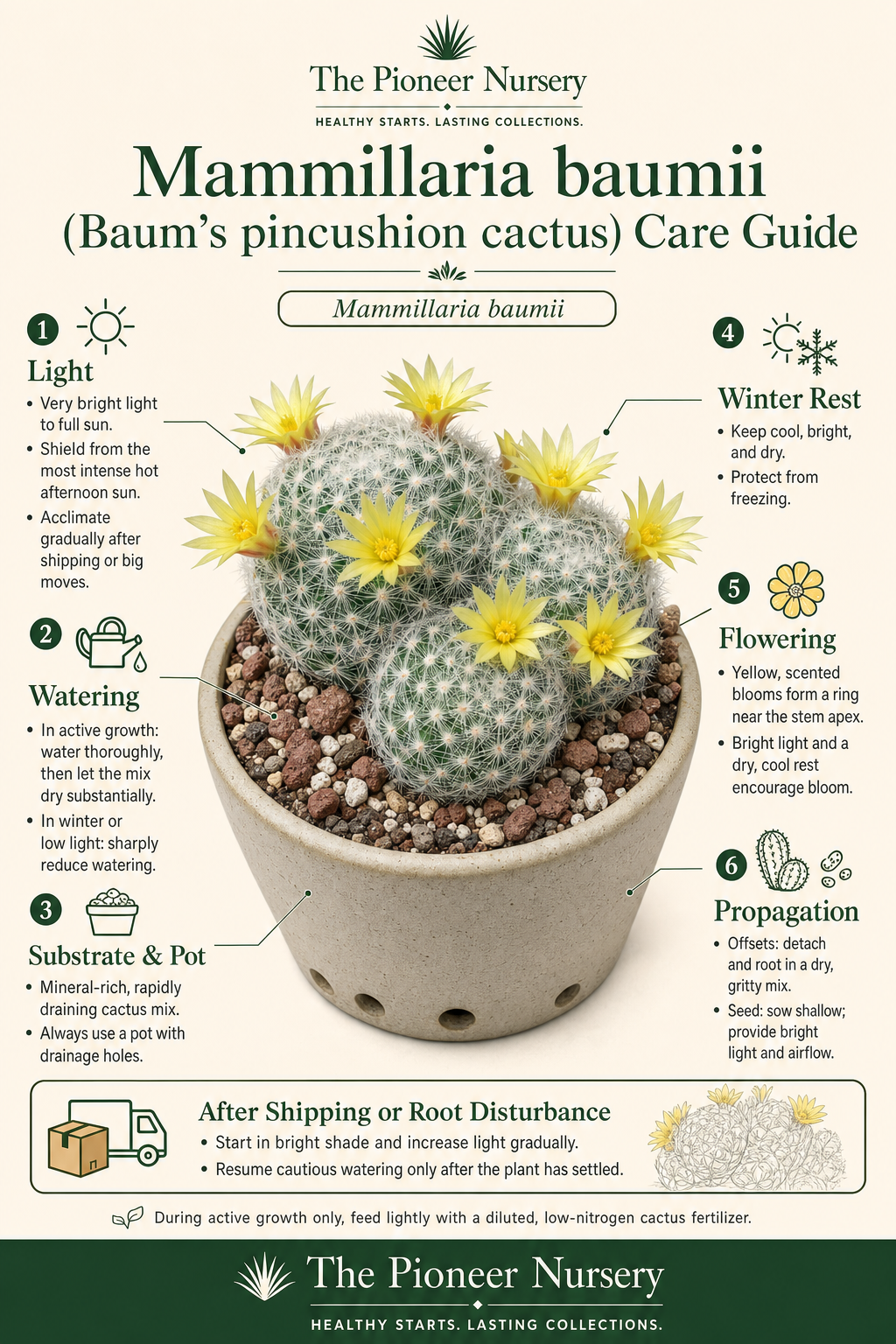
Mammillaria baumii, also called Baum’s pincushion cactus or San Vicente cactus, is a clump-forming cactus native to Tamaulipas, Mexico. Its yellow to golden-yellow, strongly scented flowers can form a ring near the upper stem when the plant is mature and grown in strong light. The main care priorities are excellent drainage, thorough watering during active growth followed by substantial drying, and a cool, dry winter rest protected from freezing.
Quick Care Summary
- Provide very bright light to full sun, with protection from the most intense hot afternoon sun.
- Acclimate gradually after shipping or a sudden move from shade to strong light.
- Water thoroughly during active growth, then let the porous substrate dry substantially.
- Keep watering sharply reduced during cool, low-light winter conditions.
- Use a mineral-rich, rapidly draining cactus mix and a pot with drainage holes.
- Protect the plant from freezing and maintain a cool, bright, dry winter rest.
- Feed lightly with diluted, low-nitrogen cactus fertilizer only during active growth.
Light
Provide very bright light to full sun, while protecting the plant from the most intense hot afternoon sun. Acclimate it gradually after shipping or after moving it from shade or greenhouse conditions into stronger light. Sudden exposure can cause sun scorch.
Watering
During active growth, water thoroughly and then allow the substrate to dry substantially before watering again. Do not keep the roots continuously wet. Reduce watering sharply in winter and during cool, low-light conditions; in a cool dormant period, water only sparingly or withhold water. Avoid fixed calendar schedules, since watering depends on light, temperature, substrate, pot size, and growth.
Soil and substrate
Use a porous, rapidly draining cactus substrate with substantial mineral content and good root aeration. Avoid dense mixes that retain moisture for a long time.
Potting and roots
Choose a container with drainage holes and avoid oversized pots that stay wet. Although Mammillaria baumii is clump-forming, no specialized enlarged taproot or caudex requirement has been verified. Repot preferably in late winter or early spring. After repotting or significant root disturbance, keep the plant dry until damaged roots and wounds have dried before cautiously resuming irrigation.
Temperature and winter rest
Protect Mammillaria baumii from freezing. It tolerates low temperatures around 1–5°C (34–41°F), but persistent freezing is not suitable. A cool, bright, dry winter rest is appropriate, particularly when temperatures are low.
Seasonal growth and dormancy
Growth and watering should be coordinated with conditions. Provide more thorough irrigation during active growth when light and temperature support it, then reduce watering sharply during the cool, low-light winter rest. Cold conditions combined with wet roots create a significant rot risk.
Fertilizer
Feed lightly during active growth with a diluted, low-nitrogen cactus fertilizer. Do not fertilize during the winter rest.
Flowering
Mature plants grown in strong light and given a suitable winter rest may produce yellow to golden-yellow flowers in a ring near the upper part of the stem. Specialist cactus references describe the flowers as strongly scented.
Propagation
Mammillaria baumii can be propagated from seed or by removing and dividing offsets. Seed sowing is recommended at approximately 19–24°C (66–75°F) in late winter or early spring. Allow separated offsets or damaged tissues to callus before planting them into dry, porous substrate.
Common problems
Root rot is associated with prolonged moisture, especially during cool or dormant conditions. Sun scorch can follow abrupt exposure to intense direct sun. Monitor for mealybugs and root mealybugs. Soft, stretched growth can result from inadequate light or excessive watering and feeding.
Shipping and arrival care
Receive and ship this plant frost-free. After arrival, inspect it and protect it from abrupt full sun, increasing light gradually. Bare-root plants or plants with disturbed roots should not receive immediate heavy watering; allow the plant and any root injuries to dry and recover before cautiously resuming irrigation.
Frequently Asked Questions
How often should I water Mammillaria baumii?
Do not use a fixed calendar. Water thoroughly during active growth, then wait until the substrate has dried substantially. Reduce watering sharply in cool, low-light winter conditions.
Does Mammillaria baumii need full sun?
Provide very bright light to full sun, protecting it from the most intense hot afternoon sun. Increase light gradually after shipping or a move from shade to prevent scorch.
How should I care for it in winter?
Give it a cool, bright, dry winter rest. Water only sparingly, or withhold water when conditions are cool and the plant is not actively growing, and protect it from freezing.
Can Mammillaria baumii be propagated from offsets?
Yes. Remove and divide offsets, then allow separated offsets or damaged tissues to callus before planting into dry, porous substrate. It can also be grown from seed.
Why is my plant growing soft or stretched?
Soft, etiolated growth may indicate inadequate light or excessive watering and feeding. Review light levels and allow the substrate to dry substantially between waterings.
Mammillaria baumii is best suited to a bright location, a porous mineral-rich substrate, and watering that follows active growth rather than the calendar. Keep it notably drier during cool winter conditions, protect it from freezing and abrupt sun exposure, and provide good drainage to reduce rot risk.