Mammillaria magnimamma ‘Erusamu’ Care Guide
Learn how to grow Mammillaria magnimamma ‘Erusamu’ with bright acclimated light, fast-draining mineral soil, careful active-season watering, and a cool, nearly dry winter rest.
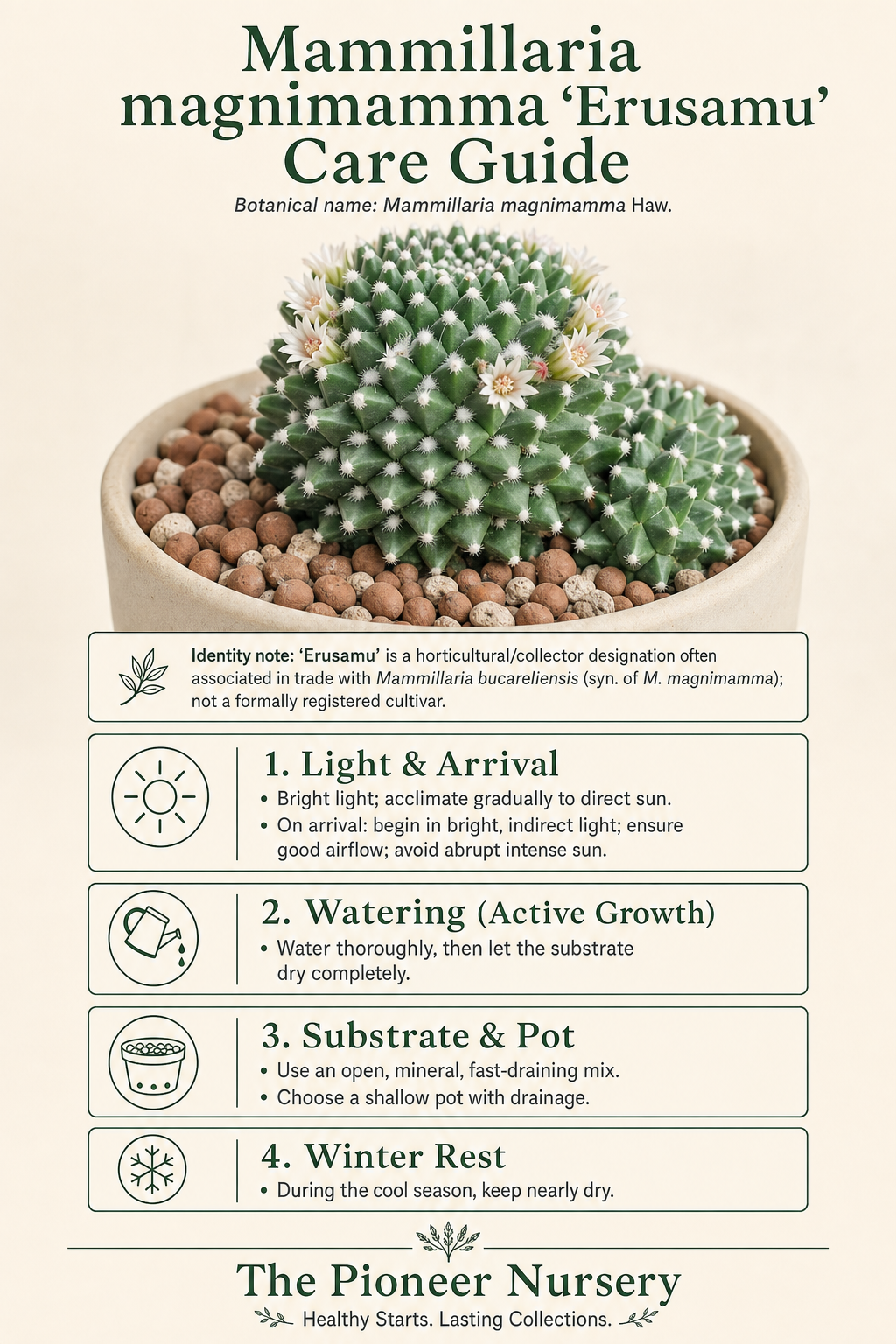
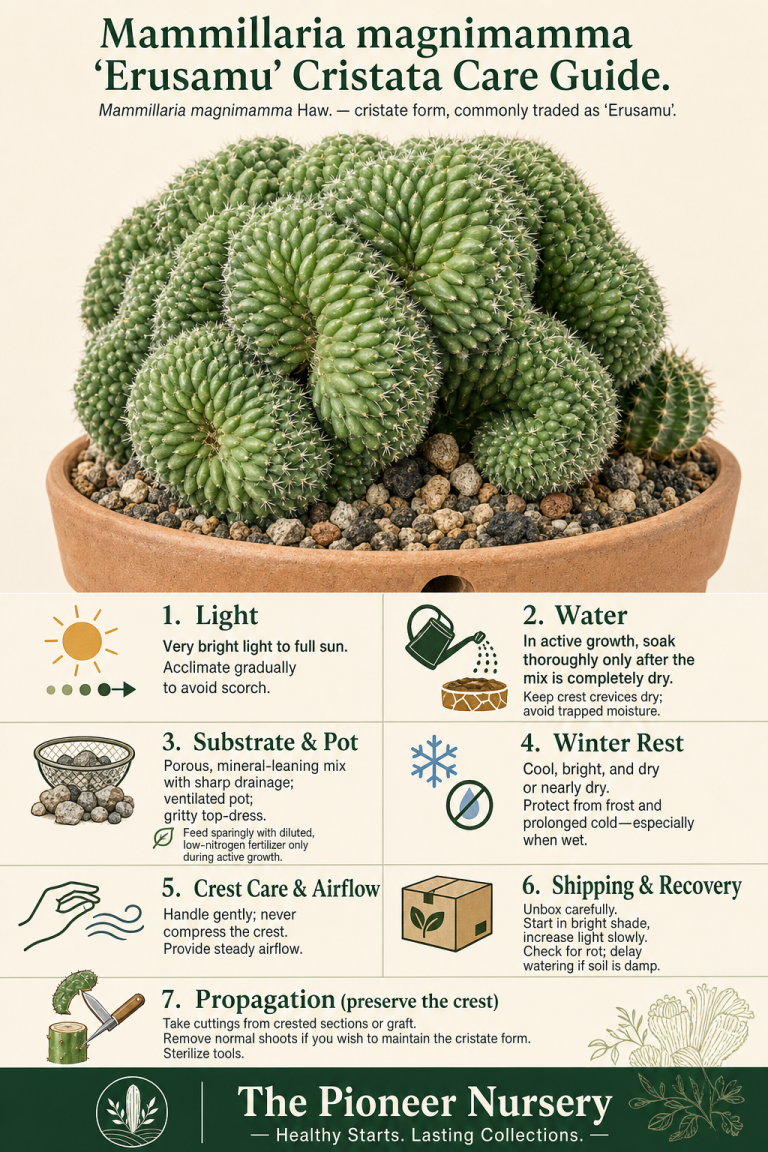
Mammillaria magnimamma ‘Erusamu’ is a variable, potentially clumping cactus that can flower when mature. Give it bright, gradually acclimated light, an open mineral substrate, thorough drying between active-season waterings, and a nearly dry winter rest. ‘Erusamu’ is a horticultural or collector designation associated with Mammillaria bucareliensis, a synonym of Mammillaria magnimamma, rather than a verified formal botanical rank.
Quick Care Summary
- Bright light with gradual acclimation to direct sun.
- Water thoroughly during active growth, then let the substrate dry completely.
- Use an open, mineral, fast-draining mix and a shallow pot with drainage.
- Keep nearly dry during cool winter rest.
- Provide good airflow and avoid abrupt intense sun.
About the plant
Mammillaria magnimamma is a variable species with historical names and forms. Plants may form clumps, and mature specimens can produce a ring of small flowers around the upper stem. The species identity is Mammillaria magnimamma Haw.; retain ‘Erusamu’ as a horticultural or collector designation.
Light
Provide bright light with several hours of direct sun once acclimated. Increase exposure gradually after shipping or moving the cactus from shade. Strong light supports compact growth and flowering, but a low-spined or heavily woolly ‘Erusamu’ plant may scorch after an abrupt move into intense sun. Provide good ventilation in hot weather.
Watering
During active growth, water thoroughly and allow the substrate to dry completely before watering again. Do not leave the pot standing in water, and increase watering gradually as spring growth begins. During cool winter rest, keep the plant nearly dry because cold, wet conditions create a significant rot risk.
Soil and substrate
Use a very open, fast-draining mix with substantial mineral content and limited organic matter. It should retain enough moisture for active growth while drying rapidly and remaining well aerated around the roots.
Potting and roots
Choose a pot only slightly larger than the root system, with an unobstructed drainage hole. A relatively shallow container suits this rot-sensitive species. Repot about every 2–3 years or when the substrate has degraded. After repotting or major root disturbance, let damaged roots dry and recover before resuming careful watering.
Temperature and seasonal rest
Warm conditions suit active growth when airflow is good. Protect the plant from frost and avoid low temperatures combined with wet soil. It typically rests during the cooler, lower-light period, when a cool, dry rest is preferable to warm, poorly lit, continuously moist conditions. Keep it almost completely dry unless it remains warm and actively growing under adequate light.
Fertilizer
Feed sparingly during active growth with diluted, low-nitrogen cactus fertilizer. Do not fertilize a dry, dormant, recently repotted, or stressed plant.
Flowering and propagation
Mature plants can produce a ring of relatively small flowers around the upper stem, with reported colors from pale yellow through pink and sometimes darker central markings. The exact expression associated with ‘Erusamu’ is unverified. Propagate from seed or offsets; allow offset or cutting wounds to callus fully before placing them in a dry, porous rooting medium, and protect seedlings from harsh direct sun until established.
Shipping and arrival care
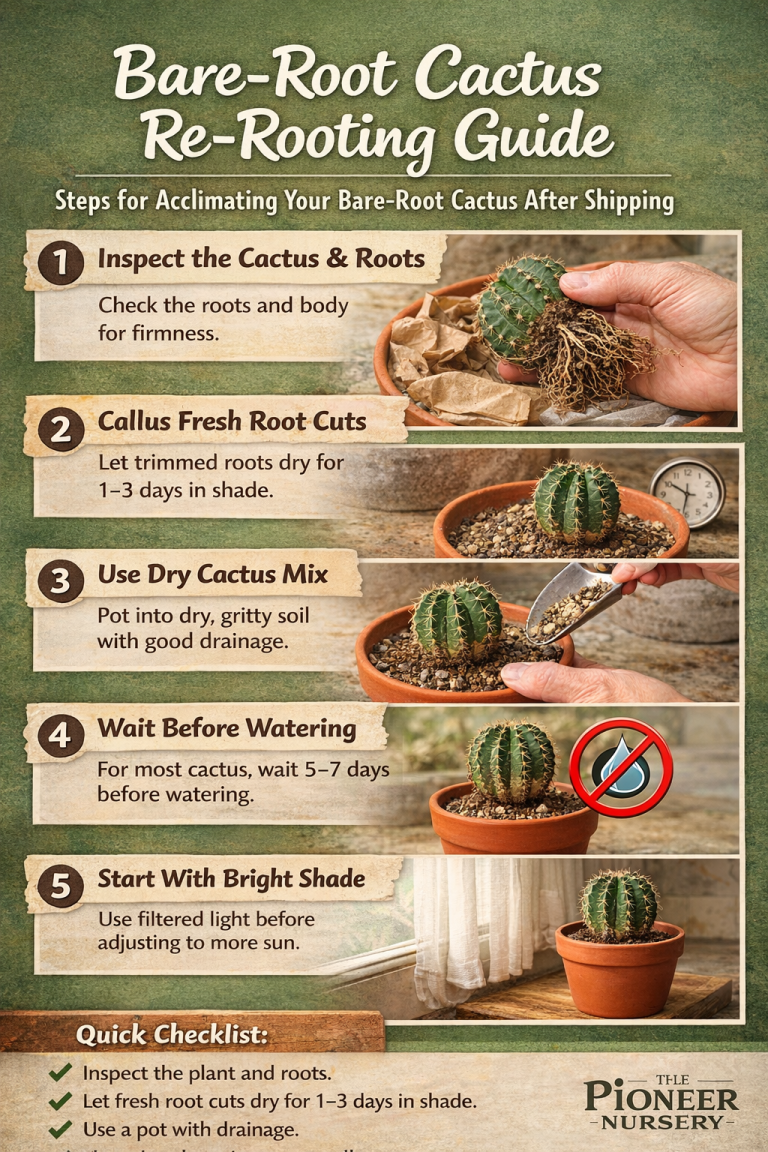
Inspect the plant on arrival for rot or pests and begin with bright, initially filtered light. Keep it dry if roots were damaged, it arrived bare-root, or the medium is cold and wet. Once settled, acclimate gradually to direct sun.
Common Problems
- Root or stem rot: review drainage and avoid wet soil during cool conditions.
- Sunburn: increase direct light gradually, especially for low-spined or woolly plants.
- Spider mites: check hot, dry, poorly ventilated plants when growth declines.
- Mealybugs: inspect wool and roots regularly.
- Scale insects: inspect the plant when growth appears weak or pests are suspected.
- Etiolated growth: insufficient light can produce weak, elongated growth.
Frequently Asked Questions
What should I check if the plant is declining?
Inspect first for wet, poorly aerated substrate, rot, or pests among the wool or on the roots. Also consider whether light is insufficient or was increased too abruptly.
When should I delay watering after arrival or repotting?
Delay watering when roots were damaged, the plant arrived bare-root, or the medium is cold and wet. After major root disturbance, let damaged roots dry and recover before watering.
How can I tell whether ‘Erusamu’ is a formal cultivar?
‘Erusamu’ is supported as a horticultural or collector designation associated with Mammillaria bucareliensis, a synonym of Mammillaria magnimamma. Its formal cultivar status was not verified.
Can this cactus take direct sun?
Yes, once acclimated. Increase exposure gradually, particularly for a low-spined or heavily woolly plant.
With bright, gradually acclimated light, a mineral, fast-draining substrate, careful active-season watering, and a cool, nearly dry winter rest, Mammillaria magnimamma ‘Erusamu’ can remain compact and flower when mature.