Ariocarpus cauliflower: Care Guide
Learn how to grow Ariocarpus cauliflower, a cultivated Ariocarpus retusus selection with a large taproot, slow growth, bright-light needs, and a strong preference for mineral soil and dry winter conditions.
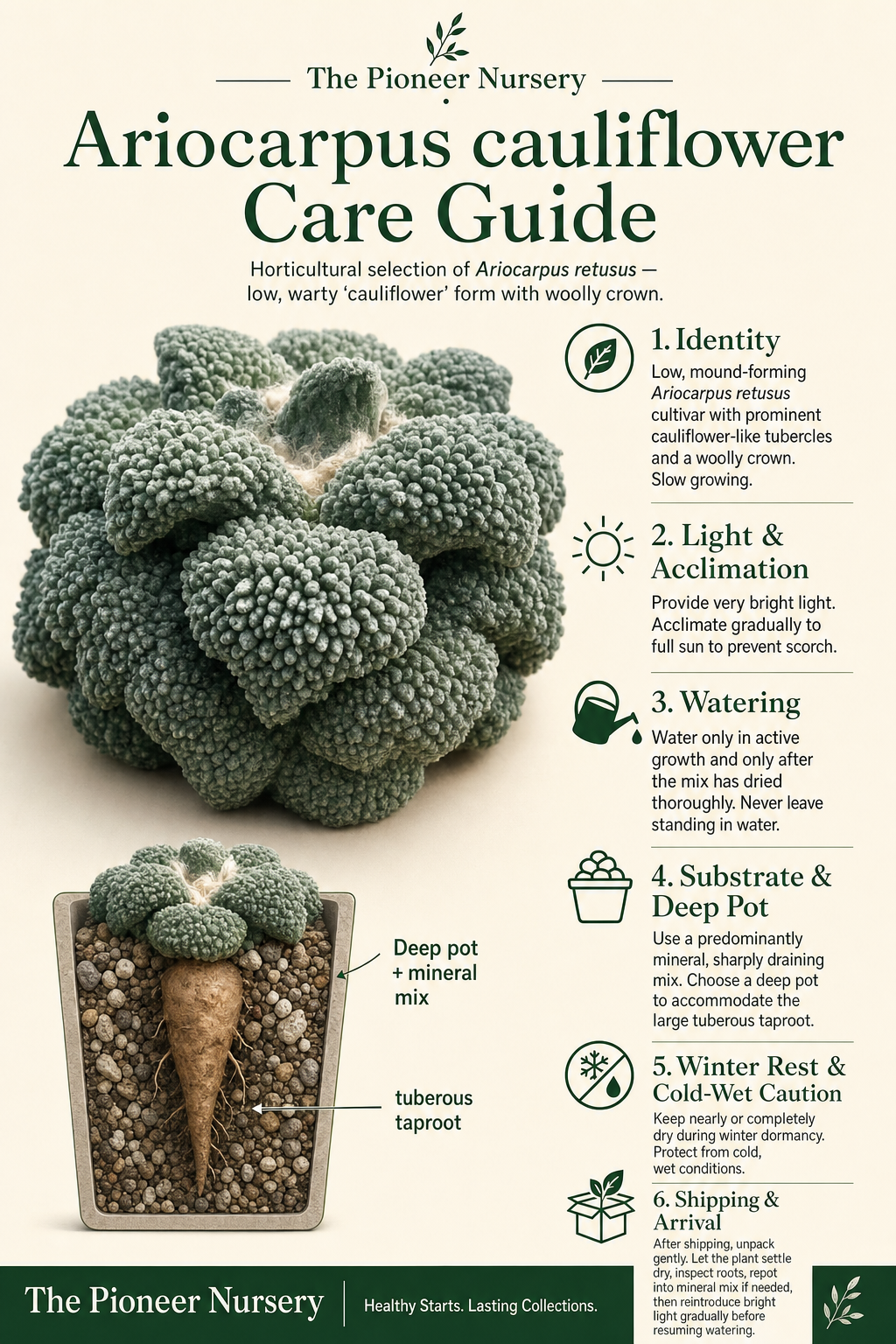
Ariocarpus cauliflower is a slow-growing, low-growing form with distinctive warty, cauliflower-like tubercles and a large storage-oriented taproot. Give it bright light, a deep well-drained pot, a predominantly mineral substrate, careful watering during active growth, and a dry winter rest. The customer-facing name is horticultural and is associated with Ariocarpus retusus, which should guide its care.
Quick Care Summary
- Provide very bright light and acclimate gradually to full sun.
- Use a deep pot and predominantly mineral, sharply draining substrate.
- Water only during active growth after the substrate has dried thoroughly.
- Keep nearly or completely dry during winter dormancy.
- Expect slow growth and protect the plant from cold, wet conditions.
About the plant
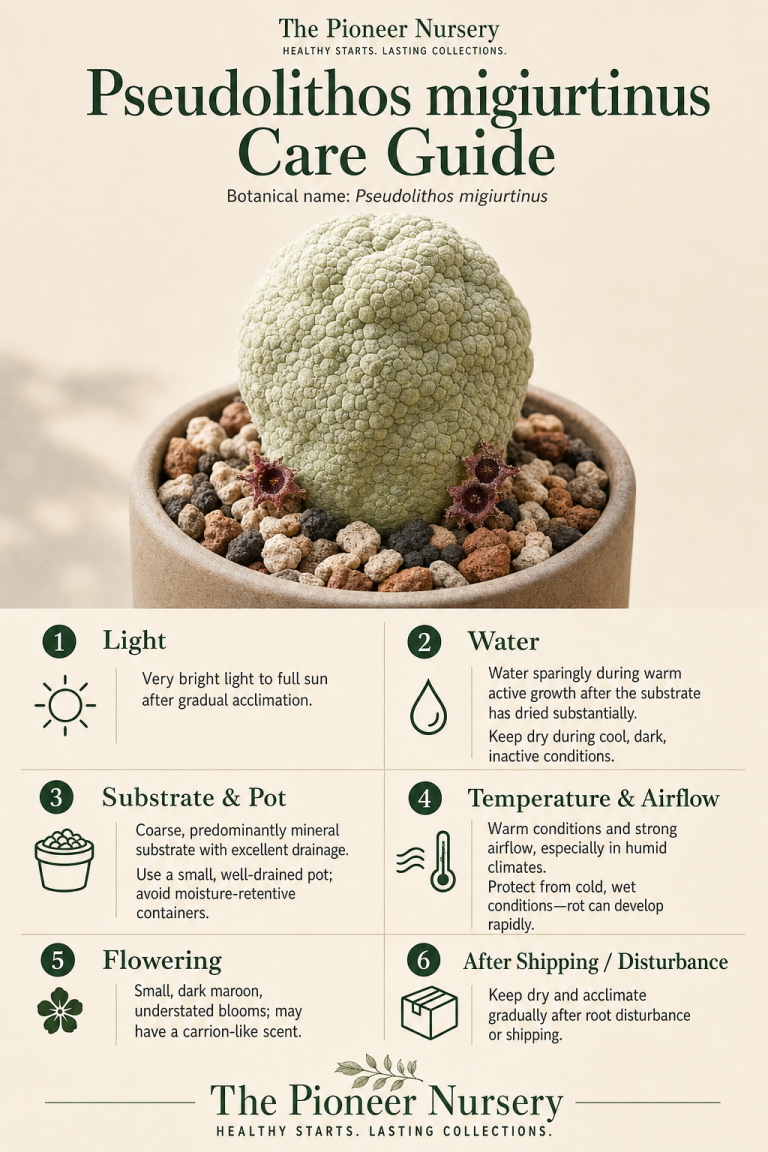
“Ariocarpus cauliflower” is a cultivation or trade name for a selection associated with the accepted species Ariocarpus retusus Scheidw. Because names and parentage are not always consistent in commerce, appearance alone should not be used to confirm a specific cultivar. The form is valued for its warty, cauliflower-like tubercles. Like other Ariocarpus retusus plants, it grows slowly, develops a large tuberous taproot, and may contract or look slightly sunken and wrinkled during dormancy.
Light and airflow
Provide very bright light to full sun once acclimated. Introduce indoor-, shaded-, or greenhouse-grown plants to stronger light gradually to reduce sunburn. Good airflow is especially important in humid conditions.
Watering
Water only during active growth and only after the substrate has dried thoroughly. Apply a controlled, thorough watering or a small targeted amount suited to the pot, then allow rapid drainage and complete drying. Avoid repeated shallow watering that leaves the root zone damp. During winter dormancy, keep the plant nearly or completely dry; a dry surface does not necessarily mean a cool or inactive plant needs water.
Soil and substrate
Use a sharply draining, predominantly mineral substrate with minimal moisture retention and little organic matter. A gritty, limestone-compatible mix is appropriate, and calcium-containing mineral material may be beneficial because the species occurs in limestone habitats. Moisture-retentive soil increases the risk of root rot.
Potting and roots
Choose a deep pot with an unobstructed drainage hole for the large taproot. Avoid oversized containers that stay wet for extended periods. Handle the roots carefully, since damage combined with moisture can lead to rot. After repotting or substantial root disturbance, keep the plant dry until damaged tissue has healed, then resume watering cautiously during active growth.
Temperature and seasonal rest
Keep the plant warm during active growth. It can tolerate brief exposure to temperatures near or below freezing when dry, but cold, wet conditions substantially increase the risk of root and stem rot. Protect it from prolonged freezing, winter rain, and poorly ventilated humidity. During its bright, cool-to-mild winter rest, keep it dry and resume watering gradually when temperatures and light indicate renewed growth.
Fertilizer
Feed sparingly with a weak, low-nitrogen cactus fertilizer during active growth, generally no more than once or twice per growing season. A calcium-containing formulation may be suitable. Do not fertilize a dormant, recently shipped, or recently repotted plant. Slow growth is normal and does not call for extra fertilizer or water.
Flowering
Mature plants commonly flower from autumn into early winter. Flowers emerge from the woolly crown and may be white to pale pink, depending on the plant and its parentage. Seed capsules can remain concealed in the crown and may mature months after flowering.
Propagation
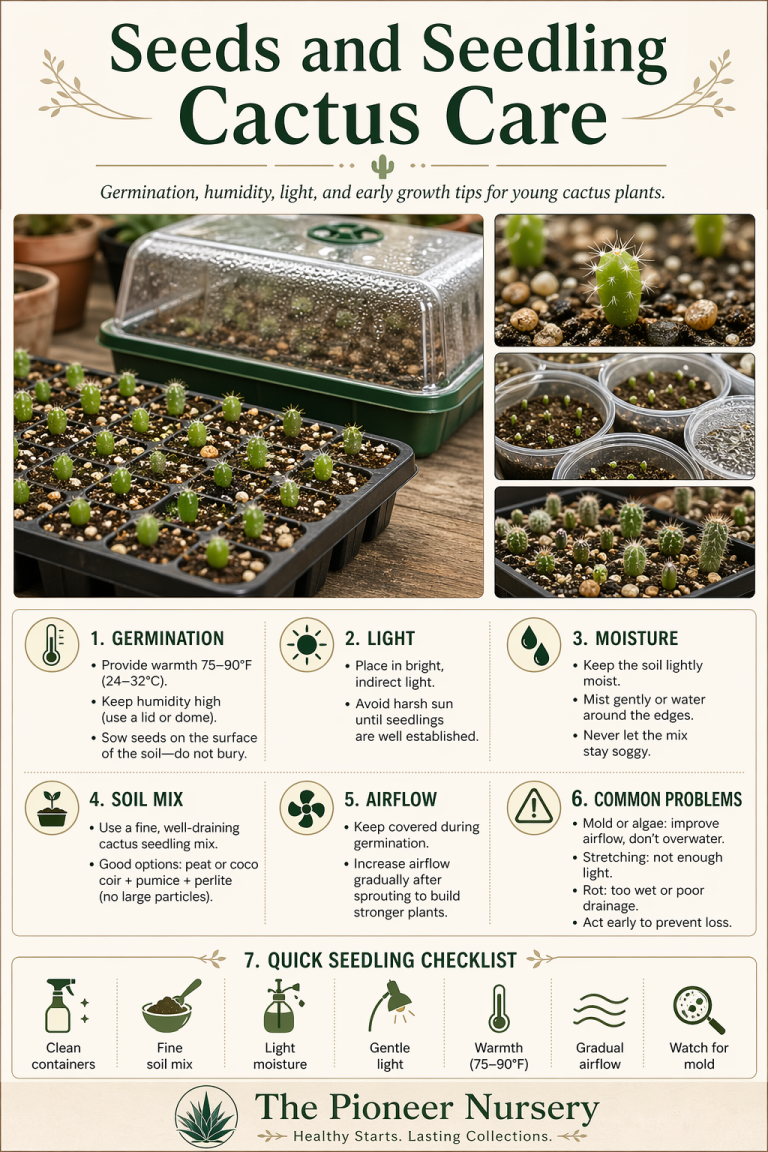
Propagation is primarily by seed. Fresh seed can germinate reliably under warm, humid conditions, but seedlings are slow-growing. Sow on a predominantly mineral surface and maintain approximately 22–26 °C with elevated surface humidity during germination. Move seedlings into deep individual pots before the developing taproot becomes difficult to transplant. Grafting may accelerate growth but does not change the underlying species identity.
Common problems
Root rot is associated with moisture-retentive substrate, frequent watering, poor drainage, or cold, wet conditions. Sunburn can follow an abrupt move into intense sun, so acclimate gradually. Slow growth is normal. Check woolly or recessed crown and tubercle areas for mealybugs. Stagnant air, prolonged humidity, and wet foliage or substrate can encourage fungal problems.
Shipping and arrival care
After arrival, inspect the plant for damage, including damage to the taproot. Protect it from bending, crushing, prolonged cold, and wet packing. If it has been bare-rooted, repotted, chilled, or otherwise stressed, allow disturbed roots to dry and heal before watering. Begin in gentler light and acclimate gradually to stronger light. Use documented cultivated-source plants where applicable, since Ariocarpus are conservation-sensitive cacti and international trade may be regulated.
Frequently Asked Questions
How often should I water Ariocarpus cauliflower?
There is no fixed calendar. Water only during active growth, after the substrate has dried thoroughly, and keep the plant nearly or completely dry during winter dormancy.
Can it grow in full sun?
Yes, once acclimated. Introduce indoor-, shaded-, or greenhouse-grown plants to stronger light gradually to prevent sunburn.
Why does my plant look sunken or wrinkled?
Ariocarpus retusus can contract or become slightly sunken and wrinkled during drought or dormancy. This appearance is not automatically a sign of water deficiency.
What kind of pot does it need?
Use a deep pot with an unobstructed drainage hole for its large taproot. Avoid oversized containers that stay wet for long periods.
When can I water after shipping or repotting?
Allow disturbed or bare roots to dry and heal before watering. Resume cautiously when the plant is entering active growth.
How is it propagated?
Propagation is primarily by seed. Seedlings are slow-growing; grafting may accelerate growth but does not change the underlying species identity.
Ariocarpus cauliflower rewards patience and disciplined watering. Give it bright light, a deep mineral setup, excellent drainage, and a dry winter rest, while treating the large taproot gently.