Astrophytum asterias Cristata Care Guide
Learn how to grow crested Astrophytum asterias with bright light, sharply draining soil, careful watering, and a dry winter rest.
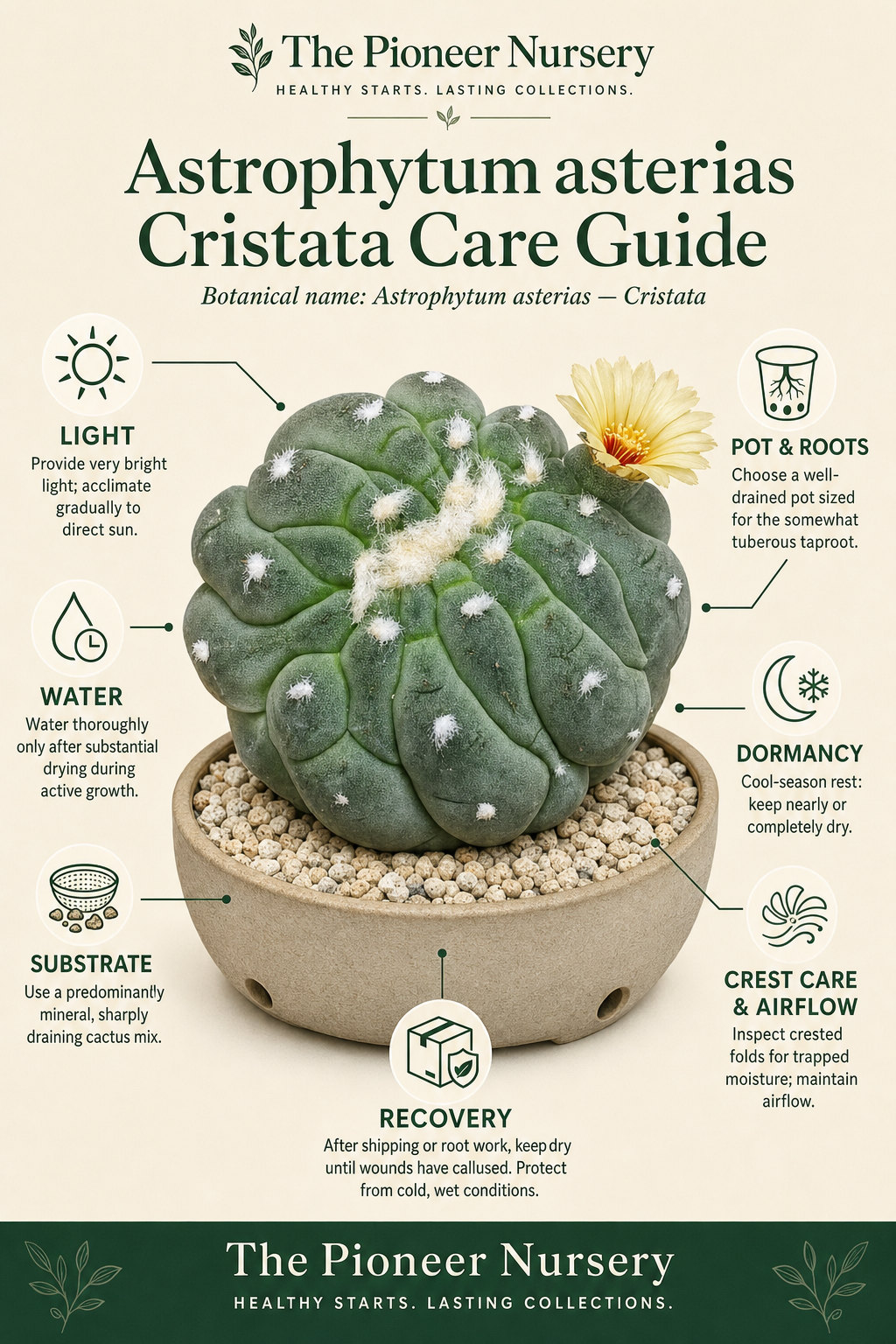
Astrophytum asterias Cristata is the crested, fan-shaped form of the accepted species Astrophytum asterias, also called sand dollar cactus or star cactus. Its irregular folds can trap moisture and are more vulnerable to bruising than a typical globular plant, so the main priorities are strong light, excellent drainage, careful watering, good airflow, and cautious recovery after shipping or root disturbance.
Quick Care Summary
- Provide very bright light and acclimate gradually to direct sun.
- Use a predominantly mineral, sharply draining cactus substrate.
- Water thoroughly only after substantial drying during active growth.
- Keep nearly or completely dry during cool winter dormancy.
- Use a well-drained pot sized for the somewhat tuberous taproot.
- Inspect crested folds for trapped moisture after watering.
- Keep damaged roots dry until wounds have callused.
- Protect from frost and cold, wet conditions.
About the Plant
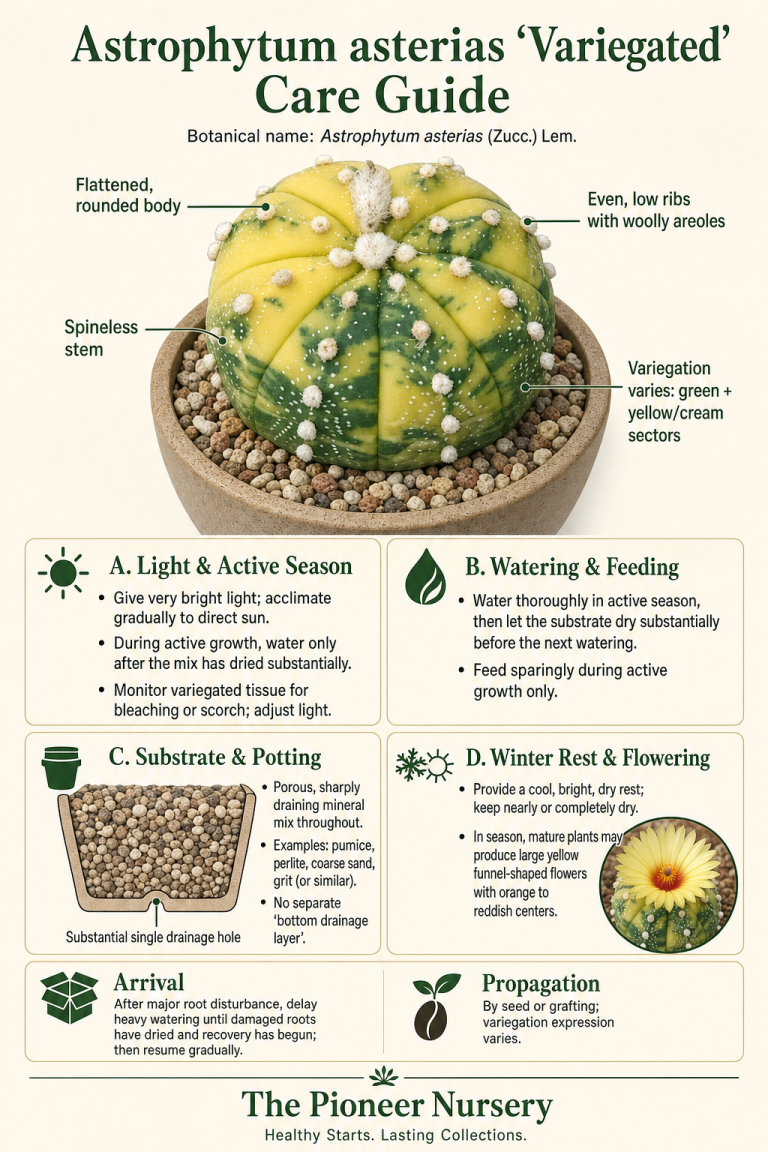
“Cristata” describes a horticultural crested growth form rather than a separate species, subspecies, or cultivar. The body develops into an uneven fan-shaped form. Both own-root and grafted specimens are legitimate horticultural forms; crested growth itself does not determine whether a plant is grafted. Mature plants may produce silky yellow flowers with reddish or orange coloration near the base or throat during warm-season growth.
Light
Provide very bright light with several hours of direct sun once acclimated. Introduce newly shipped, recently repotted, grafted, or greenhouse-grown plants to stronger light gradually to reduce sunburn. In very hot climates, light afternoon protection can help while preserving strong overall illumination.
Watering
Water thoroughly only after the substrate has dried substantially, and let excess water drain completely. Water more during active spring-through-early-fall growth when light and temperature support growth, then reduce watering as growth slows. Keep the plant nearly or completely dry during cool winter dormancy. Avoid shallow, repeated watering and never keep the root zone constantly wet. Inspect the folds of the crest after watering so moisture does not remain trapped.
Soil and Substrate
Use a sharply draining, porous cactus substrate made predominantly from mineral materials such as pumice, perlite, coarse sand, lava, or similar components, with only a modest organic fraction. A neutral to slightly alkaline mix is suitable; some growers include a small amount of limestone-containing material.
Potting and Roots
Choose a container with an unobstructed drainage hole and avoid oversized pots that stay wet around the roots. Astrophytum asterias has a somewhat tuberous taproot, so provide enough depth for the root system without choosing an unnecessarily deep or moisture-retentive container. Handle roots carefully because crested plants may recover slowly from damage. After repotting or major root disturbance, keep the plant dry until damaged roots have callused, then resume watering cautiously.
Temperature and Dormancy
Keep the plant warm during active growth. Protect it from frost and from prolonged cold combined with wet soil. Cool winter conditions around 5–15 °C (41–59 °F) can support dormancy when the plant is kept dry and air movement is good. Growth commonly slows or stops in the cool, low-light season. Resume watering gradually only when temperature, light, and visible growth increase.
Fertilizer
Feed sparingly during active growth with a dilute, low-nitrogen cactus fertilizer. Feeding is optional in a mineral-rich substrate. Avoid heavy fertilizing, especially late in the season or during dormancy, because soft growth is more prone to damage and rot.
Flowering
Mature plants may produce silky yellow flowers, often with reddish or orange coloration at the flower base or throat, during the warm growing season. Strong light, adequate seasonal growth, maturity, and a cool, dry winter rest support flowering. Some crested clones may flower irregularly or less readily than typical plants.
Propagation
Astrophytum asterias is commonly propagated from seed, but seedlings will not reliably reproduce the crested form. Crested material is generally maintained through vegetative propagation, including grafting or rooting suitable cuttings or offsets when available. Rooting crested material can be slow and carries a rot risk. Use clean cuts, allow wounds to callus fully, and provide a dry, airy rooting period.
Shipping and Arrival Care
Crested bodies have irregular folds that may be vulnerable to bruising, hidden damage, and trapped moisture. On arrival, inspect the body and roots, especially if the plant was shipped bare-root. Remove damaged or rotting tissue when necessary and allow wounds to callus before potting. Give the plant bright but initially filtered light, then acclimate it gradually to direct sun. Do not water immediately after bare-root shipping or significant root damage; base timing on root condition, temperature, and substrate dryness. Avoid exposing a recently shipped or wet-rooted plant to cold conditions.
Conservation and Sourcing
Astrophytum asterias is conservation-sensitive and regulated in international trade. Choose nursery-propagated plants from reputable growers rather than collected material.
Common Problems
- Root or basal rot: Usually associated with wet, poorly aerated soil, cool conditions, or watering after root damage.
- Sunburn: Can follow abrupt movement from shade or greenhouse conditions into intense sun.
- Body cracking or epidermal damage: May result from rapid rehydration or excessive watering in low light.
- Shriveling: Can occur during prolonged drought, severe root loss, or excessive winter warmth without adequate light.
- Sap-feeding insects: Mealybugs and scale may hide among areoles or within crest folds.
- Mechanical injury: Damage to the fan-shaped crest can create entry points for rot.
Frequently Asked Questions
How often should I water Astrophytum asterias Cristata?
Do not use a fixed calendar. Water thoroughly after the substrate has dried substantially during active growth, then reduce watering as growth slows. Keep it nearly or completely dry during cool winter dormancy.
Can this crested cactus take full sun?
It can receive several hours of direct sun when acclimated, but newly shipped, recently repotted, grafted, or greenhouse-grown plants need gradual exposure. Light afternoon protection may help in very hot climates.
Why do crested plants need extra attention after watering?
The irregular folds of the crest can retain moisture. Inspect the plant after watering and provide good airflow so water does not remain trapped.
Will seedlings grow into crested plants?
Not reliably. Seed commonly propagates the species, while the crested form is generally maintained through vegetative propagation such as grafting or suitable cuttings or offsets.
Should I water immediately after receiving a bare-root plant?
No. Inspect the roots and allow damaged areas to callus before potting. Resume watering based on root condition, temperature, and substrate dryness.
With bright light, mineral soil, careful drying between waterings, and a cool, dry winter rest, Astrophytum asterias Cristata can grow into a striking crested specimen. Pay special attention to airflow, trapped moisture, root disturbance, and gradual acclimation after shipping.